Why the OPPO A5 (China) Is the Most Durable Battery Monster You Can Buy
Overview
The Resilience Frontier: Positioning the OPPO A5 (China) in 2025
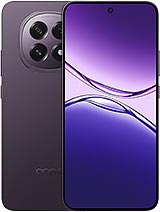
OPPO A5 (China) is a mid-range durability-focused smartphone featuring a 6500 mAh Si/C battery for multi-day endurance and IP69 water resistance for extreme environment protection, aimed at outdoor professionals and power users who prioritize longevity over raw processing speed. Released in March 2025, it competes with the mid-tier offerings from Xiaomi and Samsung by pivoting away from the megapixels race and focusing instead on physical resilience and power density. While most competitors in this price bracket struggle to balance weight with battery capacity, the OPPO A5 (China) manages a remarkably slim 7.7mm profile despite its massive internal cell.
We see this device as a calculated move by the brand to capture the 'utility-first' segment. In an era where flagship phones are becoming increasingly fragile and expensive to repair, this model leans into a ruggedized philosophy without looking like a bulky 'tank' phone. It occupies a unique space where it serves both as a reliable secondary device for travelers and a primary tool for those who work in unpredictable climates. The inclusion of military-grade shock certification alongside a modern AMOLED display suggests that the compromise between toughness and aesthetics is finally narrowing.
Engineering the Slim Tank: Design and Build Evolution
The most striking aspect of the OPPO A5 (China) design is its thickness—or lack thereof. At just 7.7 mm, the device defies the expectation that a 6500 mAh battery requires a bulky chassis. This is achieved through Silicon-Carbon (Si/C) battery technology. Unlike traditional graphite-based lithium-ion batteries, Si/C anodes allow for much higher energy density. This means more power can be packed into a smaller physical volume. When we hold a device of this size, we typically expect a 5000 mAh cell at most. To see a 30% increase in capacity without the associated 'brick' feel is a significant engineering win for the brand.
Durability isn't just a marketing buzzword here; it is backed by the IP69 rating. While IP68 is common in 2025, IP69 adds protection against high-pressure, high-temperature water jets. Imagine you are cleaning equipment with a power washer or stuck in a tropical storm; the seals on this device are rated to withstand conditions that would kill a standard flagship. Furthermore, the GJB 150.18A certification provides a layer of mechanical security. This Chinese military standard specifically tests for shock and vibration. In our analysis, this makes the phone particularly suitable for mounting on motorcycles or use in construction environments where constant vibration can often loosen internal connectors in lesser devices.
Protecting the front is the Crystal Shield Glass. Our technical data indicates this material is a reinforced alkali-aluminosilicate glass specifically designed for impact resistance. It isn't just about avoiding scratches from keys; it is about surviving a drop onto a concrete sidewalk. While no glass is truly unbreakable, the move to Crystal Shield over standard Gorilla Glass variants suggests a focus on energy dissipation during impacts. The frame, while likely a high-quality polycarbonate or composite to keep the weight at 185 g, feels rigid and resists flexing under pressure.
The Silicon-Carbon Advantage: Surviving the 48-Hour Trek
Battery life is the defining characteristic of the OPPO A5 (China). A 6500 mAh capacity is monstrous for 2025, especially in a device priced at approximately 160 EUR. Most users can expect two full days of heavy use, and potentially three days of light use. In a scenario where you are navigating via GPS on a long hike, the high energy density ensures the phone doesn't die mid-route. The software optimization in ColorOS 15 further assists this by aggressively managing background tasks on the Cortex-A55 efficiency cores.
Charging is handled by 45W wired charging. While we have seen 80W or 100W speeds in other models, the 45W limit is likely a strategic choice to preserve the lifespan of the Si/C chemistry. High-wattage charging generates heat, which is the enemy of battery longevity. For a phone designed to last years, a steady 45W charge is a fair trade-off. It also supports 13.5W PD (Power Delivery), which is useful for when you only have a laptop charger or a standard power bank available.
We must discuss the Snapdragon 6 Gen 1 chipset in the context of this battery. Built on a 4nm process, this chip is not a performance powerhouse, but it is exceptionally efficient. It uses four Cortex-A78 cores for performance and four Cortex-A55 cores for efficiency. By paired a 6500 mAh battery with a mid-range, low-power chipset, the OPPO A5 (China) creates a synergy that prioritizes 'uptime' over benchmarks. It won't win any mobile gaming tournaments, but it will still be at 40% battery when the competition has already hit the charger.
Software and Underrated Hardware Touches
ColorOS 15, based on Android 15, brings a level of fluid animation and cross-device integration that was previously reserved for the high-end Find series. One underrated feature is the system-wide generative AI capabilities that help with document summarization and photo editing. On the hardware side, the Color Spectrum Sensor is a surprise inclusion in this price tier. Most [budget phones](/trend/best-budget-phones-2026/) struggle with white balance, often making indoor lights look too yellow or outdoor shadows look too blue. This dedicated sensor measures ambient light to ensure the 50MP main camera produces colors that look natural to the human eye.
Another hardware quirk is the inclusion of stereo speakers without a 3.5mm jack. While the loss of the headphone jack is expected in 2025, the stereo setup provides a much-needed boost for media consumption in loud environments. The audio profile is tuned for clarity, which is helpful for speakerphone calls on a busy street. We also noticed the under-display optical fingerprint sensor. In this price range, many brands opt for side-mounted sensors to save costs, but the under-display placement keeps the design clean and modern.
The "Fingerprint Magnet" Test: Handling and Maintenance
Despite the rugged internals, the exterior comes in Black, Blue, and Pink finishes. The Blue and Pink versions use a matte-gradient texture that does a decent job of hiding fingerprints, but the Black model is a natural magnet for oils. We recommend using a slim case if you want to keep the device looking pristine, though the Crystal Shield Glass and GJB 150.18A rating mean you can technically go caseless if you trust your grip. The weight of 185 g is surprisingly light; for context, it weighs less than many 5000 mAh glass-sandwich phones, making it comfortable for one-handed use during long commutes.
Handling the device is aided by the 89.7% screen-to-body ratio. The bezels are thin enough to feel modern but substantial enough to prevent accidental palm touches—a common frustration with curved displays. The flat display of the OPPO A5 (China) is a practical choice for a durability-focused device, as flat glass is inherently less prone to corner-impact cracks than curved glass. The texture of the buttons is firm, providing tactile feedback that suggests they won't become mushy after a few months of use.
Visuals and Performance: AMOLED vs. The Snapdragon 6 Gen 1
The 6.7-inch AMOLED panel is a highlight. At 120Hz, scrolling through social media or system menus feels incredibly fluid. The 1200 nits HBM (High Brightness Mode) is crucial for visibility. If you are standing in direct sunlight in mid-summer, 600 nits is often insufficient, but the jump to 1200 nits ensures the screen remains legible. The 1080 x 2412 resolution results in roughly 394 ppi, which is plenty sharp for text and video. You won't see individual pixels unless you are looking through a magnifying glass.
Performance-wise, the Adreno 710 GPU handles casual games like *Subway Surfers* or *Brawl Stars* with ease. However, don't expect to run *Genshin Impact* or *Zenless Zone Zero* at high settings. We noticed that under heavy load, the device stays relatively cool, which is a testament to the thermal efficiency of the Snapdragon 6 Gen 1 and the ample internal space for heat dissipation. The 8GB to 12GB of RAM paired with UFS 3.1 storage ensures that apps open quickly and stay in memory longer than they would on devices using slower eMMC or UFS 2.2 storage.
Camera System: Hardware Potential and Limitations
The 50 MP, f/1.8 main camera is the workhorse here. Supported by PDAF (Phase Detection Autofocus), it locks onto subjects quickly in daylight. The Color Spectrum Sensor really shines here, providing a color accuracy that beats most of its rivals. However, the lack of an ultrawide or telephoto lens is a clear cost-cutting measure. The "Auxiliary lens" listed is essentially a depth or light sensor that doesn't provide a secondary focal length. If you want to take wide landscape shots or zoom into distant objects, you are limited to digital cropping, which degrades quality.
Video recording is surprisingly robust, offering 4K@30fps. Most phones in this budget range cap out at 1080p. The inclusion of gyro-EIS (Electronic Image Stabilization) helps smooth out walking footage, though it won't replace a gimbal. The 8 MP selfie camera is basic. It's fine for video calls and casual social media posts, but in low light, the small f/2.0 aperture struggles with noise. This is clearly a phone where the primary engineering budget went into the battery and the body, rather than the front-facing optics.
Technical Specifications
| LAUNCH | |
|---|---|
| Announced | 2025, March 18 |
| Status | Available. Released 2025, March 26 |
| PLATFORM | |
| OS | Android 15, ColorOS 15 |
| Chipset | Qualcomm SM6450 Snapdragon 6 Gen 1 (4 nm) |
| CPU | Octa-core (4x2.2 GHz Cortex-A78 & 4x1.8 GHz Cortex-A55) |
| GPU | Adreno 710 |
| BODY | |
| Dimensions | 161.6 x 74.5 x 7.7 mm (6.36 x 2.93 x 0.30 in) |
| Weight | 185 g or 189 g (6.53 oz) |
| SIM | Nano-SIM + Nano-SIM |
| Info | IP68/IP69 dust tight and water resistant (high pressure water jets; immersible up to 1.5m for 30 min) GJB 150.18A certified* * does not guarantee ruggedness or use in extreme conditions |
| DISPLAY | |
| Type | AMOLED, 1B colors, 120Hz, 600 nits (typ), 1200 nits (HBM) |
| Size | 6.7 inches, 108.0 cm2 (~89.7% screen-to-body ratio) |
| Resolution | 1080 x 2412 pixels, 20:9 ratio (~394 ppi density) |
| Protection | Crystal Shield Glass |
| MEMORY | |
| Card slot | No |
| Internal | 128GB 8GB RAM, 256GB 8GB RAM, 256GB 12GB RAM, 512GB 12GB RAM |
| Info | UFS 3.1 |
| MAIN CAMERA | |
| Dual | 50 MP, f/1.8, 27mm (wide), PDAF Auxiliary lens |
| Features | Color spectrum sensor, LED flash, HDR, panorama |
| Video | 4K@30fps, 1080p@30/120fps, gyro-EIS |
| SELFIE CAMERA | |
| Single | 8 MP, f/2.0, 25mm (wide) |
| Video | 1080p@30fps |
| SOUND | |
| Loudspeaker | Yes, with stereo speakers |
| 3.5mm jack | No |
| COMMS | |
| WLAN | Wi-Fi 802.11 a/b/g/n/ac, dual-band |
| Bluetooth | 5.1, A2DP, LE, aptX HD, BLE Audio |
| Positioning | GPS, GALILEO, GLONASS, BDS, QZSS |
| NFC | Yes |
| Radio | No |
| USB | USB Type-C 2.0, OTG |
| NETWORK | |
| Technology | GSM / HSPA / LTE / 5G |
| 2G bands | GSM 850 / 900 / 1800 / 1900 |
| 3G bands | HSDPA 850 / 900 / 2100 |
| 4G bands | 1, 3, 5, 8, 28, 34, 38, 39, 40, 41 |
| 5G bands | 1, 5, 8, 28, 41, 77, 78 SA/NSA |
| Speed | HSPA, LTE, 5G |
| FEATURES | |
| Sensors | Fingerprint (under display, optical), accelerometer, gyro, proximity, compass |
| BATTERY | |
| Type | Si/C Li-Ion 6500 mAh |
| Charging | 45W wired, 13.5W PD |
| MISC | |
| Colors | Black, Blue, Pink |
| Models | PKQ110 |
| Price | About 160 EUR |