Why the OPPO A58 4G Prioritizes Visual Fidelity Over the 5G Hype
Overview
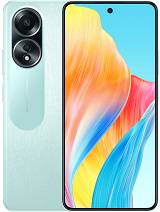
The OPPO A58 4G is a budget-tier smartphone featuring a 6.72-inch FHD+ IPS LCD for crisp multimedia consumption and 33W SUPERVOOC charging for efficient power delivery, aimed at consumers who prioritize display resolution and battery speed over future-proofed cellular connectivity. Released in mid-2023, it competes directly with established affordable titans like the Redmi Note 12 and the [Samsung Galaxy A14](/the-samsung-galaxy-a14-a-calculated-financial-move-for-smart-buyers/) by offering a more refined aesthetic and faster charging speeds in the sub-€200 bracket.
In an era where many manufacturers are opting for 720p panels to offset the cost of 5G modems, the handset makes a bold statement with its 1080 x 2400 resolution. The 6.72-inch IPS LCD offers a pixel density of approximately 392 ppi, ensuring that text remains sharp and video content lacks the fuzziness often found on entry-level displays. The panel achieves a typical brightness of 550 nits, which can boost to 680 nits in High Brightness Mode (HBM). While not as blinding as flagship OLEDs, this is sufficient for legible use under the harsh July sun, provided the light isn't hitting the screen at an extreme angle.
The choice of an IPS LCD over an AMOLED panel is clearly a cost-saving measure, yet the color calibration remains surprisingly natural. Users won't find the infinite contrast ratios of more expensive devices, but the black levels are deep enough for casual Netflix sessions. Compared to the previous generation A57, which languished with a standard HD+ screen, this upgrade represents a significant leap in daily usability. The punch-hole design for the selfie camera also gives the device a more modern silhouette than the dated teardrop notches seen on competitors like the Galaxy A14.
Looking at the competition, the display stands out as a primary selling point. While some rivals offer 90Hz or 120Hz refresh rates, they often do so by sacrificing resolution or brightness. This model sticks to a standard 60Hz rate but ensures every pixel is accounted for. For the average user scrolling through social feeds or watching YouTube, the clarity of a 1080p image is often more noticeable than the slightly smoother motion of a higher refresh rate on a lower-resolution screen.
OPPO has simplified the camera arrangement on this device, moving away from the "sensor-stuffing" trend that often plagues the budget segment. The 50 MP main sensor with an f/1.8 aperture handles the heavy lifting, supported by a secondary auxiliary lens for depth data. In well-lit environments, the primary sensor has the hardware potential to capture detailed images with respectable dynamic range. The f/1.8 aperture allows for a decent amount of light intake, which helps keep noise levels manageable during indoor shooting. However, without Optical Image Stabilization (OIS), users will need steady hands to avoid blur.
The auxiliary lens is largely a supporting player, aiding the software in creating artificial background blur for portrait shots. While some might call this a gimmick compared to having a dedicated ultra-wide or macro lens, it ensures the processing power of the Helio G85 isn't spread too thin across multiple sensors. The lack of an ultra-wide lens is the most felt omission here, as it limits the versatility for landscape photography. This is a common trade-off in the 4G budget space where sensor quality is prioritized over sensor quantity.
Video recording is capped at 1080p at 30fps for both the front and rear cameras. This is a hard limitation of the MediaTek ISP, and while it's standard for the price, content creators should temper their expectations. The 8 MP selfie camera is serviceable for video calls and basic social media posts, but the lack of higher-resolution video or advanced stabilization means this isn't a vlogging tool. It is a functional camera system designed for capturing memories rather than professional-grade content.
Initial setup is relatively straightforward, though users should expect a significant software update immediately upon connecting to Wi-Fi. ColorOS 13, based on Android 13, comes pre-installed, and the initial patch often addresses camera stability and security definitions. The box includes the 33W SUPERVOOC adapter, which is a welcome inclusion when companies like Samsung and Apple are removing chargers from even their cheapest models. The inclusion of a basic TPU case and a pre-applied screen protector reduces the immediate friction of ownership.
Software bloatware remains a point of contention. Upon first boot, the app drawer is populated with several third-party games and utility apps that many users will find unnecessary. Fortunately, most of these can be uninstalled, but the initial cleanup takes about 10 to 15 minutes. The setup wizard also pushes several of the manufacturer's own cloud services, which can be skipped if you prefer to stick with the standard Google ecosystem.
Initial performance during the update process can be slightly sluggish. The Helio G85 and eMMC 5.1 storage are being pushed to their limits while downloading and installing large system files. Once the background processes settle, the device becomes significantly more responsive. We recommend letting the phone sit for an hour after the initial setup to allow the system to index files and optimize the battery for its first full cycle.
The transition to gesture-based navigation is smooth on this hardware, though the 60Hz screen refresh rate means you won't get the "buttery" feel of more expensive handsets. Back gestures from the edges are reliable, and the software does a commendable job of rejecting accidental touches on the flat screen. The flat edges of the plastic frame provide a secure grip, making the swiping motions feel stable even during one-handed use. If you prefer the old-school three-button navigation, it remains an option in the settings.
One area where the hardware excels is the integration of the side-mounted fingerprint sensor into the power button. The placement is natural for both thumb and index finger use, depending on which hand is holding the device. Recognition is nearly instantaneous, often proving more reliable than the sluggish under-display optical sensors found on [mid-range phones](/trend/best-mid-range-phones-2026/) from a year or two ago. Face unlock is also available via the 8 MP front camera, though it relies purely on 2D image data and is less secure than the fingerprint method.
System animations in ColorOS 13 are well-optimized for the Mali-G52 MC2 GPU. While you might see the occasional dropped frame when quickly switching between heavy apps like Maps and Instagram, the overall experience is consistent. The software includes several customization options for gesture shortcuts, such as a three-finger swipe for screenshots, which adds a layer of utility to the large 6.72-inch canvas.
Security is handled by a combination of the side-mounted fingerprint scanner and 2D facial recognition. The fingerprint scanner is the star here, offering a tactile and rapid way to secure the device. Because it is a physical capacitive sensor, it works even with slightly damp fingers, a common failure point for in-display sensors. It serves as a reliable gatekeeper for banking apps and password managers, which are increasingly vital in the current mobile ecosystem.
The 2D face unlock is convenient for quick access when the phone is sitting on a desk, but it struggles in low-light conditions. Since it doesn't use IR sensors or 3D mapping, it can be fooled by high-resolution photos in some instances, so we recommend using the fingerprint sensor as the primary biometric. The software also includes a "Private Safe" feature, allowing users to encrypt sensitive photos and documents behind their biometric credentials, providing an extra layer of privacy for personal data.
From a long-term security perspective, the manufacturer has committed to regular updates. While entry-level phones often receive fewer patches than flagships, having Android 13 out of the box provides a modern security foundation. The hardware-level security features of the Helio G85, while basic compared to the latest Dimensity or Snapdragon chips, are sufficient for protecting standard consumer data from casual breaches.
The MediaTek Helio G85 is the heart of this handset. Built on a 12nm process, it features two Cortex-A75 performance cores clocked at 2.0 GHz and six Cortex-A55 efficiency cores at 1.8 GHz. This is a proven chipset for daily tasks like web browsing, emails, and light gaming. When playing titles like Mobile Legends or PUBG Mobile, users should expect stable performance at medium settings. However, heavy multitasking can cause the eMMC 5.1 storage to become a bottleneck, resulting in longer app load times compared to devices with UFS storage.
Battery life is a standout feature, thanks to the 5000 mAh cell and the power-efficient 60Hz display. For the average user, this is easily a two-day phone. Even under heavy use involving GPS navigation and video streaming, it comfortably lasts until the end of the day. When it does run low, the 33W SUPERVOOC charging is a game-changer for this price tier. Getting to 56% in just 30 minutes means you don't have to leave the phone plugged in overnight, which can help prolong the overall lifespan of the Li-Po battery.
Audio quality is surprisingly robust for a budget device. The handset features stereo speakers, a rarity at this price point where a single bottom-firing speaker is the norm. The "Ultra Volume Mode" can boost output to 300%, which is useful for listening to podcasts in noisy environments, though it does introduce some distortion at the highest levels. The retention of the 3.5mm headphone jack and support for high-quality Bluetooth codecs like aptX HD ensure that whether you are wired or wireless, the audio experience remains a priority.
The OPPO A58 4G is a calculated offering that recognizes the current market reality: not everyone needs 5G, but everyone appreciates a good screen and fast charging. By sacrificing the 5G modem, the brand was able to invest in a superior 1080p display and a charging system that outclasses many of its peers. It is a device built for the pragmatic user who spends their time watching media and browsing the web rather than chasing benchmark scores or ultra-fast download speeds in areas where 5G coverage is spotty at best.
While the plastic build and Helio G85 chipset remind you of its budget roots, the overall package feels more expensive than its price tag suggests. The stereo speakers and NFC support are "pro" features that make a real difference in daily life, from contactless payments to enjoying music without headphones. If you can live without an ultra-wide camera and aren't a hardcore mobile gamer, this device offers one of the most balanced 4G experiences currently available in the mid-2023 landscape.
Ultimately, the OPPO A58 4G proves that there is still plenty of life in the 4G market. It offers a refined software experience and hardware that focuses on the essentials of modern smartphone use. While it faces stiff competition, its combination of display quality, charging speed, and audio performance makes it a top contender for anyone looking to maximize their value in the sub-€200 segment.
The Large FHD+ Display Advantage
In an era where many manufacturers are opting for 720p panels to offset the cost of 5G modems, the handset makes a bold statement with its 1080 x 2400 resolution. The 6.72-inch IPS LCD offers a pixel density of approximately 392 ppi, ensuring that text remains sharp and video content lacks the fuzziness often found on entry-level displays. The panel achieves a typical brightness of 550 nits, which can boost to 680 nits in High Brightness Mode (HBM). While not as blinding as flagship OLEDs, this is sufficient for legible use under the harsh July sun, provided the light isn't hitting the screen at an extreme angle.
The choice of an IPS LCD over an AMOLED panel is clearly a cost-saving measure, yet the color calibration remains surprisingly natural. Users won't find the infinite contrast ratios of more expensive devices, but the black levels are deep enough for casual Netflix sessions. Compared to the previous generation A57, which languished with a standard HD+ screen, this upgrade represents a significant leap in daily usability. The punch-hole design for the selfie camera also gives the device a more modern silhouette than the dated teardrop notches seen on competitors like the Galaxy A14.
Looking at the competition, the display stands out as a primary selling point. While some rivals offer 90Hz or 120Hz refresh rates, they often do so by sacrificing resolution or brightness. This model sticks to a standard 60Hz rate but ensures every pixel is accounted for. For the average user scrolling through social feeds or watching YouTube, the clarity of a 1080p image is often more noticeable than the slightly smoother motion of a higher refresh rate on a lower-resolution screen.
Does It Gimmick?
OPPO has simplified the camera arrangement on this device, moving away from the "sensor-stuffing" trend that often plagues the budget segment. The 50 MP main sensor with an f/1.8 aperture handles the heavy lifting, supported by a secondary auxiliary lens for depth data. In well-lit environments, the primary sensor has the hardware potential to capture detailed images with respectable dynamic range. The f/1.8 aperture allows for a decent amount of light intake, which helps keep noise levels manageable during indoor shooting. However, without Optical Image Stabilization (OIS), users will need steady hands to avoid blur.
The auxiliary lens is largely a supporting player, aiding the software in creating artificial background blur for portrait shots. While some might call this a gimmick compared to having a dedicated ultra-wide or macro lens, it ensures the processing power of the Helio G85 isn't spread too thin across multiple sensors. The lack of an ultra-wide lens is the most felt omission here, as it limits the versatility for landscape photography. This is a common trade-off in the 4G budget space where sensor quality is prioritized over sensor quantity.
Video recording is capped at 1080p at 30fps for both the front and rear cameras. This is a hard limitation of the MediaTek ISP, and while it's standard for the price, content creators should temper their expectations. The 8 MP selfie camera is serviceable for video calls and basic social media posts, but the lack of higher-resolution video or advanced stabilization means this isn't a vlogging tool. It is a functional camera system designed for capturing memories rather than professional-grade content.
The Out of Box Experience
Initial setup is relatively straightforward, though users should expect a significant software update immediately upon connecting to Wi-Fi. ColorOS 13, based on Android 13, comes pre-installed, and the initial patch often addresses camera stability and security definitions. The box includes the 33W SUPERVOOC adapter, which is a welcome inclusion when companies like Samsung and Apple are removing chargers from even their cheapest models. The inclusion of a basic TPU case and a pre-applied screen protector reduces the immediate friction of ownership.
Software bloatware remains a point of contention. Upon first boot, the app drawer is populated with several third-party games and utility apps that many users will find unnecessary. Fortunately, most of these can be uninstalled, but the initial cleanup takes about 10 to 15 minutes. The setup wizard also pushes several of the manufacturer's own cloud services, which can be skipped if you prefer to stick with the standard Google ecosystem.
Initial performance during the update process can be slightly sluggish. The Helio G85 and eMMC 5.1 storage are being pushed to their limits while downloading and installing large system files. Once the background processes settle, the device becomes significantly more responsive. We recommend letting the phone sit for an hour after the initial setup to allow the system to index files and optimize the battery for its first full cycle.
Navigation and Gestures
The transition to gesture-based navigation is smooth on this hardware, though the 60Hz screen refresh rate means you won't get the "buttery" feel of more expensive handsets. Back gestures from the edges are reliable, and the software does a commendable job of rejecting accidental touches on the flat screen. The flat edges of the plastic frame provide a secure grip, making the swiping motions feel stable even during one-handed use. If you prefer the old-school three-button navigation, it remains an option in the settings.
One area where the hardware excels is the integration of the side-mounted fingerprint sensor into the power button. The placement is natural for both thumb and index finger use, depending on which hand is holding the device. Recognition is nearly instantaneous, often proving more reliable than the sluggish under-display optical sensors found on [mid-range phones](/trend/best-mid-range-phones-2026/) from a year or two ago. Face unlock is also available via the 8 MP front camera, though it relies purely on 2D image data and is less secure than the fingerprint method.
System animations in ColorOS 13 are well-optimized for the Mali-G52 MC2 GPU. While you might see the occasional dropped frame when quickly switching between heavy apps like Maps and Instagram, the overall experience is consistent. The software includes several customization options for gesture shortcuts, such as a three-finger swipe for screenshots, which adds a layer of utility to the large 6.72-inch canvas.
Biometrics and Security
Security is handled by a combination of the side-mounted fingerprint scanner and 2D facial recognition. The fingerprint scanner is the star here, offering a tactile and rapid way to secure the device. Because it is a physical capacitive sensor, it works even with slightly damp fingers, a common failure point for in-display sensors. It serves as a reliable gatekeeper for banking apps and password managers, which are increasingly vital in the current mobile ecosystem.
The 2D face unlock is convenient for quick access when the phone is sitting on a desk, but it struggles in low-light conditions. Since it doesn't use IR sensors or 3D mapping, it can be fooled by high-resolution photos in some instances, so we recommend using the fingerprint sensor as the primary biometric. The software also includes a "Private Safe" feature, allowing users to encrypt sensitive photos and documents behind their biometric credentials, providing an extra layer of privacy for personal data.
From a long-term security perspective, the manufacturer has committed to regular updates. While entry-level phones often receive fewer patches than flagships, having Android 13 out of the box provides a modern security foundation. The hardware-level security features of the Helio G85, while basic compared to the latest Dimensity or Snapdragon chips, are sufficient for protecting standard consumer data from casual breaches.
Performance, Battery, and Sound
The MediaTek Helio G85 is the heart of this handset. Built on a 12nm process, it features two Cortex-A75 performance cores clocked at 2.0 GHz and six Cortex-A55 efficiency cores at 1.8 GHz. This is a proven chipset for daily tasks like web browsing, emails, and light gaming. When playing titles like Mobile Legends or PUBG Mobile, users should expect stable performance at medium settings. However, heavy multitasking can cause the eMMC 5.1 storage to become a bottleneck, resulting in longer app load times compared to devices with UFS storage.
Battery life is a standout feature, thanks to the 5000 mAh cell and the power-efficient 60Hz display. For the average user, this is easily a two-day phone. Even under heavy use involving GPS navigation and video streaming, it comfortably lasts until the end of the day. When it does run low, the 33W SUPERVOOC charging is a game-changer for this price tier. Getting to 56% in just 30 minutes means you don't have to leave the phone plugged in overnight, which can help prolong the overall lifespan of the Li-Po battery.
Audio quality is surprisingly robust for a budget device. The handset features stereo speakers, a rarity at this price point where a single bottom-firing speaker is the norm. The "Ultra Volume Mode" can boost output to 300%, which is useful for listening to podcasts in noisy environments, though it does introduce some distortion at the highest levels. The retention of the 3.5mm headphone jack and support for high-quality Bluetooth codecs like aptX HD ensure that whether you are wired or wireless, the audio experience remains a priority.
The Verdict
The OPPO A58 4G is a calculated offering that recognizes the current market reality: not everyone needs 5G, but everyone appreciates a good screen and fast charging. By sacrificing the 5G modem, the brand was able to invest in a superior 1080p display and a charging system that outclasses many of its peers. It is a device built for the pragmatic user who spends their time watching media and browsing the web rather than chasing benchmark scores or ultra-fast download speeds in areas where 5G coverage is spotty at best.
While the plastic build and Helio G85 chipset remind you of its budget roots, the overall package feels more expensive than its price tag suggests. The stereo speakers and NFC support are "pro" features that make a real difference in daily life, from contactless payments to enjoying music without headphones. If you can live without an ultra-wide camera and aren't a hardcore mobile gamer, this device offers one of the most balanced 4G experiences currently available in the mid-2023 landscape.
Ultimately, the OPPO A58 4G proves that there is still plenty of life in the 4G market. It offers a refined software experience and hardware that focuses on the essentials of modern smartphone use. While it faces stiff competition, its combination of display quality, charging speed, and audio performance makes it a top contender for anyone looking to maximize their value in the sub-€200 segment.
Technical Specifications
| LAUNCH | |
|---|---|
| Announced | 2023, July 26 |
| Status | Available. Released 2023, July 28 |
| PLATFORM | |
| OS | Android 13, upgradable to Android 15, ColorOS 15 |
| Chipset | Mediatek MT6769 Helio G85 (12 nm) |
| CPU | Octa-core (2x2.0 GHz Cortex-A75 & 6x1.8 GHz Cortex-A55) |
| GPU | Mali-G52 MC2 |
| BODY | |
| Dimensions | 165.7 x 76 x 8 mm (6.52 x 2.99 x 0.31 in) |
| Weight | 192 g (6.77 oz) |
| Build | Glass front, plastic frame, plastic back |
| SIM | Nano-SIM + Nano-SIM |
| DISPLAY | |
| Type | IPS LCD, 550 nits (typ), 680 nits (HBM) |
| Size | 6.72 inches, 109.0 cm2 (~86.6% screen-to-body ratio) |
| Resolution | 1080 x 2400 pixels, 20:9 ratio (~392 ppi density) |
| MEMORY | |
| Card slot | microSDXC |
| Internal | 128GB 6GB RAM, 128GB 8GB RAM, 256GB 8GB RAM |
| Info | eMMC 5.1 |
| MAIN CAMERA | |
| Dual | 50 MP, f/1.8, (wide), AF Auxiliary lens |
| Features | LED flash, HDR, panorama |
| Video | 1080p@30fps |
| SELFIE CAMERA | |
| Single | 8 MP, f/2.0, (wide) |
| Features | Panorama |
| Video | 1080p@30fps |
| SOUND | |
| Loudspeaker | Yes, with stereo speakers |
| 3.5mm jack | Yes |
| COMMS | |
| WLAN | Wi-Fi 802.11 a/b/g/n/ac, dual-band |
| Bluetooth | 5.3, A2DP, LE, aptX HD |
| Positioning | GPS, GALILEO, GLONASS, BDS, QZSS |
| NFC | Yes |
| Infrared port | Yes |
| Radio | No |
| USB | USB Type-C 2.0, OTG |
| NETWORK | |
| Technology | GSM / HSPA / LTE |
| 2G bands | GSM 900 / 1800 |
| 3G bands | HSDPA 900 / 2100 |
| 4G bands | 1, 3, 5, 8, 40 |
| Speed | HSPA, LTE |
| FEATURES | |
| Sensors | Fingerprint (side-mounted), accelerometer, proximity, compass |
| BATTERY | |
| Type | Li-Po 5000 mAh |
| Charging | 33W wired, 56% in 30 min |
| MISC | |
| Colors | Glowing Black, Dazzling Green |
| Models | CPH2577 |
| Price | About 150 EUR |