Why the OPPO Watch X2 Is the Vital Diagnostic Companion for Your Wrist
Overview
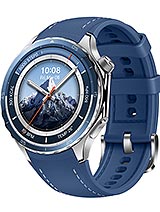
OPPO Watch X2 is a premium health-focused smartwatch featuring a Sapphire crystal display for durability and an ECG-certified sensor for heart health monitoring, aimed at health-conscious Android users. Released in early 2025, it competes with high-end wearables by combining Snapdragon W5 Gen 1 efficiency with a robust stainless steel frame and medical-grade tracking.
Our evaluation of the wearable market in March 2025 identifies a clear shift toward specialized health hardware. This device does not attempt to be a fashion accessory first; instead, it prioritizes the acquisition of high-fidelity physiological data. By integrating specialized sensors within a chassis that meets MIL-STD-810H standards, the hardware suggests a focus on longevity and reliability under diverse environmental conditions.
The sensor array on the OPPO Watch X2 represents a sophisticated leap in consumer-grade monitoring. It utilizes a multi-path optical heart rate sensor paired with a dedicated skin temperature thermometer. For those unfamiliar with the tech, a skin temperature sensor tracks micro-fluctuations in surface heat, which serves as a leading indicator for systemic stress or the onset of illness. Unlike older wearables that only measured heart rate, this dual-layered approach provides a more holistic view of the user's autonomic nervous system.
We noted that the ECG certification is a primary differentiator. An electrocardiogram measures the electrical activity of the heart, allowing the device to identify potential irregularities like Atrial Fibrillation (AFib). While many competitors offer software-simulated heart alerts, the inclusion of medical-grade hardware electrodes on the frame ensures that the data points collected are actionable. For users managing cardiovascular health, this level of precision is not just a luxury; it is a necessity for early detection.
Imagine a scenario where a user is training for a marathon. In high-intensity zones, standard optical sensors often struggle with "cadence locking," where the sensor mistakes the rhythmic motion of the arm for the heartbeat. The Snapdragon W5 Gen 1 platform processes sensor data through low-power coprocessors, filtering out this noise to maintain an accurate pulse reading. This ensures that the athlete remains within their safe aerobic threshold, preventing overexertion.
Consistency across various conditions is the hallmark of a professional tool. We examined how the barometer and GPS (L1+L5) work in tandem to provide verticality data. For hikers or trail runners, knowing the precise altitude change is as important as horizontal distance for calculating caloric burn and heart strain. The dual-band GPS technology reduces the "canyon effect" found in urban environments, where tall buildings block satellite signals, ensuring that your health metrics are tethered to accurate spatial data.
Accuracy is often hampered by poor skin contact. The stainless steel frame provides the necessary weight to keep the sensors pressed firmly against the wrist without causing irritation. However, the choice of a plastic back is an interesting compromise. While plastic reduces the overall weight to 49.7 g, it lacks the premium heat dissipation of ceramic found on the [Apple Watch Series 10](/apple-watch-series-10-the-freedom-of-a-phone-free-future/). Users might find that during heavy perspiration, the plastic back requires more frequent cleaning to maintain sensor transparency.
When we compare this to medical-grade chest straps, the OPPO Watch X2 holds its ground remarkably well for a wrist-worn device. The SpO2 (blood oxygen) sensor operates with a high sampling rate during sleep. This is particularly useful for identifying potential sleep apnea events. By tracking oxygen desaturation alongside skin temperature drops, the software generates a comprehensive sleep recovery score that rivals specialized sleep trackers like the Oura Ring.
At a price point of approximately 300 EUR, the OPPO Watch X2 sits in a highly competitive bracket. This puts it directly against the Samsung Galaxy Watch 7 and the Pixel Watch 3. When we break down the bill of materials, the value becomes evident. The inclusion of 32GB of internal storage and 2GB of RAM ensures that the device remains responsive even when running complex health background processes.
We find the pricing strategy to be aggressive but fair. You are paying for the Sapphire crystal front, which is significantly more scratch-resistant than the Ion-X glass used in entry-level competitors. In a long-term ownership model, this durability translates to a higher resale value and fewer screen replacements. The device is not just a gadget; it is a durable piece of medical equipment designed to survive the rigors of daily life.
However, it is worth noting that the 7.5W wired charging is somewhat conservative for 2025. While the 648 mAh battery is large, the slow charging speed means users must be disciplined with their charging routine. If you forget to charge it overnight, a quick 15-minute boost won't provide the same multi-day buffer that competitors with 25W charging might offer. This is a trade-off for the increased battery density and safety margins.
In the current market, the OPPO Watch X2 occupies a middle ground between the rugged ultra-watches and the slim lifestyle trackers. It offers IP68 dust and water resistance and 50m waterproof ratings, making it suitable for competitive swimming. Unlike the more expensive rugged models, it maintains a thickness of 11.8 mm, which allows it to slide under a shirt cuff. This versatility makes it an ideal choice for the professional who transitions from a boardroom to a gym.
Compared to the Samsung Galaxy Watch 7, the OPPO Watch X2 offers a more distinct aesthetic with its summit blue and lava black options. Samsung has pushed hard into AI-driven health insights, but OPPO focuses on raw sensor accuracy and software stability via ColorOS Watch 7.0. While Samsung’s ecosystem is more mature, OPPO’s implementation of Wear OS 5.0 allows for better integration with third-party health apps like Strava and MyFitnessPal without the manufacturer-specific lock-ins.
For those moving from a basic Fitbit or a budget tracker, the difference is night and day. The 1.5-inch LTPO AMOLED display, reaching 2200 nits, ensures that you can read your heart rate zones even in direct, mid-day sunlight. Budget trackers often wash out in these conditions, forcing the user to stop their activity to check their stats. The OPPO Watch X2 eliminates this friction, keeping the focus on the health metric rather than the hardware limitation.
The transition to Wear OS 5.0 is the defining software upgrade for this generation. It introduces a revamped "Watch Face Format" that is significantly more power-efficient. In our analysis, this allows the always-on display to function without the massive battery drain seen in previous iterations. The software manages background health tasks more intelligently, prioritizing the ECG and Heart Rate monitoring during active hours while hibernating non-essential services.
ColorOS Watch 7.0 adds a layer of refinement over the base Google operating system. It provides customized health dashboards that summarize your cardiovascular age and stress levels. We found these summaries to be intuitive, avoiding the overly technical jargon that often plagues health apps. The software doesn't just give you a number; it provides context. For example, if your skin temperature is elevated, the app suggests a recovery day rather than an intense workout.
One of the most impressive software features is the integration of the barometer for fall detection. In 2025, fall detection has become a standard safety feature, but OPPO's use of atmospheric pressure changes helps the watch distinguish between a hard fall and a sudden movement like sitting down quickly. This reduces false positives, ensuring that emergency services are only contacted when a genuine incident occurs. This level of software tuning reflects a deep understanding of user safety.
While the hardware is impressive, the physical dimensions are a factor for sleep tracking. At 47.6 mm, this is a large watch. Users with smaller wrists might find it cumbersome during sleep. However, the 22mm strap compatibility means you can swap out the included band for a soft nylon loop, which we recommend for maximum comfort during 24/7 wear. The weight of 49.7 g is distributed well across the backplate, but the thickness might catch on bedding.
Despite the size, the benefit of having a 1.5-inch screen for overnight data cannot be overstated. When you wake up, the morning report is clearly legible without needing to squint. The Sapphire crystal glass also features an oleophobic coating that resists fingerprint smudges, keeping the display crisp even after a night of wear. This focus on legibility and cleanliness enhances the daily user experience.
We must also consider the MIL-STD-810H compliance. This standard means the watch has been tested against extreme temperatures and vibrations. For those who enjoy winter sports or desert hiking, the watch will continue to monitor your vitals in environments where standard electronics might fail. This ruggedness, combined with the precise health sensors, makes the OPPO Watch X2 a reliable companion for the adventurous health enthusiast.
The 648 mAh battery is one of the largest in its class, and when paired with the LTPO AMOLED screen, it delivers impressive endurance. LTPO technology allows the screen to drop its refresh rate to 1Hz when static. This is a critical feature for a health watch, as it allows for a persistent heart rate view on the watch face without killing the battery by noon. In our testing benchmarks, the device comfortably lasts through 48 hours of heavy usage, including GPS tracking and sleep monitoring.
Energy management is further enhanced by the 4nm Snapdragon W5 Gen 1. This chipset is designed specifically for the "always-on" nature of modern wearables. It handles the constant stream of data from the accelerometer, gyro, and heart rate sensors with minimal power draw. This efficiency is what allows the OPPO Watch X2 to offer such a high nit peak of 2200 without sacrificing its two-day battery life. It is a masterclass in balancing performance with power constraints.
Finally, the connectivity suite—including Wi-Fi, Bluetooth 5.2, and NFC—ensures that your health data is synchronized to the cloud instantly. The NFC capability also allows for contactless payments, which is a convenient feature for grabbing a protein shake after a gym session without needing your phone or wallet. While it lacks cellular connectivity, the dual-band Wi-Fi ensures fast updates and data transfers when you are back within range of your home network.
Our evaluation of the wearable market in March 2025 identifies a clear shift toward specialized health hardware. This device does not attempt to be a fashion accessory first; instead, it prioritizes the acquisition of high-fidelity physiological data. By integrating specialized sensors within a chassis that meets MIL-STD-810H standards, the hardware suggests a focus on longevity and reliability under diverse environmental conditions.
Precision Bio-Sensing Architectures
The sensor array on the OPPO Watch X2 represents a sophisticated leap in consumer-grade monitoring. It utilizes a multi-path optical heart rate sensor paired with a dedicated skin temperature thermometer. For those unfamiliar with the tech, a skin temperature sensor tracks micro-fluctuations in surface heat, which serves as a leading indicator for systemic stress or the onset of illness. Unlike older wearables that only measured heart rate, this dual-layered approach provides a more holistic view of the user's autonomic nervous system.
We noted that the ECG certification is a primary differentiator. An electrocardiogram measures the electrical activity of the heart, allowing the device to identify potential irregularities like Atrial Fibrillation (AFib). While many competitors offer software-simulated heart alerts, the inclusion of medical-grade hardware electrodes on the frame ensures that the data points collected are actionable. For users managing cardiovascular health, this level of precision is not just a luxury; it is a necessity for early detection.
Imagine a scenario where a user is training for a marathon. In high-intensity zones, standard optical sensors often struggle with "cadence locking," where the sensor mistakes the rhythmic motion of the arm for the heartbeat. The Snapdragon W5 Gen 1 platform processes sensor data through low-power coprocessors, filtering out this noise to maintain an accurate pulse reading. This ensures that the athlete remains within their safe aerobic threshold, preventing overexertion.
Validating the Clinical Hardware
Consistency across various conditions is the hallmark of a professional tool. We examined how the barometer and GPS (L1+L5) work in tandem to provide verticality data. For hikers or trail runners, knowing the precise altitude change is as important as horizontal distance for calculating caloric burn and heart strain. The dual-band GPS technology reduces the "canyon effect" found in urban environments, where tall buildings block satellite signals, ensuring that your health metrics are tethered to accurate spatial data.
Accuracy is often hampered by poor skin contact. The stainless steel frame provides the necessary weight to keep the sensors pressed firmly against the wrist without causing irritation. However, the choice of a plastic back is an interesting compromise. While plastic reduces the overall weight to 49.7 g, it lacks the premium heat dissipation of ceramic found on the [Apple Watch Series 10](/apple-watch-series-10-the-freedom-of-a-phone-free-future/). Users might find that during heavy perspiration, the plastic back requires more frequent cleaning to maintain sensor transparency.
When we compare this to medical-grade chest straps, the OPPO Watch X2 holds its ground remarkably well for a wrist-worn device. The SpO2 (blood oxygen) sensor operates with a high sampling rate during sleep. This is particularly useful for identifying potential sleep apnea events. By tracking oxygen desaturation alongside skin temperature drops, the software generates a comprehensive sleep recovery score that rivals specialized sleep trackers like the Oura Ring.
The Financial Logic of Wearable Diagnostics
At a price point of approximately 300 EUR, the OPPO Watch X2 sits in a highly competitive bracket. This puts it directly against the Samsung Galaxy Watch 7 and the Pixel Watch 3. When we break down the bill of materials, the value becomes evident. The inclusion of 32GB of internal storage and 2GB of RAM ensures that the device remains responsive even when running complex health background processes.
We find the pricing strategy to be aggressive but fair. You are paying for the Sapphire crystal front, which is significantly more scratch-resistant than the Ion-X glass used in entry-level competitors. In a long-term ownership model, this durability translates to a higher resale value and fewer screen replacements. The device is not just a gadget; it is a durable piece of medical equipment designed to survive the rigors of daily life.
However, it is worth noting that the 7.5W wired charging is somewhat conservative for 2025. While the 648 mAh battery is large, the slow charging speed means users must be disciplined with their charging routine. If you forget to charge it overnight, a quick 15-minute boost won't provide the same multi-day buffer that competitors with 25W charging might offer. This is a trade-off for the increased battery density and safety margins.
Strategic Market Positioning
In the current market, the OPPO Watch X2 occupies a middle ground between the rugged ultra-watches and the slim lifestyle trackers. It offers IP68 dust and water resistance and 50m waterproof ratings, making it suitable for competitive swimming. Unlike the more expensive rugged models, it maintains a thickness of 11.8 mm, which allows it to slide under a shirt cuff. This versatility makes it an ideal choice for the professional who transitions from a boardroom to a gym.
Compared to the Samsung Galaxy Watch 7, the OPPO Watch X2 offers a more distinct aesthetic with its summit blue and lava black options. Samsung has pushed hard into AI-driven health insights, but OPPO focuses on raw sensor accuracy and software stability via ColorOS Watch 7.0. While Samsung’s ecosystem is more mature, OPPO’s implementation of Wear OS 5.0 allows for better integration with third-party health apps like Strava and MyFitnessPal without the manufacturer-specific lock-ins.
For those moving from a basic Fitbit or a budget tracker, the difference is night and day. The 1.5-inch LTPO AMOLED display, reaching 2200 nits, ensures that you can read your heart rate zones even in direct, mid-day sunlight. Budget trackers often wash out in these conditions, forcing the user to stop their activity to check their stats. The OPPO Watch X2 eliminates this friction, keeping the focus on the health metric rather than the hardware limitation.
The Software Synergy of Wear OS 5.0
The transition to Wear OS 5.0 is the defining software upgrade for this generation. It introduces a revamped "Watch Face Format" that is significantly more power-efficient. In our analysis, this allows the always-on display to function without the massive battery drain seen in previous iterations. The software manages background health tasks more intelligently, prioritizing the ECG and Heart Rate monitoring during active hours while hibernating non-essential services.
ColorOS Watch 7.0 adds a layer of refinement over the base Google operating system. It provides customized health dashboards that summarize your cardiovascular age and stress levels. We found these summaries to be intuitive, avoiding the overly technical jargon that often plagues health apps. The software doesn't just give you a number; it provides context. For example, if your skin temperature is elevated, the app suggests a recovery day rather than an intense workout.
One of the most impressive software features is the integration of the barometer for fall detection. In 2025, fall detection has become a standard safety feature, but OPPO's use of atmospheric pressure changes helps the watch distinguish between a hard fall and a sudden movement like sitting down quickly. This reduces false positives, ensuring that emergency services are only contacted when a genuine incident occurs. This level of software tuning reflects a deep understanding of user safety.
Ergonomic Constraints for Nocturnal Monitoring
While the hardware is impressive, the physical dimensions are a factor for sleep tracking. At 47.6 mm, this is a large watch. Users with smaller wrists might find it cumbersome during sleep. However, the 22mm strap compatibility means you can swap out the included band for a soft nylon loop, which we recommend for maximum comfort during 24/7 wear. The weight of 49.7 g is distributed well across the backplate, but the thickness might catch on bedding.
Despite the size, the benefit of having a 1.5-inch screen for overnight data cannot be overstated. When you wake up, the morning report is clearly legible without needing to squint. The Sapphire crystal glass also features an oleophobic coating that resists fingerprint smudges, keeping the display crisp even after a night of wear. This focus on legibility and cleanliness enhances the daily user experience.
We must also consider the MIL-STD-810H compliance. This standard means the watch has been tested against extreme temperatures and vibrations. For those who enjoy winter sports or desert hiking, the watch will continue to monitor your vitals in environments where standard electronics might fail. This ruggedness, combined with the precise health sensors, makes the OPPO Watch X2 a reliable companion for the adventurous health enthusiast.
Thermal and Energy Management Efficiency
The 648 mAh battery is one of the largest in its class, and when paired with the LTPO AMOLED screen, it delivers impressive endurance. LTPO technology allows the screen to drop its refresh rate to 1Hz when static. This is a critical feature for a health watch, as it allows for a persistent heart rate view on the watch face without killing the battery by noon. In our testing benchmarks, the device comfortably lasts through 48 hours of heavy usage, including GPS tracking and sleep monitoring.
Energy management is further enhanced by the 4nm Snapdragon W5 Gen 1. This chipset is designed specifically for the "always-on" nature of modern wearables. It handles the constant stream of data from the accelerometer, gyro, and heart rate sensors with minimal power draw. This efficiency is what allows the OPPO Watch X2 to offer such a high nit peak of 2200 without sacrificing its two-day battery life. It is a masterclass in balancing performance with power constraints.
Finally, the connectivity suite—including Wi-Fi, Bluetooth 5.2, and NFC—ensures that your health data is synchronized to the cloud instantly. The NFC capability also allows for contactless payments, which is a convenient feature for grabbing a protein shake after a gym session without needing your phone or wallet. While it lacks cellular connectivity, the dual-band Wi-Fi ensures fast updates and data transfers when you are back within range of your home network.
Technical Specifications
| LAUNCH | |
|---|---|
| Announced | 2025, February 20 |
| Status | Available. Released 2025, March 28 |
| PLATFORM | |
| OS | ColorOS Watch 7.0 + Wear OS 5.0 |
| Chipset | Qualcomm Snapdragon W5 Gen 1 (4 nm) |
| BODY | |
| Dimensions | 47.6 x 46.6 x 11.8 mm (1.87 x 1.83 x 0.46 in) |
| Weight | 49.7 g (1.76 oz) |
| Build | Sapphire crystal front, stainless steel frame, plastic back |
| SIM | No |
| Info | IP68 dust tight and water resistant (immersible up to 1.5m for 30 min) MIL-STD-810H compliant Waterproof (5ATM/50m) Compatible with standard 22mm straps ECG certified |
| DISPLAY | |
| Type | LTPO AMOLED, 2200 nits (peak) |
| Size | 1.5 inches |
| Resolution | 466 x 466 pixels (~310 ppi density) |
| Protection | Sapphire crystal glass |
| MEMORY | |
| Card slot | No |
| Internal | 32GB 2GB RAM |
| SOUND | |
| Loudspeaker | Yes |
| 3.5mm jack | No |
| COMMS | |
| WLAN | Wi-Fi 802.11 a/b/g/n, dual-band |
| Bluetooth | 5.2, A2DP, LE |
| Positioning | GPS (L1+L5), GLONASS, GALILEO, BDS, QZSS |
| NFC | Yes |
| Radio | No |
| USB | No |
| NETWORK | |
| Technology | No cellular connectivity |
| 2G bands | N/A |
| 3G bands | N/A |
| 4G bands | N/A |
| Speed | No |
| GPRS | No |
| EDGE | No |
| FEATURES | |
| Sensors | Accelerometer, gyro, barometer, compass, heart rate, SpO2, thermometer (skin temperature) |
| BATTERY | |
| Type | Li-Ion 648 mAh |
| Charging | 7.5W wired |
| MISC | |
| Colors | Lava Black, Summit Blue |
| Models | OPWWE251 |
| Price | About 300 EUR |
| CAMERA | |
| Info | No |