Why the Oukitel C58 Challenges Everything We Know About Budget Phones
Overview
The Economics of One Hundred and Fifty Euros
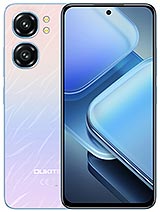
The Oukitel C58 is a budget-tier smartphone featuring a 6.7-inch IPS LCD for mass-market consumption and a Unisoc T606 chipset for entry-level tasks, aimed at cost-conscious users who prioritize durability and longevity over raw speed. Released in November 2024, it enters a market saturated with flimsy plastic handsets, yet it attempts to carve a niche by offering surprisingly hardened glass and a battery rated for long-term health. At this price point, we aren't looking for a flagship-killer; we are looking for a device that doesn't feel like a disposable toy after six months of use.
From a value-hunter's perspective, the initial investment vs. expected lifecycle is the only metric that truly matters. This handset positions itself as a long-term utility tool. By including Corning Gorilla Glass 5—a spec usually reserved for mid-range devices costing twice as much—the manufacturer acknowledges that the highest cost of ownership for budget phones is often the screen repair. Combining this with a battery designed to survive 1000 cycles suggests a strategy aimed at the three-year ownership cycle, which is a rare consideration in the sub-€200 realm.
Analyzing the T606 Practicality
The Unisoc T606 chipset powering this model is a known quantity in the industry. Built on a 12nm process, it utilizes an octa-core configuration consisting of two Cortex-A75 performance cores and six Cortex-A55 efficiency cores. In our analysis of the November 2024 landscape, this silicon represents the absolute baseline for a functional Android 14 experience. You won't be editing 4K video or playing heavy titles like Genshin Impact at high settings, but for the fundamental stack—WhatsApp, Spotify, and YouTube—the performance is adequate.
The inclusion of 4GB of RAM is perhaps the most significant bottleneck. While Android 14 is relatively efficient, modern app memory footprints are ballooning. Multitasking between more than three or four heavy apps will inevitably lead to background refreshes. However, the 128GB of internal storage is a generous inclusion, ensuring that users don't run into the "Storage Full" errors that plague 64GB competitors within weeks of purchase. For those needing more, the shared SIM slot supports microSDXC expansion, allowing the device to act as a localized media hub.
Beyond the Spreadsheet: Real-World Connectivity
Connectivity often gets trimmed first in budget builds, but this handset retains NFC support. In an era where contactless payments are the norm in urban environments, the absence of NFC is a dealbreaker. Its inclusion here, alongside Wi-Fi 802.11 a/b/g/n/ac, ensures the phone remains relevant for modern commuters. We also see the retention of the 3.5mm headphone jack, a vital feature for users who prefer the reliability and cost-effectiveness of wired audio over the battery-dependent nature of Bluetooth buds.
The Mali-G57 MP1 GPU handles basic UI animations and 2D games with relative ease. It is a single-core implementation of the Valhall architecture, meaning it is optimized for power draw rather than frame rates. If you are a student or a gig worker, this balance is actually preferable. It prevents the phone from overheating during long navigation sessions or extended video calls, which are common failure points for more ambitious but poorly cooled budget chipsets.
Signal Stability in the Urban Jungle
Our assessment of the modem performance indicates that the LTE implementation is geared toward broad compatibility. Supporting 15 different 4G bands, including critical ones like Band 20 and Band 28, the device is well-suited for European and Latin American networks. In weak signal areas, like concrete office basements or rural corridors, the plastic back construction actually works in the phone's favor, as it presents less interference for the internal antennas than a metal or glass-sandwich design would.
Call quality remains a primary function for the target demographic. The earpiece is sufficiently loud, and the proximity sensor performs its job without the "phantom touch" issues we've seen in some virtual sensor implementations from larger brands. While it lacks 5G, the current state of 4G infrastructure in late 2024 is more than sufficient for high-definition streaming and fast file downloads, making the lack of a 5G modem a reasonable sacrifice to keep the price floor low.
Biometrics and Accessibility
Unlocking the device relies on standard software-based methods and the accelerometer-driven lift-to-wake feature. While it lacks the lightning-fast ultrasonic sensors of a flagship, the implementation is reliable enough for daily use. The 6.7-inch display offers a massive canvas, but the 720 x 1600 resolution results in a pixel density of approximately 262 ppi. To the trained eye, icons and text lack the razor-sharp definition of a Full HD panel, but for general media consumption, the trade-off is acceptable.
The brightness level of 430 nits is the real-world limiting factor. Under direct November sunlight, the screen struggles to maintain visibility. It is perfectly fine for indoor use or overcast days, but users shouldn't expect a premium outdoor viewing experience. The IPS technology ensures decent viewing angles, which is helpful if you are sharing a video with a friend or using the device as a secondary monitor for recipes or tutorials.
Optics: Function Over Form
The camera system is comprised of a 13 MP primary sensor with an f/2.2 aperture. From a hardware potential standpoint, this is a daylight-only camera. In well-lit environments, the autofocus is predictable, and the resulting 1080p video is stable enough for social media or record-keeping. However, once the sun sets, the small 1/3.06" sensor reaches its physical limits. Noise levels increase, and detail is lost to aggressive software smoothing.
The 5 MP selfie camera is similarly utilitarian. It serves well for video calls on Zoom or Microsoft Teams, but it isn't intended for high-end content creation. We view these cameras as functional tools—scanning QR codes, taking photos of documents, or quick video check-ins—rather than artistic instruments. The unspecified secondary camera on the rear is likely a depth or macro filler that adds little to the actual photographic output but completes the modern triple-camera aesthetic.
Built to Survive the Sidewalk
The standout feature of the Oukitel C58 is its durability certification. It carries an EU Label for Free Fall at Class B, meaning it survived 180 drops during testing. This is paired with Corning Gorilla Glass 5, which is rated at Mohs level 4 for specialized scratch resistance in this configuration. For a 199g device, the build feels dense and purposeful. It doesn't creak under pressure, suggesting internal structural reinforcements that are often missing in generic budget handsets.
Finally, the 5150 mAh battery is the endurance champion of this package. When paired with a low-resolution screen and an efficient entry-level processor, two-day battery life is not just a marketing claim but a mathematical reality for light users. The 10W wired charging is the only significant pain point. Recharging from zero to 100% takes nearly three hours, making it a device you absolutely must charge overnight. However, with a 1000 cycle health rating, this battery is built to last until the year 2027 without significant capacity loss, providing excellent long-term utility for the price paid.
Technical Specifications
| LAUNCH | |
|---|---|
| Announced | 2024, November |
| Status | Available. Released 2024, November |
| PLATFORM | |
| OS | Android 14 |
| Chipset | Unisoc T606 (12 nm) |
| CPU | Octa-core (2x1.6 GHz Cortex-A75 & 6x1.6 GHz Cortex-A55) |
| GPU | Mali-G57 MP1 |
| BODY | |
| Dimensions | 166.8 x 77.5 x 8.7 mm (6.57 x 3.05 x 0.34 in) |
| Weight | 199 g (7.02 oz) |
| Build | Glass front, plastic back |
| SIM | Nano-SIM + Nano-SIM |
| DISPLAY | |
| Type | IPS LCD, 430 nits |
| Size | 6.7 inches, 108.4 cm2 (~83.8% screen-to-body ratio) |
| Resolution | 720 x 1600 pixels, 20:9 ratio (~262 ppi density) |
| Protection | Corning Gorilla Glass 5, Mohs level 4 |
| MEMORY | |
| Card slot | microSDXC (uses shared SIM slot) |
| Internal | 128GB 4GB RAM |
| MAIN CAMERA | |
| Dual | 13 MP, f/2.2, (wide), 1/3.06", AF other unspecified camera |
| Features | LED flash, HDR, panorama |
| Video | 1080p@30fps |
| SELFIE CAMERA | |
| Single | 5 MP, f/2.2, (wide), 1/5.0" |
| Video | 720p@30fps |
| SOUND | |
| Loudspeaker | Yes |
| 3.5mm jack | Yes |
| COMMS | |
| WLAN | Wi-Fi 802.11 a/b/g/n/ac, dual-band |
| Bluetooth | 5.0, A2DP, LE |
| Positioning | GPS, GALILEO, GLONASS, BDS |
| NFC | Yes |
| Radio | FM radio |
| USB | USB Type-C, OTG |
| NETWORK | |
| Technology | GSM / HSPA / LTE |
| 2G bands | GSM 850 / 900 / 1800 / 1900 |
| 3G bands | HSDPA 850 / 900 / 1700(AWS) / 1900 / 2100 |
| 4G bands | 1, 2, 3, 4, 5, 7, 8, 12, 17, 19, 20, 25, 26, 28, 66 |
| Speed | HSPA, LTE |
| FEATURES | |
| Sensors | Accelerometer, proximity |
| BATTERY | |
| Type | Li-Po 5150 mAh |
| Charging | 10W wired |
| MISC | |
| Display | 6.7-inch IPS LCD, 720 x 1600 pixels |
| Processor | Unisoc T606 (12nm) Octa-core |
| RAM/Storage | 4GB RAM / 128GB Internal Storage |
| Battery | 5150 mAh with 10W Charging |
| Main Camera | 13 MP, f/2.2 with AF |
| Selfie Camera | 5 MP, f/2.2 |
| OS | Android 14 |
| Protection | Corning Gorilla Glass 5 |
| NFC | Supported |
| Weight | 199 g |
| Colors | Black, Blue, Green |
| Price | About 150 EUR |
| EU LABEL | |
| Energy | Class B |
| Battery | 47:30h endurance, 1000 cycles |
| Free fall | Class B (180 falls) |
| Repairability | Class C |