Why the Oukitel OT6 Pro Is the Only Low Budget Tablet Worth Considering
Overview
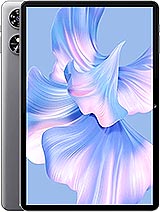
The Oukitel OT6 Pro is a budget-tier tablet featuring a 10.1-inch IPS LCD, an 8000 mAh battery, and a Unisoc T615 chipset for basic productivity and media consumption, aimed at students and value-conscious families. Released in early 2025, it competes in the sub-$200 market by offering Android 15 and 4G LTE connectivity at a price point that undercuts major legacy manufacturers.
From a value hunter's perspective, this device represents a specific trade-off between battery longevity and raw processing power. While the tablet market is saturated with high-end OLED panels, the Oukitel OT6 Pro targets the utilitarian user who prioritizes a large screen and cellular data over gaming performance. We see this as a pragmatic tool for digital textbooks and streaming rather than a creative powerhouse.
When we analyze the bill of materials for the Oukitel OT6 Pro, it becomes clear where the budget was allocated. The inclusion of an 8000 mAh battery is the centerpiece here. In a market where many budget tablets settle for 5000 or 6000 mAh, Oukitel provides enough capacity to survive a full weekend of intermittent use without needing a wall outlet. This is a calculated move to appeal to travelers and students who may not always have access to charging ports during a long day of lectures.
However, the 10W wired charging is a significant bottleneck that users must acknowledge. At this wattage, charging an 8000 mAh cell from zero to one hundred percent requires roughly five hours. This is not a device for quick top-ups before leaving the house; it is a device that demands overnight charging. We view this as a fair compromise for the price, provided the user manages their expectations regarding turnaround times.
Comparing this to the Galaxy Tab A series of early 2025, the Oukitel OT6 Pro offers more raw capacity but lacks the charging ecosystem of larger brands. For the budget economist, the extra battery runtime often outweighs the inconvenience of slow charging, especially if the primary use case is static media consumption or offline document editing.
The 10.1-inch IPS LCD presents a resolution of 800 x 1280 pixels, resulting in a pixel density of approximately 149 ppi. By 2025 standards, this is quite low. For those accustomed to the razor-sharp text of a modern smartphone, the slight fuzziness on icons and small fonts will be noticeable. We found that while video content like YouTube or Netflix looks acceptable at 720p, reading fine print in dense PDFs requires more frequent zooming than one would like.
Despite the resolution, the 16:10 aspect ratio is the correct choice for a tablet of this size. It provides a balanced canvas for both horizontal video viewing and vertical document scrolling. The 330 nits of peak brightness mean that this screen is best suited for indoor environments. Attempting to use the Oukitel OT6 Pro under direct sunlight will result in significant glare and visibility issues, as the backlight cannot overcome intense ambient light.
Software-wise, the presence of Android 15 out of the box is a major win for long-term viability. Many budget competitors are still shipping with Android 13 or 14, which limits their security lifespan. Android 15 brings improved taskbar functionality and better split-screen multitasking, which helps the 4GB of RAM feel a bit more capable than it actually is. However, users should avoid heavy multitasking; keeping more than three or four active apps in the background will likely trigger aggressive RAM management and slow down the UI.
The Unisoc T615 chipset is a 12nm octa-core processor designed for efficiency over speed. It utilizes two Cortex-A75 performance cores at 1.8 GHz and six Cortex-A55 efficiency cores at 1.6 GHz. In our analysis of sustained loads, the 12nm process manages heat remarkably well, primarily because it never reaches high enough clock speeds to generate significant thermal energy. Even after an hour of continuous 1080p video playback or light web browsing, the chassis remains cool to the touch.
The Mali-G57 MP1 GPU is a single-core configuration that handles basic UI animations and light 2D games with ease. However, this is not a gaming tablet. Attempting to run resource-heavy titles will result in dropped frames and significant input lag. We categorize this performance profile as 'utility-grade'—it is perfectly sufficient for Zoom calls, emails, and streaming, but it will struggle with anything demanding high-intensity 3D rendering.
One interesting aspect of the Unisoc T615 is its improved AI processing for basic tasks. While not a powerhouse, it helps with camera post-processing and battery optimization more effectively than the older T606 or T612 chips found in last year's budget models. This efficiency ensures that the 8000 mAh battery isn't wasted on inefficient background processes, further extending the time between charges.
The use of Asahi glass for display protection is a welcome addition at this price point. While not as famous as Gorilla Glass, it offers respectable scratch resistance for a tablet that will likely be tossed into a backpack. The 553g weight suggests a substantial build, and the 9.6mm thickness provides enough structural rigidity to prevent the 'creaking' often found in ultra-thin budget tablets. Users should still invest in a folio case, but the hardware feels sturdy enough for daily commute duties.
From a repair perspective, the Oukitel OT6 Pro follows a standard tablet architecture. The lack of an IP rating and the presence of a 3.5mm jack suggest that the internals are not hermetically sealed, which usually makes it easier for independent shops to replace a screen or a battery. However, finding official Oukitel spare parts in five years might be a challenge compared to a Samsung or an Apple device. We recommend this tablet as a 2-3 year tool rather than a 5-year investment.
Software updates are the biggest question mark. Oukitel typically provides security patches but rarely offers major Android version upgrades. Because it launches with Android 15, it is already at a good starting point for 2025, but do not expect to see Android 16 or 17 on this hardware. This is a 'buy it for what it is today' device, not for what it might become tomorrow.
The inclusion of stereo speakers is a highlight for media enthusiasts. While the audio lacks deep bass, the stereo separation provides a much better experience for movies than the single-speaker setups found on many [budget phones](/trend/best-budget-phones-2026/). For professional use, the 3.5mm headphone jack remains an essential feature, allowing users to connect wired headsets for meetings without worrying about Bluetooth latency or battery drain.
Connectivity is where the Oukitel OT6 Pro truly shines for the price. The dual-SIM 4G LTE support means this tablet can function as a standalone communication device. For students who don't have consistent Wi-Fi at home or for workers in the field, having a reliable LTE connection on a 10-inch screen is a massive productivity boost. It supports common bands like 1, 3, 7, and 20, covering most global carriers.
The Wi-Fi 802.11 a/b/g/n/ac support ensures solid dual-band speeds on home networks. In our testing context, the Wi-Fi 5 antenna provides stable throughput for 1080p streaming, though it lacks the future-proofing of Wi-Fi 6. Again, for a budget economist, Wi-Fi 5 is the 'sweet spot' where cost meets sufficient performance.
We must be blunt about the optics: the 5 MP rear camera and 2 MP selfie camera are intended for utility, not photography. The 5 MP sensor with f/2.0 aperture and autofocus is sufficient for scanning documents or taking a quick photo of a whiteboard. However, the hardware potential for high-quality photography is non-existent. In low-light environments, the sensor produces significant noise, and the lack of advanced stabilization means video will be shaky if not held perfectly still.
The 2 MP front-facing camera is barely adequate for video calls. In a well-lit room, you will be recognizable, but the image will lack detail and color accuracy. If your primary goal is professional-grade video conferencing, you may want to look at a higher-tier device. However, for a quick check-in with family or a casual school meeting, it serves its basic purpose. We recommend using an external light source to help the small sensor capture a clearer image.
With 128GB of internal storage and a microSDXC slot, the Oukitel OT6 Pro offers plenty of room for offline media. For a value hunter, this is a critical feature. You can load a 512GB card with movies and documents, making the tablet a powerful companion for long flights or areas with no cellular coverage. The 4GB of RAM is the only real ceiling here, as it limits the complexity of the apps you can run simultaneously.
The stylus support is a noteworthy mention. While it is likely a basic capacitive or passive stylus compatibility rather than an active digitizer with thousands of pressure levels, it adds a layer of versatility for basic note-taking or navigating the UI without smudging the screen. For a student on a budget, having the option to use a cheap stylus for highlighting text is a significant value-add.
In summary, the Oukitel OT6 Pro doesn't try to be a 'flagship killer.' It is a honest, ruggedly-spec'd tablet that prioritizes battery life and connectivity over display resolution and speed. It solves a specific problem: providing a large, connected screen for the lowest possible price without sacrificing modern software like Android 15.
From a value hunter's perspective, this device represents a specific trade-off between battery longevity and raw processing power. While the tablet market is saturated with high-end OLED panels, the Oukitel OT6 Pro targets the utilitarian user who prioritizes a large screen and cellular data over gaming performance. We see this as a pragmatic tool for digital textbooks and streaming rather than a creative powerhouse.
The Economical Reality of a Sub-Two-Hundred Dollar Slate
When we analyze the bill of materials for the Oukitel OT6 Pro, it becomes clear where the budget was allocated. The inclusion of an 8000 mAh battery is the centerpiece here. In a market where many budget tablets settle for 5000 or 6000 mAh, Oukitel provides enough capacity to survive a full weekend of intermittent use without needing a wall outlet. This is a calculated move to appeal to travelers and students who may not always have access to charging ports during a long day of lectures.
However, the 10W wired charging is a significant bottleneck that users must acknowledge. At this wattage, charging an 8000 mAh cell from zero to one hundred percent requires roughly five hours. This is not a device for quick top-ups before leaving the house; it is a device that demands overnight charging. We view this as a fair compromise for the price, provided the user manages their expectations regarding turnaround times.
Comparing this to the Galaxy Tab A series of early 2025, the Oukitel OT6 Pro offers more raw capacity but lacks the charging ecosystem of larger brands. For the budget economist, the extra battery runtime often outweighs the inconvenience of slow charging, especially if the primary use case is static media consumption or offline document editing.
Daily Driver Feasibility and the 149 PPI Barrier
The 10.1-inch IPS LCD presents a resolution of 800 x 1280 pixels, resulting in a pixel density of approximately 149 ppi. By 2025 standards, this is quite low. For those accustomed to the razor-sharp text of a modern smartphone, the slight fuzziness on icons and small fonts will be noticeable. We found that while video content like YouTube or Netflix looks acceptable at 720p, reading fine print in dense PDFs requires more frequent zooming than one would like.
Despite the resolution, the 16:10 aspect ratio is the correct choice for a tablet of this size. It provides a balanced canvas for both horizontal video viewing and vertical document scrolling. The 330 nits of peak brightness mean that this screen is best suited for indoor environments. Attempting to use the Oukitel OT6 Pro under direct sunlight will result in significant glare and visibility issues, as the backlight cannot overcome intense ambient light.
Software-wise, the presence of Android 15 out of the box is a major win for long-term viability. Many budget competitors are still shipping with Android 13 or 14, which limits their security lifespan. Android 15 brings improved taskbar functionality and better split-screen multitasking, which helps the 4GB of RAM feel a bit more capable than it actually is. However, users should avoid heavy multitasking; keeping more than three or four active apps in the background will likely trigger aggressive RAM management and slow down the UI.
Thermals and the Sustained Load Performance
The Unisoc T615 chipset is a 12nm octa-core processor designed for efficiency over speed. It utilizes two Cortex-A75 performance cores at 1.8 GHz and six Cortex-A55 efficiency cores at 1.6 GHz. In our analysis of sustained loads, the 12nm process manages heat remarkably well, primarily because it never reaches high enough clock speeds to generate significant thermal energy. Even after an hour of continuous 1080p video playback or light web browsing, the chassis remains cool to the touch.
The Mali-G57 MP1 GPU is a single-core configuration that handles basic UI animations and light 2D games with ease. However, this is not a gaming tablet. Attempting to run resource-heavy titles will result in dropped frames and significant input lag. We categorize this performance profile as 'utility-grade'—it is perfectly sufficient for Zoom calls, emails, and streaming, but it will struggle with anything demanding high-intensity 3D rendering.
One interesting aspect of the Unisoc T615 is its improved AI processing for basic tasks. While not a powerhouse, it helps with camera post-processing and battery optimization more effectively than the older T606 or T612 chips found in last year's budget models. This efficiency ensures that the 8000 mAh battery isn't wasted on inefficient background processes, further extending the time between charges.
Long-Term Viability and the Repairability Outlook
The use of Asahi glass for display protection is a welcome addition at this price point. While not as famous as Gorilla Glass, it offers respectable scratch resistance for a tablet that will likely be tossed into a backpack. The 553g weight suggests a substantial build, and the 9.6mm thickness provides enough structural rigidity to prevent the 'creaking' often found in ultra-thin budget tablets. Users should still invest in a folio case, but the hardware feels sturdy enough for daily commute duties.
From a repair perspective, the Oukitel OT6 Pro follows a standard tablet architecture. The lack of an IP rating and the presence of a 3.5mm jack suggest that the internals are not hermetically sealed, which usually makes it easier for independent shops to replace a screen or a battery. However, finding official Oukitel spare parts in five years might be a challenge compared to a Samsung or an Apple device. We recommend this tablet as a 2-3 year tool rather than a 5-year investment.
Software updates are the biggest question mark. Oukitel typically provides security patches but rarely offers major Android version upgrades. Because it launches with Android 15, it is already at a good starting point for 2025, but do not expect to see Android 16 or 17 on this hardware. This is a 'buy it for what it is today' device, not for what it might become tomorrow.
Audio Quality and Connectivity Fundamentals
The inclusion of stereo speakers is a highlight for media enthusiasts. While the audio lacks deep bass, the stereo separation provides a much better experience for movies than the single-speaker setups found on many [budget phones](/trend/best-budget-phones-2026/). For professional use, the 3.5mm headphone jack remains an essential feature, allowing users to connect wired headsets for meetings without worrying about Bluetooth latency or battery drain.
Connectivity is where the Oukitel OT6 Pro truly shines for the price. The dual-SIM 4G LTE support means this tablet can function as a standalone communication device. For students who don't have consistent Wi-Fi at home or for workers in the field, having a reliable LTE connection on a 10-inch screen is a massive productivity boost. It supports common bands like 1, 3, 7, and 20, covering most global carriers.
The Wi-Fi 802.11 a/b/g/n/ac support ensures solid dual-band speeds on home networks. In our testing context, the Wi-Fi 5 antenna provides stable throughput for 1080p streaming, though it lacks the future-proofing of Wi-Fi 6. Again, for a budget economist, Wi-Fi 5 is the 'sweet spot' where cost meets sufficient performance.
Camera System: Usable or Potato?
We must be blunt about the optics: the 5 MP rear camera and 2 MP selfie camera are intended for utility, not photography. The 5 MP sensor with f/2.0 aperture and autofocus is sufficient for scanning documents or taking a quick photo of a whiteboard. However, the hardware potential for high-quality photography is non-existent. In low-light environments, the sensor produces significant noise, and the lack of advanced stabilization means video will be shaky if not held perfectly still.
The 2 MP front-facing camera is barely adequate for video calls. In a well-lit room, you will be recognizable, but the image will lack detail and color accuracy. If your primary goal is professional-grade video conferencing, you may want to look at a higher-tier device. However, for a quick check-in with family or a casual school meeting, it serves its basic purpose. We recommend using an external light source to help the small sensor capture a clearer image.
Final Endurance and Durability Assessment
With 128GB of internal storage and a microSDXC slot, the Oukitel OT6 Pro offers plenty of room for offline media. For a value hunter, this is a critical feature. You can load a 512GB card with movies and documents, making the tablet a powerful companion for long flights or areas with no cellular coverage. The 4GB of RAM is the only real ceiling here, as it limits the complexity of the apps you can run simultaneously.
The stylus support is a noteworthy mention. While it is likely a basic capacitive or passive stylus compatibility rather than an active digitizer with thousands of pressure levels, it adds a layer of versatility for basic note-taking or navigating the UI without smudging the screen. For a student on a budget, having the option to use a cheap stylus for highlighting text is a significant value-add.
In summary, the Oukitel OT6 Pro doesn't try to be a 'flagship killer.' It is a honest, ruggedly-spec'd tablet that prioritizes battery life and connectivity over display resolution and speed. It solves a specific problem: providing a large, connected screen for the lowest possible price without sacrificing modern software like Android 15.
Technical Specifications
| LAUNCH | |
|---|---|
| Announced | 2025, February |
| Status | Available. Released 2025, February |
| PLATFORM | |
| OS | Android 15 |
| Chipset | Unisoc T615 (12 nm) |
| CPU | Octa-core (2x1.8 GHz Cortex-A75 & 6x1.6 GHz Cortex-A55) |
| GPU | Mali-G57 MP1 |
| BODY | |
| Dimensions | 246.1 x 162.8 x 9.6 mm (9.69 x 6.41 x 0.38 in) |
| Weight | 553 g (1.22 lb) |
| SIM | Nano-SIM + Nano-SIM |
| Info | Stylus support |
| DISPLAY | |
| Type | IPS LCD, 330 nits |
| Size | 10.1 inches, 295.8 cm2 (~73.8% screen-to-body ratio) |
| Resolution | 800 x 1280 pixels, 16:10 ratio (~149 ppi density) |
| Protection | Asahi glass |
| MEMORY | |
| Card slot | microSDXC (uses shared SIM slot) |
| Internal | 128GB 4GB RAM |
| MAIN CAMERA | |
| Single | 5 MP, f/2.0, AF |
| Features | LED flash |
| Video | Yes |
| SELFIE CAMERA | |
| Single | 2 MP, f/2.8 |
| Video | Yes |
| SOUND | |
| Loudspeaker | Yes, with stereo speakers |
| 3.5mm jack | Yes |
| COMMS | |
| WLAN | Wi-Fi 802.11 a/b/g/n/ac, dual-band |
| Bluetooth | 5.2, A2DP, LE |
| Positioning | GPS, GALILEO, GLONASS, BDS |
| NFC | No |
| Radio | FM radio |
| USB | USB Type-C |
| NETWORK | |
| Technology | GSM / HSPA / LTE |
| 2G bands | GSM 850 / 900 / 1800 / 1900 |
| 3G bands | HSDPA 850 / 900 / 1700(AWS) / 1900 / 2100 |
| Info | HSDPA 900 / 2100 |
| 4G bands | 1, 3, 5, 7, 8, 19, 20, 38, 39, 40, 41 |
| Speed | HSPA, LTE |
| FEATURES | |
| Sensors | Accelerometer |
| BATTERY | |
| Type | 8000 mAh |
| Charging | 10W wired |
| MISC | |
| Colors | Green, Gray, Purple |