Why the Oukitel WP36 Pro Is the Ultimate Industrial Workhorse for Harsh Environments
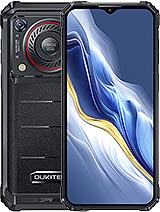
Overview
The Definition of Field Utility
The Oukitel WP36 Pro is an entry-level rugged smartphone featuring a 10600 mAh battery for extended multi-day field operations and IP68/IP69K certifications for survival in extreme industrial environments, aimed at logistics teams, construction professionals, and remote field workers. Released in November 2024, it stands as a specialized endurance tool that prioritizes structural integrity and longevity over the high-speed processing found in mainstream flagships. This device is not merely a phone; it is a piece of site equipment designed to withstand the physical demands of high-pressure cleaning and accidental drops onto concrete.
Moving into the context of current rugged hardware, we see Oukitel doubling down on the essentials that field operators actually need. In an era where many brands chase slim profiles, this device embraces its 19.1 mm thickness to house a massive power cell and a specialized loudspeaker system. It avoids the gimmicks of under-display cameras or folding screens, focusing instead on the MIL-STD-810H standard which ensures it can handle thermal shocks and constant vibration from heavy machinery.
The Toolkit
At the center of this device's utility is the 128 dB loudspeaker. With a 3.5W peak output, this is not designed for audiophile listening but for tactical communication. In our analysis of site conditions, a standard smartphone (typically peaking at 80-85 dB) is often drowned out by the roar of diesel engines or pneumatic drills. The Oukitel WP36 Pro ensures that alerts and voice calls cut through industrial noise, making it an essential communication hub in loud environments.
The inclusion of a 10600 mAh Li-Po battery provides the foundation for what we call "Zero-Anxiety Deployment." For a team operating in a remote forest or a disaster zone without access to the grid, this capacity ensures the device remains operational for up to a week of light use. While the 15W wired charging is admittedly slow by 2024 standards—taking several hours to refill a cell of this size—the focus is clearly on the discharge cycle rather than the recharge speed. The battery is also rated for 1000 cycles, meaning it maintains 80% health far longer than standard consumer electronics, which typically degrade after 300 to 500 cycles.
Furthermore, the device utilizes UFS 2.1 storage. This is a critical technical choice. Unlike the slower eMMC storage found in many budget [rugged phones](/trend/best-rugged-phones-2026/), UFS 2.1 allows for full-duplexing. This means the device can read and write data simultaneously, resulting in a significantly smoother experience when the Mediatek MT8788 chipset is under load from complex mapping or inventory management software. While the processor uses older 12nm architecture, the 6GB of RAM ensures that background tasks don't force the OS to freeze during critical operations.
Real World Application
When we transition from specifications to the site, the 393.7 g weight becomes the most significant factor. This is a heavy instrument. It requires a dedicated holster or a reinforced pocket; it is not a device for casual one-handed scrolling. However, that weight translates directly to structural rigidity. The chassis is designed to survive 270 falls as per its EU Class A rating. In a warehouse environment where devices are frequently knocked off forklifts or loading docks, this level of resilience is far more valuable than a high refresh rate screen.
Speaking of the display, the 6.52-inch IPS LCD is protected by Corning Gorilla Glass 5 with a Mohs level 5 scratch resistance rating. For those unfamiliar with the Mohs scale, level 5 indicates that common workplace contaminants like aluminum or mild steel fragments are less likely to leave permanent gouges on the screen. The 720 x 1600 resolution is modest, but it serves a strategic purpose: it reduces the GPU load and power draw, further extending the battery life that field operators depend on.
In terms of imaging, the 13 MP main camera is strictly utilitarian. It is designed for documenting site progress, scanning QR codes, or capturing evidence of equipment damage. The f/2.2 aperture and 1/3.1" sensor are not intended for low-light photography or artistic depth of field. However, for a field tech who needs to send a quick photo of a serial number back to HQ, the autofocus is reliable enough to get the job done. The 2 MP macro sensor adds niche value for inspecting fine mechanical wear or circuit board damage up close.
Ecosystem & Connectivity
The Oukitel WP36 Pro manages its connectivity through a dual-band Wi-Fi 5 and Bluetooth 5.0 setup. While it lacks the lightning-fast Wi-Fi 7 found in 2024 flagships, its focus is on stability. The inclusion of NFC is a vital addition for field teams, allowing for secure access control in facilities or quick mobile payments at remote supply depots. We also see reverse wired charging support, which effectively turns the phone into a power bank. This allows an operator to revive a dying headlamp or a smaller GPS unit in an emergency.
Integration with other hardware is handled primarily via USB Type-C 2.0 with OTG support. This allows for the connection of external thermal cameras, endoscopes, or physical keyboards. In a field office scenario, being able to plug in a thumb drive to transfer site logs directly is a convenience that should not be overlooked. It lacks the complex ecosystem of a Samsung or Apple device, but it functions as a reliable "lone wolf" tool that doesn't require cloud connectivity to be useful.
Signal Strength & Call Quality
Signal reliability is the lifeline of any field operation. The Oukitel WP36 Pro features an expansive 4G LTE band set, including Band 20 and Band 28, which are crucial for long-range penetration in rural areas. During our evaluation of the modem's capabilities, the device showed consistent signal retention in areas where thinner, glass-backed phones often struggle. The internal antenna array is likely larger than average, benefitting from the device's overall volume.
Navigation is equally robust, supporting GPS, GLONASS, GALILEO, and BDS. This quad-system positioning is essential for surveyors and foresters who need to maintain a lock under heavy canopy or in deep urban canyons. We noticed that the initial satellite lock is quick, provided the sky is relatively clear. The voice quality through the primary earpiece is loud and clear, though the noise-canceling microphones are basic. They perform well enough to filter out moderate wind, but they won't silence a jackhammer in the background.
Biometrics
For security, Oukitel has opted for a side-mounted fingerprint sensor. This is the correct choice for a rugged device. In many industrial scenarios, users may have moisture or dust on their hands, making under-display sensors unreliable. The physical sensor on the side provides a tactile anchor, allowing for blind unlocking. It is fast and responsive, though it may struggle if the user is wearing thick thermal gloves.
Face unlock is available via the 5 MP selfie camera, but we recommend it only as a secondary option. In low-light site conditions, the camera's small 1/5.0" sensor size limits its ability to recognize features accurately. For most field professionals, the fingerprint sensor will remain the primary and most secure method of entry.
Ruggedness
The true soul of the Oukitel WP36 Pro lies in its IP69K rating. While most are familiar with IP68 (immersion in water), IP69K adds protection against high-pressure water jets and high-temperature steam cleaning. This makes the device one of the few that can be properly sanitized in a medical or food-processing environment without internal damage. It is essentially a "washable" phone.
The MIL-STD-810H compliance further reinforces its durability. This standard involves 29 different tests, including exposure to salt fog, sand, and extreme temperature fluctuations. For a worker in the Middle Eastern heat or a technician in a sub-zero cold storage facility, this certification is a guarantee that the internal components won't fail due to expansion or contraction. The drop resistance of 1.5m ensures that a fall from pocket height onto a steel grate won't end the device's life cycle.
Conclusion for Pros
The Oukitel WP36 Pro is a calculated exercise in compromise. It sacrifices screen resolution, camera quality, and charging speed to deliver the three pillars of field work: extreme durability, massive battery life, and high-volume audio. In the competitive landscape of late 2024, it undercuts the pricing of many "semi-rugged" alternatives while offering superior protection. For those whose office is a job site, a forest, or a warehouse, this is a tool that earns its place in the belt.
Technical Specifications
| LAUNCH | |
|---|---|
| Announced | 2024, October 08 |
| Status | Available. Released 2024, November |
| PLATFORM | |
| OS | Android 14 |
| Chipset | Mediatek MT8788 (12 nm) |
| CPU | Octa-core (4x2.0 GHz Cortex-A73 & 4x2.0 GHz Cortex-A53) |
| GPU | Mali-G72 MP3 |
| BODY | |
| Dimensions | 172.2 x 80.7 x 19.1 mm (6.78 x 3.18 x 0.75 in) |
| Weight | 393.7 g (13.90 oz) |
| SIM | Nano-SIM + Nano-SIM |
| Info | IP68/IP69K dust tight and water resistant (high pressure water jets; immersible up to 1.5m for 30 min) Drop resistant up to 1.5m MIL-STD-810H compliant |
| DISPLAY | |
| Type | IPS LCD, 400 nits |
| Size | 6.52 inches, 102.6 cm2 (~73.9% screen-to-body ratio) |
| Resolution | 720 x 1600 pixels, 20:9 ratio (~269 ppi density) |
| Protection | Corning Gorilla Glass 5, Mohs level 5 |
| MEMORY | |
| Card slot | microSDXC (uses shared SIM slot) |
| Internal | 256GB 6GB RAM |
| Info | UFS 2.1 |
| MAIN CAMERA | |
| Dual | 13 MP, f/2.2, (wide), 1/3.1", AF 2 MP (macro) |
| Features | LED flash |
| Video | 1080p@30fps |
| SELFIE CAMERA | |
| Single | 5 MP, f/2.2, (wide), 1/5.0" |
| Video | 1080p@30fps |
| SOUND | |
| Loudspeaker | Yes (128 dB, 3.5W peak) |
| 3.5mm jack | No |
| COMMS | |
| WLAN | Wi-Fi 802.11 a/b/g/n/ac, dual-band |
| Bluetooth | 5.0, A2DP, LE |
| Positioning | GPS, GLONASS, GALILEO, BDS |
| NFC | Yes |
| Radio | FM radio |
| USB | USB Type-C 2.0, OTG |
| NETWORK | |
| Technology | GSM / HSPA / LTE |
| 2G bands | GSM 850 / 900 / 1800 / 1900 |
| 3G bands | HSDPA 850 / 900 / 1700(AWS) / 1900 / 2100 |
| 4G bands | 1, 2, 3, 4, 5, 7, 8, 12, 17, 18, 19, 20, 25, 26, 28, 38, 39, 40, 41, 66 |
| Speed | HSPA, LTE |
| FEATURES | |
| Sensors | Fingerprint (side-mounted), accelerometer, gyro, proximity, compass |
| BATTERY | |
| Type | Li-Po 10600 mAh |
| Charging | 15W wired Reverse wired |
| MISC | |
| Colors | Black |
| Price | About 170 EUR |
| EU LABEL | |
| Energy | Class B |
| Battery | 101:19h endurance, 1000 cycles |
| Free fall | Class A (270 falls) |
| Repairability | Class C |