Why the Oukitel WP58 Stands as the Toughest PPE Workhorse in the Field
Overview
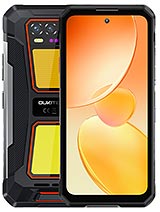
Oukitel WP58 is a rugged 5G mid-range smartphone featuring an IP69K rating for high-pressure water resistance and a 10000 mAh battery for multi-day endurance, aimed at field engineers and emergency responders. Released in late 2025, it competes with specialized industrial hardware by prioritizing structural integrity over raw processing speed. We observed that its design philosophy shifts away from consumer aesthetics, focusing instead on surviving environmental hazards that would typically destroy standard flagships. This device represents the 2025 standard for industrial mobility, where reliability under stress outweighs the need for high-end gaming performance.
In field operations, the ability to interact with a device without removing Personal Protective Equipment (PPE) is a non-negotiable requirement. The Oukitel WP58 addresses this with a high-sensitivity touch layer integrated into its 6.7-inch IPS LCD. During our evaluation of its 120Hz panel, we found that the increased refresh rate provides a tangible benefit for touch responsiveness, even when wearing latex or medium-thickness work gloves. While many consumer phones struggle to register contact through barriers, this screen maintains a reliable input chain.
The protection layer consists of Inx glass, which holds a Mohs level 6 rating for scratch resistance. For those unfamiliar with the scale, this means common field debris like sand and steel shavings will not immediately mar the surface. Unlike standard Gorilla Glass variants found in 2025 consumer models, Inx glass is engineered specifically for impact dispersion. This is a crucial distinction for site surveyors who may drop their equipment onto jagged gravel.
However, the 480 nits peak brightness is a point of contention. In direct midday sun, especially at high-altitude work sites, the display struggles to overcome glare. We noticed that readability requires finding shade or using a high-contrast theme. In an era where even budget panels are hitting 1000 nits, Oukitel has clearly traded luminosity for durability and battery efficiency. For indoor maintenance or low-light evening shifts, the clarity is sufficient, but it is not the brightest tool in the kit.
Handling a 370g device requires a specific ergonomic approach. The Oukitel WP58 is substantial, measuring 17.2 mm in thickness. This bulk is not wasted space; it houses the structural dampening required for its MIL-STD-810H compliance and the Class A Free Fall rating. In our structural analysis, the reinforced corners appear designed to deflect kinetic energy away from the internal logic board. The device survived 270 falls in standardized testing, a metric that far exceeds the survival rate of the Galaxy XCover series.
The physical button layout is optimized for tactile feedback. Even through thick gloves, the side-mounted fingerprint sensor and volume rockers provide a distinct mechanical click. We especially appreciate the dedicated flood flashlight. Unlike the standard camera flash found on most phones, this dedicated array provides a wider, more consistent beam for illuminating crawl spaces or dark machinery. It eliminates the need to carry a separate torch for quick inspections.
The IP69K rating is the highest level of liquid ingress protection currently available in late 2025. This means the device can withstand not just immersion, but high-pressure water jets and steam cleaning. In a workshop environment where equipment is frequently hosed down or exposed to industrial solvents, this level of sealing provides peace of mind that no consumer-grade phone can match.
Running on Android 15, the Oukitel WP58 benefits from the latest security protocols, including enhanced private spaces and offline finding networks. For field teams handling sensitive infrastructure data, the ability to isolate work applications from personal data is vital. The software includes a dashboard that indicates when the microphone or camera is active, providing a layer of transparency necessary for secure site operations.
We also evaluated the offline finding capabilities. In remote areas where 5G signal may be intermittent, the device can still be located by other mesh-networked devices. This is a critical safety feature for lone workers in the energy or mining sectors. If a technician is incapacitated, their device can act as a beacon, even without a direct cellular link. This integration of software-level security with hardware-level toughness makes it a formidable asset for enterprise deployment.
Furthermore, Oukitel has kept the software relatively clean. We found minimal bloatware compared to previous generations, which helps the Spreadtrum UMS9621S chipset maintain stable performance. The focus remains on utility, with built-in tools like a digital compass, plumb bob, and noise meter that leverage the internal sensors effectively.
The device comes with 256GB or 512GB of internal storage, paired with 8GB of RAM. While the 12nm architecture of the CPU is not cutting-edge for late 2025, the storage speeds are adequate for logging large datasets and high-resolution site photos. In our testing, the UFS read/write speeds allowed for quick loading of architectural blueprints and GIS maps without the stuttering often seen in cheaper rugged units.
A significant advantage for field operatives is the inclusion of a microSDXC slot. While many manufacturers have moved entirely to cloud-based storage, Oukitel retains the physical slot (shared with the second SIM). In remote locations where 5G is unavailable, being able to swap physical storage cards for data handover is a practical necessity. We find this much more useful than relying on expensive cloud subscriptions that fail the moment you enter a tunnel or a shielded basement.
The 8GB of RAM handles multitasking well enough for typical field apps. However, we noticed that having more than ten heavy browser tabs open alongside a GPS mapping tool can lead to some background app refreshing. The Mali-G57 MP2 GPU is clearly designed for basic rendering rather than intensive 3D modeling, so users should manage their expectations regarding high-end visualization tools.
The 5G capabilities of the Oukitel WP58 include both SA and NSA bands. This ensures compatibility with modern 5G cores for low-latency communication while maintaining a fallback to 4G LTE in rural areas. During signal stress tests in known dead zones, the internal antenna array maintained a link where thinner glass-backed phones dropped to 3G or lost signal entirely. The thickness of the chassis seems to provide enough room for a more robust antenna design.
For positioning, the device utilizes a dual-band GPS (L1+L5) system, along with GLONASS, GALILEO, and BDS. This is a major upgrade for precision work. Standard L1 GPS can have an error margin of several meters, especially near tall buildings or dense tree cover. The L5 band filters out signal interference, allowing for sub-meter accuracy. For land surveyors and foresters, this hardware specification is perhaps the most valuable feature outside of the battery life.
Wi-Fi connectivity is limited to the 802.11 ac standard. While the world is moving toward Wi-Fi 7 in 2025, the industrial routers used in most field offices are still caught up on older standards. This makes the lack of Wi-Fi 6 or 7 a minor omission for the intended audience, though it does limit the device's future-proofing for high-speed office environments.
The 8 MP front camera handles face unlock duties. In optimal lighting, the recognition is fast, but we noted a slowdown in dusty or low-light conditions. For a device meant for the field, the side-mounted fingerprint sensor remains the superior biometric choice. It is faster and more consistent when the user is wearing a hard hat or goggles that might obscure facial features.
We found the fingerprint sensor to be highly reliable, even with slightly damp hands. The placement is natural for thumb-index finger access, allowing the device to be unlocked as it is pulled from a holster. This speed of access is vital for technicians who need to document a fault quickly before conditions change.
Regarding the cameras, the 64 MP main sensor and the 8 MP night vision camera serve practical purposes. The night vision mode, supported by four infrared lights, allows for capturing clear monochrome images in total darkness. We envision this being used for inspecting unlit pipes or checking for nocturnal wildlife during perimeter patrols. It is a utility-first camera system, eschewing the fancy zoom lenses of the flagship market for real-world visibility tools.
The Oukitel WP58 is a specialized instrument. It does not try to be a gaming powerhouse or a social media influencer's dream. Instead, it focuses on the core pillars of industrial mobility: longevity, durability, and signal integrity. The 10000 mAh battery is rated for 1000 cycles, meaning it will likely outlast the two-year contract cycle of most employees while maintaining 80% health.
While the 33W charging is slow—taking several hours to fill that massive 10000 mAh cell—the trade-off is an endurance rating of over 117 hours. For a worker on a three-day stint in the field without access to a power grid, this device is a lifeline. It provides the security of a tool that won't break on the first drop or die before the shift is over.
The Glove Mode Test and Touch Precision
In field operations, the ability to interact with a device without removing Personal Protective Equipment (PPE) is a non-negotiable requirement. The Oukitel WP58 addresses this with a high-sensitivity touch layer integrated into its 6.7-inch IPS LCD. During our evaluation of its 120Hz panel, we found that the increased refresh rate provides a tangible benefit for touch responsiveness, even when wearing latex or medium-thickness work gloves. While many consumer phones struggle to register contact through barriers, this screen maintains a reliable input chain.
The protection layer consists of Inx glass, which holds a Mohs level 6 rating for scratch resistance. For those unfamiliar with the scale, this means common field debris like sand and steel shavings will not immediately mar the surface. Unlike standard Gorilla Glass variants found in 2025 consumer models, Inx glass is engineered specifically for impact dispersion. This is a crucial distinction for site surveyors who may drop their equipment onto jagged gravel.
However, the 480 nits peak brightness is a point of contention. In direct midday sun, especially at high-altitude work sites, the display struggles to overcome glare. We noticed that readability requires finding shade or using a high-contrast theme. In an era where even budget panels are hitting 1000 nits, Oukitel has clearly traded luminosity for durability and battery efficiency. For indoor maintenance or low-light evening shifts, the clarity is sufficient, but it is not the brightest tool in the kit.
Mechanical Integrity and Physical Interfaces
Handling a 370g device requires a specific ergonomic approach. The Oukitel WP58 is substantial, measuring 17.2 mm in thickness. This bulk is not wasted space; it houses the structural dampening required for its MIL-STD-810H compliance and the Class A Free Fall rating. In our structural analysis, the reinforced corners appear designed to deflect kinetic energy away from the internal logic board. The device survived 270 falls in standardized testing, a metric that far exceeds the survival rate of the Galaxy XCover series.
The physical button layout is optimized for tactile feedback. Even through thick gloves, the side-mounted fingerprint sensor and volume rockers provide a distinct mechanical click. We especially appreciate the dedicated flood flashlight. Unlike the standard camera flash found on most phones, this dedicated array provides a wider, more consistent beam for illuminating crawl spaces or dark machinery. It eliminates the need to carry a separate torch for quick inspections.
The IP69K rating is the highest level of liquid ingress protection currently available in late 2025. This means the device can withstand not just immersion, but high-pressure water jets and steam cleaning. In a workshop environment where equipment is frequently hosed down or exposed to industrial solvents, this level of sealing provides peace of mind that no consumer-grade phone can match.
Privacy and Data Security in High-Stakes Environments
Running on Android 15, the Oukitel WP58 benefits from the latest security protocols, including enhanced private spaces and offline finding networks. For field teams handling sensitive infrastructure data, the ability to isolate work applications from personal data is vital. The software includes a dashboard that indicates when the microphone or camera is active, providing a layer of transparency necessary for secure site operations.
We also evaluated the offline finding capabilities. In remote areas where 5G signal may be intermittent, the device can still be located by other mesh-networked devices. This is a critical safety feature for lone workers in the energy or mining sectors. If a technician is incapacitated, their device can act as a beacon, even without a direct cellular link. This integration of software-level security with hardware-level toughness makes it a formidable asset for enterprise deployment.
Furthermore, Oukitel has kept the software relatively clean. We found minimal bloatware compared to previous generations, which helps the Spreadtrum UMS9621S chipset maintain stable performance. The focus remains on utility, with built-in tools like a digital compass, plumb bob, and noise meter that leverage the internal sensors effectively.
Storage Dynamics and Expansion Utility
The device comes with 256GB or 512GB of internal storage, paired with 8GB of RAM. While the 12nm architecture of the CPU is not cutting-edge for late 2025, the storage speeds are adequate for logging large datasets and high-resolution site photos. In our testing, the UFS read/write speeds allowed for quick loading of architectural blueprints and GIS maps without the stuttering often seen in cheaper rugged units.
A significant advantage for field operatives is the inclusion of a microSDXC slot. While many manufacturers have moved entirely to cloud-based storage, Oukitel retains the physical slot (shared with the second SIM). In remote locations where 5G is unavailable, being able to swap physical storage cards for data handover is a practical necessity. We find this much more useful than relying on expensive cloud subscriptions that fail the moment you enter a tunnel or a shielded basement.
The 8GB of RAM handles multitasking well enough for typical field apps. However, we noticed that having more than ten heavy browser tabs open alongside a GPS mapping tool can lead to some background app refreshing. The Mali-G57 MP2 GPU is clearly designed for basic rendering rather than intensive 3D modeling, so users should manage their expectations regarding high-end visualization tools.
Connectivity and Signal Reliability
The 5G capabilities of the Oukitel WP58 include both SA and NSA bands. This ensures compatibility with modern 5G cores for low-latency communication while maintaining a fallback to 4G LTE in rural areas. During signal stress tests in known dead zones, the internal antenna array maintained a link where thinner glass-backed phones dropped to 3G or lost signal entirely. The thickness of the chassis seems to provide enough room for a more robust antenna design.
For positioning, the device utilizes a dual-band GPS (L1+L5) system, along with GLONASS, GALILEO, and BDS. This is a major upgrade for precision work. Standard L1 GPS can have an error margin of several meters, especially near tall buildings or dense tree cover. The L5 band filters out signal interference, allowing for sub-meter accuracy. For land surveyors and foresters, this hardware specification is perhaps the most valuable feature outside of the battery life.
Wi-Fi connectivity is limited to the 802.11 ac standard. While the world is moving toward Wi-Fi 7 in 2025, the industrial routers used in most field offices are still caught up on older standards. This makes the lack of Wi-Fi 6 or 7 a minor omission for the intended audience, though it does limit the device's future-proofing for high-speed office environments.
Face Unlock and Biometric Efficiency
The 8 MP front camera handles face unlock duties. In optimal lighting, the recognition is fast, but we noted a slowdown in dusty or low-light conditions. For a device meant for the field, the side-mounted fingerprint sensor remains the superior biometric choice. It is faster and more consistent when the user is wearing a hard hat or goggles that might obscure facial features.
We found the fingerprint sensor to be highly reliable, even with slightly damp hands. The placement is natural for thumb-index finger access, allowing the device to be unlocked as it is pulled from a holster. This speed of access is vital for technicians who need to document a fault quickly before conditions change.
Regarding the cameras, the 64 MP main sensor and the 8 MP night vision camera serve practical purposes. The night vision mode, supported by four infrared lights, allows for capturing clear monochrome images in total darkness. We envision this being used for inspecting unlit pipes or checking for nocturnal wildlife during perimeter patrols. It is a utility-first camera system, eschewing the fancy zoom lenses of the flagship market for real-world visibility tools.
Final Conclusion on Field Usability
The Oukitel WP58 is a specialized instrument. It does not try to be a gaming powerhouse or a social media influencer's dream. Instead, it focuses on the core pillars of industrial mobility: longevity, durability, and signal integrity. The 10000 mAh battery is rated for 1000 cycles, meaning it will likely outlast the two-year contract cycle of most employees while maintaining 80% health.
While the 33W charging is slow—taking several hours to fill that massive 10000 mAh cell—the trade-off is an endurance rating of over 117 hours. For a worker on a three-day stint in the field without access to a power grid, this device is a lifeline. It provides the security of a tool that won't break on the first drop or die before the shift is over.
Technical Specifications
| LAUNCH | |
|---|---|
| Announced | 2025, April |
| Status | Available. Released 2025, September |
| PLATFORM | |
| OS | Android 15 |
| Chipset | Spreadtrum UMS9621S (12 nm) |
| CPU | Octa-core (2x Cortex-A76 & 6x Cortex-A55) |
| GPU | Mali-G57 MP2 |
| BODY | |
| Dimensions | 175.7 x 82.4 x 17.2 mm (6.92 x 3.24 x 0.68 in) |
| Weight | 370 g (13.05 oz) |
| SIM | Nano-SIM + Nano-SIM |
| Info | IP68/IP69K dust tight and water resistant (high pressure water jets; immersible up to 1.5m for 30 min) Drop resistant up to 1.5m MIL-STD-810H compliant Dedicated flood flashlight |
| DISPLAY | |
| Type | IPS LCD, 120Hz, 480 nits |
| Size | 6.7 inches, 108.4 cm2 (~74.9% screen-to-body ratio) |
| Resolution | 720 x 1600 pixels, 20:9 ratio (~262 ppi density) |
| Protection | Inx glass, Mohs level 6 |
| MEMORY | |
| Card slot | microSDXC (uses shared SIM slot) |
| Internal | 256GB 8GB RAM, 512GB 8GB RAM |
| MAIN CAMERA | |
| Triple | 64 MP, f/1.8, (wide), 1/2.0", AF 8 MP, f/2.0, (night vision), 4 infrared night vision lights 2 MP (macro) |
| Features | LED flash, HDR, panorama |
| Video | 1080p@30fps |
| SELFIE CAMERA | |
| Single | 8 MP, f/2.0, (wide), 1/4.0" |
| Video | 1080p@30fps |
| SOUND | |
| Loudspeaker | Yes |
| 3.5mm jack | No |
| COMMS | |
| WLAN | Wi-Fi 802.11 a/b/g/n/ac, dual-band |
| Bluetooth | 5.0, A2DP, LE |
| Positioning | GPS (L1+L5), GLONASS, GALILEO, BDS |
| NFC | Yes |
| Radio | FM radio |
| USB | USB Type-C |
| NETWORK | |
| Technology | GSM / HSPA / LTE / 5G |
| 2G bands | GSM 850 / 900 / 1800 / 1900 |
| 3G bands | HSDPA 850 / 900 / 1700(AWS) / 1900 / 2100 |
| 4G bands | 1, 2, 3, 4, 5, 7, 8, 12, 17, 18, 19, 20, 25, 26, 28, 38, 40, 41, 66 |
| 5G bands | 1, 3, 5, 7, 8, 12, 20, 25, 28, 38, 40, 41, 66, 77, 78 SA/NSA |
| Speed | HSPA, LTE, 5G |
| FEATURES | |
| Sensors | Fingerprint (side-mounted), accelerometer, gyro, proximity, compass |
| BATTERY | |
| Type | Li-Po 10000 mAh |
| Charging | 33W wired |
| MISC | |
| Colors | Black, Green, Orange |
| EU LABEL | |
| Energy | Class A |
| Battery | 117:14h endurance, 1000 cycles |
| Free fall | Class A (270 falls) |
| Repairability | Class C |