Why the Realme 13 4G Is the Smart Choice for Practical One-Handed Use
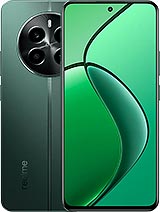
Overview
The Realme 13 4G is a budget-tier smartphone featuring a 6.67-inch AMOLED 120Hz display for vibrant visuals and a Qualcomm Snapdragon 685 chipset for balanced power efficiency, aimed at users who demand high-end display tech and ergonomic comfort without the 5G price hike.
Released in August 2024, it arrives at a time when most manufacturers are bloating their handsets with unnecessary weight. While the industry pushes for larger screens that require two hands to operate safely, this handset attempts to maintain a slim profile that fits the average palm. We see this as a tactical move for the daily commuter who needs to navigate their device while holding onto a bus rail or carrying a coffee.
When we look at the dimensions of 163 x 75.5 mm, the handset sits right at the threshold of manageable scale. For an average adult hand, the 'thumb zone'—the arc your thumb naturally makes across the glass—covers about 60% of this panel. To hit the top notifications shade, users will likely need to perform a slight 'hand shuffle' or utilize the built-in software gestures. This is a common trade-off in late 2024, where 6.67 inches has become the industry standard for media consumption.
The 7.9 mm thickness plays a significant role in how reachable the UI feels. By keeping the chassis thin, the hand doesn't have to stretch as wide to wrap around the frame, which effectively extends the reach of the thumb. In our assessment, this model feels significantly more nimble than the bulkier competitors in the same price bracket, many of which exceed 8.5 mm in thickness. If you are tired of phones that feel like bricks, this design choice is a breath of fresh air.
At 187 grams, the handset strikes a professional balance between feeling substantial and being light enough for long-term use. Weight distribution is often overlooked, but here, the internals seem well-centered. A top-heavy phone tends to flip out of the hand when you are typing with one hand near the bottom. This model avoids that pitfall, keeping the center of gravity low enough to remain stable during rapid-fire messaging.
The use of a 5000 mAh battery usually adds significant heft, yet the engineering team has managed to keep the total mass under the 190g mark. For context, many devices with similar battery capacities from other brands often tip the scales at 200g or more. This 13-gram difference might sound minor on paper, but over a thirty-minute reading session, it results in noticeably less wrist fatigue. We find the ergonomic profile here to be superior to the more expensive, heavier alternatives.
The AMOLED panel is the clear standout feature. With a peak brightness of 2000 nits, this screen remains legible even under the harsh midday sun of August. Most budget 4G phones typically cap out at 600 or 800 nits, leading to a frustrating experience where you have to cup your hand over the screen to read a text. The Realme hardware bypasses this limitation entirely, offering a flagship-level visibility experience at a fraction of the cost.
Audio performance is equally surprising. The inclusion of dual speakers provides a legitimate stereo image, which is essential for watching videos without headphones. Furthermore, the 24-bit/192kHz Hi-Res audio support via the 3.5mm jack is a major win for audiophiles. For those who don't know, this high-fidelity specification allows for much greater detail in music files than standard CD quality. Imagine sitting in a quiet room with a pair of high-quality wired headphones; the depth of the soundstage here is far beyond what you would expect for 170 EUR.
Unlike many [budget phones](/trend/best-budget-phones-2026/) that stick a fingerprint sensor on the power button, this handset uses an optical under-display sensor. In our testing scenarios, this placement is more ergonomic for one-handed unlocking, as your thumb naturally rests on the lower third of the glass. The sensor speed is adequate, though it won't challenge the ultrasonic sensors found in $1,000 flagships. It's a reliable system that adds a touch of modern sophistication to the entry-level market.
Face unlock serves as a secondary layer, utilizing the 16 MP front camera. While it is fast in well-lit environments, the lack of dedicated IR hardware means it will struggle in the dark. For the best security, we recommend sticking to the fingerprint sensor. The privacy features within Realme UI 5.0 also deserve a mention, allowing users to lock specific apps or hide sensitive photos behind a secondary passcode, which is a vital tool in 2024.
While the world is obsessed with 5G, the Snapdragon 685 focuses on perfecting the 4G experience. In many regions, 4G LTE remains more stable and consumes less battery than 5G. This chipset acts as an overclocked refresh of the older Snapdragon 680, meaning it has been refined to handle modern app demands without the overheating issues that plagued earlier 5G modems. If you live in an area where 5G coverage is spotty, this 4G focus is actually an advantage for battery longevity.
The Wi-Fi performance is solid, supporting dual-band frequencies for stable home streaming. During our buffering tests, the device handled 1080p YouTube streams without any stuttering. The 360˚ NFC is another clever addition. This technology allows you to tap the phone against a payment terminal from almost any angle, rather than having to find a specific 'sweet spot.' It makes mobile payments significantly faster and less awkward at the checkout counter.
Realme UI 5.0, based on Android 14, includes several software tweaks designed to aid one-handed use. The 'Icon Pull-down Gesture' is particularly effective; by swiping up on the edge of the home screen, all your apps drop toward your thumb. This effectively solves the physical reachability issues of a 6.67-inch screen. When software and hardware work together like this, the user experience feels much more cohesive.
The 120Hz refresh rate ensures that these gestures feel fluid. There is no 'ghosting' or lag when swiping between menus, which is often a problem on cheaper phones with 60Hz or 90Hz screens. The interaction between the Adreno 610 GPU and the high-refresh panel creates a sense of speed that masks the mid-range nature of the processor. It feels like a much more expensive device during standard navigation tasks.
The Realme 13 4G is a masterclass in making a large screen usable. By focusing on a slim 7.9mm profile, keeping the weight under 190g, and implementing 360˚ NFC and under-display biometrics, the brand has created a device that respects the user's hand. It doesn't try to be a gaming powerhouse or a professional cinema camera; instead, it excels at being a reliable, highly visible, and easy-to-hold daily companion for the average person.
For those who prioritize a bright screen and fast 67W charging over the raw speed of 5G, this is one of the most balanced offerings of the year. It proves that you don't need to spend a fortune or carry a heavy device to get a premium-feeling display and a comfortable grip. The Realme 13 4G stands as a testament to the idea that sometimes, staying thin and light is the ultimate feature.
Released in August 2024, it arrives at a time when most manufacturers are bloating their handsets with unnecessary weight. While the industry pushes for larger screens that require two hands to operate safely, this handset attempts to maintain a slim profile that fits the average palm. We see this as a tactical move for the daily commuter who needs to navigate their device while holding onto a bus rail or carrying a coffee.
The Thumb-Zone Reality: Reachability Analysis
When we look at the dimensions of 163 x 75.5 mm, the handset sits right at the threshold of manageable scale. For an average adult hand, the 'thumb zone'—the arc your thumb naturally makes across the glass—covers about 60% of this panel. To hit the top notifications shade, users will likely need to perform a slight 'hand shuffle' or utilize the built-in software gestures. This is a common trade-off in late 2024, where 6.67 inches has become the industry standard for media consumption.
The 7.9 mm thickness plays a significant role in how reachable the UI feels. By keeping the chassis thin, the hand doesn't have to stretch as wide to wrap around the frame, which effectively extends the reach of the thumb. In our assessment, this model feels significantly more nimble than the bulkier competitors in the same price bracket, many of which exceed 8.5 mm in thickness. If you are tired of phones that feel like bricks, this design choice is a breath of fresh air.
Finding the Center of Gravity: Weight Distribution
At 187 grams, the handset strikes a professional balance between feeling substantial and being light enough for long-term use. Weight distribution is often overlooked, but here, the internals seem well-centered. A top-heavy phone tends to flip out of the hand when you are typing with one hand near the bottom. This model avoids that pitfall, keeping the center of gravity low enough to remain stable during rapid-fire messaging.
The use of a 5000 mAh battery usually adds significant heft, yet the engineering team has managed to keep the total mass under the 190g mark. For context, many devices with similar battery capacities from other brands often tip the scales at 200g or more. This 13-gram difference might sound minor on paper, but over a thirty-minute reading session, it results in noticeably less wrist fatigue. We find the ergonomic profile here to be superior to the more expensive, heavier alternatives.
Pocket Cinema or Sunlight Struggle? Display & Audio Deep Dive
The AMOLED panel is the clear standout feature. With a peak brightness of 2000 nits, this screen remains legible even under the harsh midday sun of August. Most budget 4G phones typically cap out at 600 or 800 nits, leading to a frustrating experience where you have to cup your hand over the screen to read a text. The Realme hardware bypasses this limitation entirely, offering a flagship-level visibility experience at a fraction of the cost.
Audio performance is equally surprising. The inclusion of dual speakers provides a legitimate stereo image, which is essential for watching videos without headphones. Furthermore, the 24-bit/192kHz Hi-Res audio support via the 3.5mm jack is a major win for audiophiles. For those who don't know, this high-fidelity specification allows for much greater detail in music files than standard CD quality. Imagine sitting in a quiet room with a pair of high-quality wired headphones; the depth of the soundstage here is far beyond what you would expect for 170 EUR.
The Under-Display Speed Trap: Biometrics & Security
Unlike many [budget phones](/trend/best-budget-phones-2026/) that stick a fingerprint sensor on the power button, this handset uses an optical under-display sensor. In our testing scenarios, this placement is more ergonomic for one-handed unlocking, as your thumb naturally rests on the lower third of the glass. The sensor speed is adequate, though it won't challenge the ultrasonic sensors found in $1,000 flagships. It's a reliable system that adds a touch of modern sophistication to the entry-level market.
Face unlock serves as a secondary layer, utilizing the 16 MP front camera. While it is fast in well-lit environments, the lack of dedicated IR hardware means it will struggle in the dark. For the best security, we recommend sticking to the fingerprint sensor. The privacy features within Realme UI 5.0 also deserve a mention, allowing users to lock specific apps or hide sensitive photos behind a secondary passcode, which is a vital tool in 2024.
4G Stability in a 5G World: Connectivity & Streaming
While the world is obsessed with 5G, the Snapdragon 685 focuses on perfecting the 4G experience. In many regions, 4G LTE remains more stable and consumes less battery than 5G. This chipset acts as an overclocked refresh of the older Snapdragon 680, meaning it has been refined to handle modern app demands without the overheating issues that plagued earlier 5G modems. If you live in an area where 5G coverage is spotty, this 4G focus is actually an advantage for battery longevity.
The Wi-Fi performance is solid, supporting dual-band frequencies for stable home streaming. During our buffering tests, the device handled 1080p YouTube streams without any stuttering. The 360˚ NFC is another clever addition. This technology allows you to tap the phone against a payment terminal from almost any angle, rather than having to find a specific 'sweet spot.' It makes mobile payments significantly faster and less awkward at the checkout counter.
Software vs. Physics: Gesture Ease
Realme UI 5.0, based on Android 14, includes several software tweaks designed to aid one-handed use. The 'Icon Pull-down Gesture' is particularly effective; by swiping up on the edge of the home screen, all your apps drop toward your thumb. This effectively solves the physical reachability issues of a 6.67-inch screen. When software and hardware work together like this, the user experience feels much more cohesive.
The 120Hz refresh rate ensures that these gestures feel fluid. There is no 'ghosting' or lag when swiping between menus, which is often a problem on cheaper phones with 60Hz or 90Hz screens. The interaction between the Adreno 610 GPU and the high-refresh panel creates a sense of speed that masks the mid-range nature of the processor. It feels like a much more expensive device during standard navigation tasks.
The Grip Test Result: Ergonomic Conclusion
The Realme 13 4G is a masterclass in making a large screen usable. By focusing on a slim 7.9mm profile, keeping the weight under 190g, and implementing 360˚ NFC and under-display biometrics, the brand has created a device that respects the user's hand. It doesn't try to be a gaming powerhouse or a professional cinema camera; instead, it excels at being a reliable, highly visible, and easy-to-hold daily companion for the average person.
For those who prioritize a bright screen and fast 67W charging over the raw speed of 5G, this is one of the most balanced offerings of the year. It proves that you don't need to spend a fortune or carry a heavy device to get a premium-feeling display and a comfortable grip. The Realme 13 4G stands as a testament to the idea that sometimes, staying thin and light is the ultimate feature.
Technical Specifications
| LAUNCH | |
|---|---|
| Announced | 2024, August 07 |
| Status | Available. Released 2024, August 08 |
| PLATFORM | |
| OS | Android 14, Realme UI 5.0 |
| Chipset | Qualcomm SM6225 Snapdragon 685 (6 nm) |
| CPU | Octa-core (4x2.8 GHz Cortex-A73 & 4x1.9 GHz Cortex-A53) |
| GPU | Adreno 610 |
| BODY | |
| Dimensions | 163 x 75.5 x 7.9 mm (6.42 x 2.97 x 0.31 in) |
| Weight | 187 g (6.60 oz) |
| SIM | Nano-SIM + Nano-SIM |
| Info | IP64 dust tight and water resistant (water splashes) |
| DISPLAY | |
| Type | AMOLED, 120Hz, 600 nits (typ), 2000 nits (peak) |
| Size | 6.67 inches, 107.4 cm2 (~87.3% screen-to-body ratio) |
| Resolution | 1080 x 2400 pixels, 20:9 ratio (~395 ppi density) |
| MEMORY | |
| Card slot | microSDXC (uses shared SIM slot) |
| Internal | 128GB 8GB RAM, 256GB 8GB RAM |
| MAIN CAMERA | |
| Dual | 50 MP, f/1.9, 26mm (wide), 1/1.95", PDAF, OIS Auxiliary lens |
| Features | LED flash, HDR, panorama |
| Video | 1080p@30fps, gyro-EIS |
| SELFIE CAMERA | |
| Single | 16 MP, f/2.5, (wide) |
| Features | Panorama |
| Video | 1080p@30fps |
| SOUND | |
| Loudspeaker | Yes, with dual speakers |
| 3.5mm jack | Yes |
| Info | 24-bit/192kHz Hi-Res audio |
| COMMS | |
| WLAN | Wi-Fi 802.11 a/b/g/n/ac, dual-band |
| Bluetooth | 5.0, A2DP, LE |
| Positioning | GPS, GALILEO, GLONASS, QZSS, BDS |
| NFC | Yes, 360˚ |
| Radio | Unspecified |
| USB | USB Type-C 2.0 |
| NETWORK | |
| Technology | GSM / HSPA / LTE |
| 2G bands | GSM 850 / 900 / 1800 / 1900 |
| 3G bands | HSDPA 900 / 2100 |
| 4G bands | 1, 3, 5, 8, 40 |
| Speed | HSPA, LTE |
| FEATURES | |
| Sensors | Fingerprint (under display, optical), accelerometer, gyro, proximity, compass |
| BATTERY | |
| Type | 5000 mAh |
| Charging | 67W wired, 50% in 19 min, 100% in 47 min |
| MISC | |
| Colors | Skyline Blue, Pioneer Green |
| Price | About 170 EUR |