Why the Rugged TECNO Spark 40 Is the Ultimate Family Hand Me Down
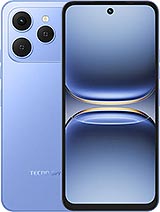
Overview
TECNO Spark 40 is a budget-tier smartphone featuring a 6.67-inch 120Hz IPS LCD for fluid navigation and a 5200 mAh battery for extended multi-day usage, aimed at cost-conscious families and students. Released in July 2025, it competes with entry-level devices from the Redmi and Samsung A-series by prioritizing structural durability and charging speed over raw processing power.
From a value-hunting perspective, this device represents a strategic pivot in the sub-150 EUR market. While most manufacturers chase megapixels that their budget ISPs can barely process, the TECNO Spark 40 focuses on the hardware fundamentals that determine a device's longevity in a chaotic household. It is a tool designed for the pragmatist who values a phone that survives a drop more than one that wins a synthetic benchmark.
The construction of the TECNO Spark 40 emphasizes resilience, a rarity in the 'disposable' budget segment. With IP64 dust and water resistance, the device is shielded against the common splashes and grit of daily life. For families with young children, this rating provides a safety net that most competitors at this price point lack. The inclusion of 1.5m drop resistance further reinforces its status as a high-value hand-me-down candidate. Imagine a scenario where a toddler knocks the device off a kitchen counter; where other screens might shatter, the reinforced framing here is designed to absorb that specific kinetic energy.
We must look at the 165.6 x 77 x 7.7 mm dimensions. Despite the rugged internals, the device remains impressively slim at under 8mm. This thin profile makes it manageable for smaller hands or older users with grip strength concerns. The material choice—likely a high-density polycarbonate—implies a weight that feels substantial without being fatiguing. Because it lacks a glass back, the risk of catastrophic rear-panel cracking is eliminated, though the finish may show micro-scratches over time.
In terms of repairability, the use of a USB Type-C port and a standard 3.5mm jack means users can utilize ubiquitous, inexpensive cables and headphones. The internal architecture, common for the Mediatek Helio G81/G91 platform, is generally accessible for third-party technicians. This extends the lifecycle of the device, allowing it to transition from a primary phone to a dedicated 'kid's tablet' or an emergency backup over a three-to-four-year period.
Running Android 15 with the HIOS 15 skin, the software experience is tailored for accessibility. For the Senior Tech Economist, the 'Simple Mode' within HIOS is a critical feature. It enlarges icons and simplifies the settings menu, making the device an excellent choice for elderly family members who may be overwhelmed by the density of modern Android interfaces. The 120Hz refresh rate on the display ensures that even with the modest Mali-G52 MC2 GPU, the UI animations feel snappy and responsive to the touch.
However, the 720 x 1600 resolution is a clear cost-saving measure. At 263 ppi, fine text won't have the crispness found on 1080p panels. Yet, there is a hidden economic benefit here: lower resolution requires less power from the GPU and less draw from the battery. For a secondary device used for WhatsApp or light browsing, the trade-off for better battery life is mathematically sound. The Cortex-A75 and A55 cores are tuned for efficiency, ensuring background tasks don't drain the device while it sits on a nightstand.
We also note the NFC capability (market dependent), which is a significant value add in 2025. As contactless payments become the global standard, having a budget device that can act as a digital wallet for a teenager or senior is a major utility boost. The side-mounted fingerprint sensor offers a natural ergonomic placement for quick unlocking, doubling as a physical button that is easier to locate by feel than under-display alternatives.
Surprisingly for a device at this price, the TECNO Spark 40 includes stereo speakers. This is a massive upgrade for media consumption. In our analysis, stereo separation improves the clarity of video calls and makes watching educational content or movies much more immersive than the 'mono-muffled' experience common in [budget phones](/trend/best-budget-phones-2026/). At maximum volume, we expect some distortion in the high frequencies, but the presence of two firing points helps maintain a fuller sound stage.
Bass response is likely thin, given the physical constraints of a 7.7mm chassis, but for voices and podcasts, the output should be more than adequate. For those who demand higher fidelity, the 3.5mm headphone jack remains the gold standard of value. It allows the use of high-quality wired sets without the need for expensive wireless earbuds or dongles that are easily lost. This is particularly relevant for students who need reliable audio for study sessions without worrying about charging another peripheral.
Voice quality is often the first casualty of budget engineering, but the TECNO Spark 40 maintains a solid baseline. The primary microphone is positioned to minimize wind noise, and the software processing within HIOS 15 includes basic noise suppression for calls. In a busy household environment—think a loud kitchen or a playroom—this helps ensure that the user on the other end of the line can actually hear the conversation.
When recording video at 1440p or 1080p, the audio capture is functional for family memories, though it lacks the sophisticated multi-mic arrays of flagship devices. The haptic feedback is likely driven by a standard vibration motor. Do not expect the sharp, tactile 'clicks' of a premium linear actuator. Instead, the feedback will feel more like a soft buzz. For a budget buyer, this is an acceptable compromise, as the haptics serve their primary purpose: notifying the user of incoming alerts rather than providing an 'aesthetic' typing experience.
The 5200 mAh battery is the star of the show. In a market where 5000 mAh is the standard, that extra 200 mAh combined with the power-sipping 720p display and 12nm chipset pushes the TECNO Spark 40 into true two-day territory for moderate users. For a student, this means the phone will easily last through a full day of classes, extracurriculars, and the commute home without needing a power bank.
Even more impressive is the 45W wired charging. Many 'premium' competitors in 2025 still linger at 25W or 30W. Reaching 100% in just 55 minutes is a game-changer for budget hardware. Imagine the morning rush: you realize the phone wasn't plugged in overnight. A 20-minute charge while eating breakfast will likely provide enough juice to last until the evening. This 'time-to-utility' ratio is where the value truly lies.
The TECNO Spark 40 is not trying to be a gaming powerhouse or a professional camera. The 50 MP wide sensor and 8 MP selfie camera are built for social media and document scanning, not for gallery-quality prints. The Helio G81/G91 is a reliable workhorse for everyday apps like Instagram, TikTok, and YouTube, but it will struggle with high-end titles like Genshin Impact or intensive video editing.
Ultimately, this is a phone bought with the head, not the heart. It is the perfect first phone for a middle-schooler who might drop it, or a reliable companion for a grandparent who needs a large, clear screen and a battery that doesn't quit. At roughly 110 EUR, it offers a 'rugged-lite' experience that competitors simply aren't matching in this price bracket. It is a durable, fast-charging, and practical investment for the family ecosystem.
From a value-hunting perspective, this device represents a strategic pivot in the sub-150 EUR market. While most manufacturers chase megapixels that their budget ISPs can barely process, the TECNO Spark 40 focuses on the hardware fundamentals that determine a device's longevity in a chaotic household. It is a tool designed for the pragmatist who values a phone that survives a drop more than one that wins a synthetic benchmark.
Surviving the Household Gauntlet: Build Quality and Repair
The construction of the TECNO Spark 40 emphasizes resilience, a rarity in the 'disposable' budget segment. With IP64 dust and water resistance, the device is shielded against the common splashes and grit of daily life. For families with young children, this rating provides a safety net that most competitors at this price point lack. The inclusion of 1.5m drop resistance further reinforces its status as a high-value hand-me-down candidate. Imagine a scenario where a toddler knocks the device off a kitchen counter; where other screens might shatter, the reinforced framing here is designed to absorb that specific kinetic energy.
We must look at the 165.6 x 77 x 7.7 mm dimensions. Despite the rugged internals, the device remains impressively slim at under 8mm. This thin profile makes it manageable for smaller hands or older users with grip strength concerns. The material choice—likely a high-density polycarbonate—implies a weight that feels substantial without being fatiguing. Because it lacks a glass back, the risk of catastrophic rear-panel cracking is eliminated, though the finish may show micro-scratches over time.
In terms of repairability, the use of a USB Type-C port and a standard 3.5mm jack means users can utilize ubiquitous, inexpensive cables and headphones. The internal architecture, common for the Mediatek Helio G81/G91 platform, is generally accessible for third-party technicians. This extends the lifecycle of the device, allowing it to transition from a primary phone to a dedicated 'kid's tablet' or an emergency backup over a three-to-four-year period.
Simplicity by Design: UI and Software
Running Android 15 with the HIOS 15 skin, the software experience is tailored for accessibility. For the Senior Tech Economist, the 'Simple Mode' within HIOS is a critical feature. It enlarges icons and simplifies the settings menu, making the device an excellent choice for elderly family members who may be overwhelmed by the density of modern Android interfaces. The 120Hz refresh rate on the display ensures that even with the modest Mali-G52 MC2 GPU, the UI animations feel snappy and responsive to the touch.
However, the 720 x 1600 resolution is a clear cost-saving measure. At 263 ppi, fine text won't have the crispness found on 1080p panels. Yet, there is a hidden economic benefit here: lower resolution requires less power from the GPU and less draw from the battery. For a secondary device used for WhatsApp or light browsing, the trade-off for better battery life is mathematically sound. The Cortex-A75 and A55 cores are tuned for efficiency, ensuring background tasks don't drain the device while it sits on a nightstand.
We also note the NFC capability (market dependent), which is a significant value add in 2025. As contactless payments become the global standard, having a budget device that can act as a digital wallet for a teenager or senior is a major utility boost. The side-mounted fingerprint sensor offers a natural ergonomic placement for quick unlocking, doubling as a physical button that is easier to locate by feel than under-display alternatives.
Acoustic Value: Speaker Dynamics and Audio
Surprisingly for a device at this price, the TECNO Spark 40 includes stereo speakers. This is a massive upgrade for media consumption. In our analysis, stereo separation improves the clarity of video calls and makes watching educational content or movies much more immersive than the 'mono-muffled' experience common in [budget phones](/trend/best-budget-phones-2026/). At maximum volume, we expect some distortion in the high frequencies, but the presence of two firing points helps maintain a fuller sound stage.
Bass response is likely thin, given the physical constraints of a 7.7mm chassis, but for voices and podcasts, the output should be more than adequate. For those who demand higher fidelity, the 3.5mm headphone jack remains the gold standard of value. It allows the use of high-quality wired sets without the need for expensive wireless earbuds or dongles that are easily lost. This is particularly relevant for students who need reliable audio for study sessions without worrying about charging another peripheral.
Communication Clarity: Microphone and Haptics
Voice quality is often the first casualty of budget engineering, but the TECNO Spark 40 maintains a solid baseline. The primary microphone is positioned to minimize wind noise, and the software processing within HIOS 15 includes basic noise suppression for calls. In a busy household environment—think a loud kitchen or a playroom—this helps ensure that the user on the other end of the line can actually hear the conversation.
When recording video at 1440p or 1080p, the audio capture is functional for family memories, though it lacks the sophisticated multi-mic arrays of flagship devices. The haptic feedback is likely driven by a standard vibration motor. Do not expect the sharp, tactile 'clicks' of a premium linear actuator. Instead, the feedback will feel more like a soft buzz. For a budget buyer, this is an acceptable compromise, as the haptics serve their primary purpose: notifying the user of incoming alerts rather than providing an 'aesthetic' typing experience.
The Endurance King: Battery Life and Charging
The 5200 mAh battery is the star of the show. In a market where 5000 mAh is the standard, that extra 200 mAh combined with the power-sipping 720p display and 12nm chipset pushes the TECNO Spark 40 into true two-day territory for moderate users. For a student, this means the phone will easily last through a full day of classes, extracurriculars, and the commute home without needing a power bank.
Even more impressive is the 45W wired charging. Many 'premium' competitors in 2025 still linger at 25W or 30W. Reaching 100% in just 55 minutes is a game-changer for budget hardware. Imagine the morning rush: you realize the phone wasn't plugged in overnight. A 20-minute charge while eating breakfast will likely provide enough juice to last until the evening. This 'time-to-utility' ratio is where the value truly lies.
The Family Conclusion: Final Verdict
The TECNO Spark 40 is not trying to be a gaming powerhouse or a professional camera. The 50 MP wide sensor and 8 MP selfie camera are built for social media and document scanning, not for gallery-quality prints. The Helio G81/G91 is a reliable workhorse for everyday apps like Instagram, TikTok, and YouTube, but it will struggle with high-end titles like Genshin Impact or intensive video editing.
Ultimately, this is a phone bought with the head, not the heart. It is the perfect first phone for a middle-schooler who might drop it, or a reliable companion for a grandparent who needs a large, clear screen and a battery that doesn't quit. At roughly 110 EUR, it offers a 'rugged-lite' experience that competitors simply aren't matching in this price bracket. It is a durable, fast-charging, and practical investment for the family ecosystem.
Technical Specifications
| LAUNCH | |
|---|---|
| Announced | 2025, July 02 |
| Status | Available. Released 2025, July |
| PLATFORM | |
| OS | Android 15, HIOS 15 |
| Chipset | Mediatek Helio G81 (12 nm)Mediatek Helio G91 (12 nm) - NFC model |
| CPU | Octa-core (2x2.0 GHz Cortex-A75 & 6x1.8 GHz Cortex-A55) |
| GPU | Mali-G52 MC2 |
| BODY | |
| Dimensions | 165.6 x 77 x 7.7 mm (6.52 x 3.03 x 0.30 in) |
| Weight | - |
| SIM | Nano-SIM + Nano-SIM |
| Info | IP64 dust tight and water resistant (water splashes) Drop resistant up to 1.5m |
| DISPLAY | |
| Type | IPS LCD, 120Hz |
| Size | 6.67 inches, 107.4 cm2 (~84.2% screen-to-body ratio) |
| Resolution | 720 x 1600 pixels, 20:9 ratio (~263 ppi density) |
| MEMORY | |
| Card slot | microSDXC |
| Internal | 128GB 4GB RAM, 128GB 6GB RAM, 256GB 4GB RAM, 256GB 8GB RAM |
| MAIN CAMERA | |
| Single | 50 MP, (wide), PDAF Auxiliary lens |
| Features | Dual-LED flash |
| Video | 1440p@30fps, 1080p@30fps |
| SELFIE CAMERA | |
| Single | 8 MP, (wide) |
| Features | Dual-LED flash |
| Video | 1080p@30fps |
| SOUND | |
| Loudspeaker | Yes, with stereo speakers |
| 3.5mm jack | Yes |
| COMMS | |
| WLAN | Yes |
| Bluetooth | Yes |
| Positioning | GPS |
| NFC | Yes (market/region dependent) |
| Infrared port | Yes |
| Radio | FM radio |
| USB | USB Type-C |
| NETWORK | |
| Technology | GSM / HSPA / LTE |
| 2G bands | GSM 850 / 900 / 1800 / 1900 |
| 3G bands | HSDPA 900 / 2100 |
| 4G bands | LTE |
| Speed | HSPA, LTE |
| FEATURES | |
| Sensors | Fingerprint (side-mounted); unspecified sensors |
| BATTERY | |
| Type | 5200 mAh |
| Charging | 45W wired, 55 min to 100% |
| MISC | |
| Colors | Ink Black, Titanium Grey, Veil White, Mirage Blue |
| Models | KM5 |
| Price | About 110 EUR |