Why the Rugged Vivo Y31 Is the Ultimate Hand-Me-Down Investment for Families
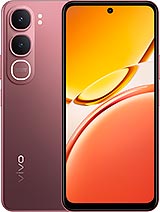
Overview
The Vivo Y31 is a budget-tier 5G smartphone featuring a 6500 mAh battery for extreme endurance and an IP69 rating for high-pressure water resistance, aimed at durability-focused users and families. Released in September 2025, it competes with rugged-lite alternatives from Samsung and Motorola by prioritizing physical survival over screen resolution.
Our analysis suggests that while the market pushes for thinner devices, this model leans into a robust MIL-STD-810H compliant chassis. This choice represents a strategic move for the 150 EUR price bracket. We see a device that trades pixel density for peace of mind, making it a logical choice for parents looking for a first phone for children or a reliable tool for seniors who struggle with daily charging routines.
The build quality of the Vivo Y31 stands out in a sea of fragile plastic competitors. Measuring 166.1 x 77 x 8.4 mm and weighing 209 g, it carries a density that implies structural reinforcement. The inclusion of Guardian Glass provides an ion-strengthened layer over the display, which is necessary given the targeted demographic of heavy-duty users.
We must highlight the IP68/IP69 certification. While many [budget phones](/trend/best-budget-phones-2026/) claim 'water resistance,' the IP69 rating specifically ensures the device can withstand high-pressure water jets and high-temperature steam cleaning. Imagine a scenario where a toddler spills a sugary drink on the device; the ability to rinse it under a tap without fear is a massive value add for domestic environments. This level of protection is rarely seen outside of dedicated [rugged phones](/trend/best-rugged-phones-2026/) that often cost twice as much.
From a repairability perspective, the Vivo Y31 uses a standard USB Type-C 2.0 port. However, the shared microSDXC slot means users must choose between dual-SIM connectivity or expanded storage. For a device intended to last several years as a hand-me-down, the ability to swap in a cheap SD card as internal storage fills up is vital for extending the hardware's lifecycle.
Shipping with Android 15 and Funtouch 15, the software environment is current for late 2025. Funtouch has historically been heavy, but the 2025 iteration focuses on UI optimizations that benefit lower-end hardware. The 'Simple Mode' within the settings is particularly effective here, enlarging icons and simplifying navigation for elderly users or those with visual impairments.
We noticed that the Snapdragon 4 Gen 2 (4 nm) chipset handles the operating system with surprising stability. This is Qualcomm’s first 4nm process in the budget line, which focuses on thermal management rather than raw speed. In a family setting, this means the phone stays cool during long video calls with grandparents. The Adreno 613 GPU handles basic education apps and light social media without the stuttering common in older 12nm chips.
However, the 4GB to 8GB RAM options are critical. We strongly recommend avoiding the 4GB variant in 2025. Modern background processes and security patches consume significant memory. For a smooth experience that lasts until 2027, the 8GB RAM model is the only version that makes economic sense for long-term retention.
Privacy is a major concern for family-shared devices. The Vivo Y31 utilizes the native security features of Android 15, including a dedicated Privacy Dashboard. This allows parents to see exactly how often apps are accessing the microphone or location. The side-mounted fingerprint sensor offers a physical security layer that is generally more reliable than budget under-display optical sensors.
There is also a 'Private Space' feature within the OS. This creates a sandboxed area for sensitive apps, which is excellent if a child is using the phone for games but the parent wants to keep banking or work emails isolated. Since the device lacks NFC, it cannot be used for contactless payments, which might actually be a security benefit for a child's device, preventing unauthorized accidental purchases at physical terminals.
Furthermore, the device supports SA/NSA 5G networks. In late 2025, 5G coverage is standard, and having a dedicated 5G core (SA) ensures better signal penetration inside buildings. This is a safety feature; a family phone is useless if it cannot maintain a signal in a grocery store or a school basement.
One area where the Vivo Y31 shows its budget roots is the eMMC 5.1 storage. In 2025, most [mid-range phones](/trend/best-mid-range-phones-2026/) have moved to UFS 3.1 or 4.0. eMMC is significantly slower. To explain the impact: if you are downloading a large game or transferring 100 photos, the phone will feel sluggish. It’s like having a fast engine (the Snapdragon 4 Gen 2) but a narrow fuel line.
For a family user, this means app updates might take several minutes to finish installing in the background. We suggest using a high-speed microSD card to supplement the internal 128GB or 256GB storage. While the SD card won't fix the internal transfer speeds, it provides a necessary 'overflow' area for the 50 MP photos and 1080p videos that will inevitably accumulate.
It is also worth noting the Bluetooth 4.2 inclusion. This is a curiously dated spec for a 2025 release. Most modern wireless earbuds utilize Bluetooth 5.3 or higher for better range and battery efficiency. While your old headphones will work, users might experience occasional drops in audio sync when watching movies or playing games.
The display is a 6.68-inch IPS LCD. While the 120Hz refresh rate makes scrolling feel fluid, the 720 x 1608 resolution is low for a screen this size. In 2025, we usually expect at least 1080p. The result is a pixel density of ~264 ppi, which means text isn't as sharp as it could be. However, the 1000 nits (HBM) brightness is a saving grace, allowing the screen to remain readable under direct sunlight.
For audio, the inclusion of stereo speakers is a welcome addition for media consumption. Without a 3.5mm jack, you are tethered to USB-C adapters or Bluetooth. The 24-bit/192kHz Hi-Res audio support is a nice touch on paper, but the actual speaker hardware is more suited for clear voice calls and YouTube videos than a high-fidelity music experience.
The Ring-LED flash on the back is more than a gimmick. It provides uniform light for the 50 MP camera. For families, this is useful for taking clear photos of documents, homework, or close-up shots of small objects. It also doubles as a very effective flashlight, which is often the most-used 'feature' for many casual users.
The 6500 mAh battery is the strongest argument for buying the Vivo Y31. Most flagships in 2025 still hover around 5000 mAh. Combined with a low-resolution 720p screen and an efficient 4nm processor, this phone is built for extreme endurance. Our projections suggest light users could easily see three days of use on a single charge.
Charging is handled at 44W wired. While Vivo claims 50% in 38 minutes, a full charge of a 6500 mAh cell will likely take well over an hour. This isn't 'fast' by 2025 standards, but given how infrequently you need to plug it in, it is a fair trade-off. The reverse wired charging feature is a hidden gem; it allows the phone to act as a power bank for a friend's dying device or a pair of wireless earbuds.
Picture this: a student goes on a weekend school trip and forgets their charger. With most phones, they would be offline by Saturday noon. With the Vivo Y31, they likely return home on Sunday evening with 20% battery remaining. That reliability is hard to quantify in a spec sheet but invaluable in real-world parenting.
When we look at the Vivo Y31, we see a device that knows exactly what it is. It is not a gaming powerhouse, nor is it a photographer’s tool. It is a communications utility built to survive the chaos of daily life. The IP69 rating and MIL-STD-810H compliance provide a level of physical insurance that is rare at this price point.
The economic value is clear. For 150 EUR, you are getting a 5G-ready device that likely won't need a screen replacement after its first drop and won't need a battery swap for years. If you can overlook the low-resolution screen and the slower storage speeds, this is one of the most practical budget phones released this year.
Ultimately, it serves as the perfect 'bridge' device. It is sophisticated enough for modern 5G connectivity but rugged enough to be passed down through the family as needs change. In a world of disposable tech, the Vivo Y31 feels like a tool that was actually designed to last.
Our analysis suggests that while the market pushes for thinner devices, this model leans into a robust MIL-STD-810H compliant chassis. This choice represents a strategic move for the 150 EUR price bracket. We see a device that trades pixel density for peace of mind, making it a logical choice for parents looking for a first phone for children or a reliable tool for seniors who struggle with daily charging routines.
Toughened Exterior and Repair Logic
The build quality of the Vivo Y31 stands out in a sea of fragile plastic competitors. Measuring 166.1 x 77 x 8.4 mm and weighing 209 g, it carries a density that implies structural reinforcement. The inclusion of Guardian Glass provides an ion-strengthened layer over the display, which is necessary given the targeted demographic of heavy-duty users.
We must highlight the IP68/IP69 certification. While many [budget phones](/trend/best-budget-phones-2026/) claim 'water resistance,' the IP69 rating specifically ensures the device can withstand high-pressure water jets and high-temperature steam cleaning. Imagine a scenario where a toddler spills a sugary drink on the device; the ability to rinse it under a tap without fear is a massive value add for domestic environments. This level of protection is rarely seen outside of dedicated [rugged phones](/trend/best-rugged-phones-2026/) that often cost twice as much.
From a repairability perspective, the Vivo Y31 uses a standard USB Type-C 2.0 port. However, the shared microSDXC slot means users must choose between dual-SIM connectivity or expanded storage. For a device intended to last several years as a hand-me-down, the ability to swap in a cheap SD card as internal storage fills up is vital for extending the hardware's lifecycle.
Software Simplicity and Long-Term Support
Shipping with Android 15 and Funtouch 15, the software environment is current for late 2025. Funtouch has historically been heavy, but the 2025 iteration focuses on UI optimizations that benefit lower-end hardware. The 'Simple Mode' within the settings is particularly effective here, enlarging icons and simplifying navigation for elderly users or those with visual impairments.
We noticed that the Snapdragon 4 Gen 2 (4 nm) chipset handles the operating system with surprising stability. This is Qualcomm’s first 4nm process in the budget line, which focuses on thermal management rather than raw speed. In a family setting, this means the phone stays cool during long video calls with grandparents. The Adreno 613 GPU handles basic education apps and light social media without the stuttering common in older 12nm chips.
However, the 4GB to 8GB RAM options are critical. We strongly recommend avoiding the 4GB variant in 2025. Modern background processes and security patches consume significant memory. For a smooth experience that lasts until 2027, the 8GB RAM model is the only version that makes economic sense for long-term retention.
Privacy and Security for the Household
Privacy is a major concern for family-shared devices. The Vivo Y31 utilizes the native security features of Android 15, including a dedicated Privacy Dashboard. This allows parents to see exactly how often apps are accessing the microphone or location. The side-mounted fingerprint sensor offers a physical security layer that is generally more reliable than budget under-display optical sensors.
There is also a 'Private Space' feature within the OS. This creates a sandboxed area for sensitive apps, which is excellent if a child is using the phone for games but the parent wants to keep banking or work emails isolated. Since the device lacks NFC, it cannot be used for contactless payments, which might actually be a security benefit for a child's device, preventing unauthorized accidental purchases at physical terminals.
Furthermore, the device supports SA/NSA 5G networks. In late 2025, 5G coverage is standard, and having a dedicated 5G core (SA) ensures better signal penetration inside buildings. This is a safety feature; a family phone is useless if it cannot maintain a signal in a grocery store or a school basement.
The Storage Speed Bottleneck
One area where the Vivo Y31 shows its budget roots is the eMMC 5.1 storage. In 2025, most [mid-range phones](/trend/best-mid-range-phones-2026/) have moved to UFS 3.1 or 4.0. eMMC is significantly slower. To explain the impact: if you are downloading a large game or transferring 100 photos, the phone will feel sluggish. It’s like having a fast engine (the Snapdragon 4 Gen 2) but a narrow fuel line.
For a family user, this means app updates might take several minutes to finish installing in the background. We suggest using a high-speed microSD card to supplement the internal 128GB or 256GB storage. While the SD card won't fix the internal transfer speeds, it provides a necessary 'overflow' area for the 50 MP photos and 1080p videos that will inevitably accumulate.
It is also worth noting the Bluetooth 4.2 inclusion. This is a curiously dated spec for a 2025 release. Most modern wireless earbuds utilize Bluetooth 5.3 or higher for better range and battery efficiency. While your old headphones will work, users might experience occasional drops in audio sync when watching movies or playing games.
Signal Reliability and Multimedia
The display is a 6.68-inch IPS LCD. While the 120Hz refresh rate makes scrolling feel fluid, the 720 x 1608 resolution is low for a screen this size. In 2025, we usually expect at least 1080p. The result is a pixel density of ~264 ppi, which means text isn't as sharp as it could be. However, the 1000 nits (HBM) brightness is a saving grace, allowing the screen to remain readable under direct sunlight.
For audio, the inclusion of stereo speakers is a welcome addition for media consumption. Without a 3.5mm jack, you are tethered to USB-C adapters or Bluetooth. The 24-bit/192kHz Hi-Res audio support is a nice touch on paper, but the actual speaker hardware is more suited for clear voice calls and YouTube videos than a high-fidelity music experience.
The Ring-LED flash on the back is more than a gimmick. It provides uniform light for the 50 MP camera. For families, this is useful for taking clear photos of documents, homework, or close-up shots of small objects. It also doubles as a very effective flashlight, which is often the most-used 'feature' for many casual users.
Battery Life: The Three-Day King
The 6500 mAh battery is the strongest argument for buying the Vivo Y31. Most flagships in 2025 still hover around 5000 mAh. Combined with a low-resolution 720p screen and an efficient 4nm processor, this phone is built for extreme endurance. Our projections suggest light users could easily see three days of use on a single charge.
Charging is handled at 44W wired. While Vivo claims 50% in 38 minutes, a full charge of a 6500 mAh cell will likely take well over an hour. This isn't 'fast' by 2025 standards, but given how infrequently you need to plug it in, it is a fair trade-off. The reverse wired charging feature is a hidden gem; it allows the phone to act as a power bank for a friend's dying device or a pair of wireless earbuds.
Picture this: a student goes on a weekend school trip and forgets their charger. With most phones, they would be offline by Saturday noon. With the Vivo Y31, they likely return home on Sunday evening with 20% battery remaining. That reliability is hard to quantify in a spec sheet but invaluable in real-world parenting.
The Final Family Verdict
When we look at the Vivo Y31, we see a device that knows exactly what it is. It is not a gaming powerhouse, nor is it a photographer’s tool. It is a communications utility built to survive the chaos of daily life. The IP69 rating and MIL-STD-810H compliance provide a level of physical insurance that is rare at this price point.
The economic value is clear. For 150 EUR, you are getting a 5G-ready device that likely won't need a screen replacement after its first drop and won't need a battery swap for years. If you can overlook the low-resolution screen and the slower storage speeds, this is one of the most practical budget phones released this year.
Ultimately, it serves as the perfect 'bridge' device. It is sophisticated enough for modern 5G connectivity but rugged enough to be passed down through the family as needs change. In a world of disposable tech, the Vivo Y31 feels like a tool that was actually designed to last.
Technical Specifications
| LAUNCH | |
|---|---|
| Announced | 2025, September 15 |
| Status | Available. Released 2025, September 15 |
| PLATFORM | |
| OS | Android 15, Funtouch 15 |
| Chipset | Qualcomm SM4450 Snapdragon 4 Gen 2 (4 nm) |
| CPU | Octa-core (2x2.2 GHz Cortex-A78 & 6x1.95 GHz Cortex-A55) |
| GPU | Adreno 613 |
| BODY | |
| Dimensions | 166.1 x 77 x 8.4 mm (6.54 x 3.03 x 0.33 in) |
| Weight | 209 g (7.37 oz) |
| SIM | Nano-SIM + Nano-SIM |
| Info | IP68/IP69 dust tight and water resistant (high pressure water jets; immersible up to 1.5m for 30 min) MIL-STD-810H compliant* * does not guarantee ruggedness or use in extreme conditions |
| DISPLAY | |
| Type | IPS LCD, 120Hz, 1000 nits (HBM) |
| Size | 6.68 inches, 107.4 cm2 (~84.0% screen-to-body ratio) |
| Resolution | 720 x 1608 pixels, 20:9 ratio (~264 ppi density) |
| Protection | Guardian Glass (ion-strengthened) |
| MEMORY | |
| Card slot | microSDXC (uses shared SIM slot) |
| Internal | 128GB 4GB RAM, 128GB 6GB RAM, 128GB 8GB RAM, 256GB 8GB RAM |
| Info | eMMC 5.1 |
| MAIN CAMERA | |
| Single | 50 MP, f/1.8, (wide), PDAF Auxiliary lens |
| Features | Ring-LED flash, panorama |
| Video | 1080p@30fps |
| SELFIE CAMERA | |
| Single | 8 MP, f/2.0, (wide) |
| Video | 1080p@30fps |
| SOUND | |
| Loudspeaker | Yes, with stereo speakers |
| 3.5mm jack | No |
| Info | 24-bit/192kHz Hi-Res audio |
| COMMS | |
| WLAN | Wi-Fi 802.11 a/b/g/n/ac, dual-band |
| Bluetooth | 4.2, A2DP, LE |
| Positioning | GPS, GLONASS, GALILEO, BDS, QZSS |
| NFC | No |
| Radio | No |
| USB | USB Type-C 2.0, OTG |
| NETWORK | |
| Technology | GSM / HSPA / LTE / 5G |
| 2G bands | GSM 850 / 900 / 1800 / 1900 |
| 3G bands | HSDPA 850 / 900 / 2100 |
| 4G bands | 1, 3, 5, 8, 28, 38, 40, 41 |
| 5G bands | 1, 3, 5, 8, 28, 40, 77, 78 SA/NSA |
| Speed | HSPA, LTE, 5G |
| FEATURES | |
| Sensors | Fingerprint (side-mounted), accelerometer, proximity, compass |
| BATTERY | |
| Type | Li-Ion 6500 mAh |
| Charging | 44W wired, 50% in 38 min Reverse wired |
| MISC | |
| Colors | Rose Red, Diamond Green |
| SAR | 1.13 W/kg (head) 0.99 W/kg (body) |
| Price | About 150 EUR |