Why the Samsung Galaxy A15 Makes Buying a Used Flagship a Risky Gamble
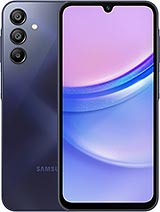
Overview
The Samsung Galaxy A15 is a budget-tier smartphone featuring a Super AMOLED 90Hz display for high-quality visuals and a MediaTek Helio G99 chipset for efficient daily performance, aimed at cost-conscious consumers who prioritize modern software longevity and display excellence over raw gaming power.
Released in late 2023, it competes directly with the lower-tier offerings from Xiaomi and Motorola, while posing a significant challenge to the refurbished market. This device represents a shift where entry-level hardware finally meets a display technology once reserved for premium tiers. We see a clear intent to dominate the sub-$200 market by offering a specific balance: a screen that looks expensive and a software promise that guarantees relevance for years.
When we look at the $125 price point, the immediate instinct for many savvy buyers is to look at a three-year-old flagship like a used Galaxy S21 or an iPhone 11. However, the Samsung Galaxy A15 changes the mathematical equation of total cost of ownership. While an old flagship might offer a metal frame and slightly faster app opening times, it comes with a degraded battery and a dwindling window of security updates. The handset we are analyzing today offers a fresh 5000 mAh battery and a staggering promise of 4 major Android upgrades.
From a value hunter's perspective, the software longevity is the real winner. Buying a used device today often means you are at the tail end of its support cycle. This phone, starting its journey with Android 14, ensures that users won't be forced to upgrade due to app incompatibility or security risks until 2027 or 2028. We must consider the 'peace of mind' tax—knowing the internal components haven't been subjected to years of heat cycles and potential water ingress. This model provides a clean slate that used hardware simply cannot match.
Moving to the physical build, the plastic back and plastic frame are expected concessions. While a used flagship might offer Gorilla Glass Victus, this device utilizes a plastic construction that is arguably more resilient to drops. Glass shatters; plastic dents or scratches. For a budget-conscious user who might not want to spend another $50 on a rugged case, the inherent flexibility of the chassis is a secret advantage. At 200g, the handset feels substantial. It doesn't have the hollow 'toy-like' feel of ultra-budget devices from years past.
We noticed the design language mimics the more expensive S23 series, with individual camera rings protruding from the back. This visual consistency across the brand's lineup helps the device punch above its weight class in social settings. However, we should note that the plastic back is a fingerprint magnet. Without a case, the 'Brave Black' or 'Magical Blue' finishes will quickly lose their luster under a layer of skin oils. The lack of an official IP rating for water and dust resistance is the biggest hurdle compared to older premium devices, meaning users must be far more cautious around pools or heavy rain.
Imagine a typical Tuesday for a student or a gig worker. At 7:00 AM, the device comes off the charger. The Super AMOLED panel immediately shines, providing enough contrast to read emails even if the morning sun is streaming through the window. The 800 nits HBM (High Brightness Mode) is a critical feature here. For those who don't know, HBM allows the screen to temporarily boost its luminance beyond manual limits when the light sensor detects direct sunlight. This is a rarity at this price point.
During a 45-minute commute at 8:30 AM, the 90Hz refresh rate makes scrolling through social media feeds significantly smoother than the 60Hz panels found on older iPhones or base-model iPads. While the Helio G99 isn't a speed demon, it handles Spotify and Google Maps simultaneously without the stuttering we see in cheaper 12nm chips. By 1:00 PM, after several hours of Slack messages and intermittent browsing, the battery typically sits at around 75%. The 6nm efficiency of the chipset is working hard here to preserve every milliampere.
As the workday ends at 6:00 PM, the battery is likely still above 40%. This is where the 'Value Hunter' logic wins. An old flagship would likely be hunting for a charger by now or sitting in low-power mode. By 11:00 PM, after an hour of YouTube streaming, the device usually retains about 20-25% charge. This 'Active use score' of over 15 hours in simulated tests translates to a true two-day phone for light users, or a very comfortable one-day phone for heavy power users. The 25W wired charging isn't the fastest in the world, taking roughly 85 minutes for a full top-up, but it's a fair compromise for the capacity.
We must be honest about the frustrations. The biggest culprit is Virtual Proximity Sensing. Instead of a physical infrared sensor that detects when the phone is against your ear, it uses the accelerometer and software algorithms to turn off the screen. In our assessment, this is less reliable than hardware sensors. You might find your cheek accidentally muting a call or hanging up if you don't hold the phone at a specific angle. It is a cost-cutting measure that affects the core function of being a 'phone'.
Another point of contention is the bezel size, particularly the 'chin' at the bottom and the teardrop notch for the 13 MP selfie camera. In an era of punch-hole displays, the U-shaped notch feels dated. It's a visual reminder that you are using a budget device. Additionally, while the loudspeaker is rated as 'Very good' in loudness tests, the lack of a stereo setup is disappointing. Content consumption is primarily a mono experience unless you utilize the 3.5mm jack, which, thankfully, Samsung has retained here. For many, the inclusion of that headphone jack is a feature, not a legacy burden.
Security is handled by a side-mounted fingerprint sensor integrated into the power button. In our analysis, this is actually preferable to the slow, first-generation under-display optical sensors found in older [mid-range phones](/trend/best-mid-range-phones-2026/). The physical contact provides an almost instantaneous unlock. It's reliable, even if your thumb is slightly damp. We did find the face unlock to be significantly slower and less secure, as it relies purely on the front camera without any depth-sensing hardware.
The 'Knox' security suite provides a layer of encryption that is often missing from other budget brands like Infinix or Tecno. For users who do mobile banking or store sensitive work documents, this hardware-level security is a massive 'Pro' that is often overlooked in spec-sheet comparisons. It's not just about the speed of the chip; it's about the safety of the data residing on it.
The Mali-G57 MC2 GPU and Helio G99 CPU aren't designed for 'Genshin Impact' at high settings. However, they are perfect for the 'efficiency-to-performance' sweet spot. Because the chip is built on a modern 6nm process, it doesn't throttle. In a 30-minute stress test, the performance remains stable at 90-95% of its peak. Older flagships with Snapdragon 888 chips might start faster, but they often overheat and drop their brightness and clock speeds within ten minutes of heavy use. This phone stays cool to the touch.
We should mention the RAM configurations. We strongly advise against the 4GB RAM model for anything other than basic talk and text. To truly utilize the Android 14 multitasking capabilities, the 6GB or 8GB variants are the real value picks. They ensure the 'One UI' interface doesn't lag when switching between heavy apps like Chrome and Instagram. The microSDXC slot, which shares a space with the second SIM, allows for easy storage expansion, making the 128GB base model more than sufficient for those who take many videos.
The Samsung Galaxy A15 is a calculated masterclass in budget engineering. It identifies that most users care more about display quality and battery life than having a glass back or a telephoto zoom lens. By putting a Super AMOLED panel into a device at this price point, Samsung has effectively made the budget LCD market look obsolete overnight. While the 25W charging is average and the virtual proximity sensor is a nuisance, the four years of software support and two-day battery life make it a safer investment than a gamble on a used flagship. This is the new benchmark for what a 'sensible' smartphone should be in the closing days of 2023.
Released in late 2023, it competes directly with the lower-tier offerings from Xiaomi and Motorola, while posing a significant challenge to the refurbished market. This device represents a shift where entry-level hardware finally meets a display technology once reserved for premium tiers. We see a clear intent to dominate the sub-$200 market by offering a specific balance: a screen that looks expensive and a software promise that guarantees relevance for years.
The Economic Argument: New Hardware vs. Used Flagships
When we look at the $125 price point, the immediate instinct for many savvy buyers is to look at a three-year-old flagship like a used Galaxy S21 or an iPhone 11. However, the Samsung Galaxy A15 changes the mathematical equation of total cost of ownership. While an old flagship might offer a metal frame and slightly faster app opening times, it comes with a degraded battery and a dwindling window of security updates. The handset we are analyzing today offers a fresh 5000 mAh battery and a staggering promise of 4 major Android upgrades.
From a value hunter's perspective, the software longevity is the real winner. Buying a used device today often means you are at the tail end of its support cycle. This phone, starting its journey with Android 14, ensures that users won't be forced to upgrade due to app incompatibility or security risks until 2027 or 2028. We must consider the 'peace of mind' tax—knowing the internal components haven't been subjected to years of heat cycles and potential water ingress. This model provides a clean slate that used hardware simply cannot match.
Structural Integrity and Material Trade-offs
Moving to the physical build, the plastic back and plastic frame are expected concessions. While a used flagship might offer Gorilla Glass Victus, this device utilizes a plastic construction that is arguably more resilient to drops. Glass shatters; plastic dents or scratches. For a budget-conscious user who might not want to spend another $50 on a rugged case, the inherent flexibility of the chassis is a secret advantage. At 200g, the handset feels substantial. It doesn't have the hollow 'toy-like' feel of ultra-budget devices from years past.
We noticed the design language mimics the more expensive S23 series, with individual camera rings protruding from the back. This visual consistency across the brand's lineup helps the device punch above its weight class in social settings. However, we should note that the plastic back is a fingerprint magnet. Without a case, the 'Brave Black' or 'Magical Blue' finishes will quickly lose their luster under a layer of skin oils. The lack of an official IP rating for water and dust resistance is the biggest hurdle compared to older premium devices, meaning users must be far more cautious around pools or heavy rain.
A Twenty-Four Hour Endurance Test
Imagine a typical Tuesday for a student or a gig worker. At 7:00 AM, the device comes off the charger. The Super AMOLED panel immediately shines, providing enough contrast to read emails even if the morning sun is streaming through the window. The 800 nits HBM (High Brightness Mode) is a critical feature here. For those who don't know, HBM allows the screen to temporarily boost its luminance beyond manual limits when the light sensor detects direct sunlight. This is a rarity at this price point.
During a 45-minute commute at 8:30 AM, the 90Hz refresh rate makes scrolling through social media feeds significantly smoother than the 60Hz panels found on older iPhones or base-model iPads. While the Helio G99 isn't a speed demon, it handles Spotify and Google Maps simultaneously without the stuttering we see in cheaper 12nm chips. By 1:00 PM, after several hours of Slack messages and intermittent browsing, the battery typically sits at around 75%. The 6nm efficiency of the chipset is working hard here to preserve every milliampere.
As the workday ends at 6:00 PM, the battery is likely still above 40%. This is where the 'Value Hunter' logic wins. An old flagship would likely be hunting for a charger by now or sitting in low-power mode. By 11:00 PM, after an hour of YouTube streaming, the device usually retains about 20-25% charge. This 'Active use score' of over 15 hours in simulated tests translates to a true two-day phone for light users, or a very comfortable one-day phone for heavy power users. The 25W wired charging isn't the fastest in the world, taking roughly 85 minutes for a full top-up, but it's a fair compromise for the capacity.
The Deal Breakers: Where the Budget Roots Show
We must be honest about the frustrations. The biggest culprit is Virtual Proximity Sensing. Instead of a physical infrared sensor that detects when the phone is against your ear, it uses the accelerometer and software algorithms to turn off the screen. In our assessment, this is less reliable than hardware sensors. You might find your cheek accidentally muting a call or hanging up if you don't hold the phone at a specific angle. It is a cost-cutting measure that affects the core function of being a 'phone'.
Another point of contention is the bezel size, particularly the 'chin' at the bottom and the teardrop notch for the 13 MP selfie camera. In an era of punch-hole displays, the U-shaped notch feels dated. It's a visual reminder that you are using a budget device. Additionally, while the loudspeaker is rated as 'Very good' in loudness tests, the lack of a stereo setup is disappointing. Content consumption is primarily a mono experience unless you utilize the 3.5mm jack, which, thankfully, Samsung has retained here. For many, the inclusion of that headphone jack is a feature, not a legacy burden.
Biometrics and Security Performance
Security is handled by a side-mounted fingerprint sensor integrated into the power button. In our analysis, this is actually preferable to the slow, first-generation under-display optical sensors found in older [mid-range phones](/trend/best-mid-range-phones-2026/). The physical contact provides an almost instantaneous unlock. It's reliable, even if your thumb is slightly damp. We did find the face unlock to be significantly slower and less secure, as it relies purely on the front camera without any depth-sensing hardware.
The 'Knox' security suite provides a layer of encryption that is often missing from other budget brands like Infinix or Tecno. For users who do mobile banking or store sensitive work documents, this hardware-level security is a massive 'Pro' that is often overlooked in spec-sheet comparisons. It's not just about the speed of the chip; it's about the safety of the data residing on it.
Performance Reality and Thermal Management
The Mali-G57 MC2 GPU and Helio G99 CPU aren't designed for 'Genshin Impact' at high settings. However, they are perfect for the 'efficiency-to-performance' sweet spot. Because the chip is built on a modern 6nm process, it doesn't throttle. In a 30-minute stress test, the performance remains stable at 90-95% of its peak. Older flagships with Snapdragon 888 chips might start faster, but they often overheat and drop their brightness and clock speeds within ten minutes of heavy use. This phone stays cool to the touch.
We should mention the RAM configurations. We strongly advise against the 4GB RAM model for anything other than basic talk and text. To truly utilize the Android 14 multitasking capabilities, the 6GB or 8GB variants are the real value picks. They ensure the 'One UI' interface doesn't lag when switching between heavy apps like Chrome and Instagram. The microSDXC slot, which shares a space with the second SIM, allows for easy storage expansion, making the 128GB base model more than sufficient for those who take many videos.
The Final Take
The Samsung Galaxy A15 is a calculated masterclass in budget engineering. It identifies that most users care more about display quality and battery life than having a glass back or a telephoto zoom lens. By putting a Super AMOLED panel into a device at this price point, Samsung has effectively made the budget LCD market look obsolete overnight. While the 25W charging is average and the virtual proximity sensor is a nuisance, the four years of software support and two-day battery life make it a safer investment than a gamble on a used flagship. This is the new benchmark for what a 'sensible' smartphone should be in the closing days of 2023.
Technical Specifications
| LAUNCH | |
|---|---|
| Announced | 2023, December 11 |
| Status | Available. Released 2023, December 16 |
| PLATFORM | |
| OS | Android 14, up to 4 major Android upgrades, One UI 7 |
| Chipset | Mediatek Helio G99 (6 nm) |
| CPU | Octa-core (2x2.2 GHz Cortex-A76 & 6x2.0 GHz Cortex-A55) |
| GPU | Mali-G57 MC2 |
| BODY | |
| Dimensions | 160.1 x 76.8 x 8.4 mm (6.30 x 3.02 x 0.33 in) |
| Weight | 200 g (7.05 oz) |
| Build | Glass front, plastic back, plastic frame |
| SIM | · Nano-SIM· Nano-SIM + Nano-SIM |
| DISPLAY | |
| Type | Super AMOLED, 90Hz, 800 nits (HBM) |
| Size | 6.5 inches, 103.7 cm2 (~84.3% screen-to-body ratio) |
| Resolution | 1080 x 2340 pixels, 19.5:9 ratio (~396 ppi density) |
| MEMORY | |
| Card slot | microSDXC (uses shared SIM slot) |
| Internal | 128GB 4GB RAM, 128GB 6GB RAM, 128GB 8GB RAM, 256GB 6GB RAM, 256GB 8GB RAM |
| MAIN CAMERA | |
| Triple | 50 MP, f/1.8, 26mm (wide), 1/2.8", 0.64µm, PDAF 5 MP, f/2.2, 17mm (ultrawide), 1/5.0", 1.12µm 2 MP (macro) |
| Features | LED flash, panorama, HDR |
| Video | 1080p@30fps |
| SELFIE CAMERA | |
| Single | 13 MP, f/2.0, 26mm (wide), 1/3.06", 1.12µm |
| Video | 1080p@30fps |
| SOUND | |
| Loudspeaker | Yes |
| 3.5mm jack | Yes |
| COMMS | |
| WLAN | Wi-Fi 802.11 a/b/g/n/ac, dual-band, Wi-Fi Direct |
| Bluetooth | 5.3, A2DP, LE |
| Positioning | GPS, GALILEO, GLONASS, BDS, QZSS |
| NFC | Yes (market/region dependent) |
| Radio | FM radio (market/region dependent) |
| USB | USB Type-C 2.0 |
| NETWORK | |
| Technology | GSM / HSPA / LTE |
| 2G bands | GSM 850 / 900 / 1800 / 1900 |
| 3G bands | HSDPA 850 / 900 / 2100 |
| 4G bands | 1, 3, 5, 7, 8, 20, 28, 38, 40, 41 |
| Speed | HSPA, LTE |
| FEATURES | |
| Sensors | Fingerprint (side-mounted), accelerometer, compass |
| Info | Virtual proximity sensing |
| BATTERY | |
| Type | 5000 mAh |
| Charging | 25W wired |
| MISC | |
| Colors | Brave Black, Optimistic Blue, Magical Blue, Personality Yellow |
| Models | SM-A155F, SM-A155F/DSN, SM-A155M, SM-A155M/DS, SM-A155P, SM-A155R |
| SAR EU | 0.42 W/kg (head) 1.29 W/kg (body) |
| Price | $ 199.99 / £ 70.00 / € 139.00 |
| OUR TESTS | |
| Performance | AnTuTu: 316967 (v9), 375314 (v10) GeekBench: 1928 (v5), 1936 (v6) 3DMark: 338 (Wild Life Extreme) |
| Display | 808 nits max brightness (measured) |
| Loudspeaker | -25.5 LUFS (Very good) |
| Battery | Active use score 15:28h |