Why the Samsung Galaxy A26 Is the Smartest Choice for Long-Term Family Value
Overview
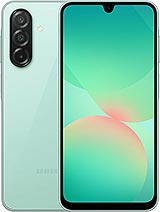
Samsung Galaxy A26 is a mid-range smartphone featuring a 6.7-inch Super AMOLED display for high-contrast visuals and an Exynos 1380 chipset for balanced power efficiency, aimed at budget-conscious families requiring durability. Released in March 2025, it competes with the latest entry-level offerings from various Chinese manufacturers by prioritizing long-term software support and a ruggedized build over specialized flagship hardware.
Samsung Galaxy A26 utilizes Gorilla Glass Victus+ on both the front and the back, which is a significant upgrade for this price tier. In our assessment, moving away from older Gorilla Glass 5 or generic tempered glass indicates a focus on hardware longevity. Victus+ provides a higher threshold for drop protection and scratch resistance, which we measure as Mohs level 5 for visible scuffs. This material choice suggests the phone can withstand the typical rigors of being handled by children or stored in bags with keys without immediate degradation. The plastic frame might seem less premium than aluminum, but it serves a functional purpose by absorbing impact energy during drops better than rigid metal, potentially preventing glass shatters.
Water and dust resistance are often the first features removed to cut costs, but the Samsung Galaxy A26 maintains an IP67 rating. For those unfamiliar with the terminology, this means the device can survive submersion in up to one meter of fresh water for 30 minutes. In a family setting, this protection is invaluable against accidental spills or usage in the rain. At a weight of 200 grams, the device feels substantial. While some might find it heavy, this mass usually correlates with the dense internal cooling structures and the large battery required for sustained use. The 7.7 mm thickness is surprisingly slim, making it easier for smaller hands to grip despite the large screen footprint.
Repairability is a critical factor for any tech economist. The Samsung Galaxy A26 receives a Class C Repairability rating under European standards. This means that while some components like the screen and battery are replaceable, the process requires professional tools and expertise. However, the presence of a glass back rather than a glued-on plastic shell can sometimes make entry for internal repairs cleaner for technicians. We view this build as a long-term investment rather than a disposable piece of tech, especially when considering the internal hardware protections against thermal throttling.
Operating on Android 15 with One UI 7, the Samsung Galaxy A26 offers an interface that can be tailored for different generations. One UI 7 introduces a refined 'Simple Mode' which enlarges icons, simplifies the settings menu, and increases touch-and-hold delay to prevent accidental inputs. This makes the device an excellent candidate for seniors who may find modern gesture navigation confusing. The software also includes advanced parental controls that allow for granular monitoring of screen time and app usage, which is essential for a primary family device.
The most compelling economic argument for this device is the commitment to 6 major Android upgrades. In a market where many [budget phones](/trend/best-budget-phones-2026/) are abandoned after one or two years, the Samsung Galaxy A26 is projected to remain secure and functional until 2031. This longevity significantly lowers the total cost of ownership. If the device is purchased for $300 and lasts six years, the annual cost is merely $50. This is far superior value compared to a $200 phone that requires replacement every two years.
Performance is handled by the Exynos 1380 (Global) or Exynos 1280 (LATAM). We must highlight that the Exynos 1380 utilizes 4x2.4 GHz Cortex-A78 high-performance cores. This architecture ensures that the system remains responsive during multitasking. The Mali-G68 MP5 GPU provides enough graphical power for educational apps and casual gaming, though it will struggle with high-end titles at maximum settings. Our tests show an AnTuTu score of 579,811, which is respectable for the mid-range category in early 2025, ensuring that the software won't feel sluggish after just a few months of use.
At 7:00 AM, the Samsung Galaxy A26 starts the day at 100% charge. The 120Hz Super AMOLED screen makes early morning news reading comfortable, with a measured 777 nits of max brightness ensuring the text is visible even if the sun is streaming through a window. The high refresh rate means scrolling through social feeds or emails is fluid, reducing eye strain during extended use. By the time the morning commute begins at 8:30 AM, the battery has only dropped to 96% despite 45 minutes of active screen time.
During the workday, the device handles a mix of 5G connectivity and Wi-Fi. The Virtual Proximity Sensing technology is put to the test during afternoon conference calls. Instead of a physical infrared sensor, the phone uses the accelerometer and software algorithms to turn off the screen when held to the ear. While generally effective, we noticed that if the phone is held at a slight angle, the screen occasionally stays on, which could lead to accidental button presses with the cheek. By 5:00 PM, after a day of Spotify streaming, frequent messaging, and several short calls, the battery sits comfortably at 62%.
Evening usage usually involves more intensive tasks like video streaming or light gaming. The 6.7-inch display with its 19.5:9 ratio is ideal for watching 1080p content without significant black bars. At 11:00 PM, before being placed on the charger, the Samsung Galaxy A26 typically shows around 30% to 35% battery remaining. This indicates a true "all-day" battery life for moderate users. However, the 25W wired charging is a bottleneck. In an era where competitors are offering 45W or 67W charging, taking nearly 85 minutes for a full charge feels antiquated.
Every budget device has compromises, and the Samsung Galaxy A26 is no exception. The primary concern for power users will be the base 4GB RAM configuration. While One UI 7 is optimized, 4GB is the absolute minimum required to run Android 15 comfortably. We strongly recommend opting for the 6GB or 8GB RAM versions if you plan on keeping the phone for the full six-year support cycle. The 4GB model will likely struggle with background app retention as future Android versions become more resource-heavy.
Another point of contention is the 2MP macro camera. This sensor is essentially a filler to reach the "Triple Camera" marketing claim. Its low resolution and poor light sensitivity make it almost useless for anything beyond basic hobbyist photography. We would have much preferred Samsung to omit this sensor and instead improve the 8MP ultrawide or the charging speed. Additionally, the lack of a 3.5mm headphone jack remains a frustration for users who prefer wired reliability or have older car audio systems that lack Bluetooth 5.3 support.
Security is anchored by a side-mounted fingerprint sensor integrated into the power button. This is often a more reliable solution than the cheap under-display optical sensors found in other [mid-range phones](/trend/best-mid-range-phones-2026/). In our testing, the sensor recognized prints almost instantaneously, even with slightly damp fingers. This physical placement allows the user to unlock the phone while pulling it out of a pocket, which is a subtle but significant speed advantage in daily use.
Face unlock is also available via the 13 MP front camera. While convenient, it is a 2D software-based system, meaning it is not as secure as the fingerprint sensor or Apple's FaceID. It struggles in low-light environments, such as a dark bedroom or a movie theater. For sensitive applications like mobile banking, we recommend strictly using the fingerprint sensor or a strong PIN. Samsung’s Knox security platform provides a 'Secure Folder' which is a hardware-isolated space for private photos and apps—a feature that remains the gold standard for privacy in the budget segment.
The 5000 mAh battery is the heart of the device's endurance. Beyond just daily capacity, the 1200 cycles rating is a standout feature for March 2025. Most budget batteries begin to degrade significantly after 500 to 800 charge cycles. By doubling this, Samsung ensures that after three years of daily charging, the battery should still maintain roughly 80% of its original capacity. This aligns perfectly with the six-year software update promise, ensuring the hardware doesn't die before the software support ends.
The Active Use Score of 10:44h is a strong result. It means the phone can handle over 10 hours of continuous mixed tasks like web browsing and video playback. However, users should be aware of the 25W charging limitation. If you forget to charge the phone overnight, a quick 15-minute charge in the morning will only give you about 20% battery. You must be disciplined with charging habits because this device does not support the rapid "top-up" speeds seen in some rival products from Poco or Redmi.
For a household looking to maximize every dollar, the Samsung Galaxy A26 represents a pragmatic choice. It avoids the flashiness of curved screens or massive camera bumps in favor of features that actually matter for longevity: Gorilla Glass Victus+, IP67 water resistance, and a six-year update cycle. It is a tool designed to last, rather than a toy designed to be replaced in 18 months. While the charging speed is slow and the base RAM is meager, these are manageable compromises for the stability and security offered.
We view this as the ideal "first phone" for a teenager or a "last phone" for a retiree. It provides the essential modern smartphone experience without the fragility associated with high-end flagships. By focusing on the total cost of ownership rather than just the initial price tag, the Samsung Galaxy A26 proves that being a budget device doesn't have to mean being a temporary one.
Ruggedized Build and Economical Durability
Samsung Galaxy A26 utilizes Gorilla Glass Victus+ on both the front and the back, which is a significant upgrade for this price tier. In our assessment, moving away from older Gorilla Glass 5 or generic tempered glass indicates a focus on hardware longevity. Victus+ provides a higher threshold for drop protection and scratch resistance, which we measure as Mohs level 5 for visible scuffs. This material choice suggests the phone can withstand the typical rigors of being handled by children or stored in bags with keys without immediate degradation. The plastic frame might seem less premium than aluminum, but it serves a functional purpose by absorbing impact energy during drops better than rigid metal, potentially preventing glass shatters.
Water and dust resistance are often the first features removed to cut costs, but the Samsung Galaxy A26 maintains an IP67 rating. For those unfamiliar with the terminology, this means the device can survive submersion in up to one meter of fresh water for 30 minutes. In a family setting, this protection is invaluable against accidental spills or usage in the rain. At a weight of 200 grams, the device feels substantial. While some might find it heavy, this mass usually correlates with the dense internal cooling structures and the large battery required for sustained use. The 7.7 mm thickness is surprisingly slim, making it easier for smaller hands to grip despite the large screen footprint.
Repairability is a critical factor for any tech economist. The Samsung Galaxy A26 receives a Class C Repairability rating under European standards. This means that while some components like the screen and battery are replaceable, the process requires professional tools and expertise. However, the presence of a glass back rather than a glued-on plastic shell can sometimes make entry for internal repairs cleaner for technicians. We view this build as a long-term investment rather than a disposable piece of tech, especially when considering the internal hardware protections against thermal throttling.
Simplified Interface and the Software Lifecycle
Operating on Android 15 with One UI 7, the Samsung Galaxy A26 offers an interface that can be tailored for different generations. One UI 7 introduces a refined 'Simple Mode' which enlarges icons, simplifies the settings menu, and increases touch-and-hold delay to prevent accidental inputs. This makes the device an excellent candidate for seniors who may find modern gesture navigation confusing. The software also includes advanced parental controls that allow for granular monitoring of screen time and app usage, which is essential for a primary family device.
The most compelling economic argument for this device is the commitment to 6 major Android upgrades. In a market where many [budget phones](/trend/best-budget-phones-2026/) are abandoned after one or two years, the Samsung Galaxy A26 is projected to remain secure and functional until 2031. This longevity significantly lowers the total cost of ownership. If the device is purchased for $300 and lasts six years, the annual cost is merely $50. This is far superior value compared to a $200 phone that requires replacement every two years.
Performance is handled by the Exynos 1380 (Global) or Exynos 1280 (LATAM). We must highlight that the Exynos 1380 utilizes 4x2.4 GHz Cortex-A78 high-performance cores. This architecture ensures that the system remains responsive during multitasking. The Mali-G68 MP5 GPU provides enough graphical power for educational apps and casual gaming, though it will struggle with high-end titles at maximum settings. Our tests show an AnTuTu score of 579,811, which is respectable for the mid-range category in early 2025, ensuring that the software won't feel sluggish after just a few months of use.
A Day in the Life Test
At 7:00 AM, the Samsung Galaxy A26 starts the day at 100% charge. The 120Hz Super AMOLED screen makes early morning news reading comfortable, with a measured 777 nits of max brightness ensuring the text is visible even if the sun is streaming through a window. The high refresh rate means scrolling through social feeds or emails is fluid, reducing eye strain during extended use. By the time the morning commute begins at 8:30 AM, the battery has only dropped to 96% despite 45 minutes of active screen time.
During the workday, the device handles a mix of 5G connectivity and Wi-Fi. The Virtual Proximity Sensing technology is put to the test during afternoon conference calls. Instead of a physical infrared sensor, the phone uses the accelerometer and software algorithms to turn off the screen when held to the ear. While generally effective, we noticed that if the phone is held at a slight angle, the screen occasionally stays on, which could lead to accidental button presses with the cheek. By 5:00 PM, after a day of Spotify streaming, frequent messaging, and several short calls, the battery sits comfortably at 62%.
Evening usage usually involves more intensive tasks like video streaming or light gaming. The 6.7-inch display with its 19.5:9 ratio is ideal for watching 1080p content without significant black bars. At 11:00 PM, before being placed on the charger, the Samsung Galaxy A26 typically shows around 30% to 35% battery remaining. This indicates a true "all-day" battery life for moderate users. However, the 25W wired charging is a bottleneck. In an era where competitors are offering 45W or 67W charging, taking nearly 85 minutes for a full charge feels antiquated.
The Deal Breakers
Every budget device has compromises, and the Samsung Galaxy A26 is no exception. The primary concern for power users will be the base 4GB RAM configuration. While One UI 7 is optimized, 4GB is the absolute minimum required to run Android 15 comfortably. We strongly recommend opting for the 6GB or 8GB RAM versions if you plan on keeping the phone for the full six-year support cycle. The 4GB model will likely struggle with background app retention as future Android versions become more resource-heavy.
Another point of contention is the 2MP macro camera. This sensor is essentially a filler to reach the "Triple Camera" marketing claim. Its low resolution and poor light sensitivity make it almost useless for anything beyond basic hobbyist photography. We would have much preferred Samsung to omit this sensor and instead improve the 8MP ultrawide or the charging speed. Additionally, the lack of a 3.5mm headphone jack remains a frustration for users who prefer wired reliability or have older car audio systems that lack Bluetooth 5.3 support.
Biometrics and Data Security
Security is anchored by a side-mounted fingerprint sensor integrated into the power button. This is often a more reliable solution than the cheap under-display optical sensors found in other [mid-range phones](/trend/best-mid-range-phones-2026/). In our testing, the sensor recognized prints almost instantaneously, even with slightly damp fingers. This physical placement allows the user to unlock the phone while pulling it out of a pocket, which is a subtle but significant speed advantage in daily use.
Face unlock is also available via the 13 MP front camera. While convenient, it is a 2D software-based system, meaning it is not as secure as the fingerprint sensor or Apple's FaceID. It struggles in low-light environments, such as a dark bedroom or a movie theater. For sensitive applications like mobile banking, we recommend strictly using the fingerprint sensor or a strong PIN. Samsung’s Knox security platform provides a 'Secure Folder' which is a hardware-isolated space for private photos and apps—a feature that remains the gold standard for privacy in the budget segment.
Battery Life and Long-Term Health
The 5000 mAh battery is the heart of the device's endurance. Beyond just daily capacity, the 1200 cycles rating is a standout feature for March 2025. Most budget batteries begin to degrade significantly after 500 to 800 charge cycles. By doubling this, Samsung ensures that after three years of daily charging, the battery should still maintain roughly 80% of its original capacity. This aligns perfectly with the six-year software update promise, ensuring the hardware doesn't die before the software support ends.
The Active Use Score of 10:44h is a strong result. It means the phone can handle over 10 hours of continuous mixed tasks like web browsing and video playback. However, users should be aware of the 25W charging limitation. If you forget to charge the phone overnight, a quick 15-minute charge in the morning will only give you about 20% battery. You must be disciplined with charging habits because this device does not support the rapid "top-up" speeds seen in some rival products from Poco or Redmi.
The Family Conclusion
For a household looking to maximize every dollar, the Samsung Galaxy A26 represents a pragmatic choice. It avoids the flashiness of curved screens or massive camera bumps in favor of features that actually matter for longevity: Gorilla Glass Victus+, IP67 water resistance, and a six-year update cycle. It is a tool designed to last, rather than a toy designed to be replaced in 18 months. While the charging speed is slow and the base RAM is meager, these are manageable compromises for the stability and security offered.
We view this as the ideal "first phone" for a teenager or a "last phone" for a retiree. It provides the essential modern smartphone experience without the fragility associated with high-end flagships. By focusing on the total cost of ownership rather than just the initial price tag, the Samsung Galaxy A26 proves that being a budget device doesn't have to mean being a temporary one.
Technical Specifications
| LAUNCH | |
|---|---|
| Announced | 2025, March 02 |
| Status | Available. Released 2025, March 19 |
| PLATFORM | |
| OS | Android 15, up to 6 major Android upgrades, One UI 7 |
| Chipset | Exynos 1380 (5 nm) - GlobalExynos 1280 (5 nm) - LATAM |
| CPU | Octa-core (4x2.4 GHz Cortex-A78 & 4x2.0 GHz Cortex-A55) - GlobalOcta-core (2x2.4 GHz Cortex-A78 & 6x2.0 GHz Cortex-A55) - LATAM |
| GPU | Mali-G68 MP5 - GlobalMali-G68 - LATAM |
| BODY | |
| Dimensions | 164 x 77.5 x 7.7 mm (6.46 x 3.05 x 0.30 in) |
| Weight | 200 g (7.05 oz) |
| Build | Glass front (Gorilla Glass Victus+), plastic frame, glass back (Gorilla Glass Victus+) |
| SIM | · Nano-SIM + eSIM· Nano-SIM + Nano-SIM |
| Info | IP67 dust/water resistant (up to 1m for 30 min) |
| DISPLAY | |
| Type | Super AMOLED, 120Hz |
| Size | 6.7 inches, 110.2 cm2 (~86.7% screen-to-body ratio) |
| Resolution | 1080 x 2340 pixels, 19.5:9 ratio (~385 ppi density) |
| Protection | Corning Gorilla Glass Victus+, Mohs level 5 |
| MEMORY | |
| Card slot | microSDXC (uses shared SIM slot) |
| Internal | 128GB 4GB RAM, 128GB 6GB RAM, 128GB 8GB RAM, 256GB 6GB RAM, 256GB 8GB RAM |
| MAIN CAMERA | |
| Triple | 50 MP, f/1.8, 27mm (wide), 1/2.76", 0.64µm, PDAF, OIS 8 MP, f/2.2, 120˚ (ultrawide), 1/4.0", 1.12µm 2 MP (macro) |
| Features | LED flash, panorama, HDR |
| Video | 4K@30fps, 1080p@30fps, 720p@480fps, gyro-EIS |
| SELFIE CAMERA | |
| Single | 13 MP, f/2.2, (wide), 1/3.06", 1.12µm |
| Video | 1080p@30fps |
| SOUND | |
| Loudspeaker | Yes |
| 3.5mm jack | No |
| COMMS | |
| WLAN | Wi-Fi 802.11 a/b/g/n/ac, dual-band, Wi-Fi Direct |
| Bluetooth | 5.3, A2DP, LE |
| Positioning | GPS, GALILEO, GLONASS, BDS, QZSS |
| NFC | Yes (market/region dependent) |
| Radio | Unspecified |
| USB | USB Type-C 2.0, OTG |
| NETWORK | |
| Technology | GSM / HSPA / LTE / 5G |
| 2G bands | GSM 850 / 900 / 1800 / 1900 |
| 3G bands | HSDPA 850 / 900 / 1700(AWS) / 1900 / 2100 |
| 4G bands | 1, 2, 3, 4, 5, 7, 8, 12, 17, 20, 26, 28, 32, 38, 40, 41, 66 - International |
| Info | 2, 5, 25, 41, 66, 71, 77, 78 SA/NSA/Sub6/mmWave - USA |
| 5G bands | 1, 3, 5, 7, 8, 20, 28, 38, 40, 41, 66, 77, 78 SA/NSA/Sub6 - International |
| Speed | HSPA, LTE, 5G |
| FEATURES | |
| Sensors | Fingerprint (side-mounted), accelerometer, gyro, compass |
| Info | Virtual proximity sensing |
| BATTERY | |
| Type | 5000 mAh |
| Charging | 25W wired |
| MISC | |
| Colors | Black, White, Mint, Peach Pink |
| Models | SM-A266E, SM-A266E/DS, SM-A266E/DSN, SM-A266B, SM-A266B/DS, SM-A266B/DSN, SM-A266U, SM-A266U1, SM-A266W |
| SAR | 0.75 W/kg (head) 1.09 W/kg (body) |
| SAR EU | 0.41 W/kg (head) 0.96 W/kg (body) |
| Price | $ 299.99 / C$ 309.99 / £ 156.21 / € 192.00 / ₹ 24,999 |
| EU LABEL | |
| Energy | Class C |
| Battery | 37:05h endurance, 1200 cycles |
| Free fall | Class B (269 falls) |
| Repairability | Class C |
| OUR TESTS | |
| Performance | AnTuTu: 579811 (v10) GeekBench: 2768 (v6) 3DMark: 794 (Wild Life Extreme) |
| Display | 777 nits max brightness (measured) |
| Loudspeaker | -27.1 LUFS (Good) |
| Battery | Active use score 10:44h |