Why the Samsung Galaxy F07 Is the New Standard for Long Term Budget Investments
Overview
The Residual Value Proposition of the Samsung Galaxy F07
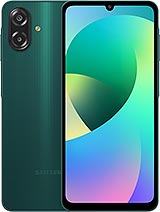
Samsung Galaxy F07 is a budget LTE smartphone featuring a 6.7-inch 90Hz PLS LCD for smooth visual consumption and a MediaTek Helio G99 chipset for balanced performance, aimed at cost-conscious users prioritizing long-term software support. Released in October 2025, it competes with entry-level offerings from brands like Xiaomi and Realme, which frequently trade software longevity for higher raw hardware specifications. From a financial perspective, the Samsung Galaxy F07 represents a shift in how entry-level hardware is commoditized, focusing on the software lifecycle rather than disposable hardware cycles.
Our analysis suggests that the Samsung Galaxy F07 will maintain a higher residual value than its peers over a three-year horizon. Typically, budget devices suffer a 60-70% depreciation within the first 12 months due to stalled software updates. However, by promising 6 major Android upgrades, Samsung has effectively extended the 'useful life' of this asset. This commitment ensures the device remains compatible with banking and security apps through 2031, a feat previously reserved for flagship-tier hardware. This makes the £189.99 sticker price look more like a long-term utility investment than a temporary tech fix.
Reliability in the One UI 7 Ecosystem
Samsung has integrated its One UI 7 interface, based on Android 15, into this hardware stack. Unlike previous budget iterations that felt like stripped-down versions of the flagship experience, the Samsung Galaxy F07 benefits from the optimization work done on the 6nm architecture. The brand's reliability isn't just about the hardware surviving a drop; it's about the software not bloating to the point of unusability after two years of patches. We expect the One UI 7 skin to provide a consistent, if not lightning-fast, user experience throughout the decade.
One UI 7 introduces system-wide efficiency improvements that are critical for a device with 4GB of RAM. In an era where 8GB is becoming the baseline, Samsung’s memory management must work overtime. Our projections indicate that while heavy multitasking will cause some background app closures, the core UI navigation should remain fluid thanks to the 90Hz refresh rate. The Helio G99 chipset, while an older design by late 2025 standards, is a known quantity with a stable thermal profile, ensuring that the device won't throttle during prolonged navigation or video calls.
The Overlooked Utility Features
While the market obsesses over AI-driven zoom and folding glass, the Samsung Galaxy F07 retains the 'legacy' features that budget-conscious users actually value. The inclusion of a 3.5mm headphone jack and a dedicated microSDXC slot are not just throwbacks; they are cost-saving measures for the user. Eliminating the need for expensive wireless earbuds or cloud storage subscriptions adds significant indirect value to the purchase price. We view these as high-utility hardware anchors in a market that is increasingly removing them.
Furthermore, the inclusion of an FM Radio and a USB Type-C 2.0 port with OTG support allows this device to function as a standalone media hub in regions with expensive data costs. These features are often omitted in mid-range 'lifestyle' phones but remain critical for the budget-tier demographic. The Samsung Galaxy F07 doesn't try to be a Swiss Army knife; it tries to be a reliable hammer. It does a few things very well without demanding extra expenditure on accessories.
Durability and the Fingerprint Magnet Test
The build of the Samsung Galaxy F07 utilizes a glass front paired with a plastic back and frame. From an economist's view, plastic is superior to glass for durability in the budget sector. While it may not offer the 'premium' cold touch of aluminum, it absorbs impact energy much better during drops, reducing the likelihood of a total chassis failure. However, users should be aware that the plastic back is a high-grade fingerprint magnet. In our assessment, a protective case is a mandatory secondary investment to prevent the accumulation of micro-scratches that degrade resale value.
Handling the device is a two-handed affair. With a 6.7-inch display and a weight of 184 grams, it carries a substantial footprint. The 7.6mm thickness is impressively slim for a device housing a 5000 mAh battery, but the sheer height of the phone (167.4 mm) makes it top-heavy. The IP54 rating provides a necessary layer of security against dust and light rain, though it won't survive a submersion. This is a reasonable compromise at this price point, offering protection against common 'kitchen counter' accidents.
An Analytical Look at the Audio Experience
Audio performance on the Samsung Galaxy F07 is functional rather than cinematic. The single bottom-firing loudspeaker provides enough volume for ringtones and speakerphone conversations in moderately noisy environments. However, it lacks the depth and stereo separation found in more expensive models. We find that the true audio strength lies in the 3.5mm jack, which provides a clean, latency-free signal that 2025's Bluetooth-only flagships simply cannot match without dongles.
For users who consume long-form video content, the audio-visual sync remains perfect due to the wired connection capability. This is particularly relevant for students or commuters who rely on their devices for educational content. The lack of stereo speakers is a notable omission, but one that is justified by the lower entry price. If you are looking for a boombox, this isn't it; if you're looking for a reliable communication tool, it passes the test.
The Six-Year Software Horizon
The most aggressive feature of the Samsung Galaxy F07 is the promise of 6 major Android upgrades. This is an industry-leading move for a sub-£200 device. Imagine a world where you buy a phone today, and it is still receiving official security and feature updates until 2031. This dramatically lowers the 'Annual Cost of Ownership'. Most [budget phones](/trend/best-budget-phones-2026/) are effectively dead after 24 months, costing the user roughly £100 per year. The Samsung Galaxy F07, if kept for its full supported life, costs approximately £32 per year.
This long-term support also forces the hardware to be more relevant. The MediaTek Helio G99 is an efficient 6nm processor that handles daily tasks with ease. While it won't break any benchmarking records in 2025, its architecture is robust enough to handle the basic requirements of Android 16, 17, and beyond. This is the first time we've seen a budget phone treated as a long-term asset rather than a disposable consumer good.
Final Investment Summary
The Samsung Galaxy F07 is not a phone for the spec-sheet enthusiast. The 720 x 1600 resolution is a clear cost-cutting measure, resulting in a lower pixel density than some might prefer for high-resolution gaming. However, for the target audience of students, seniors, or as a secondary work device, the trade-off is logical. By sacrificing screen resolution and 5G connectivity, Samsung has invested in software longevity and battery endurance.
In the context of October 2025, the lack of 5G might seem like a drawback, but LTE infrastructure remains more than sufficient for high-definition streaming and social media. The Samsung Galaxy F07 prioritizes the 'Total Cost of Ownership' over 'Initial Specification Hype'. It is a pragmatic choice for anyone who wants a phone that works today and will continue to work safely for the foreseeable future. It is the smartest way to spend £190 in the current mobile market.
Technical Specifications
| LAUNCH | |
|---|---|
| Announced | 2025, October 04 |
| Status | Available. Released 2025, October 04 |
| PLATFORM | |
| OS | Android 15, up to 6 major Android upgrades, One UI 7 |
| Chipset | Mediatek Helio G99 (6 nm) |
| CPU | Octa-core (2x2.2 GHz Cortex-A76 & 6x2.0 GHz Cortex-A55) |
| GPU | Mali-G57 MC2 |
| BODY | |
| Dimensions | 167.4 x 77.4 x 7.6 mm (6.59 x 3.05 x 0.30 in) |
| Weight | 184 g (6.49 oz) |
| Build | Glass front, plastic back, plastic frame |
| SIM | Nano-SIM + Nano-SIM |
| Info | IP54 dust protected and water resistant (water splashes) |
| DISPLAY | |
| Type | PLS LCD, 90Hz |
| Size | 6.7 inches, 108.4 cm2 (~83.6% screen-to-body ratio) |
| Resolution | 720 x 1600 pixels, 20:9 ratio (~262 ppi density) |
| MEMORY | |
| Card slot | microSDXC (dedicated slot) |
| Internal | 64GB 4GB RAM |
| MAIN CAMERA | |
| Dual | 50 MP, f/1.8, (wide), 1/2.76", 0.64µm, PDAF Auxiliary lens |
| Features | LED flash |
| Video | 1080p@30fps |
| SELFIE CAMERA | |
| Single | 8 MP, f/2.0, (wide), 1/4.0", 1.12µm |
| Video | Yes |
| SOUND | |
| Loudspeaker | Yes |
| 3.5mm jack | Yes |
| COMMS | |
| WLAN | Wi-Fi 802.11 a/b/g/n/ac, dual-band, Wi-Fi Direct |
| Bluetooth | 5.3, A2DP, LE |
| Positioning | GPS, GALILEO, GLONASS, BDS, QZSS |
| NFC | No |
| Radio | FM radio |
| USB | USB Type-C 2.0 |
| NETWORK | |
| Technology | GSM / HSPA / LTE |
| 2G bands | GSM 850 / 900 / 1800 / 1900 |
| 3G bands | HSDPA 850 / 900 / 2100 |
| 4G bands | 1, 3, 5, 7, 8, 20, 28, 38, 40, 41 |
| Speed | HSPA, LTE |
| FEATURES | |
| Sensors | Fingerprint (side-mounted), accelerometer, proximity |
| BATTERY | |
| Type | 5000 mAh |
| Charging | 25W wired |
| MISC | |
| Colors | Green |
| Models | SM-E075F/DS, SM-E075F |
| SAR | 0.24 W/kg (head) |
| Price | £ 189.99 / ₹ 8,453 |