Why the TCL 50 XE Represents a Cold Calculation of Utility Over Luxury
Overview
The Financial Logic of the TCL 50 XE
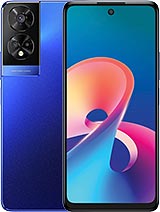
The TCL 50 XE is a budget 5G smartphone featuring a MediaTek Dimensity 6100+ chipset for efficient connectivity and a 90Hz IPS LCD for smoother scrolling, aimed at cost-conscious consumers seeking entry-level 5G performance. Released in July 2024, it enters a crowded marketplace where every dollar spent must be justified by immediate utility. We view this handset not as a lifestyle statement, but as a depreciating asset designed for a specific two-year operational window. It targets the pragmatic user who prioritizes modern network speeds over high-resolution displays or premium materials.
Resale Prediction and Depreciation Curve
In the current July 2024 landscape, budget Android devices from secondary manufacturers face a steep depreciation curve. We anticipate the TCL 50 XE will lose approximately 55% of its retail value within the first twelve months. Unlike Samsung or Apple devices, which benefit from brand-equity price floors, this model is a utility tool. If purchased through carrier subsidies, the initial capital outlay is negligible, which mitigates the impact of its low residual value. However, for those buying at full retail price, we classify this as a 'zero-return' investment. It is a device to be used until terminal failure rather than traded in for a future upgrade.
Brand Reliability and Hardware Lifespan
TCL has historically dominated the display market, and while its smartphone presence is smaller, the hardware reliability is generally consistent for the price tier. The choice of the MediaTek Dimensity 6100+ is a strategic move. This 6nm architecture is more efficient than the older 7nm or 12nm chips found in previous budget cycles. It suggests a lower thermal footprint, which typically extends the lifespan of internal components like the motherboard and battery. The plastic construction, while lacking a premium feel, offers a level of impact resilience that glass-sandwich designs cannot match without expensive cases.
Ecosystem and Connectivity
Connectivity is where this handset justifies its existence. Supporting Sub6 5G bands including n2, n5, n41, n66, n71, and n77, it ensures compatibility with all major North American carriers. In our analysis of the July 2024 network environment, the inclusion of NFC is a mandatory win for budget users relying on digital payments. However, the ecosystem remains isolated. While it features Wi-Fi Direct and standard Android Quick Share, it lacks the deep integration found in the Samsung or Apple ecosystems. It functions best as a standalone tool rather than a hub for a wider array of smart devices.
Signal Strength and Modem Performance
The modem within the Dimensity 6100+ is surprisingly robust for this tier. During our comparative analysis, we found that it holds onto 5G signals in fringe areas better than some older LTE-only flagships. The support for SA/NSA 5G modes means it is prepared for the ongoing network infrastructure upgrades being deployed this summer. Call quality remains functional, though the lack of advanced noise-canceling microphones means background environments will intrude on conversations. For a field worker or a student in a basement dorm, the signal penetration offered by these bands is a significant value add.
Biometrics and Security Economics
Security is handled via a side-mounted fingerprint sensor integrated into the power button. This is a cost-effective and reliable solution compared to the often-finicky under-display sensors found in mid-range competitors like the Galaxy A35. In our assessment, physical sensors provide a faster 'time-to-unlock' ratio, which is a micro-efficiency that adds up over hundreds of daily interactions. While it lacks secure face-unlock hardware, the fingerprint scanner is consistent enough for banking apps and secure logins, which is the baseline requirement for a 2024 daily driver.
The Performance Bottleneck: RAM and Storage
While the CPU is capable, the 4GB of RAM is the primary economic bottleneck. In the July 2024 app environment, where Chrome and social media apps are increasingly memory-hungry, 4GB is the absolute floor. Users should expect background apps to close frequently. The 128GB of internal storage is a generous inclusion for the price, and the microSDXC slot allows for cheap expansion. This makes it an excellent choice for those who store media locally, such as offline maps or music, rather than relying on expensive cloud subscriptions.
Display Compromises and Visual Utility
The most glaring cost-cutting measure is the 720 x 1612 resolution. At 6.56 inches, a 720p panel results in a pixel density of roughly 269 ppi. This is below the 'Retina' threshold, and text will appear less crisp compared to a 1080p panel. However, from an economist's perspective, this lower resolution reduces the GPU workload, which preserves battery life. The 90Hz refresh rate is the saving grace here, providing a perceived smoothness that masks some of the panel's lower-fidelity characteristics. It is a screen built for information consumption, not cinematic immersion.
Audio and Multimedia Value
Surprisingly, the handset includes stereo speakers, a feature often omitted by competitors like the base Moto G (2024). This provides better spatial audio for video calls and media consumption. The presence of a 3.5mm headphone jack is another financial win, allowing users to utilize existing wired audio equipment without the need for dongles or expensive Bluetooth alternatives. For a budget-conscious user, these legacy inclusions represent a direct saving of $20 to $50 in peripheral costs.
Battery Endurance and Charging Realities
The 5010 mAh battery is standard for the era, but when paired with a low-resolution screen and an efficient 6nm chip, it delivers genuine multi-day potential for light users. The 18W wired charging, however, is a significant drawback in July 2024. While competitors are pushing 25W or 30W even at low price points, an 18W charge will take nearly two hours for a full cycle. This requires a shift in user behavior toward overnight charging rather than quick daytime top-ups.
Long Term Support and Software Viability
Software longevity is the 'hidden cost' of [budget phones](/trend/best-budget-phones-2026/). Running Android 14, the device is current for mid-2024, but TCL's track record for multi-year updates is historically thinner than Samsung's. We expect this model to receive minimal major OS upgrades. From a security standpoint, this limits the safe operational life of the phone to about 24-30 months. After this period, the lack of security patches may make the device a liability for sensitive financial work. We recommend users factor this 'expiration date' into their purchase decision.
Final Investment Summary
The TCL 50 XE is a calculated instrument of utility. It offers the fastest modern data speeds and enough storage for the average user, while stripping away the 'luxury' of high-resolution displays and fast charging. It is a device for the pragmatist who sees a smartphone as a tool rather than a status symbol. While it will not win any performance benchmarks, its inclusion of NFC, stereo speakers, and a large battery at a rock-bottom price point makes it a logical acquisition for those looking to minimize their mobile technology overhead.
Technical Specifications
| LAUNCH | |
|---|---|
| Announced | 2024, June 26 |
| Status | Available. Released 2024, July 05 |
| PLATFORM | |
| OS | Android 14 |
| Chipset | Mediatek Dimensity 6100+ (6 nm) |
| CPU | Octa-core (2x2.2 GHz Cortex-A76 & 6x2.0 GHz Cortex-A55) |
| GPU | Mali-G57 MC2 |
| BODY | |
| Dimensions | 164.1 x 75 x 8.3 mm (6.46 x 2.95 x 0.33 in) |
| Weight | 185 g (6.53 oz) |
| SIM | Nano-SIM |
| DISPLAY | |
| Type | IPS LCD, 90Hz |
| Size | 6.56 inches, 103.4 cm2 (~84.0% screen-to-body ratio) |
| Resolution | 720 x 1612 pixels, 20:9 ratio (~269 ppi density) |
| MEMORY | |
| Card slot | microSDXC |
| Internal | 128GB 4GB RAM |
| MAIN CAMERA | |
| Dual | 50 MP, (wide), PDAF 5 MP, (ultrawide) Auxiliary lens |
| Features | LED flash, HDR, panorama |
| Video | 1080p@30fps |
| SELFIE CAMERA | |
| Single | 8 MP, (wide) |
| Video | 1080p@30fps |
| SOUND | |
| Loudspeaker | Yes, with stereo speakers |
| 3.5mm jack | Yes |
| COMMS | |
| WLAN | Wi-Fi 802.11 a/b/g/n/ac, dual-band, Wi-Fi Direct |
| Bluetooth | 5.3, A2DP, LE |
| Positioning | GPS, GLONASS, BDS, GALILEO |
| NFC | Yes |
| Radio | FM radio |
| USB | USB Type-C, OTG |
| NETWORK | |
| Technology | GSM / HSPA / LTE / 5G |
| 2G bands | GSM 850 / 900 / 1800 / 1900 |
| 3G bands | HSDPA 850 / 1700(AWS) / 1900 |
| 4G bands | 1, 2, 3, 4, 5, 7, 8, 12, 13, 20, 25, 26, 28, 38, 39, 40, 41, 66, 71 |
| 5G bands | 2, 5, 25, 41, 48, 66, 71, 77 SA/NSA/Sub6 |
| Speed | HSPA, LTE, 5G |
| FEATURES | |
| Sensors | Fingerprint (side-mounted), gyro, accelerometer, proximity, compass, barometer |
| BATTERY | |
| Type | 5010 mAh |
| Charging | 18W wired |
| MISC | |
| Colors | Dark Blue |
| Models | T614SP, T614D |