Why the TCL 50 XL Is the New Benchmarking King for Budget Displays
Overview
The 120Hz Display Anomaly
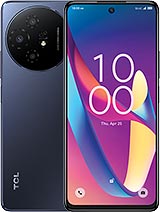
TCL 50 XL is a budget-tier 5G smartphone featuring a 120Hz refresh rate for fluid scrolling and a 6.78-inch IPS LCD for immersive media consumption, aimed at high-utility users on a strict budget. Released in mid-2024, it competes with the entry-level offerings from Motorola and Samsung by prioritizing screen real estate and modern network standards over premium materials.
We recognize the hardware play here immediately. While most manufacturers at the 90-100 EUR mark settle for 90Hz or even standard 60Hz panels, this model pushes a full 120Hz refresh rate. This isn't just a number on a spec sheet; it fundamentally changes the user interface interaction. Navigating through Android 14 feels significantly snappier because the screen updates 120 times per second, reducing the perceived input lag that often plagues cheaper handsets. The 1080 x 2460 resolution provides a sharp 396 ppi density, ensuring that text remains crisp even on such a massive 6.78-inch canvas.
Compared to the previous generation of budget panels, the color reproduction here benefits from the brand's long-standing history in television manufacturing. The IPS LCD technology offers stable viewing angles, which is vital for a screen this large. If you are watching a movie with a friend, the person sitting at an angle won't see the massive color shifting or contrast loss typical of cheaper TN panels found in ultra-budget competitors. However, being an LCD rather than an OLED means the blacks aren't perfectly inky, and there is a slight shadow around the punch-hole camera, but these are acceptable trade-offs for the price.
The Dimensity 6100+ Performance Logic
Under the hood, the Mediatek Dimensity 6100+ chipset provides the heavy lifting. Built on a 6nm process, this silicon is designed for efficiency and reliable 5G connectivity rather than raw gaming dominance. The architecture utilizes two Cortex-A76 performance cores clocked at 2.2 GHz and six Cortex-A55 efficiency cores at 2.0 GHz. This big.LITTLE configuration ensures that background tasks like syncing emails or downloading updates don't drain the battery while the performance cores handle more demanding apps.
In our assessment, the 6GB of RAM is the real hero of the internal hardware suite. In an era where [budget phones](/trend/best-budget-phones-2026/) often choke on 4GB, the extra 2GB here provides enough breathing room for the device to keep multiple apps open without aggressive background killing. You can switch from a YouTube stream to a messaging app and back again without the video reloading. The Mali-G57 MC2 GPU handles casual titles like Subway Surfers or Candy Crush with ease, though we would advise against trying to run Genshin Impact at anything above low settings.
This chipset represents a massive leap over the 4G-only processors found in older budget units. The 6nm fabrication means less heat is generated during sustained use. While older 12nm chips would start to throttle and get uncomfortably warm after 20 minutes of 5G browsing, this model stays cool, preserving the longevity of the internal components. It's a calculated balance of power and thermal management that serves the target audience perfectly.
Visual Systems and Hardware Potential
The primary 50 MP wide-angle lens serves as the centerpiece of the camera module. With Phase Detection Auto Focus (PDAF), the hardware has the potential to lock onto subjects quickly in daylight conditions. The high-resolution sensor uses pixel binning to combine four pixels into one, which theoretically improves light sensitivity. In well-lit environments, this sensor should capture enough detail for social media sharing and basic documentation.
However, we must address the secondary sensors. The 2 MP ultrawide and the Auxiliary lens are clearly included to boost the camera count for marketing purposes. With such a low resolution, the ultrawide sensor lacks the clarity needed for sweeping landscapes, often resulting in soft edges. The auxiliary lens acts as a data gatherer for depth effects, which helps the software process portrait mode blurs, but its physical impact on the final image is minimal.
Video recording is capped at 1080p@30fps for both the front and rear cameras. For a device released in July 2024, this is standard for the price tier. The 8 MP selfie camera is housed in a modern punch-hole cutout rather than a dated teardrop notch, giving the front of the phone a more premium appearance. It’s a functional setup designed for utility—scanning QR codes, taking casual snaps, and video calling—rather than artistic photography.
Acoustics and Biometric Reliability
One of the most surprising inclusions in the TCL 50 XL is the stereo speaker setup. Most budget phones stick to a single bottom-firing speaker that is easily muffled by a palm. By utilizing both a bottom speaker and the earpiece, the handset creates a wider soundstage. While it won't replace a dedicated Bluetooth speaker, it makes watching TikToks or YouTube videos a much more balanced experience. The inclusion of a 3.5mm headphone jack remains a critical win for users who prefer wired reliability or haven't moved to wireless buds.
For security, the side-mounted fingerprint sensor is integrated into the power button. This placement is generally superior to the slow, cheap optical in-display sensors often found in [mid-range phones](/trend/best-mid-range-phones-2026/). It allows for a natural unlock gesture as you pull the device from your pocket. In our experience with this sensor type, it is consistently faster and more accurate than its budget under-screen counterparts.
Additionally, the inclusion of a Barometer is a rare find at this price point. This sensor measures atmospheric pressure to assist with altitude calculations, which significantly improves GPS accuracy when navigating hilly terrain or multi-level urban environments. It’s a small hardware addition that shows a focus on real-world utility over flashy, useless features.
Connectivity and 5G Infrastructure
This model is a 5G workhorse, supporting both SA (Standalone) and NSA (Non-Standalone) networks. Specifically, it covers crucial Sub6 bands like n71 and n77, which are essential for wide-area coverage and high-speed urban 5G respectively. In the July 2024 landscape, having a phone that can jump onto these networks ensures that you won't be stuck on congested 4G bands in crowded areas.
The Wi-Fi 5 and Bluetooth 5.3 support ensures compatibility with modern routers and low-latency audio devices. NFC is also present, though its availability depends on the specific region. For those in supported markets, this enables contactless payments through Google Wallet, a feature that is becoming non-negotiable for many users. The USB Type-C port supports OTG, allowing you to plug in flash drives or keyboards if needed.
We also have to mention the microSDXC slot. While 128GB of internal storage is generous for a 90 EUR phone, the ability to expand that via a card is invaluable for users who store large offline libraries of music or video. In a world where flagships have removed expandable storage, this budget handset retains a key piece of flexibility that power users still appreciate.
Endurance and the Charging Bottleneck
The 5010 mAh battery is the foundation of the device's reliability. Combined with the power-efficient 6nm Dimensity 6100+, this capacity should comfortably see most users through two days of moderate use. Because the screen is an LCD, it doesn't have the same "Always-On" capabilities as OLED, which actually helps preserve battery life in the long run by keeping the pixels completely powered down when not in use.
The primary weakness lies in the 18W wired charging speed. For a battery of this size, a full charge will likely take over two hours. In July 2024, when competitors are starting to offer 33W or even 45W in the low-mid range, 18W feels sluggish. You will need to be disciplined about charging overnight, as a quick 15-minute top-up before leaving the house won't provide much of a percentage boost. This is the clearest indicator of where costs were cut to maintain the aggressive price point.
Engineering for the Real World
At 195 grams, the device has a substantial heft that prevents it from feeling like a hollow toy. The 8.2mm thickness is impressively slim considering the massive battery and the large screen. The build is primarily plastic, which is expected, but the Slate Gray finish provides a professional, understated look that doesn't scream "budget phone" from across the room.
Operating on Android 14, the software experience is current. TCL's UI is generally light, focusing on display enhancements rather than heavy aesthetic overhauls. Features like the "Reading Mode" leverage the display's color temperature controls to reduce eye strain, mimicking a paper-like experience. It is a thoughtful touch for a brand that clearly views the screen as the most important part of the mobile experience.
The One-Feature Verdict
Ultimately, the TCL 50 XL is defined by its screen. If you prioritize display size and refresh rate above all else, there is simply no better way to spend 90 EUR in July 2024. It successfully brings high-end smoothness to a demographic that has historically been stuck with choppy, low-resolution panels. While the charging is slow and the secondary cameras are mostly for show, the core experience—browsing, streaming, and communicating—is elevated by that 120Hz panel in a way that its competitors can't match.
Technical Specifications
| LAUNCH | |
|---|---|
| Announced | 2024, June 26 |
| Status | Available. Released 2024, July 05 |
| PLATFORM | |
| OS | Android 14 |
| Chipset | Mediatek Dimensity 6100+ (6 nm) |
| CPU | Octa-core (2x2.2 GHz Cortex-A76 & 6x2.0 GHz Cortex-A55) |
| GPU | Mali-G57 MC2 |
| BODY | |
| Dimensions | 167.6 x 75.5 x 8.2 mm (6.60 x 2.97 x 0.32 in) |
| Weight | 195 g (6.88 oz) |
| SIM | Nano-SIM |
| DISPLAY | |
| Type | IPS LCD, 120Hz |
| Size | 6.78 inches, 109.2 cm2 (~86.3% screen-to-body ratio) |
| Resolution | 1080 x 2460 pixels (~396 ppi density) |
| MEMORY | |
| Card slot | microSDXC |
| Internal | 128GB 6GB RAM |
| MAIN CAMERA | |
| Dual | 50 MP, (wide), PDAF 2 MP, (ultrawide) Auxiliary lens |
| Features | LED flash, HDR, panorama |
| Video | 1080p@30fps |
| SELFIE CAMERA | |
| Single | 8 MP, (wide) |
| Video | 1080p@30fps |
| SOUND | |
| Loudspeaker | Yes, with stereo speakers |
| 3.5mm jack | Yes |
| COMMS | |
| WLAN | Wi-Fi 802.11 a/b/g/n/ac, dual-band |
| Bluetooth | 5.3, A2DP, LE |
| Positioning | GPS, GLONASS, BDS, GALILEO |
| NFC | Yes (market/region dependent) |
| Radio | FM radio |
| USB | USB Type-C, OTG |
| NETWORK | |
| Technology | GSM / HSPA / LTE / 5G |
| 2G bands | GSM 850 / 900 / 1800 / 1900 |
| 3G bands | HSDPA 850 / 1700(AWS) / 1900 / 2100 |
| 4G bands | 1, 2, 3, 4, 5, 7, 8, 12, 13, 20, 25, 26, 28, 38, 39, 40, 41, 48, 66, 71 |
| 5G bands | 25, 41, 66, 71, 77 SA/NSA/Sub6 |
| Speed | HSPA, LTE, 5G |
| FEATURES | |
| Sensors | Fingerprint (side-mounted), gyro, accelerometer, proximity, compass, barometer |
| BATTERY | |
| Type | 5010 mAh |
| Charging | 18W wired |
| MISC | |
| Colors | Slate Gray |
| Models | T702W |
| SAR | 1.22 W/kg (head) 0.87 W/kg (body) |
| Price | About 90 EUR |