Why the TCL 505 Is the Smartest Secondary Phone Purchase You Can Make
Overview
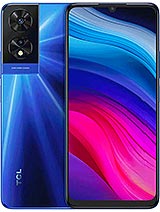
TCL 505 is a budget-tier smartphone featuring an IPS LCD with 90Hz refresh rate for smooth navigation and a 5010 mAh battery for extended endurance, aimed at users seeking a reliable secondary device. Released in March 2024, it enters a competitive entry-level market against established players from Motorola and Samsung by prioritizing screen fluidity and the latest software.
When evaluating a device for a secondary role, the priority shifts from raw power to operational reliability. The Helio G36 chipset inside the handset serves this purpose with a pragmatic approach. This 12nm octa-core processor, utilizing Cortex-A53 cores, is not designed to shatter benchmark records. Instead, it focuses on maintaining a stable environment for essential communication tools like WhatsApp, Telegram, and basic navigation apps. For the budget-conscious economist, this represents a low-cost entry point into the Android 14 ecosystem, ensuring that the software remains supported and secure for the near future.
Imagine a scenario where a primary flagship loses power or sustains damage. Having this model in a drawer, already updated to the latest OS version, provides an immediate safety net. The 4GB of RAM paired with virtual memory expansion capabilities ensures that basic multitasking doesn't result in immediate system freezes. While it won't handle intensive video editing or high-end gaming, it facilitates smooth transitions between a browser and a messaging app, which is precisely what is required from a backup unit.
One surprising inclusion for a device in this price bracket is the 90Hz refresh rate on the 6.75-inch panel. Most entry-level competitors still linger at 60Hz. This 50% increase in refresh rate makes the UI feel significantly more responsive than the underlying processor might suggest. It reduces the perceived lag during scrolling through social media feeds or long contact lists. Even though the resolution is capped at 720 x 1600 pixels, the high refresh rate provides a modern feel that masks the economical nature of the hardware.
The 5010 mAh battery is the structural foundation of this phone's value proposition. In our analysis of budget hardware, the efficiency of the Helio G36 plays a massive role. Because the CPU isn't pushing high-performance Cortex-X or A7-series cores, the power draw remains remarkably low during idle periods. For a backup phone, standby time is more critical than active screen-on time. This handset can likely sit on a desk for several days without requiring a top-up, making it ideal for emergency kits or travel bags.
However, the 10W wired charging speed is a clear bottleneck. At this wattage, filling a 5010 mAh cell is a process that takes hours rather than minutes. Users should view this as a 'set it and forget it' device, ideally charged overnight. In March 2024, seeing 10W in a world where 33W is becoming common even in [mid-range phones](/trend/best-mid-range-phones-2026/) is a reminder of the cost-cutting measures taken to keep the initial purchase price low. It is a trade-off that favors the initial budget over daily convenience.
Running Android 14 out of the box is a significant advantage for security. This version of Android introduces more granular permissions for media access and better transparency regarding how apps use location data. The handset includes a side-mounted fingerprint sensor, which provides a hardware-level security layer that is often more reliable and faster than the cheap under-display optical sensors found in some slightly more expensive competitors.
Beyond basic biometrics, the software provides a security dashboard that allows users to see which apps have accessed the microphone or camera recently. For a 'burner' or secondary phone, this level of visibility is paramount. If the device is used primarily for sensitive tasks or as a dedicated work phone, the ability to quickly toggle off permissions or use a secure folder for private documents adds a layer of professional utility that belies its price tag.
The use of eMMC 5.1 storage is a standard choice for this tier. While it is significantly slower than UFS 2.2 or 3.1 found in flagship devices, it provides a stable platform for data storage. The 64GB or 128GB internal options might seem small by modern standards, but the inclusion of a dedicated microSDXC slot changes the calculation.
Users can add up to 512GB or more of additional space without sacrificing their second SIM slot. This makes the device an excellent candidate for an offline media player. One could load a massive library of FLAC music files or offline maps for a long trek where data is unavailable. The stereo speakers further enhance this use case, offering better audio separation and volume than the single bottom-firing speakers typically found in budget rivals.
Signal penetration is often overlooked in budget reviews, but for a backup phone, it is the most important spec. The device supports a wide array of 4G LTE bands (1, 3, 5, 7, 8, 20, 26, 28, 38, 40, 41). This coverage ensures that it can latch onto signals in rural areas or inside thick-walled buildings where higher-frequency 5G signals might struggle.
With dual-band Wi-Fi (2.4GHz and 5GHz), it avoids the congestion issues of older [budget phones](/trend/best-budget-phones-2026/) that were limited to 2.4GHz. This allows for faster app downloads and more stable video calls when connected to home or office networks. The inclusion of NFC is region-dependent, but where available, it turns this budget handset into a functional digital wallet, a feature often stripped out by competitors trying to save a few cents per unit.
At 190 grams, the handset has a substantial presence without feeling overly heavy. The plastic construction is a logical choice; it doesn't shatter like glass and it doesn't dent as easily as thin aluminum. For a phone that might be tossed into a backpack or used by a child as their first device, this resilience is a feature, not a drawback. The 8.3mm thickness provides enough internal volume to protect the components from minor drops.
There is no official IP rating for water resistance, which is expected at this price. Users must exercise caution near pools or in heavy rain. However, the mechanical simplicity of the design—including the presence of a 3.5mm headphone jack—means there are fewer sophisticated points of failure compared to high-end foldables or glass-sandwich flagships.
From an economist's perspective, the TCL 505 represents a 'low-floor' investment. Because the initial price is already near the bottom of the market, the absolute depreciation over two years is minimal. A $1000 flagship might lose $400 in value the moment it leaves the store; this handset likely retains a significant percentage of its utility value for a much longer period.
As a first phone for a student or a reliable unit for a gig-worker needing a dedicated navigation screen, the return on investment is high. It fulfills the basic requirements of a modern smartphone with the added bonus of a smooth screen and the latest Android features. TCL 505 remains a pragmatic, value-driven choice for anyone who prioritizes functional endurance over flashy marketing gimmicks.
The Backup Use Case
When evaluating a device for a secondary role, the priority shifts from raw power to operational reliability. The Helio G36 chipset inside the handset serves this purpose with a pragmatic approach. This 12nm octa-core processor, utilizing Cortex-A53 cores, is not designed to shatter benchmark records. Instead, it focuses on maintaining a stable environment for essential communication tools like WhatsApp, Telegram, and basic navigation apps. For the budget-conscious economist, this represents a low-cost entry point into the Android 14 ecosystem, ensuring that the software remains supported and secure for the near future.
Imagine a scenario where a primary flagship loses power or sustains damage. Having this model in a drawer, already updated to the latest OS version, provides an immediate safety net. The 4GB of RAM paired with virtual memory expansion capabilities ensures that basic multitasking doesn't result in immediate system freezes. While it won't handle intensive video editing or high-end gaming, it facilitates smooth transitions between a browser and a messaging app, which is precisely what is required from a backup unit.
Screen Fluidity in the Budget Tier
One surprising inclusion for a device in this price bracket is the 90Hz refresh rate on the 6.75-inch panel. Most entry-level competitors still linger at 60Hz. This 50% increase in refresh rate makes the UI feel significantly more responsive than the underlying processor might suggest. It reduces the perceived lag during scrolling through social media feeds or long contact lists. Even though the resolution is capped at 720 x 1600 pixels, the high refresh rate provides a modern feel that masks the economical nature of the hardware.
Battery Standby and Longevity
The 5010 mAh battery is the structural foundation of this phone's value proposition. In our analysis of budget hardware, the efficiency of the Helio G36 plays a massive role. Because the CPU isn't pushing high-performance Cortex-X or A7-series cores, the power draw remains remarkably low during idle periods. For a backup phone, standby time is more critical than active screen-on time. This handset can likely sit on a desk for several days without requiring a top-up, making it ideal for emergency kits or travel bags.
However, the 10W wired charging speed is a clear bottleneck. At this wattage, filling a 5010 mAh cell is a process that takes hours rather than minutes. Users should view this as a 'set it and forget it' device, ideally charged overnight. In March 2024, seeing 10W in a world where 33W is becoming common even in [mid-range phones](/trend/best-mid-range-phones-2026/) is a reminder of the cost-cutting measures taken to keep the initial purchase price low. It is a trade-off that favors the initial budget over daily convenience.
Privacy and Security Features
Running Android 14 out of the box is a significant advantage for security. This version of Android introduces more granular permissions for media access and better transparency regarding how apps use location data. The handset includes a side-mounted fingerprint sensor, which provides a hardware-level security layer that is often more reliable and faster than the cheap under-display optical sensors found in some slightly more expensive competitors.
Beyond basic biometrics, the software provides a security dashboard that allows users to see which apps have accessed the microphone or camera recently. For a 'burner' or secondary phone, this level of visibility is paramount. If the device is used primarily for sensitive tasks or as a dedicated work phone, the ability to quickly toggle off permissions or use a secure folder for private documents adds a layer of professional utility that belies its price tag.
Storage Speed and Expansion
The use of eMMC 5.1 storage is a standard choice for this tier. While it is significantly slower than UFS 2.2 or 3.1 found in flagship devices, it provides a stable platform for data storage. The 64GB or 128GB internal options might seem small by modern standards, but the inclusion of a dedicated microSDXC slot changes the calculation.
Users can add up to 512GB or more of additional space without sacrificing their second SIM slot. This makes the device an excellent candidate for an offline media player. One could load a massive library of FLAC music files or offline maps for a long trek where data is unavailable. The stereo speakers further enhance this use case, offering better audio separation and volume than the single bottom-firing speakers typically found in budget rivals.
Connectivity and Signal Reliability
Signal penetration is often overlooked in budget reviews, but for a backup phone, it is the most important spec. The device supports a wide array of 4G LTE bands (1, 3, 5, 7, 8, 20, 26, 28, 38, 40, 41). This coverage ensures that it can latch onto signals in rural areas or inside thick-walled buildings where higher-frequency 5G signals might struggle.
With dual-band Wi-Fi (2.4GHz and 5GHz), it avoids the congestion issues of older [budget phones](/trend/best-budget-phones-2026/) that were limited to 2.4GHz. This allows for faster app downloads and more stable video calls when connected to home or office networks. The inclusion of NFC is region-dependent, but where available, it turns this budget handset into a functional digital wallet, a feature often stripped out by competitors trying to save a few cents per unit.
Durability and Physical Build
At 190 grams, the handset has a substantial presence without feeling overly heavy. The plastic construction is a logical choice; it doesn't shatter like glass and it doesn't dent as easily as thin aluminum. For a phone that might be tossed into a backpack or used by a child as their first device, this resilience is a feature, not a drawback. The 8.3mm thickness provides enough internal volume to protect the components from minor drops.
There is no official IP rating for water resistance, which is expected at this price. Users must exercise caution near pools or in heavy rain. However, the mechanical simplicity of the design—including the presence of a 3.5mm headphone jack—means there are fewer sophisticated points of failure compared to high-end foldables or glass-sandwich flagships.
Resale Value and Economic Lifecycle
From an economist's perspective, the TCL 505 represents a 'low-floor' investment. Because the initial price is already near the bottom of the market, the absolute depreciation over two years is minimal. A $1000 flagship might lose $400 in value the moment it leaves the store; this handset likely retains a significant percentage of its utility value for a much longer period.
As a first phone for a student or a reliable unit for a gig-worker needing a dedicated navigation screen, the return on investment is high. It fulfills the basic requirements of a modern smartphone with the added bonus of a smooth screen and the latest Android features. TCL 505 remains a pragmatic, value-driven choice for anyone who prioritizes functional endurance over flashy marketing gimmicks.
Technical Specifications
| LAUNCH | |
|---|---|
| Announced | 2024, February 06 |
| Status | Available. Released 2024, March |
| PLATFORM | |
| OS | Android 14 |
| Chipset | Mediatek Helio G36 (12 nm) |
| CPU | Octa-core (4x2.2 GHz Cortex-A53 & 4x1.6 GHz Cortex-A53) |
| GPU | PowerVR GE8320 |
| BODY | |
| Dimensions | 168.3 x 76.7 x 8.3 mm (6.63 x 3.02 x 0.33 in) |
| Weight | 190 g (6.70 oz) |
| SIM | · Nano-SIM· Nano-SIM + Nano-SIM |
| DISPLAY | |
| Type | IPS LCD, 90Hz, 400 nits (typ) |
| Size | 6.75 inches, 110.0 cm2 (~85.2% screen-to-body ratio) |
| Resolution | 720 x 1600 pixels, 20:9 ratio (~260 ppi density) |
| MEMORY | |
| Card slot | microSDXC (dedicated slot) |
| Internal | 64GB 4GB RAM, 128GB 4GB RAM |
| Info | eMMC 5.1 |
| MAIN CAMERA | |
| Dual | 50 MP, f/1.8, 26mm (wide), 1/2.55", 0.7µm, PDAF Auxiliary lens |
| Features | LED flash, HDR, panorama |
| Video | 1080p@30fps |
| SELFIE CAMERA | |
| Single | 5 MP, f/2.2, 27mm (wide), 1/5.0", 1.12µm |
| Video | 1080p@30fps |
| SOUND | |
| Loudspeaker | Yes, with stereo speakers |
| 3.5mm jack | Yes |
| COMMS | |
| WLAN | Wi-Fi 802.11 a/b/g/n/ac, dual-band, Wi-Fi Direct |
| Bluetooth | 5.1, A2DP, LE |
| Positioning | GPS, GLONASS, GALILEO, BDS |
| NFC | Yes (market/region dependent) |
| Radio | FM radio |
| USB | USB Type-C 2.0, OTG |
| NETWORK | |
| Technology | GSM / HSPA / LTE |
| 2G bands | GSM 850 / 900 / 1800 / 1900 |
| 3G bands | HSDPA 850 / 900 / 1900 / 2100 |
| 4G bands | 1, 3, 5, 7, 8, 20, 26, 28, 38, 40, 41 |
| Speed | HSPA, LTE |
| FEATURES | |
| Sensors | Fingerprint (side-mounted; market/region dependent), accelerometer |
| Info | Virtual proximity sensing |
| BATTERY | |
| Type | 5010 mAh |
| Charging | 10W wired |
| MISC | |
| Colors | Ocean Blue, Space Grey |
| Models | T509K, T509A |