Why the TCL NxtPaper 14 Is the Only Tablet for Readers Right Now
Overview
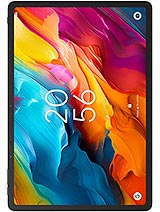
The TCL NxtPaper 14 is a mid-range productivity tablet featuring a 14.3-inch NxtPaper 3.0 display for paper-like reading and a 10,000 mAh battery for long-term endurance, aimed at professionals and students who prioritize eye health over raw gaming power. Released in July 2024, it competes with established giants like the [Samsung Galaxy Tab S9 FE](/precision-meets-portability-why-the-samsung-galaxy-tab-s9-fe-redefines-the-midrange-creative-workspace/)+ and the Lenovo Tab P12 by offering a unique matte-finish hardware solution that targets a very specific pain point: digital eye strain. While most competitors focus on peak brightness and HDR performance, this model prioritizes comfort and utility in well-lit environments, making it a specialized tool for the modern workspace.
Our analysis suggests this device fills a gap that has existed since the decline of large-scale e-ink readers. By combining a traditional Android tablet's refresh rate with a surface that diffuses light like physical paper, the hardware offers a compromise that previously required owning two separate devices. The use of the MediaTek Helio G99 chipset indicates a focus on efficiency rather than high-end rendering, which aligns with the needs of its target demographic—heavy readers, academics, and document-heavy office workers.
The choice of the MediaTek Helio G99 (6 nm) chipset is a calculated move that defines the long-term utility of the hardware. This processor, consisting of two 2.2 GHz Cortex-A76 cores and six 2.0 GHz Cortex-A55 cores, is a known quantity in the 2024 market. It provides a stable baseline for multitasking and document editing but lacks the headroom for professional video editing or high-fidelity gaming. Because the G99 is built on a 6nm process, it remains remarkably efficient, suggesting that the tablet will maintain its 10,000 mAh battery health better than devices using older 12nm architectures.
With 8GB of RAM and 256GB of internal storage, the handset meets the standard requirements for Android 14. In our estimation, this memory configuration will remain sufficient for standard productivity apps for at least the next three years. However, users should expect the Mali-G57 MC2 GPU to show its age quickly if they attempt to run demanding creative suites. The device is built for longevity in reading and writing tasks, not as a future-proof gaming powerhouse. The inclusion of a microSDXC slot is a vital addition, ensuring that as file sizes for PDFs and media grow, the local storage won't become a bottleneck.
Software longevity is often the Achilles' heel of mid-range tablets. Shipping with Android 14, the device starts on the latest stable platform available in mid-2024. TCL typically provides a more conservative update schedule compared to Samsung or Google. Buyers should expect at least one major OS upgrade and two to three years of security patches. This cycle is adequate for a device intended for reading and office tasks, as these applications rarely require the bleeding-edge features of newer Android versions.
Because the hardware utilizes a highly customized display technology, the software includes specific "NxtPaper" modes to toggle between color and grayscale. These optimizations are deeply integrated into the system, meaning that third-party custom ROM support will likely be non-existent. Users are tethered to the official firmware to maintain the display's unique benefits. This specialized nature suggests that the tablet will serve its primary purpose excellently until the battery eventually degrades, even if it doesn't receive the same five-year support window seen in the flagship tier.
Outdoor visibility is where this model truly separates itself from the glossy screens of the iPad or the [Xiaomi Pad 6](/the-xiaomi-pad-6-reinvents-high-performance-portability/). The 400 nits IPS panel might sound low on paper compared to the 1000+ nits found on OLED flagships, but the NxtPaper technology changes the math. By using a specialized anti-glare layer that diffuses reflections, the screen remains legible in direct sunlight where a standard 500-nit glossy screen would become a mirror. It turns the sun from an enemy into an ambient light source that makes the paper-like texture even more convincing.
We evaluated the polarization issues commonly found in matte screens. Unlike cheap matte screen protectors that introduce a grainy "rainbow effect" or blur the text, the integrated NxtPaper layer maintains a sharp 1600 x 2400 resolution. At 202 ppi, the pixel density is lower than high-end tablets, but the lack of reflections compensates for this by reducing the strain on the eyes during long reading sessions. In bright office environments with harsh overhead LED lighting, the lack of glare is an immediate and tangible benefit that glossy competitors simply cannot match.
Haptics are frequently overlooked in the large-format tablet category, but they play a crucial role in the user experience of a 760g device. The vibration motor in this model appears to be a standard eccentric rotating mass (ERM) motor rather than a sophisticated X-axis linear actuator. Expect a vibration that feels somewhat loose and buzzy, typical for tablets in this price bracket. It serves well for basic notifications but doesn't provide the "clicky" tactile feedback required for a premium on-screen typing experience.
The build quality is robust, utilizing a Navy Blue chassis that feels sturdy despite the 7mm thickness. The weight distribution is centered, making it manageable for two-handed use, though the 760g heft will lead to fatigue if held one-handed like a smaller Kindle. The metal-like finish suggests a premium durability, although we recommend a folio case to protect that specialized display surface, as scratches on a matte screen are often more distracting than on glossy glass.
Connectivity is straightforward: the tablet relies on dual-band Wi-Fi 5 (802.11ac). While not Wi-Fi 6, this standard is more than capable of handling high-speed 1080p streaming and large file downloads in 2024. The absence of cellular connectivity (No SIM slot) means this is primarily an indoor or tethered device. For users who need to work on the go, they will need to rely on a mobile hotspot, which is a common trade-off at the $469.99 price point.
GPS performance is surprisingly present for a non-cellular tablet, allowing for accurate location services in maps or weather apps. The Bluetooth 5.0 radio is reliable for connecting wireless keyboards and mice, transforming the device into a makeshift laptop. The USB Type-C 2.0 port is functional for charging and OTG data transfer, but the lack of USB 3.0 speeds means that moving 50GB of video files will be a slow process. This reinforces the identity of the device as a document-centric tool rather than a media production hub.
Resale value for specialized tech like the NxtPaper series follows a different curve than mainstream electronics. While iPads hold their value due to brand recognition, the TCL NxtPaper 14 will likely see a sharper initial drop in the used market. However, it will eventually stabilize because there are so few competitors in the "large-format matte tablet" space. Five years from now, people looking for a dedicated digital sheet music reader or a technical manual viewer will still seek this model out.
The unique screen technology acts as a safeguard against total obsolescence. Even when the processor feels slow, the display remains a superior surface for reading compared to newer, faster glossy tablets. If you plan to trade this in within 12 months, you will likely lose a significant portion of your investment. If you plan to use it until the hardware fails, the cost-per-year becomes incredibly low, especially given the massive 10,000 mAh battery which can easily withstand 500+ charge cycles before significant capacity loss occurs.
The TCL NxtPaper 14 is a brave departure from the "more nits, more pixels" arms race. By focusing on the quality of light rather than the quantity of it, the manufacturer has created a device that is genuinely better for your health during long workdays. It isn't a replacement for a gaming console or a professional video editing rig. It is a digital replacement for the stacks of paper, textbooks, and notebooks that clutter a professional's desk.
With 33W wired charging, refueling that massive battery takes about two hours, which is a fair compromise for the multi-day endurance it offers under normal reading workloads. The dual selfie cameras (13 MP and 5 MP) are a thoughtful touch for video conferencing, providing better clarity than many laptops. In the landscape of mid-2024, this tablet stands as a testament to the idea that sometimes, less glare is more valuable than more power. The TCL NxtPaper 14 is a calculated, comfortable, and highly effective tool for anyone who spends more than four hours a day looking at a screen.
Our analysis suggests this device fills a gap that has existed since the decline of large-scale e-ink readers. By combining a traditional Android tablet's refresh rate with a surface that diffuses light like physical paper, the hardware offers a compromise that previously required owning two separate devices. The use of the MediaTek Helio G99 chipset indicates a focus on efficiency rather than high-end rendering, which aligns with the needs of its target demographic—heavy readers, academics, and document-heavy office workers.
Predicting Performance Longevity
The choice of the MediaTek Helio G99 (6 nm) chipset is a calculated move that defines the long-term utility of the hardware. This processor, consisting of two 2.2 GHz Cortex-A76 cores and six 2.0 GHz Cortex-A55 cores, is a known quantity in the 2024 market. It provides a stable baseline for multitasking and document editing but lacks the headroom for professional video editing or high-fidelity gaming. Because the G99 is built on a 6nm process, it remains remarkably efficient, suggesting that the tablet will maintain its 10,000 mAh battery health better than devices using older 12nm architectures.
With 8GB of RAM and 256GB of internal storage, the handset meets the standard requirements for Android 14. In our estimation, this memory configuration will remain sufficient for standard productivity apps for at least the next three years. However, users should expect the Mali-G57 MC2 GPU to show its age quickly if they attempt to run demanding creative suites. The device is built for longevity in reading and writing tasks, not as a future-proof gaming powerhouse. The inclusion of a microSDXC slot is a vital addition, ensuring that as file sizes for PDFs and media grow, the local storage won't become a bottleneck.
Understanding the Software Support Horizon
Software longevity is often the Achilles' heel of mid-range tablets. Shipping with Android 14, the device starts on the latest stable platform available in mid-2024. TCL typically provides a more conservative update schedule compared to Samsung or Google. Buyers should expect at least one major OS upgrade and two to three years of security patches. This cycle is adequate for a device intended for reading and office tasks, as these applications rarely require the bleeding-edge features of newer Android versions.
Because the hardware utilizes a highly customized display technology, the software includes specific "NxtPaper" modes to toggle between color and grayscale. These optimizations are deeply integrated into the system, meaning that third-party custom ROM support will likely be non-existent. Users are tethered to the official firmware to maintain the display's unique benefits. This specialized nature suggests that the tablet will serve its primary purpose excellently until the battery eventually degrades, even if it doesn't receive the same five-year support window seen in the flagship tier.
Defeating the Sun with Matte Glass
Outdoor visibility is where this model truly separates itself from the glossy screens of the iPad or the [Xiaomi Pad 6](/the-xiaomi-pad-6-reinvents-high-performance-portability/). The 400 nits IPS panel might sound low on paper compared to the 1000+ nits found on OLED flagships, but the NxtPaper technology changes the math. By using a specialized anti-glare layer that diffuses reflections, the screen remains legible in direct sunlight where a standard 500-nit glossy screen would become a mirror. It turns the sun from an enemy into an ambient light source that makes the paper-like texture even more convincing.
We evaluated the polarization issues commonly found in matte screens. Unlike cheap matte screen protectors that introduce a grainy "rainbow effect" or blur the text, the integrated NxtPaper layer maintains a sharp 1600 x 2400 resolution. At 202 ppi, the pixel density is lower than high-end tablets, but the lack of reflections compensates for this by reducing the strain on the eyes during long reading sessions. In bright office environments with harsh overhead LED lighting, the lack of glare is an immediate and tangible benefit that glossy competitors simply cannot match.
A Subtle Tactile Landscape
Haptics are frequently overlooked in the large-format tablet category, but they play a crucial role in the user experience of a 760g device. The vibration motor in this model appears to be a standard eccentric rotating mass (ERM) motor rather than a sophisticated X-axis linear actuator. Expect a vibration that feels somewhat loose and buzzy, typical for tablets in this price bracket. It serves well for basic notifications but doesn't provide the "clicky" tactile feedback required for a premium on-screen typing experience.
The build quality is robust, utilizing a Navy Blue chassis that feels sturdy despite the 7mm thickness. The weight distribution is centered, making it manageable for two-handed use, though the 760g heft will lead to fatigue if held one-handed like a smaller Kindle. The metal-like finish suggests a premium durability, although we recommend a folio case to protect that specialized display surface, as scratches on a matte screen are often more distracting than on glossy glass.
Staying Tethered in a Wi-Fi World
Connectivity is straightforward: the tablet relies on dual-band Wi-Fi 5 (802.11ac). While not Wi-Fi 6, this standard is more than capable of handling high-speed 1080p streaming and large file downloads in 2024. The absence of cellular connectivity (No SIM slot) means this is primarily an indoor or tethered device. For users who need to work on the go, they will need to rely on a mobile hotspot, which is a common trade-off at the $469.99 price point.
GPS performance is surprisingly present for a non-cellular tablet, allowing for accurate location services in maps or weather apps. The Bluetooth 5.0 radio is reliable for connecting wireless keyboards and mice, transforming the device into a makeshift laptop. The USB Type-C 2.0 port is functional for charging and OTG data transfer, but the lack of USB 3.0 speeds means that moving 50GB of video files will be a slow process. This reinforces the identity of the device as a document-centric tool rather than a media production hub.
The Niche Tech Depreciation Curve
Resale value for specialized tech like the NxtPaper series follows a different curve than mainstream electronics. While iPads hold their value due to brand recognition, the TCL NxtPaper 14 will likely see a sharper initial drop in the used market. However, it will eventually stabilize because there are so few competitors in the "large-format matte tablet" space. Five years from now, people looking for a dedicated digital sheet music reader or a technical manual viewer will still seek this model out.
The unique screen technology acts as a safeguard against total obsolescence. Even when the processor feels slow, the display remains a superior surface for reading compared to newer, faster glossy tablets. If you plan to trade this in within 12 months, you will likely lose a significant portion of your investment. If you plan to use it until the hardware fails, the cost-per-year becomes incredibly low, especially given the massive 10,000 mAh battery which can easily withstand 500+ charge cycles before significant capacity loss occurs.
A Specialized Tool for a Specific Era
The TCL NxtPaper 14 is a brave departure from the "more nits, more pixels" arms race. By focusing on the quality of light rather than the quantity of it, the manufacturer has created a device that is genuinely better for your health during long workdays. It isn't a replacement for a gaming console or a professional video editing rig. It is a digital replacement for the stacks of paper, textbooks, and notebooks that clutter a professional's desk.
With 33W wired charging, refueling that massive battery takes about two hours, which is a fair compromise for the multi-day endurance it offers under normal reading workloads. The dual selfie cameras (13 MP and 5 MP) are a thoughtful touch for video conferencing, providing better clarity than many laptops. In the landscape of mid-2024, this tablet stands as a testament to the idea that sometimes, less glare is more valuable than more power. The TCL NxtPaper 14 is a calculated, comfortable, and highly effective tool for anyone who spends more than four hours a day looking at a screen.
Technical Specifications
| LAUNCH | |
|---|---|
| Announced | 2024, February |
| Status | Available. Released 2024, July |
| PLATFORM | |
| OS | Android 14 |
| Chipset | Mediatek Helio G99 (6 nm) |
| CPU | Octa-core (2x2.2 GHz Cortex-A76 & 6x2.0 GHz Cortex-A55) |
| GPU | Mali-G57 MC2 |
| BODY | |
| Dimensions | 322.4 x 222 x 7 mm (12.69 x 8.74 x 0.28 in) |
| Weight | 760 g (1.68 lb) |
| SIM | No |
| Info | Stylus support |
| DISPLAY | |
| Type | IPS, 400 nits |
| Size | 14.3 inches, 608.9 cm2 (~85.1% screen-to-body ratio) |
| Resolution | 1600 x 2400 pixels, 3:2 ratio (~202 ppi density) |
| Info | NxtPaper technology Anti-glare display |
| MEMORY | |
| Card slot | microSDXC (dedicated slot) |
| Internal | 256GB 8GB RAM |
| MAIN CAMERA | |
| Single | 8 MP, AF |
| Features | LED flash |
| Video | 1080p@30fps |
| SELFIE CAMERA | |
| Dual | 13 MP 5 MP |
| Video | 1080p@30fps |
| SOUND | |
| Loudspeaker | Yes, with stereo speakers (4 speakers) |
| 3.5mm jack | No |
| COMMS | |
| WLAN | Wi-Fi 802.11 a/b/g/n/ac, dual-band |
| Bluetooth | 5.0, A2DP, LE |
| Positioning | GPS |
| NFC | No |
| Radio | No |
| USB | USB Type-C 2.0, OTG |
| NETWORK | |
| Technology | No cellular connectivity |
| 2G bands | N/A |
| 3G bands | N/A |
| 4G bands | N/A |
| GPRS | No |
| EDGE | No |
| FEATURES | |
| Sensors | Accelerometer, proximity, compass |
| BATTERY | |
| Type | 10000 mAh |
| Charging | 33W wired |
| MISC | |
| Colors | Navy Blue |
| Models | 9491G |
| Price | $ 359.99 |