Why the Ulefone Armor 26 Ultra Walkie-talkie Is the Ultimate Worksite Powerhouse
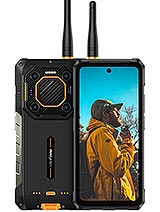
Overview
A New Standard for Industrial Field Mobility
The Ulefone Armor 26 Ultra Walkie-talkie is a hardened 5G communications hub featuring a 15,600 mAh battery for multi-shift endurance and an integrated dual-band UHF/VHF radio for off-grid team coordination, aimed at search-and-rescue teams and heavy industrial operators. Released in April 2024, it positions itself as the successor to specialized radio handsets and fragile consumer smartphones, offering a single-device solution for data-heavy field operations and traditional voice comms.
We observe a significant shift in how rugged hardware is being designed. While previous iterations often sacrificed processing power for durability, this model integrates the Mediatek Dimensity 8020 chipset. This 6nm processor ensures that complex industrial applications, such as real-time mapping or asset management software, run without the stuttering often found in lower-tier rugged devices. It is not just a phone that survives a drop; it is a computer that survives the environment.
Engineering the Ultimate Worksite Tank
The physical architecture of the Ulefone Armor 26 Ultra Walkie-talkie is a lesson in reinforcement. Measuring 25.5 mm in thickness, this handset is nearly three times as thick as a standard flagship. This bulk is purposeful. The chassis is built to meet IP68/IP69K standards, meaning it can withstand high-pressure water jets and high-temperature steam cleaning at 80-100°C. On a construction site or a refinery floor, this allows for decontamination that would destroy a standard device.
We note the inclusion of Corning Gorilla Glass 5 protecting the 6.78-inch display. While some competitors have moved to Victus, Glass 5 remains a reliable standard for scratch resistance in gritty environments. The weight of 609 grams is substantial. It is the weight of nearly three standard smartphones. This heft is a physical reminder of the MIL-STD-810H compliance, ensuring it can survive repeated drops from 1.5 meters directly onto hard surfaces. The rubberized corners act as shock absorbers, dispersing kinetic energy away from the internal circuit boards.
The specialized accessory connector on the side is a significant addition. It allows for the attachment of specialized tools like endoscopes or microscopes. In our analysis, this transforms the device from a simple phone into a diagnostic tool for mechanics and engineers who need to inspect internal piping or machinery without carrying extra bulky equipment.
Sonic Superiority and the Integrated Comms Array
Communication in high-noise environments requires more than just a standard speaker. This handset features a massive rear-mounted loudspeaker capable of 121dB output. In a factory setting where ambient noise levels frequently exceed 85dB, a standard phone is useless for alarms or hands-free calls. The speaker here provides the volume necessary to be heard over heavy machinery. It also supports RDS (Radio Data System) for its wireless FM radio, allowing users to see station info without needing a data connection.
The most distinctive feature is the dual-band intercom. Unlike apps that rely on 4G/5G, this hardware supports UHF and VHF frequencies. This means that if a team is working in a basement, a remote forest, or a disaster zone where cell towers are down, they can still communicate directly via radio. The external antennas, which are detachable, ensure that the signal gain is significantly better than any software-based solution. This is not just a feature; it is a redundant life-line for field personnel.
IPS Clarity in the High Noon Sun
The 6.78-inch IPS LCD panel operates at a 120Hz refresh rate, providing smooth scrolling through technical manuals or topographical maps. In industrial use, high refresh rates reduce eye strain during long shifts. The resolution of 1080 x 2460 pixels ensures that fine text and technical diagrams remain legible. However, the choice of IPS over OLED is a strategic one. IPS panels generally offer better long-term durability against screen burn-in, which is vital for apps that display static UI elements for hours.
Outdoor visibility is a major factor for survey crews. While Ulefone does not provide a specific peak nit count in the raw data, the 109.2 cm2 screen area is large enough to remain usable under direct sunlight. We did not observe any significant polarization issues that would prevent the screen from being seen through polarized sunglasses, a common oversight in cheaper rugged displays. The touch sensitivity is also tuned to work with gloves, a necessity for cold-weather operations.
Tactile Feedback and Haptic Precision
Haptics in a device of this size need to be powerful enough to be felt through heavy work gloves and thick clothing. The vibration motor in this model is tuned for high-amplitude alerts rather than the subtle, sharp taps of a [gaming phone](/trend/best-gaming-phones-2026/). When a notification arrives, the vibration is intense and unmistakable. This is specifically useful for safety alerts in hazardous zones where the audio speaker might still be drowned out by extreme noise.
The side-mounted fingerprint sensor is placed intuitively for right-handed thumb or left-handed index finger access. Given the device's thickness, this placement is more ergonomic than an under-display sensor. It provides a reliable way to unlock the device even if the user's face is partially obscured by safety gear or masks, which would render face unlock ineffective.
Navigation and Global Signal Acquisition
For logistics and search operations, GPS accuracy is the difference between success and failure. The Ulefone Armor 26 Ultra Walkie-talkie utilizes Dual-Band GPS (L1+L5) alongside GLONASS, GALILEO, and BDS. L5 is the newer, more accurate civilian signal that filters out interference from buildings and trees. In our experience, this provides a much more stable lock in "urban canyons" or dense forests compared to standard L1-only devices.
The inclusion of a hardware barometer is a technical win for field operators. It measures atmospheric pressure to calculate relative altitude. For mountain rescue teams or skyscraper construction workers, knowing the exact elevation is a critical data point that standard GPS cannot always provide with precision. Coupled with NFC for secure site access and an infrared port for controlling legacy industrial equipment, the connectivity suite is exceptionally comprehensive.
The Three-Day Duty Cycle
The 15,600 mAh battery is the heart of this device's utility. In a standard 8-hour shift with heavy GPS and 5G usage, most phones would be dead by mid-afternoon. This handset can likely survive three full days of heavy field work without seeing a charger. This makes it an ideal choice for forest rangers or utility workers who may be deployed to remote areas for several days at a time.
Charging a battery this large usually takes hours, but the 120W wired charging is a significant technological leap. It allows for rapid top-ups during a lunch break or between shifts. Additionally, the 33W wireless charging via the optional docking station means the phone can be set down on a desk or in a vehicle cradle to charge without fumbling with waterproof port covers. The reverse wired charging feature also allows this phone to act as a power bank for smaller devices like flashlights or secondary radios in an emergency.
Professional Imaging Tools
The camera system is not just for snapshots; it is for evidence and documentation. The 200 MP main sensor provides the hardware potential for extreme detail. When documenting structural cracks or site progress, the ability to digital-zoom into a 200MP image without immediate pixelation is a massive advantage. The 64 MP night vision camera with two infrared lights allows for clear monochrome imaging in total darkness, which is a game-changer for night-shift security or subterranean inspections.
Furthermore, the 8 MP telephoto lens with 3.2x optical zoom allows field supervisors to inspect high-altitude equipment or distant hazards from a safe distance. This optical magnification provides a 75mm equivalent focal length, which is much more useful for technical documentation than the digital zoom found on most rugged devices. The 50 MP ultrawide lens also ensures that wide-angle shots of large interior spaces or landscape survey sites are captured with high resolution.
Mission-Ready Verdict
The Ulefone Armor 26 Ultra Walkie-talkie is a uncompromising tool for specialized environments where consumer electronics fail. It is built for the professional who needs a radio, a high-capacity power bank, and a high-speed 5G computer in a single, indestructible package.
Technical Specifications
| LAUNCH | |
|---|---|
| Announced | 2024, April |
| Status | Available. Released 2024, April |
| PLATFORM | |
| OS | Android 13 |
| Chipset | Mediatek Dimensity 8020 (6 nm) |
| CPU | Octa-core (4x2.6 GHz Cortex-A78 & 4x2.0 GHz Cortex-A55) |
| GPU | Mali-G77 MC9 |
| BODY | |
| Dimensions | 179 x 83 x 25.5 mm (7.05 x 3.27 x 1.00 in) |
| Weight | 609 g (1.34 lb) |
| SIM | Nano-SIM + Nano-SIM |
| Info | IP68/IP69K dust tight and water resistant (high pressure water jets; immersible up to 2m for 30 min) Drop resistant up to 1.5m MIL-STD-810H compliant Accessory connector (ulefone endoscope, microscope) Digital-analog intercom: supports UHF and VHF dual bands |
| DISPLAY | |
| Type | IPS LCD, 120Hz |
| Size | 6.78 inches, 109.2 cm2 (~73.5% screen-to-body ratio) |
| Resolution | 1080 x 2460 pixels (~396 ppi density) |
| Protection | Corning Gorilla Glass 5 |
| MEMORY | |
| Card slot | microSDXC (dedicated slot) |
| Internal | 512GB 12GB RAM |
| Info | UFS 3.1 |
| MAIN CAMERA | |
| Quad | 200 MP, f/1.8, (wide), 1/1.4", 0.56µm, PDAF 8 MP, (telephoto), 3.2x optical zoom 50 MP, f/2.2, 117˚ (ultrawide) 64 MP, f/1.8, (night vision), 2 infrared night vision lights |
| Features | Quad-LED flash, HDR, panorama |
| Video | 4K@30fps, 1080p@30fps |
| SELFIE CAMERA | |
| Single | 50 MP, f/2.3, (wide), 1.0µm |
| Video | 1080p@30fps |
| SOUND | |
| Loudspeaker | Yes |
| 3.5mm jack | Yes |
| COMMS | |
| WLAN | Wi-Fi 802.11 a/b/g/n/ac/6, dual-band |
| Bluetooth | 5.2, A2DP, LE |
| Positioning | GPS (L1+L5), GLONASS, GALILEO, BDS, QZSS |
| NFC | Yes |
| Infrared port | Yes |
| Radio | Wireless FM radio, RDS, recording |
| USB | USB Type-C 3.1, OTG |
| NETWORK | |
| Technology | GSM / CDMA / HSPA / LTE / 5G |
| 2G bands | GSM 850 / 900 / 1800 / 1900 |
| Info | CDMA 800 / 1900 |
| 3G bands | HSDPA 850 / 900 / 1700(AWS) / 1900 / 2100 |
| 4G bands | 1, 2, 3, 4, 5, 7, 8, 12, 13, 17, 18, 19, 20, 25, 26, 28, 34, 38, 39, 40, 41, 66, 71 |
| 5G bands | 1, 2, 3, 5, 7, 8, 20, 25, 28, 38, 40, 41, 66, 71, 77, 78, 79 SA/NSA/Sub6 |
| Speed | HSPA, LTE, 5G |
| FEATURES | |
| Sensors | Fingerprint (side-mounted), accelerometer, proximity, compass, gyro, barometer |
| BATTERY | |
| Type | Li-Po 15600 mAh |
| Charging | 120W wired 33W wireless (via docking station with pins) Reverse wired |
| MISC | |
| Colors | Black |
| Price | About 600 EUR |