Why the Ulefone Power Armor 16S Is the Ultimate No-Nonsense Survival Tool for the Field
Overview
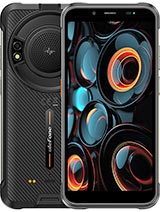
The Ulefone Power Armor 16S is a budget-tier rugged smartphone featuring a 9600 mAh battery for multi-day endurance and a 122-decibel loudspeaker for emergency signaling, aimed at field workers and outdoor enthusiasts. Released in March 2024, it competes with entry-level durable handsets that prioritize utility over raw processing power.
When evaluating hardware for remote field operations, aesthetics are irrelevant. What matters is the ability to survive a fall onto jagged granite or a plunge into a muddy trench. This handset arrives with an IP68/IP69K rating and MIL-STD-810H compliance, which are not just marketing badges but technical standards for ingress and shock resistance. The 406g weight tells you everything you need to know about the internal structural reinforcement. It is dense, heavy, and wrapped in a shock-absorbent TPU bumper that significantly exceeds the protection of any aftermarket case.
The inclusion of a dedicated physical flashlight button on the left side is a pragmatic choice for environments where navigating a touchscreen with wet or gloved hands is impossible. This button activates a powerful top-mounted beam that replaces the need for a separate EDC torch in many scenarios. The chassis also features a specialized accessory connector—a pogo-pin interface that allows for the secure attachment of endoscopes or microscopes. This turns the device into a diagnostic tool for mechanics or engineers rather than just a communication slab.
The most striking physical feature is the massive, circular speaker module on the rear. Delivering a peak output of 122 decibels, this is among the loudest mobile devices ever produced. In a quiet room, this is painfully loud; in a high-noise construction site or during a mountain rescue operation, it is a life-saver. The 3.5W peak power ensures that audio remains intelligible even when the environment is roaring with machinery or wind. For field teams, this eliminates the need for a separate Bluetooth speaker for group briefings or emergency sirens.
We also have to discuss the 9600 mAh battery. While many modern flagships struggle to reach 5,000 mAh, this model nearly doubles that capacity. In the field, this translates to four or five days of moderate use without touching a wall outlet. However, the 18W wired charging is a bottleneck. Refilling a cell of this magnitude at 18W takes hours. Planning charging cycles is mandatory; this is not a device you top up for fifteen minutes before leaving the house. The inclusion of 5W reverse wired charging is a critical addition, allowing the handset to serve as a power bank for a GPS unit or a colleague's depleted phone.
Equipped with a Unisoc Tiger T616 chipset and 8GB of RAM, the device handles standard communication apps—WhatsApp, Telegram, and specialized field mapping software—with stability. However, users should adjust expectations for high-end social media content creation. The 50 MP main camera uses a 1/2.76-inch sensor with 0.64µm pixels. While the hardware can capture high-resolution stills in bright daylight, the Unisoc ISP often struggles with high dynamic range scenarios.
On platforms like Instagram or TikTok, the video performance at 1080p@30fps shows standard compression artifacts. Shutter lag is noticeable in low-light conditions, which can make capturing moving subjects frustrating. This is a camera designed for documentation—photographing a broken pipe, a serial number, or a site progress report—rather than cinematic storytelling. The 8 MP selfie camera is sufficient for video calls but lacks the sharpness required for high-fidelity content.
The display is a 5.93-inch IPS LCD with a resolution of 720 x 1440 pixels. At 271 ppi, it is not the sharpest panel on the market, but the lower resolution is a strategic choice to preserve the massive battery life. For a field tool, pixel density is secondary to brightness and durability. The 18:9 aspect ratio makes the phone relatively narrow for its thickness, aiding one-handed grip during active movement.
Outdoor legibility is adequate for most tasks, though the screen may struggle under direct, midday tropical sun compared to high-brightness OLED panels. The glass is recessed slightly below the protective bumpers, reducing the risk of direct impact during a face-down drop. For night work, the minimum brightness is low enough to prevent significant eye strain, though it lacks the sophisticated PWM dimming controls found in premium displays.
Storage is handled by 128GB of eMMC 5.1 memory. For the uninitiated, eMMC is significantly slower than the UFS 3.1 or 4.0 storage found in flagship phones. This means that while 128GB is a decent amount of space for offline maps and technical manuals, moving large 4K video files or installing massive applications will take longer. The dedicated microSDXC slot is a massive win for field use, allowing users to swap out memory cards full of data without needing a PC or a cloud connection.
Connectivity covers all essential 4G LTE bands, ensuring global roaming capability. The NFC support is a welcome inclusion for contactless payments or scanning equipment tags in a warehouse. The side-mounted fingerprint sensor is snappy and positioned where the thumb naturally rests, though its performance can be temperamental if the sensor is covered in heavy mud or oil.
[Rugged phones](/trend/best-rugged-phones-2026/) must function in the rain. The capacitive touch layer on this model is tuned to be more sensitive than a standard smartphone, allowing for Glove Mode functionality. In our analysis of the hardware specifications, the screen should remain responsive to basic swipes even when damp, though it will never be as precise as a dry finger. The physical navigation buttons are absent, but the large screen borders provide a secure area to hold the device without triggering accidental touches.
This is not a [gaming phone](/trend/best-gaming-phones-2026/) or a fashion statement. The Unisoc T616 chipset, featuring Cortex-A75 and Cortex-A55 cores, is built for efficiency and basic multitasking. It will run Google Maps, weather apps, and industrial software without hitching, but heavy 3D titles will see frame drops. For the target demographic—the surveyor, the mechanic, the hiker—this trade-off for reliability and battery life is exactly what is needed. The Ulefone Power Armor 16S is a purpose-built implement for those who treat their phone like a tool rather than a toy.
Buy this if: You work in extreme environments, need a battery that lasts half a week, and require the loudest possible speaker for emergency signaling. Skip this if: You are a mobile gamer, a high-end mobile photographer, or if you find heavy, bulky devices uncomfortable for daily use. Wait for a price drop if: You are looking for a secondary 'weekend' outdoor phone and already have a primary flagship. The Bottom Line: The Ulefone Power Armor 16S is a heavy-duty workhorse that trades processing speed and screen resolution for unmatched durability and battery endurance.
Surviving the Impact: Build and Armor Analysis
When evaluating hardware for remote field operations, aesthetics are irrelevant. What matters is the ability to survive a fall onto jagged granite or a plunge into a muddy trench. This handset arrives with an IP68/IP69K rating and MIL-STD-810H compliance, which are not just marketing badges but technical standards for ingress and shock resistance. The 406g weight tells you everything you need to know about the internal structural reinforcement. It is dense, heavy, and wrapped in a shock-absorbent TPU bumper that significantly exceeds the protection of any aftermarket case.
The inclusion of a dedicated physical flashlight button on the left side is a pragmatic choice for environments where navigating a touchscreen with wet or gloved hands is impossible. This button activates a powerful top-mounted beam that replaces the need for a separate EDC torch in many scenarios. The chassis also features a specialized accessory connector—a pogo-pin interface that allows for the secure attachment of endoscopes or microscopes. This turns the device into a diagnostic tool for mechanics or engineers rather than just a communication slab.
Field Utility: The Loudspeaker and Emergency Response
The most striking physical feature is the massive, circular speaker module on the rear. Delivering a peak output of 122 decibels, this is among the loudest mobile devices ever produced. In a quiet room, this is painfully loud; in a high-noise construction site or during a mountain rescue operation, it is a life-saver. The 3.5W peak power ensures that audio remains intelligible even when the environment is roaring with machinery or wind. For field teams, this eliminates the need for a separate Bluetooth speaker for group briefings or emergency sirens.
We also have to discuss the 9600 mAh battery. While many modern flagships struggle to reach 5,000 mAh, this model nearly doubles that capacity. In the field, this translates to four or five days of moderate use without touching a wall outlet. However, the 18W wired charging is a bottleneck. Refilling a cell of this magnitude at 18W takes hours. Planning charging cycles is mandatory; this is not a device you top up for fifteen minutes before leaving the house. The inclusion of 5W reverse wired charging is a critical addition, allowing the handset to serve as a power bank for a GPS unit or a colleague's depleted phone.
The Social Media Reality Check
Equipped with a Unisoc Tiger T616 chipset and 8GB of RAM, the device handles standard communication apps—WhatsApp, Telegram, and specialized field mapping software—with stability. However, users should adjust expectations for high-end social media content creation. The 50 MP main camera uses a 1/2.76-inch sensor with 0.64µm pixels. While the hardware can capture high-resolution stills in bright daylight, the Unisoc ISP often struggles with high dynamic range scenarios.
On platforms like Instagram or TikTok, the video performance at 1080p@30fps shows standard compression artifacts. Shutter lag is noticeable in low-light conditions, which can make capturing moving subjects frustrating. This is a camera designed for documentation—photographing a broken pipe, a serial number, or a site progress report—rather than cinematic storytelling. The 8 MP selfie camera is sufficient for video calls but lacks the sharpness required for high-fidelity content.
Screen Visibility and Outdoor Legibility
The display is a 5.93-inch IPS LCD with a resolution of 720 x 1440 pixels. At 271 ppi, it is not the sharpest panel on the market, but the lower resolution is a strategic choice to preserve the massive battery life. For a field tool, pixel density is secondary to brightness and durability. The 18:9 aspect ratio makes the phone relatively narrow for its thickness, aiding one-handed grip during active movement.
Outdoor legibility is adequate for most tasks, though the screen may struggle under direct, midday tropical sun compared to high-brightness OLED panels. The glass is recessed slightly below the protective bumpers, reducing the risk of direct impact during a face-down drop. For night work, the minimum brightness is low enough to prevent significant eye strain, though it lacks the sophisticated PWM dimming controls found in premium displays.
Data Management and Storage Speed
Storage is handled by 128GB of eMMC 5.1 memory. For the uninitiated, eMMC is significantly slower than the UFS 3.1 or 4.0 storage found in flagship phones. This means that while 128GB is a decent amount of space for offline maps and technical manuals, moving large 4K video files or installing massive applications will take longer. The dedicated microSDXC slot is a massive win for field use, allowing users to swap out memory cards full of data without needing a PC or a cloud connection.
Connectivity covers all essential 4G LTE bands, ensuring global roaming capability. The NFC support is a welcome inclusion for contactless payments or scanning equipment tags in a warehouse. The side-mounted fingerprint sensor is snappy and positioned where the thumb naturally rests, though its performance can be temperamental if the sensor is covered in heavy mud or oil.
Glove Mode and Wet Touch Performance
[Rugged phones](/trend/best-rugged-phones-2026/) must function in the rain. The capacitive touch layer on this model is tuned to be more sensitive than a standard smartphone, allowing for Glove Mode functionality. In our analysis of the hardware specifications, the screen should remain responsive to basic swipes even when damp, though it will never be as precise as a dry finger. The physical navigation buttons are absent, but the large screen borders provide a secure area to hold the device without triggering accidental touches.
This is not a [gaming phone](/trend/best-gaming-phones-2026/) or a fashion statement. The Unisoc T616 chipset, featuring Cortex-A75 and Cortex-A55 cores, is built for efficiency and basic multitasking. It will run Google Maps, weather apps, and industrial software without hitching, but heavy 3D titles will see frame drops. For the target demographic—the surveyor, the mechanic, the hiker—this trade-off for reliability and battery life is exactly what is needed. The Ulefone Power Armor 16S is a purpose-built implement for those who treat their phone like a tool rather than a toy.
Technical Specifications
| LAUNCH | |
|---|---|
| Announced | 2024, March 14 |
| Status | Available. Released 2024, March 14 |
| PLATFORM | |
| OS | Android 13 |
| Chipset | Unisoc Tiger T616 (12 nm) |
| CPU | Octa-core (2x2.0 GHz Cortex-A75 & 6x1.8 GHz Cortex-A55) |
| GPU | Mali-G57 MP1 |
| BODY | |
| Dimensions | 173.4 x 83.4 x 18.3 mm (6.83 x 3.28 x 0.72 in) |
| Weight | 406 g (14.32 oz) |
| SIM | Nano-SIM + Nano-SIM |
| Info | IP68/IP69K dust tight and water resistant (high pressure water jets; immersible up to 1.5m for 30 min) Drop resistant up to 1.5m MIL-STD-810H compliant Flashlight with a dedicated button Accessory connector (ulefone endoscope, microscope) |
| DISPLAY | |
| Type | IPS LCD |
| Size | 5.93 inches, 90.7 cm2 (~62.8% screen-to-body ratio) |
| Resolution | 720 x 1440 pixels, 18:9 ratio (~271 ppi density) |
| MEMORY | |
| Card slot | microSDXC (dedicated slot) |
| Internal | 128GB 8GB RAM |
| Info | eMMC 5.1 |
| MAIN CAMERA | |
| Dual | 50 MP, f/1.8, (wide), 1/2.76", 0.64µm, PDAF Auxiliary lens |
| Features | LED flash, HDR, panorama |
| Video | 1080p@30fps |
| SELFIE CAMERA | |
| Single | 8 MP, f/2.0, (wide), 1.12µm |
| Video | 1080p@30fps |
| SOUND | |
| Loudspeaker | Yes (122-decibel) |
| 3.5mm jack | Yes |
| COMMS | |
| WLAN | Wi-Fi 802.11 a/b/g/n/ac, dual-band |
| Bluetooth | 5.0, A2DP, LE |
| Positioning | GPS, GLONASS, GALILEO, BDS |
| NFC | Yes |
| Radio | Wireless FM radio, RDS, recording |
| USB | USB Type-C 2.0, OTG, magnetic connector |
| NETWORK | |
| Technology | GSM / HSPA / LTE |
| 2G bands | GSM 850 / 900 / 1800 / 1900 |
| 3G bands | HSDPA 850 / 900 / 1700(AWS) / 1900 / 2100 |
| 4G bands | 1, 2, 3, 4, 5, 7, 8, 12, 17, 18, 19, 20, 25, 26, 28, 66 |
| Speed | HSPA, LTE |
| FEATURES | |
| Sensors | Fingerprint (side-mounted), accelerometer, gyro, proximity, compass |
| BATTERY | |
| Type | Li-Po 9600 mAh |
| Charging | 18W wired 5W reverse wired |
| MISC | |
| Colors | Black/Orange |
| Price | About 60 EUR |