Why the UMIDIGI G6 5G Is the Smartest Upgrade for Thrifty Buyers
Overview
Balancing the Economic Equation
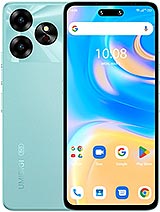
UMIDIGI G6 5G is an entry-level 5G smartphone featuring a MediaTek Dimensity 6100+ chipset for high-efficiency connectivity and a 50MP main camera paired with a specialized night vision sensor, designed for value-seekers requiring modern network compatibility. Released in early 2024, it competes directly with established budget players by offering a unique infrared imaging suite and global 5G bands at a fraction of the cost found in mainstream flagships.
The hardware choices here reflect a pragmatic approach to the 2024 mobile landscape. By utilizing the 6nm Dimensity 6100+, the handset avoids the overheating issues plagued by older 7nm or 12nm budget chips. This processor architecture includes two Cortex-A76 cores clocked at 2.2 GHz, which handle the heavy lifting for app launches and system navigation. The remaining six Cortex-A55 cores manage background tasks with extreme efficiency, ensuring the 5000 mAh battery isn't drained by simple idling. We see a clear focus on longevity and connectivity over raw gaming power, which aligns perfectly with the needs of a practical consumer.
Identifying the Strategic Cuts
In the world of budget tech economics, every high-end feature included requires a sacrifice elsewhere. To keep the price near 220 EUR, the display resolution is the primary casualty. The 6.57-inch IPS LCD panel runs at 720 x 1616 pixels. While the 90Hz refresh rate provides a perceived smoothness when scrolling through social media feeds, the 269 ppi density means that fine text and high-resolution icons won't have the razor-sharp edges found on 1080p devices. For users who primarily consume video content on the go, the lower resolution is a trade-off for significantly better battery life and reduced GPU strain.
Another notable compromise is the charging speed. While the battery capacity is generous, the 10W wired charging is essentially a relic of the past. In our analysis of the current market, most competitors have transitioned to at least 18W or 33W charging. Filling this large cell from zero to 100% will likely require a three-hour window. This makes the device a "charge-while-you-sleep" handset rather than something you can quickly top up during a lunch break. The build, while sleek at 8.3 mm thickness, utilizes materials that favor weight reduction over a heavy premium feel, keeping the device at a manageable 183 grams.
Social Media and Optical Reality
The 50 MP wide sensor with an f/1.8 aperture provides the hardware potential for decent social media content in well-lit environments. However, the ISP (Image Signal Processor) within the Dimensity chipset tends to favor aggressive sharpening, which can sometimes result in a "digital" look during high-contrast scenes. When uploading to platforms like Instagram or TikTok, the software compression often smooths out finer details, making the raw megapixels less relevant than the lighting conditions. The 1080p@30fps video limit is standard for this tier, though the lack of OIS (Optical Image Stabilization) means users will need steady hands to avoid shaky footage.
The inclusion of a 5 MP night vision camera is the true outlier. This sensor uses infrared light to capture monochrome images in total darkness. While not a feature for every user, it serves a specific niche for security, nature enthusiasts, or even finding lost items in a dark basement. It is rare to see this tech outside of heavy, ruggedized "work" phones, and seeing it in a slim 5G handset is a refreshing deviation from the standard macro or depth sensor filler typically found in budget triple-camera arrays.
Visibility and Visual Comfort
Outdoor legibility on the IPS LCD is adequate but not stellar. Without the high peak brightness of an AMOLED panel, users may find themselves hunting for shade when trying to read the screen under direct afternoon sunlight. On the positive side, the use of LCD technology avoids some of the PWM (Pulse Width Modulation) flickering issues that sensitive users report with cheaper OLED screens at low brightness levels. The 20:9 aspect ratio makes the phone tall and narrow, which is ideal for one-handed scrolling through long articles or news feeds.
Storage Dynamics and Expansion
With 128GB of internal storage and 6GB of RAM, the device starts at a very healthy baseline. We appreciate that the manufacturer didn't resort to a 64GB base model, which is increasingly unusable in 2024 given the size of modern app updates. The microSDXC slot is a vital inclusion for those who record a lot of video or carry extensive music libraries. However, it is a shared SIM slot, meaning you cannot have dual-SIM active while using an SD card. This is a common bottleneck in the budget segment that users must plan around based on their connectivity needs.
Performance for the Practical User
The Mali-G57 MC2 GPU is built for efficiency. Casual games like Candy Crush or Clash of Clans run without a hitch, but attempting to play AAA mobile titles like Genshin Impact will require dropping settings to the absolute minimum to maintain a playable frame rate. For the target audience—students, professionals, or seniors—the performance is more than sufficient. The Android 13 software experience is relatively clean, allowing the hardware to focus on core tasks rather than fighting through heavy manufacturer skins.
The Final Economic Assessment
The UMIDIGI G6 5G is a calculated purchase. It ignores the spec race in areas like screen resolution and charging speed to deliver a robust 5G experience with a unique night-vision utility. For the price, you are getting a future-proofed modem and a massive battery that can easily last two days of moderate use. If you can live with an overnight charging schedule and an HD+ display, the value proposition here is difficult to ignore. It is a tool for the pragmatist who values function and connectivity over the vanity of flagship branding.
Technical Specifications
| LAUNCH | |
|---|---|
| Announced | 2024 |
| Status | Available. Released 2024 |
| PLATFORM | |
| OS | Android 13 |
| Chipset | Mediatek Dimensity 6100+ (6 nm) |
| CPU | Octa-core (2x2.2 GHz Cortex-A76 & 6x2.0 GHz Cortex-A55) |
| GPU | Mali-G57 MC2 |
| BODY | |
| Dimensions | 163.9 x 75.3 x 8.3 mm (6.45 x 2.96 x 0.33 in) |
| Weight | 183 g (6.46 oz) |
| SIM | Nano-SIM + Nano-SIM |
| DISPLAY | |
| Type | IPS LCD, 90Hz |
| Size | 6.57 inches, 103.5 cm2 (~83.9% screen-to-body ratio) |
| Resolution | 720 x 1616 pixels, 20:9 ratio (~269 ppi density) |
| MEMORY | |
| Card slot | microSDXC (uses shared SIM slot) |
| Internal | 128GB 6GB RAM |
| MAIN CAMERA | |
| Dual | 50 MP, f/1.8, (wide), AF 5 MP, f/2.2, (night vision) |
| Features | LED flash |
| Video | 1080p@30fps |
| SELFIE CAMERA | |
| Dual | 8 MP, f/2.2, (wide) 2 MP, f/2.2, (night vision) |
| Video | 720p@30fps |
| SOUND | |
| Loudspeaker | Yes |
| 3.5mm jack | Yes |
| COMMS | |
| WLAN | Wi-Fi 802.11 a/b/g/n/ac, dual-band |
| Bluetooth | 5.3, A2DP, LE |
| Positioning | GPS, GLONASS, GALILEO, BDS |
| NFC | Yes |
| Radio | FM radio |
| USB | USB Type-C |
| NETWORK | |
| Technology | GSM / HSPA / LTE / 5G |
| 2G bands | GSM 850 / 900 / 1800 / 1900 |
| 3G bands | HSDPA 850 / 900 / 1700(AWS) / 1900 / 2100 |
| 4G bands | 1, 2, 3, 4, 5, 7, 8, 12, 13, 17, 18, 19, 20, 25, 26, 28, 34, 38, 39, 40, 41, 66, 71 |
| 5G bands | 1, 2, 3, 5, 7, 8, 20, 28, 38, 40, 41, 66, 71, 77, 78 SA/NSA |
| Speed | HSPA, LTE, 5G |
| FEATURES | |
| Sensors | Fingerprint (side-mounted), accelerometer, proximity, compass |
| BATTERY | |
| Type | 5000 mAh |
| Charging | 10W wired |
| MISC | |
| Colors | Space Black, Nebula Purple, Lake Green, Glacier Blue |
| Price | About 220 EUR |