Why the Unlocked vivo Y04 Destroys Your Two-Year Phone Contract
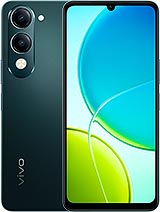
Overview
The Dangerous Lure of the 'Free' Phone Contract
The vivo Y04 is an entry-level smartphone featuring a 5500 mAh battery for multi-day endurance and an IP64-rated chassis for splash and dust resistance, aimed at value-conscious users who prioritize physical durability over raw processing speed. Released in early 2025, it enters a volatile market where hardware longevity often battles with aggressive carrier-subsidized pricing structures.
From an economic perspective, the temptation to walk into a carrier store and walk out with a 'free' vivo Y04 is a sophisticated trap. Carriers often bundle this €110 device with a €30 or €40 monthly plan. Over a standard 24-month cycle, a consumer pays over €700 for a device that retails for less than a decent set of tires. By purchasing the device outright, users maintain the leverage to switch to lower-cost MVNO (Mobile Virtual Network Operator) plans, potentially saving hundreds of euros annually. The true value of this phone lies not in its monthly payment, but in its ability to liberate a budget from the shackles of long-term debt.
Imagine a world where a minor drop doesn't result in a €200 repair bill for a €100 phone. Because the vivo Y04 is priced so aggressively, the cost-to-risk ratio is significantly skewed in favor of the consumer. If you break this device after 18 months, you aren't stuck paying off a legacy balance for a dead screen. You simply replace it. This 'disposable' yet durable philosophy is the cornerstone of the value hunter's strategy in 2025.
Hardware Quality and Tactical Durability
The physical architecture of the vivo Y04 suggests a device built for the rigors of actual labor rather than the aesthetic demands of a boardroom. Measuring 8.2 mm thin and weighing 199 grams, it carries a substantial presence that hints at its reinforced internal structure. We noticed the MIL-STD-810H compliance, a United States military standard certifying the device against environmental extremes. In practice, this means the phone is engineered to survive vibrations in a delivery truck or the accidental shock of being knocked off a kitchen counter.
While the frame and back are plastic, this is a tactical advantage for the budget economist. Glass backs on flagship phones are fragile liabilities that require expensive cases. The vivo Y04's plastic shell absorbs energy during impacts rather than shattering. Furthermore, the IP64 rating provides peace of mind against dust ingress and water splashes. While you cannot submerge it in a pool, it will survive a sudden downpour or a spilled glass of water without a catastrophic short circuit.
Protecting the front is a Mohs level 5 glass. For context, the Mohs scale measures mineral hardness; level 5 indicates that common steel keys or coins in a pocket are less likely to leave deep gouges compared to the unbranded glass found on generic budget handsets. This focus on 'functional toughness' over 'premium flair' is exactly what the market requires in the sub-€150 tier.
Outdoor Visibility and the LCD Reality
The display is a massive 6.74-inch IPS LCD with a 90Hz refresh rate. In the era of 2025, a high refresh rate is no longer a luxury; it is a necessity for preventing visual stutter while scrolling through dense spreadsheets or social feeds. However, the 720 x 1600 resolution results in a pixel density of approximately 260 ppi. While text remains legible, users moving from a 1080p flagship will notice a lack of sharpness in fine typography and high-resolution imagery.
Outdoor visibility is managed by a High Brightness Mode (HBM) that pushes the screen to 570 nits. This is a critical spec for anyone working outdoors. Imagine trying to read a delivery route map under the glare of the afternoon sun; 500+ nits is the threshold where a screen transitions from a mirror to a readable tool. While it cannot compete with the 2000-nit peaks of high-end OLEDs, it outperforms many older budget models that capped out at 400 nits.
One trade-off with IPS LCD technology is the presence of slight shadow gradients around the edges and the camera notch. Unlike OLED, where pixels turn off completely, this LCD requires a backlight that remains on, resulting in 'greier' blacks during night-time viewing. For the price, however, the color reproduction is surprisingly balanced, avoiding the oversaturated 'neon' look that some budget manufacturers use to mask low-quality panels.
Haptics and the Vibration Engine
Sound and touch are often where manufacturers cut costs, and the vivo Y04 follows this trend to a degree. It features stereo speakers, which is a massive win for this price bracket. Most competitors still rely on a single bottom-firing speaker that is easily muffled by a palm. Having audio come from both ends of the device creates a more balanced soundstage for watching videos or taking speakerphone calls in noisy environments.
However, the haptic motor—the component responsible for vibrations—is a traditional eccentric rotating mass (ERM) motor rather than a precise linear actuator. This means vibrations feel 'buzzy' and 'loose' rather than 'tight' and 'clicky.' When typing, the feedback lingers slightly too long, which can be distracting for fast typists. We recommend disabling haptic feedback for the keyboard to preserve the feeling of a 'snappy' interface.
On the plus side, the 3.5mm headphone jack remains present. In an era where wireless earbuds require constant charging, the reliability of a wired connection is a budget-tier superpower. Whether you are using it for an AUX cord in an older car or a cheap pair of wired buds, this port ensures you are never disconnected due to a dead battery.
Connectivity, GPS, and the eMMC Bottleneck
Under the hood, the Unisoc T7225 chipset paired with eMMC 5.1 storage handles the heavy lifting. The choice of eMMC over UFS storage is the most significant performance bottleneck. eMMC 5.1 is an older storage standard that acts like a narrow hallway for data; apps will take a few seconds longer to install and load compared to [mid-range phones](/trend/best-mid-range-phones-2026/). For the value hunter, this is a test of patience vs. price. Once an app is open, the Cortex-A75 performance cores keep things moving smoothly.
Connectivity is restricted to 4G LTE, as 5G modem integration would have likely driven the price past the €150 mark. In March 2025, 4G remains more than sufficient for high-definition video streaming and web browsing. The GPS suite is surprisingly comprehensive, supporting GLONASS, GALILEO, and BDS, which ensures a quick satellite lock even in dense urban environments with tall buildings.
One glaring omission for some will be the absence of NFC. This means the vivo Y04 cannot be used for contactless payments like Google Pay. If your lifestyle relies on tapping your phone at the checkout counter, this is a dealbreaker. However, if you still prefer physical cards or cash, this omission is a clever way for vivo to keep the MSRP low without sacrificing battery or screen quality.
The Logic of the 1000-Cycle Battery
The 5500 mAh battery is the undisputed hero of this spec sheet. Combined with the low-resolution screen and power-efficient 12nm chipset, this is easily a two-day phone for moderate users. But the real story is the 1000-cycle durability rating. Most budget batteries begin to degrade significantly after 500 charges. By doubling that lifespan, vivo ensures the phone remains functional for three to four years of daily use.
The 15W wired charging is, frankly, slow by 2025 standards. Charging a massive 5500 mAh cell at this speed will take over two hours from zero to full. This device is designed for the 'overnight charger.' It is not for the person who forgets to plug in their phone and needs a 20-minute top-up before heading out. However, the slower charging speed actually contributes to the battery's longevity, as it generates less heat, which is the primary enemy of lithium-ion health.
Buying Advice: The Unlocked Path
The vivo Y04 is a tool of utility. It does not pretend to be a camera powerhouse—its 13MP rear sensor is adequate for document scanning and casual daylight snaps, but will struggle in low-light environments. The 5MP selfie camera is similarly basic, sufficient for video calls but lacking the dynamic range for professional-grade social media content.
We advise against buying this on any contract that lasts longer than 12 months. The math simply doesn't add up. Instead, buy the 128GB/4GB RAM variant (or the 6GB version if you multitask) from a reputable electronics retailer. Combine it with a rugged screen protector, even with the Mohs level 5 rating, and you have a device that costs less than a weekend getaway but provides years of reliable service.
In the grand scheme of the 2025 smartphone market, the vivo Y04 represents the 'Blue Collar' of mobile tech. It isn't flashy, it isn't the fastest, and it won't win any photography awards. But it will be there, with its screen on and its battery full, long after the expensive, fragile flagships have been traded in for the next shiny upgrade.
Technical Specifications
| LAUNCH | |
|---|---|
| Announced | 2025, February 26 |
| Status | Available. Released 2025, March 11 |
| PLATFORM | |
| OS | Android 14, Funtouch 14 |
| Chipset | Unisoc T7225 (12 nm) |
| CPU | Octa-core (2x2.0 GHz Cortex-A75 & 6x1.8 GHz Cortex-A55) |
| GPU | Mali-G52 MP1 |
| BODY | |
| Dimensions | 167.3 x 77 x 8.2 mm (6.59 x 3.03 x 0.32 in) |
| Weight | 199 g (7.02 oz) |
| Build | Glass front, plastic frame, plastic back |
| SIM | Nano-SIM + Nano-SIM |
| Info | IP64 dust tight and water resistant (water splashes) MIL-STD-810H compliant* * does not guarantee ruggedness or use in extreme conditions |
| DISPLAY | |
| Type | IPS LCD, 90Hz, 570 nits (HBM) |
| Size | 6.74 inches, 109.7 cm2 (~85.1% screen-to-body ratio) |
| Resolution | 720 x 1600 pixels, 20:9 ratio (~260 ppi density) |
| Protection | Mohs level 5 |
| MEMORY | |
| Card slot | microSDXC (dedicated slot) |
| Internal | 64GB 4GB RAM, 128GB 4GB RAM, 128GB 6GB RAM, 256GB 4GB RAM |
| Info | eMMC 5.1 |
| MAIN CAMERA | |
| Single | 13 MP, f/2.2, (wide), PDAF Auxiliary lens |
| Features | LED flash, panorama |
| Video | 1080p@30fps |
| SELFIE CAMERA | |
| Single | 5 MP, f/2.2, (wide) |
| Video | Yes |
| SOUND | |
| Loudspeaker | Yes, with stereo speakers |
| 3.5mm jack | Yes |
| COMMS | |
| WLAN | Wi-Fi 802.11 a/b/g/n/ac, dual-band |
| Bluetooth | 5.2, A2DP, LE |
| Positioning | GPS, GALILEO, GLONASS, BDS, QZSS |
| NFC | No |
| Radio | FM radio |
| USB | USB Type-C 2.0, OTG |
| NETWORK | |
| Technology | GSM / HSPA / LTE |
| 2G bands | GSM 850 / 900 / 1800 / 1900 |
| 3G bands | HSDPA 850 / 900 / 2100 |
| 4G bands | 1, 3, 5, 7, 8, 20, 28, 38, 40, 41 - International |
| Info | 1, 3, 5, 8, 38, 40, 41 - India |
| Speed | HSPA, LTE |
| FEATURES | |
| Sensors | Fingerprint (side-mounted), accelerometer, proximity, compass |
| BATTERY | |
| Type | Li-Ion 5500 mAh |
| Charging | 15W wired |
| MISC | |
| Colors | Titanium Gold (Titanium Silver), Dark Green (Majestic Green), Violet |
| Models | V2430 |
| SAR | 0.97 W/kg (head) 0.93 W/kg (body) |
| Price | About 110 EUR |
| EU LABEL | |
| Energy | Class A |
| Battery | 52:40h endurance, 1000 cycles |
| Free fall | Class A (300 falls) |
| Repairability | Class B |