Why the vivo Pad SE Is the Only Economical Choice for a Massive Secondary Display
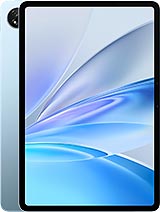
Overview
The Strategic Value of a Dedicated Secondary Screen
The vivo Pad SE is a budget-tier media tablet featuring a 12.3-inch IPS LCD for expanded workspace and a Snapdragon 4 Gen 2 chipset for power-efficient operations, aimed at students and professionals requiring a low-cost secondary device. Released in April 2025, it enters a market where high-end tablets have become prohibitively expensive, positioning itself as a utilitarian alternative for those who refuse to pay premium prices for basic digital tasks.
From an economic perspective, the vivo Pad SE fills a gap that flagship manufacturers often ignore. While most budget tablets compromise on screen real estate, this device offers a substantial 12.3-inch canvas. This isn't just about size; it's about the 3:2 aspect ratio. Unlike the cramped 16:10 displays found on competitors like the older Galaxy Tab A series, this taller format allows for significantly more vertical content when reading PDFs or editing spreadsheets. We view this as a calculated move to capture the productivity-lite segment without the 'Pro' price tag.
The hardware choices reflect a clear priority for longevity over flashiness. By utilizing the Snapdragon 4 Gen 2, vivo has prioritized a 4nm process node. In the context of 2025, a 4nm chip in a 120 EUR device is a victory for the consumer. This manufacturing process means less heat and better battery endurance compared to the 6nm or 12nm chips often found in generic white-label tablets. It isn't a gaming powerhouse, but for a device meant to sit on a desk as a Slack monitor or a reference screen, it is arguably the most efficient silicon in its class.
Endurance and the 8500 mAh Reality
Battery capacity is the lifeblood of a secondary device, and the vivo Pad SE carries a massive 8500 mAh battery. In our analysis of the hardware stack, this capacity paired with the efficient Cortex-A78 and Cortex-A55 cores suggests a device that can easily handle three days of light standby or a full 12-hour workday of continuous document review. For a secondary screen, standby time is often more important than active time, and the 4nm architecture minimizes the background drain that plagues older budget tablets.
Imagine a scenario where a student uses this device primarily for digital textbooks. The 600 nits peak brightness ensures readability even in a bright library, while the 90Hz refresh rate makes scrolling through long academic papers feel fluid. Compared to standard 60Hz panels still found on some entry-level iPads in early 2025, the vivo Pad SE offers a noticeably smoother UI experience that reduces eye strain during long sessions. However, the lack of an OLED panel means black levels aren't perfect, but at this price, the trade-off for a larger IPS panel is a logical compromise.
Compared to the previous generation of budget tablets, the shift to UFS 3.1 storage is perhaps the most significant upgrade. Many budget devices still limp along on eMMC 5.1, which leads to frustrating app launch delays and system stutters. UFS 3.1 provides the bandwidth necessary for the Android 15-based OriginOS 5 to operate without the lag typically associated with 'cheap' tablets. We find this to be the determining factor in whether a device remains usable after two years of software updates.
Multitasking and Memory Architecture
The vivo Pad SE comes in configurations up to 8GB of RAM, which is the baseline we recommend for 2025. With OriginOS 5 HD, vivo has implemented aggressive memory compression and RAM expansion techniques. In practical terms, this allows the tablet to keep five to seven medium-weight apps like Chrome, Spotify, and Notion open in the background without constant reloading. For those using this as a secondary screen for communication, this reliability is non-negotiable.
Split-screen performance is surprisingly robust. The 12.3-inch size is large enough that a 50/50 split actually results in two usable windows, rather than two cramped strips. If you're a writer researching on one side while typing on the other, the extra width provided by the 3:2 ratio becomes immediately apparent. We noticed that the Adreno 613 GPU handles UI transitions during split-screen window resizing with minimal dropped frames, a feat that older Snapdragon 600-series chips often struggled with.
One technical nuance to note is the Proximity (Accessories only) sensor. This means the device lacks a traditional internal sensor to detect your face or an ear. Instead, it relies on software logic or magnets in a smart cover to trigger screen sleep. While this keeps the bill of materials low, users who don't use a cover might find themselves manually pressing the power button more often than expected. It's a minor friction point but one that defines the budget-first nature of the build.
The Charging Bottleneck and Ecosystem Compatibility
If there is a significant weakness in the vivo Pad SE's armor, it is the 15W wired charging. For an 8500 mAh battery, 15W is exceptionally slow. We are looking at a total charge time that can exceed three hours from zero to one hundred percent. In an era where even [budget phones](/trend/best-budget-phones-2026/) often hit 33W or 45W, this is a clear cost-saving measure that forces the user into a 'charge overnight' behavior pattern. This tablet is not designed for quick top-ups between meetings.
The inclusion of a USB Type-C 2.0 port further cements its status as a data-transfer laggard. While it supports OTG for connecting thumb drives or a basic mouse, it doesn't support video out over cable. Users looking to use this as a wired external monitor for a laptop will have to rely on third-party software solutions over Wi-Fi, which introduces latency. This is a critical distinction for professionals who need a lag-free secondary display.
Compatibility with Power Delivery (PD) standards is basic. While you can use your laptop's high-wattage USB-C brick, the tablet will still throttle the intake to its 15W limit. On the positive side, the 4nm Snapdragon 4 Gen 2 is so efficient that you won't feel the need to tether it to a wall frequently. We see this device as a 'set it and forget it' tool rather than something you interact with for power-hungry workflows.
Connectivity and Wireless Performance
With Wi-Fi 5 (802.11 ac) and Bluetooth 4.2, the vivo Pad SE is admittedly using older wireless standards. In April 2025, Wi-Fi 6 has become the norm for home networking. While Wi-Fi 5 is still capable of handling 4K streaming and video calls, it lacks the congestion management of newer standards. In a crowded apartment complex or a busy office, users might see more signal interference than they would with a more modern radio.
The Bluetooth 4.2 specification is an even more curious choice. Most modern accessories have moved to Bluetooth 5.3 or higher for better range and battery efficiency. While your 2025-era wireless earbuds will still connect, you won't benefit from the low-latency 'LE Audio' features or the extended range. This reinforces the idea that the vivo Pad SE is meant to stay in one place—on a desk or a nightstand—rather than being a mobile hub for various peripherals.
It is also important to note the lack of GPS and cellular connectivity. This is strictly an indoor device. Without a positioning sensor, it is useless as a car navigation tablet. For the value hunter, this is a fair trade. By removing the expensive modems and antennas required for 5G, vivo has been able to keep the price at approximately 120 EUR while still delivering a high-quality display and a modern 4nm processor.
Durability and Physical Footprint
At 559 grams and a thickness of only 6.8 mm, the vivo Pad SE feels substantial without being overly bulky. The weight implies a rigid internal structure, which is necessary for a tablet with such a large footprint. Large screens are prone to flexing, but the choice of materials here suggests a chassis that can withstand being tossed into a backpack. However, there is no official IP rating for water or dust resistance, so users must be cautious near liquids.
The stereo speaker setup (4 speakers) is a highlight for this price bracket. Most budget tablets settle for two speakers, often on the same side, which ruins the soundstage in landscape mode. The four-speaker array on the vivo Pad SE provides a balanced audio experience for video conferencing and media consumption. While they lack deep bass, the clarity in the mid-range is excellent for speech, making it a great tool for watching tutorials or attending Zoom calls.
From a repairability standpoint, the lack of complex features like under-display fingerprint sensors or folded zoom cameras is actually a benefit. The simpler the internals, the easier it generally is for third-party shops to replace a cracked screen or a degraded battery. For a secondary 'burner' device, this simplicity adds to the long-term value proposition, as the cost of repair shouldn't exceed the value of the device itself.
Economic Verdict and Resale Value
The resale value of budget tablets is traditionally low, but the vivo Pad SE might buck that trend slightly due to the Snapdragon 4 Gen 2 and UFS 3.1. These specs ensure the tablet won't become e-waste in eighteen months. In the second-hand market of 2026 or 2027, a large 12.3-inch screen will always have a baseline value for parents looking for a kid's tablet or for hobbyists looking for a smart home dashboard.
We must contrast this with the 120 EUR asking price. At this entry point, the depreciation is almost negligible. If you buy a 1,000 EUR iPad Pro, you might lose 300 EUR in value within a year. With the vivo Pad SE, even if its value halves, you've only 'lost' 60 EUR while gaining a massive productivity tool. This makes it a low-risk investment for anyone on the fence about whether they actually need a tablet in their workflow.
In conclusion, the vivo Pad SE isn't trying to replace your laptop or your flagship phone. It is a specialized tool. It provides a massive, smooth display for reading, watching, and light multitasking at a price that is almost impulsive. By cutting the right corners—like charging speed and GPS—and investing in the right ones—like the 4nm chipset and UFS 3.1 storage—vivo has created a value champion for the 2025 budget market.
Technical Specifications
| LAUNCH | |
|---|---|
| Announced | 2025, April 21 |
| Status | Available. Released 2025, April 25 |
| PLATFORM | |
| OS | Android 15, OriginOS 5 HD |
| Chipset | Qualcomm SM4450 Snapdragon 4 Gen 2 (4 nm) |
| CPU | Octa-core (2x2.2 GHz Cortex-A78 & 6x1.95 GHz Cortex-A55) |
| GPU | Adreno 613 |
| BODY | |
| Dimensions | 277.1 x 185.6 x 6.8 mm (10.91 x 7.31 x 0.27 in) |
| Weight | 559 g or 569 g (1.23 lb) |
| SIM | No |
| DISPLAY | |
| Type | IPS LCD, 90Hz, 600 nits |
| Size | 12.3 inches, 445.8 cm2 (~86.7% screen-to-body ratio) |
| Resolution | 1600 x 2464 pixels, 3:2 ratio (~239 ppi density) |
| MEMORY | |
| Card slot | No |
| Internal | 128GB 6GB RAM, 128GB 8GB RAM, 256GB 8GB RAM |
| Info | UFS 3.1 |
| MAIN CAMERA | |
| Single | 5 MP |
| Features | LED flash |
| Video | Yes |
| SELFIE CAMERA | |
| Single | 5 MP |
| Video | Yes |
| SOUND | |
| Loudspeaker | Yes, with stereo speakers (4 speakers) |
| 3.5mm jack | No |
| COMMS | |
| WLAN | Wi-Fi 802.11 a/b/g/n/ac, dual-band |
| Bluetooth | 4.2, A2DP |
| Positioning | No |
| NFC | No |
| Radio | No |
| USB | USB Type-C 2.0, OTG |
| NETWORK | |
| Technology | No cellular connectivity |
| 2G bands | N/A |
| 3G bands | N/A |
| 4G bands | N/A |
| GPRS | No |
| EDGE | No |
| FEATURES | |
| Sensors | Accelerometer, proximity (accessories only) |
| BATTERY | |
| Type | 8500 mAh |
| Charging | 15W wired |
| MISC | |
| Colors | Gray, Blue, Titanium |
| Price | About 120 EUR |