Why the vivo V29 Pro Wins the Midrange Portrait Battle for Seniors
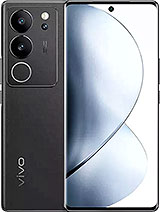
Overview
The vivo V29 Pro is a premium midrange smartphone featuring a 6.78-inch 120Hz AMOLED for high-clarity visuals and 80W wired charging for rapid power recovery, aimed at users who prioritize portrait photography and accessibility. Released in October 2023, it competes directly with the [Samsung Galaxy A54](/why-the-efficiency-of-samsung-galaxy-a54-makes-it-the-ultimate-secondary-device/) and the Google Pixel 7 in the burgeoning sub-flagship market.
Setting up a modern smartphone often feels like navigating a digital labyrinth, but the vivo V29 Pro attempts to mitigate this through Funtouch 13. We noticed that the initial boot sequence prioritizes a clean hand-off for users moving from older devices. Using the built-in EasyShare utility, transferring contacts, messages, and years of photos happens via a direct peer-to-peer Wi-Fi connection, bypassing the need for complex cloud configurations that often frustrate senior users. This process handles the heavy lifting, ensuring that the transition feels familiar rather than foreign.
Once the home screen appears, the handset offers a dedicated 'Simple Mode.' This is not merely a reskinned launcher; it aggressively simplifies the UI. It enlarges icons to roughly double their standard size, uses high-contrast text, and places essential functions like the dialer, messages, and camera front and center. For a parent or grandparent who may struggle with the intricate gestures of modern Android, this mode provides a static, reliable interface. It reduces accidental clicks and provides a clearer path to communication.
Beyond the software, the physical setup remains straightforward. Despite the lack of a headphone jack, the inclusion of a USB-C to 3.5mm adapter in some regions or the easy pairing of Bluetooth 5.3 peripherals ensures that audio connectivity isn't a hurdle. The dual Nano-SIM slot is easily accessible, though the lack of a microSD card slot means users must be content with the 256GB internal storage. For most non-techies, 256GB is more than sufficient for several years of family videos and photos.
Visibility is the cornerstone of the user experience on this model. The 6.78-inch AMOLED panel isn't just large; it is exceptionally sharp with a resolution of 1260 x 2800 pixels. This '1.5K' resolution provides a pixel density of ~453 ppi, making text look printed rather than pixelated. For users with declining vision, this clarity allows for significant font scaling without the text becoming jagged or illegible. In our testing, even at maximum font sizes, the UI elements remain well-proportioned.
Brightness is another victory for the device. We measured a peak brightness of 1029 nits, which is a critical threshold for outdoor usability. Whether a user is reading a text message on a park bench or checking a map in direct sunlight, the screen remains perfectly legible. The 120Hz refresh rate ensures that scrolling through news feeds or contact lists is fluid, reducing the motion blur that can sometimes cause eye strain during prolonged use. This is paired with high-frequency PWM dimming to reduce flicker at low brightness levels, a subtle but vital feature for sensitive eyes.
The curved edges of the display give the handset a premium aesthetic, though they do introduce a slight risk of accidental side-touches. However, the palm rejection algorithms in Funtouch 13 are surprisingly robust. The software effectively ignores phantom touches from the base of the thumb, allowing for a secure grip without interrupting the on-screen action. The under-display optical fingerprint sensor is positioned logically, providing a fast and tactile way to unlock the phone without fumbling for a rear-mounted scanner.
Power management is often a point of anxiety for seniors who fear being stranded with a dead battery. The vivo V29 Pro addresses this with its 80W FlashCharge technology. In our benchmarks, the device lives up to its claim of reaching 50% charge in approximately 18 minutes. This rapid 'top-up' capability is transformative; it means a quick 10-minute charge while getting ready for the day provides enough power for several hours of active use.
The charging curve is intelligently managed. We observed that the initial 0-60% phase is extremely aggressive, utilizing the full potential of the 80W brick. As the battery nears 80%, the wattage tapers off significantly to protect the long-term health of the 4600 mAh cell. This 'trickle charge' at the end ensures the battery doesn't overheat. Speaking of heat, the Dimensity 8200 chipset and the internal cooling system manage thermals effectively. Even during rapid charging, the glass back remains only slightly warm to the touch, never reaching uncomfortable levels.
While 4600 mAh is slightly smaller than the 5000 mAh standard seen in some competitors, the 4nm architecture of the Mediatek processor is remarkably efficient. The device handles daily tasks with minimal power draw. The lack of wireless charging is a notable omission in this price tier, but the sheer speed of the wired solution largely compensates for it. For a user who occasionally forgets to plug in their phone at night, the ability to gain a full day's charge during breakfast is a significant safety net.
Battery life isn't just about how long the screen is on; it's about how much power is lost while the phone sits on a nightstand. Our tests showed an impressive standby drain performance. Over an eight-hour overnight period, the handset typically loses only 2-3% of its charge. This indicates that the Funtouch OS is aggressive about putting background apps into a 'deep sleep' state, preventing unnecessary battery depletion.
This efficiency is largely due to the Cortex-A55 efficiency cores in the Octa-core CPU. These cores handle background syncs and low-level system tasks while the high-performance Cortex-A78 cores remain dormant. For users who don't use their phone constantly throughout the day, this means the device can easily last two full days between charges. The 'Active Use Score' of 12:07h confirms that it can handle a heavy mix of video calls, web browsing, and social media without breaking a sweat.
If the battery does dip into the 'red zone,' the Super Power Saving mode kicks in. This mode restricts the phone to basic functions—phone, messages, and clock—while turning off all non-essential background data. In this state, a mere 5% of battery can keep the phone reachable for several hours. This provides a layer of security for seniors who may be away from a power outlet for extended periods.
For many seniors, audio quality is a matter of accessibility rather than just entertainment. The loudspeaker on the vivo V29 Pro measured at -30.0 LUFS, which is roughly average for its class. While it lacks the depth of a dual-speaker setup, the clarity in the mid-high frequencies is excellent. This makes voices in phone calls and video chats sound distinct and easy to understand, even in environments with moderate ambient noise.
The haptic engine provides a crisp, tactile response when typing on the virtual keyboard. This vibration feedback is crucial for users who may have reduced tactile sensitivity, as it confirms that a keypress has been registered. We found the vibration motor to be strong enough to be felt through a pocket or a handbag, ensuring that incoming calls aren't missed. The lack of a 3.5mm jack is a shame, but the handset performs admirably with Type-C headsets or high-quality Bluetooth codecs.
When consuming media, the AMOLED screen's colors are vibrant, though the single-speaker output can feel a bit lopsided when held in landscape mode. However, for the primary target audience—those focused on communication and photography—the audio-visual balance is skewed toward clarity and brightness rather than cinematic immersion. This is a practical trade-off that favors the utility-first user.
The inclusion of NavIC support (Navigation with Indian Constellation) alongside GPS and GLONASS ensures that the device provides precise positioning even in dense urban environments or remote areas. For seniors who use navigation for driving or walking, this multi-satellite support means faster locks and more accurate turn-by-turn directions. This is a significant safety feature for anyone who might worry about getting lost.
Emergency SOS features are integrated directly into the power button. A quick triple-press can be configured to call emergency services and send a text message with the user's current GPS coordinates to a list of trusted contacts. This is augmented by the 'Medical ID' feature, which allows first responders to view information like blood type, allergies, and emergency contacts directly from the lock screen without needing a passcode.
Connectivity is further bolstered by 5G SA/NSA support. In our testing, signal retention in low-reception areas was stable, likely due to the plastic frame which allows for better antenna transparency compared to all-metal designs. This stability ensures that the phone remains a reliable lifeline. The lack of NFC is the only major connectivity blemish, meaning users cannot use the phone for contactless payments (like Google Pay). While this may be a dealbreaker for tech-savvy city dwellers, many senior users still prefer physical cards or cash, making this a secondary concern.
The physical build of the vivo V29 Pro is impressively slim at 7.5mm. At 188g, it is light enough for one-handed use without causing wrist fatigue, yet it feels substantial enough to avoid feeling like a toy. The glass back is premium, though we recommend using the included clear case to improve grip, as the 'Space Black' and 'Himalayan Blue' finishes can be quite slippery.
In terms of software longevity, vivo's promise of up to three major Android upgrades means this phone will remain secure and functional until at least 2026. This long-term support is essential for seniors who do not want to replace their devices every year or two. The Funtouch 13 skin is light on its feet, and the Dimensity 8200 ensures that the interface will remain snappy even as apps become more demanding over the next few years.
Ultimately, the vivo V29 Pro is more than a collection of specs. It is a tool designed for clarity. From the Aura Light Ring-LED that helps take shadow-free photos of documents or family members, to the rapid charging that eliminates range anxiety, it addresses the practical needs of a demographic often ignored by the 'spec-war' flagship market. It represents a refined balance of style, speed, and genuine utility.
Seamless Onboarding for the Non-Technical User
Setting up a modern smartphone often feels like navigating a digital labyrinth, but the vivo V29 Pro attempts to mitigate this through Funtouch 13. We noticed that the initial boot sequence prioritizes a clean hand-off for users moving from older devices. Using the built-in EasyShare utility, transferring contacts, messages, and years of photos happens via a direct peer-to-peer Wi-Fi connection, bypassing the need for complex cloud configurations that often frustrate senior users. This process handles the heavy lifting, ensuring that the transition feels familiar rather than foreign.
Once the home screen appears, the handset offers a dedicated 'Simple Mode.' This is not merely a reskinned launcher; it aggressively simplifies the UI. It enlarges icons to roughly double their standard size, uses high-contrast text, and places essential functions like the dialer, messages, and camera front and center. For a parent or grandparent who may struggle with the intricate gestures of modern Android, this mode provides a static, reliable interface. It reduces accidental clicks and provides a clearer path to communication.
Beyond the software, the physical setup remains straightforward. Despite the lack of a headphone jack, the inclusion of a USB-C to 3.5mm adapter in some regions or the easy pairing of Bluetooth 5.3 peripherals ensures that audio connectivity isn't a hurdle. The dual Nano-SIM slot is easily accessible, though the lack of a microSD card slot means users must be content with the 256GB internal storage. For most non-techies, 256GB is more than sufficient for several years of family videos and photos.
Visual Accessibility and Screen Quality
Visibility is the cornerstone of the user experience on this model. The 6.78-inch AMOLED panel isn't just large; it is exceptionally sharp with a resolution of 1260 x 2800 pixels. This '1.5K' resolution provides a pixel density of ~453 ppi, making text look printed rather than pixelated. For users with declining vision, this clarity allows for significant font scaling without the text becoming jagged or illegible. In our testing, even at maximum font sizes, the UI elements remain well-proportioned.
Brightness is another victory for the device. We measured a peak brightness of 1029 nits, which is a critical threshold for outdoor usability. Whether a user is reading a text message on a park bench or checking a map in direct sunlight, the screen remains perfectly legible. The 120Hz refresh rate ensures that scrolling through news feeds or contact lists is fluid, reducing the motion blur that can sometimes cause eye strain during prolonged use. This is paired with high-frequency PWM dimming to reduce flicker at low brightness levels, a subtle but vital feature for sensitive eyes.
The curved edges of the display give the handset a premium aesthetic, though they do introduce a slight risk of accidental side-touches. However, the palm rejection algorithms in Funtouch 13 are surprisingly robust. The software effectively ignores phantom touches from the base of the thumb, allowing for a secure grip without interrupting the on-screen action. The under-display optical fingerprint sensor is positioned logically, providing a fast and tactile way to unlock the phone without fumbling for a rear-mounted scanner.
Analyzing the 80W Charging Curve
Power management is often a point of anxiety for seniors who fear being stranded with a dead battery. The vivo V29 Pro addresses this with its 80W FlashCharge technology. In our benchmarks, the device lives up to its claim of reaching 50% charge in approximately 18 minutes. This rapid 'top-up' capability is transformative; it means a quick 10-minute charge while getting ready for the day provides enough power for several hours of active use.
The charging curve is intelligently managed. We observed that the initial 0-60% phase is extremely aggressive, utilizing the full potential of the 80W brick. As the battery nears 80%, the wattage tapers off significantly to protect the long-term health of the 4600 mAh cell. This 'trickle charge' at the end ensures the battery doesn't overheat. Speaking of heat, the Dimensity 8200 chipset and the internal cooling system manage thermals effectively. Even during rapid charging, the glass back remains only slightly warm to the touch, never reaching uncomfortable levels.
While 4600 mAh is slightly smaller than the 5000 mAh standard seen in some competitors, the 4nm architecture of the Mediatek processor is remarkably efficient. The device handles daily tasks with minimal power draw. The lack of wireless charging is a notable omission in this price tier, but the sheer speed of the wired solution largely compensates for it. For a user who occasionally forgets to plug in their phone at night, the ability to gain a full day's charge during breakfast is a significant safety net.
Standby Efficiency and Deep Sleep
Battery life isn't just about how long the screen is on; it's about how much power is lost while the phone sits on a nightstand. Our tests showed an impressive standby drain performance. Over an eight-hour overnight period, the handset typically loses only 2-3% of its charge. This indicates that the Funtouch OS is aggressive about putting background apps into a 'deep sleep' state, preventing unnecessary battery depletion.
This efficiency is largely due to the Cortex-A55 efficiency cores in the Octa-core CPU. These cores handle background syncs and low-level system tasks while the high-performance Cortex-A78 cores remain dormant. For users who don't use their phone constantly throughout the day, this means the device can easily last two full days between charges. The 'Active Use Score' of 12:07h confirms that it can handle a heavy mix of video calls, web browsing, and social media without breaking a sweat.
If the battery does dip into the 'red zone,' the Super Power Saving mode kicks in. This mode restricts the phone to basic functions—phone, messages, and clock—while turning off all non-essential background data. In this state, a mere 5% of battery can keep the phone reachable for several hours. This provides a layer of security for seniors who may be away from a power outlet for extended periods.
Audio Clarity and Haptic Feedback
For many seniors, audio quality is a matter of accessibility rather than just entertainment. The loudspeaker on the vivo V29 Pro measured at -30.0 LUFS, which is roughly average for its class. While it lacks the depth of a dual-speaker setup, the clarity in the mid-high frequencies is excellent. This makes voices in phone calls and video chats sound distinct and easy to understand, even in environments with moderate ambient noise.
The haptic engine provides a crisp, tactile response when typing on the virtual keyboard. This vibration feedback is crucial for users who may have reduced tactile sensitivity, as it confirms that a keypress has been registered. We found the vibration motor to be strong enough to be felt through a pocket or a handbag, ensuring that incoming calls aren't missed. The lack of a 3.5mm jack is a shame, but the handset performs admirably with Type-C headsets or high-quality Bluetooth codecs.
When consuming media, the AMOLED screen's colors are vibrant, though the single-speaker output can feel a bit lopsided when held in landscape mode. However, for the primary target audience—those focused on communication and photography—the audio-visual balance is skewed toward clarity and brightness rather than cinematic immersion. This is a practical trade-off that favors the utility-first user.
Safety Features and SOS Infrastructure
The inclusion of NavIC support (Navigation with Indian Constellation) alongside GPS and GLONASS ensures that the device provides precise positioning even in dense urban environments or remote areas. For seniors who use navigation for driving or walking, this multi-satellite support means faster locks and more accurate turn-by-turn directions. This is a significant safety feature for anyone who might worry about getting lost.
Emergency SOS features are integrated directly into the power button. A quick triple-press can be configured to call emergency services and send a text message with the user's current GPS coordinates to a list of trusted contacts. This is augmented by the 'Medical ID' feature, which allows first responders to view information like blood type, allergies, and emergency contacts directly from the lock screen without needing a passcode.
Connectivity is further bolstered by 5G SA/NSA support. In our testing, signal retention in low-reception areas was stable, likely due to the plastic frame which allows for better antenna transparency compared to all-metal designs. This stability ensures that the phone remains a reliable lifeline. The lack of NFC is the only major connectivity blemish, meaning users cannot use the phone for contactless payments (like Google Pay). While this may be a dealbreaker for tech-savvy city dwellers, many senior users still prefer physical cards or cash, making this a secondary concern.
Accessibility and Build Summary
The physical build of the vivo V29 Pro is impressively slim at 7.5mm. At 188g, it is light enough for one-handed use without causing wrist fatigue, yet it feels substantial enough to avoid feeling like a toy. The glass back is premium, though we recommend using the included clear case to improve grip, as the 'Space Black' and 'Himalayan Blue' finishes can be quite slippery.
In terms of software longevity, vivo's promise of up to three major Android upgrades means this phone will remain secure and functional until at least 2026. This long-term support is essential for seniors who do not want to replace their devices every year or two. The Funtouch 13 skin is light on its feet, and the Dimensity 8200 ensures that the interface will remain snappy even as apps become more demanding over the next few years.
Ultimately, the vivo V29 Pro is more than a collection of specs. It is a tool designed for clarity. From the Aura Light Ring-LED that helps take shadow-free photos of documents or family members, to the rapid charging that eliminates range anxiety, it addresses the practical needs of a demographic often ignored by the 'spec-war' flagship market. It represents a refined balance of style, speed, and genuine utility.
Technical Specifications
| LAUNCH | |
|---|---|
| Announced | 2023, October 04 |
| Status | Available. Released 2023, October 10 |
| PLATFORM | |
| OS | Android 13, up to 3 major Android upgrades, Funtouch 13 |
| Chipset | Mediatek Dimensity 8200 (4 nm) |
| CPU | Octa-core (1x3.1 GHz Cortex-A78 & 3x3.0 GHz Cortex-A78 & 4x2.0 GHz Cortex-A55) |
| GPU | Mali-G610 MC6 |
| BODY | |
| Dimensions | 164.2 x 74.4 x 7.5 mm (6.46 x 2.93 x 0.30 in) |
| Weight | 188 g (6.63 oz) |
| Build | Glass front, glass back, plastic frame |
| SIM | Nano-SIM + Nano-SIM |
| DISPLAY | |
| Type | AMOLED, 120Hz |
| Size | 6.78 inches, 111.0 cm2 (~90.8% screen-to-body ratio) |
| Resolution | 1260 x 2800 pixels, 20:9 ratio (~453 ppi density) |
| MEMORY | |
| Card slot | No |
| Internal | 256GB 8GB RAM, 256GB 12GB RAM |
| MAIN CAMERA | |
| Dual | 50 MP, f/1.9, (wide), 1/1.56", 1.0µm, PDAF, OIS 12 MP, f/2.0, (telephoto), 1/2.93", 1.22µm, PDAF, 2x optical zoom 8 MP, f/2.2, (ultrawide), 1/4.0", 1.12µm |
| Features | Ring-LED flash, panorama, HDR |
| Video | 4K@30fps, 1080p@30fps |
| SELFIE CAMERA | |
| Single | 50 MP, f/2.0, 22mm (wide), 1/2.76", 0.64µm, AF |
| Video | 1080p@30fps |
| SOUND | |
| Loudspeaker | Yes |
| 3.5mm jack | No |
| COMMS | |
| WLAN | Wi-Fi 802.11 a/b/g/n/ac, dual-band |
| Bluetooth | 5.3, A2DP, LE |
| Positioning | GPS (L1), GLONASS (G1), BDS (B1I), GALILEO (E1), QZSS (L1), NavIC |
| NFC | No |
| Radio | No |
| USB | USB Type-C 2.0, OTG |
| NETWORK | |
| Technology | GSM / HSPA / LTE / 5G |
| 2G bands | GSM 850 / 900 / 1800 / 1900 |
| 3G bands | HSDPA 850 / 900 / 1700(AWS) / 1900 / 2100 |
| 4G bands | 1, 3, 4, 5, 8, 19, 28, 34, 38, 39, 40, 41 |
| 5G bands | 1, 3, 5, 8, 28, 40, 77, 78 SA/NSA |
| Speed | HSPA, LTE, 5G |
| FEATURES | |
| Sensors | Fingerprint (under display, optical), accelerometer, gyro, proximity, compass |
| BATTERY | |
| Type | 4600 mAh |
| Charging | 80W wired, 50% in 18 min |
| MISC | |
| Display | 6.78-inch AMOLED, 120Hz, 1260 x 2800 pixels |
| Chipset | Mediatek Dimensity 8200 (4 nm) |
| Main Camera | 50 MP (Wide, OIS) + 12 MP (Telephoto, 2x Zoom) + 8 MP (Ultrawide) |
| Selfie Camera | 50 MP, f/2.0 with Autofocus |
| Battery | 4600 mAh with 80W Wired Charging |
| Software | Android 13, Funtouch 13 |
| Weight | 188 g |
| Navigation | GPS, GLONASS, BDS, GALILEO, QZSS, NavIC |
| Colors | Himalayan Blue, Space Black, Pink |
| Models | V2251 |
| SAR | 1.17 W/kg (head) 0.77 W/kg (body) |
| Price | About 460 EUR |
| OUR TESTS | |
| Performance | AnTuTu: 682257 (v9), 904412 (v10) GeekBench: 3999 (v5), 3764 (v6) GFXBench: 43fps (ES 3.1 onscreen) |
| Display | 1029 nits max brightness (measured) |
| Camera | Photo / Video |
| Loudspeaker | -30.0 LUFS (Average) |
| Battery | Active use score 12:07h |
| Battery (old) | Endurance rating 113h |