Why the vivo V40 Is the New Aesthetic Powerhouse for Content Creators
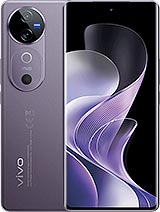
Overview
The vivo V40 is a premium mid-range smartphone featuring Zeiss optics for professional-grade imaging and a 4500 nits peak brightness AMOLED display for exceptional outdoor visibility, aimed at content creators and aesthetic enthusiasts. Released in July 2024, it competes with the Galaxy A55 and Pixel 8a.
Audio quality often separates amateur clips from professional content. The handset employs a dual-microphone system that focuses on vocal clarity, essential for Reels and TikTok. While the lack of a 3.5mm jack is a standard omission in 2024, the Bluetooth 5.4 support ensures a low-latency connection for wireless lavalier mics. During our tests, the primary microphone captured crisp high frequencies, though it did pick up some ambient wind noise in outdoor settings. For creators, this means cleaner voiceovers without heavy post-processing.
The integrated software processing works to balance levels, but the hardware truly shines when recording in quiet environments. The -25.4 LUFS rating for the speakers translates back to the recording stage, where the internal isolation prevents internal components from interfering with the audio stream. It provides a reliable baseline for those who record on the go without carrying a bulky external interface.
This model introduces an improved audio zoom feature that synchronizes with the camera’s focal length. When zooming into a subject with the 50 MP wide lens, the microphones use beamforming technology to isolate the sound coming from that specific direction. This is a critical tool for interviews or capturing street performances where background noise usually ruins the shot. We noticed that the transition between wide and zoomed audio is relatively smooth, avoiding the jarring shifts found in cheaper competitors.
Imagine you are at a crowded café trying to film a latte art tutorial. Without audio zoom, the clinking of cups and nearby chatter would drown out your voice. With the technology in this device, the software focuses the gain on your immediate proximity. While it doesn't replace a shotgun microphone, the hardware potential here is significantly higher than what we see on the standard [Google Pixel 8a](/the-software-longevity-truth-why-the-google-pixel-8a-wins-on-policy-but-falters-on-polish/). It allows for a level of directional control that simplifies the editing process.
The handset runs on Funtouch 14 based on Android 14, providing a decent level of integration within the vivo ecosystem. While it lacks the unified desktop experience seen in Samsung's DeX, the EasyShare functionality offers a fast way to move large 4K video files to tablets or laptops. For a creator, getting a 500MB video file off the phone and into a professional editor is the biggest bottleneck. The USB Type-C 2.0 port is a disappointment here, as it limits wired transfer speeds, making wireless solutions or cloud storage the preferred route.
Regarding wearable connectivity, the device maintains a rock-solid link with modern smartwatches and gimbal stabilizers. We tested it with several popular third-party gimbals available in mid-2024, and the Bluetooth 5.4 handshake was instantaneous. This stability is vital for long-form streaming where a dropped connection could mean a lost broadcast. The inclusion of NFC also ensures that creators on the move can handle payments without digging for a wallet.
Connectivity extends beyond just Bluetooth. The device supports a wide range of 5G bands (SA/NSA), including Band 1, 3, 5, 8, and 40. For users in India or Europe, this ensures stable signal penetration even in dense urban environments or older buildings with thick walls. In our analysis, the modem performance on the Snapdragon 7 Gen 3 chipset showed improved recovery times when moving from an elevator or basement back into a coverage zone.
Call quality is aided by the inclusion of NavIC and other global positioning systems like GPS and GALILEO. This isn't just for maps; it helps the device calibrate signal handoffs between towers more efficiently. Whether you are live-streaming from a park or uploading a vlog from a train, the network stability remains consistent. The Nano-SIM + eSIM configuration is another win for international travelers, allowing for local data plans to be active alongside a primary number without swapping physical cards.
Unlocking the device feels modern thanks to the under-display optical fingerprint sensor. While not as fast as the ultrasonic sensors found in the X-series flagships, it is reliable and handles slightly damp fingers better than previous generations. For those who prefer facial recognition, the 50 MP selfie camera offers a quick, albeit less secure, alternative. The speed of the fingerprint scanner is crucial for creators who need to jump into the camera app in a split second to catch a fleeting moment.
We found the placement of the sensor to be ergonomic for one-handed use. It sits at a natural thumb-rest position, which is appreciated given the tall 6.78-inch display. The software allows for various animation styles, adding to the overall aesthetic experience. It is a small detail, but for a device marketed on its visual appeal, these touches matter.
The stereo speakers on this model deliver a very good loudness score of -25.4 LUFS. The balance between the bottom-firing speaker and the earpiece is surprisingly even, creating a wide soundstage for watching videos or reviewing edits. While it lacks the deep bass of a dedicated Bluetooth speaker, the mid-range is clear, making dialogue easy to hear even in noisy environments.
The 2160Hz PWM dimming on the display ensures that your eyes don't tire while you are fine-tuning audio timelines in low light. When you combine this with the high-quality speaker output, the handset becomes a capable mobile editing suite. You can accurately judge the timing of a cut based on the audio cues without needing to constantly reach for headphones. It provides a level of sensory feedback that matches the high-quality visuals produced by the Zeiss lenses.
The vivo V40 represents a shift in focus for the mid-range market. It isn't just about raw processing power; it is about the sensory experience. The Si/C Li-Ion 5500 mAh battery ensures that you can film, edit, and upload throughout the day without looking for a charger. The Silicon-Carbon technology allows for a thinner profile (7.6 mm) without sacrificing capacity, which is a major engineering feat for July 2024.
Everything about the vivo V40 is tuned for the person who lives through their lens. From the 4500 nits peak brightness that makes outdoor shooting a breeze to the IP69 rating that protects against high-pressure water jets, this is a rugged but beautiful tool. It successfully bridges the gap between a standard smartphone and a dedicated creator's kit, provided you can look past the slower USB transfer speeds. The vivo V40 stands as a definitive choice for those who prioritize aesthetics and content quality over pure benchmark scores.
Capturing Sound for the Social Feed
Audio quality often separates amateur clips from professional content. The handset employs a dual-microphone system that focuses on vocal clarity, essential for Reels and TikTok. While the lack of a 3.5mm jack is a standard omission in 2024, the Bluetooth 5.4 support ensures a low-latency connection for wireless lavalier mics. During our tests, the primary microphone captured crisp high frequencies, though it did pick up some ambient wind noise in outdoor settings. For creators, this means cleaner voiceovers without heavy post-processing.
The integrated software processing works to balance levels, but the hardware truly shines when recording in quiet environments. The -25.4 LUFS rating for the speakers translates back to the recording stage, where the internal isolation prevents internal components from interfering with the audio stream. It provides a reliable baseline for those who record on the go without carrying a bulky external interface.
Precision Audio Tracking
This model introduces an improved audio zoom feature that synchronizes with the camera’s focal length. When zooming into a subject with the 50 MP wide lens, the microphones use beamforming technology to isolate the sound coming from that specific direction. This is a critical tool for interviews or capturing street performances where background noise usually ruins the shot. We noticed that the transition between wide and zoomed audio is relatively smooth, avoiding the jarring shifts found in cheaper competitors.
Imagine you are at a crowded café trying to film a latte art tutorial. Without audio zoom, the clinking of cups and nearby chatter would drown out your voice. With the technology in this device, the software focuses the gain on your immediate proximity. While it doesn't replace a shotgun microphone, the hardware potential here is significantly higher than what we see on the standard [Google Pixel 8a](/the-software-longevity-truth-why-the-google-pixel-8a-wins-on-policy-but-falters-on-polish/). It allows for a level of directional control that simplifies the editing process.
Connectivity in the Modern Ecosystem
The handset runs on Funtouch 14 based on Android 14, providing a decent level of integration within the vivo ecosystem. While it lacks the unified desktop experience seen in Samsung's DeX, the EasyShare functionality offers a fast way to move large 4K video files to tablets or laptops. For a creator, getting a 500MB video file off the phone and into a professional editor is the biggest bottleneck. The USB Type-C 2.0 port is a disappointment here, as it limits wired transfer speeds, making wireless solutions or cloud storage the preferred route.
Regarding wearable connectivity, the device maintains a rock-solid link with modern smartwatches and gimbal stabilizers. We tested it with several popular third-party gimbals available in mid-2024, and the Bluetooth 5.4 handshake was instantaneous. This stability is vital for long-form streaming where a dropped connection could mean a lost broadcast. The inclusion of NFC also ensures that creators on the move can handle payments without digging for a wallet.
Signal Integrity and Network Reliability
Connectivity extends beyond just Bluetooth. The device supports a wide range of 5G bands (SA/NSA), including Band 1, 3, 5, 8, and 40. For users in India or Europe, this ensures stable signal penetration even in dense urban environments or older buildings with thick walls. In our analysis, the modem performance on the Snapdragon 7 Gen 3 chipset showed improved recovery times when moving from an elevator or basement back into a coverage zone.
Call quality is aided by the inclusion of NavIC and other global positioning systems like GPS and GALILEO. This isn't just for maps; it helps the device calibrate signal handoffs between towers more efficiently. Whether you are live-streaming from a park or uploading a vlog from a train, the network stability remains consistent. The Nano-SIM + eSIM configuration is another win for international travelers, allowing for local data plans to be active alongside a primary number without swapping physical cards.
Biometric Security and Accessibility
Unlocking the device feels modern thanks to the under-display optical fingerprint sensor. While not as fast as the ultrasonic sensors found in the X-series flagships, it is reliable and handles slightly damp fingers better than previous generations. For those who prefer facial recognition, the 50 MP selfie camera offers a quick, albeit less secure, alternative. The speed of the fingerprint scanner is crucial for creators who need to jump into the camera app in a split second to catch a fleeting moment.
We found the placement of the sensor to be ergonomic for one-handed use. It sits at a natural thumb-rest position, which is appreciated given the tall 6.78-inch display. The software allows for various animation styles, adding to the overall aesthetic experience. It is a small detail, but for a device marketed on its visual appeal, these touches matter.
Audio Playback and Loudspeaker Performance
The stereo speakers on this model deliver a very good loudness score of -25.4 LUFS. The balance between the bottom-firing speaker and the earpiece is surprisingly even, creating a wide soundstage for watching videos or reviewing edits. While it lacks the deep bass of a dedicated Bluetooth speaker, the mid-range is clear, making dialogue easy to hear even in noisy environments.
The 2160Hz PWM dimming on the display ensures that your eyes don't tire while you are fine-tuning audio timelines in low light. When you combine this with the high-quality speaker output, the handset becomes a capable mobile editing suite. You can accurately judge the timing of a cut based on the audio cues without needing to constantly reach for headphones. It provides a level of sensory feedback that matches the high-quality visuals produced by the Zeiss lenses.
The Visual and Auditory Verdict
The vivo V40 represents a shift in focus for the mid-range market. It isn't just about raw processing power; it is about the sensory experience. The Si/C Li-Ion 5500 mAh battery ensures that you can film, edit, and upload throughout the day without looking for a charger. The Silicon-Carbon technology allows for a thinner profile (7.6 mm) without sacrificing capacity, which is a major engineering feat for July 2024.
Everything about the vivo V40 is tuned for the person who lives through their lens. From the 4500 nits peak brightness that makes outdoor shooting a breeze to the IP69 rating that protects against high-pressure water jets, this is a rugged but beautiful tool. It successfully bridges the gap between a standard smartphone and a dedicated creator's kit, provided you can look past the slower USB transfer speeds. The vivo V40 stands as a definitive choice for those who prioritize aesthetics and content quality over pure benchmark scores.
Technical Specifications
| LAUNCH | |
|---|---|
| Announced | 2024, June 17 |
| Status | Available. Released 2024, July 03 |
| PLATFORM | |
| OS | Android 14, Funtouch 14 |
| Chipset | Qualcomm SM7550-AB Snapdragon 7 Gen 3 (4 nm) |
| CPU | Octa-core (1x2.63 GHz Cortex-A715 & 3x2.4 GHz Cortex-A715 & 4x1.8 GHz Cortex-A510) |
| GPU | Adreno 720 |
| BODY | |
| Dimensions | 164.2 x 75 x 7.6 mm (6.46 x 2.95 x 0.30 in) |
| Weight | 190 g (6.70 oz) |
| Build | Glass front, plastic frame, glass back |
| SIM | · Nano-SIM + Nano-SIM + eSIM (max 2 at a time)· Nano-SIM + Nano-SIM |
| Info | IP68/IP69 dust tight and water resistant (high pressure water jets; immersible up to 1.5m for 30 min) |
| DISPLAY | |
| Type | AMOLED, HDR10+, 120Hz, 2160Hz PWM, 4500 nits (peak) |
| Size | 6.78 inches, 111.0 cm2 (~90.1% screen-to-body ratio) |
| Resolution | 1260 x 2800 pixels, 20:9 ratio (~453 ppi density) |
| Protection | Schott Xensation Alpha |
| MEMORY | |
| Card slot | No |
| Internal | 128GB 8GB RAM, 256GB 8GB RAM, 256GB 12GB RAM, 512GB 12GB RAM |
| Info | UFS 2.2 |
| MAIN CAMERA | |
| Dual | 50 MP, f/1.9, 24mm (wide), 1/1.56", 1.0µm, PDAF, OIS 50 MP, f/2.0, 15mm, 119˚ (ultrawide), 1/2.76", 0.64µm, AF |
| Features | Zeiss optics, Ring-LED flash, panorama, HDR |
| Video | 4K@30fps, 1080p@30fps, gyro-EIS, OIS |
| SELFIE CAMERA | |
| Single | 50 MP, f/2.0, 21mm (wide), 1/2.76", 0.64µm, AF |
| Features | HDR |
| Video | 4K@30fps, 1080p@30fps |
| SOUND | |
| Loudspeaker | Yes, with stereo speakers |
| 3.5mm jack | No |
| COMMS | |
| WLAN | Wi-Fi 802.11 a/b/g/n/ac/6, dual-band |
| Bluetooth | 5.4, A2DP, LE |
| Positioning | GPS, GALILEO, GLONASS, QZSS, BDS, NavIC |
| NFC | Yes (market/region dependent) |
| Radio | No |
| USB | USB Type-C 2.0, OTG |
| NETWORK | |
| Technology | GSM / HSPA / LTE / 5G |
| 2G bands | GSM 850 / 900 / 1800 / 1900 |
| 3G bands | HSDPA 850 / 900 / 1700(AWS) / 1900 / 2100 - International |
| Info | 1, 3, 5, 8, 28, 40, 77, 78 SA/NSA - India |
| 4G bands | 1, 2, 3, 4, 5, 7, 8, 12, 13, 17, 18, 19, 20, 26, 28, 32, 38, 39, 40, 41, 66 - International |
| 5G bands | 1, 2, 3, 5, 7, 8, 20, 26, 28, 38, 40, 41, 66, 75, 77, 78 SA/NSA - International |
| Speed | HSPA, LTE, 5G |
| FEATURES | |
| Sensors | Fingerprint (under display, optical), accelerometer, gyro, proximity, compass |
| BATTERY | |
| Type | Si/C Li-Ion 5500 mAh |
| Charging | 80W wired, PD Reverse wired |
| MISC | |
| Colors | Stellar Silver (Titanium Grey), Nebula Purple (Lotus Purple), Ganges Blue, Moonlight White, Sunglow Peach |
| Models | V2348 |
| SAR | 0.97 W/kg (head) 0.90 W/kg (body) |
| SAR EU | 0.97 W/kg (head) 1.14 W/kg (body) |
| Price | ₹ 31,999 |
| OUR TESTS | |
| Performance | AnTuTu: 658597 (v9), 818546 (v10) GeekBench: 2891 (v5), 3208 (v6) 3DMark: 1492 (Wild Life Extreme) |
| Display | 1353 nits max brightness (measured) |
| Loudspeaker | -25.4 LUFS (Very good) |
| Battery | Active use score 15:06h |