Why the vivo Y18t Is the Smartest Choice for Survivalist Budgeting
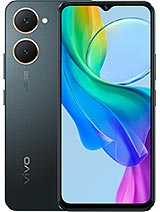
Overview
vivo Y18t is an entry-level smartphone featuring a 90Hz IPS LCD for improved visual fluidity and a 5000 mAh battery for multi-day endurance, aimed at budget-conscious buyers who prioritize durability and storage. Released in November 2024, it enters a crowded sub-€120 market where every cent of hardware value determines whether a device is an asset or a liability for the user.
From our perspective, the math of the vivo Y18t centers on a calculation of 'good enough.' It avoids the trap of trying to be a flagship and instead focuses on surviving the daily grind. The inclusion of IP54 dust and water resistance provides a layer of protection against light rain and spills that many competitors in this price bracket ignore. This makes it a practical tool for outdoor workers or students rather than just a tech toy.
The most surprising hardware choice here is the display's brightness. While many budget panels wash out under the midday sun, the vivo Y18t reaches 840 nits in High Brightness Mode (HBM). This isn't just a number on a page. In real-world usage, this means you can actually read a map or text message while standing on a sidewalk without seeking shade. Most budget screens hover around 400 to 500 nits, making this a significant victory for visibility.
While the 720 x 1612 resolution might look soft on paper, the 90Hz refresh rate compensates by making the interface feel more responsive than standard 60Hz panels found on older budget stock. The screen-to-body ratio of approximately 83.6% provides a modern aesthetic, even if the 'waterdrop' notch for the 8 MP selfie camera feels slightly dated compared to punch-hole designs. However, for a device costing about 110 EUR, these are calculated trade-offs that favor utility over fashion.
We must talk about the panel tech. It uses an IPS LCD. For those unfamiliar with the term, this technology ensures that colors don't shift wildly when viewing the phone from an angle. Unlike cheaper TFT panels used in ultra-low-cost devices, this display maintains consistent clarity for group viewing or when the phone is mounted on a car dashboard.
The Unisoc T612 chipset powers the experience. This is a 12nm octa-core processor designed for stability. It uses two Cortex-A75 performance cores and six Cortex-A55 efficiency cores. In our assessment, this setup handles social media scrolling and messaging with ease. Users shouldn't expect to run high-end games at max settings, but for the 'daily essentials' user, it stays cool and reliable.
Storage is a highlight. We see 128GB of internal memory, which is becoming the new standard for usable entry-level phones. However, it uses eMMC 5.1 storage. This is a cost-effective standard that is slower than the UFS storage found in [mid-range phones](/trend/best-mid-range-phones-2026/). This means apps might take an extra second to install, and large file transfers won't be instantaneous. Fortunately, the dedicated microSDXC slot allows for easy expansion without sacrificing one of the two SIM slots.
Memory management relies on 4GB of RAM. In 2024, this is the bare minimum for a fluid Android 14 experience. The Funtouch 14 software does its best to optimize this, but power users should expect background apps to close more frequently than on 6GB or 8GB models. For the target audience—those who use one or two apps at a time—it remains functional.
The 50 MP f/1.8 main camera is the heavy lifter here. It utilizes Phase Detection Auto Focus (PDAF), which helps the lens lock onto subjects quickly in daylight. At this price point, the hardware potential is strictly for daytime photography. The large f/1.8 aperture allows a decent amount of light into the sensor, but without Optical Image Stabilization (OIS), users need a steady hand for clear shots.
An auxiliary lens assists the main sensor. In our technical evaluation, these secondary sensors typically provide depth data for portrait mode rather than acting as standalone cameras. Don't expect macro or ultrawide capabilities. The focus here is purely on the primary sensor's ability to produce social-media-ready shots in well-lit environments.
Video recording is capped at 1080p at 30fps. This is standard for the Unisoc T612's image signal processor. While it won't replace a dedicated video camera, it is perfectly adequate for video calls or quick clips. The 8 MP front camera handles selfies with a fixed focus, performing best in natural light.
During extended use, the 12nm process of the Unisoc T612 proves its worth by staying remarkably cool. Because this isn't a high-frequency chip, it doesn't generate the intense heat seen in flagship processors. Even after 30 minutes of video streaming or light gaming, the plastic back and frame remain comfortable to hold. There is very little thermal throttling because there isn't much 'peak' performance to throttle from in the first place.
This cooling efficiency contributes to the longevity of the internal components. Heat is the primary enemy of battery health. By keeping temperatures low during operation, the 5000 mAh Li-Ion battery is likely to maintain its health across a longer lifecycle compared to [budget phones](/trend/best-budget-phones-2026/) that run hot.
The vivo Y18t includes a 3.5mm headphone jack, a feature that is increasingly rare but essential for budget-conscious users who don't want to invest in expensive wireless earbuds. The single bottom-firing loudspeaker is loud enough for ringtones and speakerphone calls, though it lacks the depth of stereo setups. We recommend using the jack for any serious media consumption.
Connectivity is limited to 4G LTE. While the world is moving toward 5G, the LTE bands supported here cover the essentials for reliable data in most regions. The inclusion of Wi-Fi 5 (ac) ensures decent home internet speeds, and Bluetooth 5.2 provides a stable connection for peripherals. Note the absence of NFC, meaning this device cannot be used for contactless 'tap-to-pay' transactions at registers.
Repairability for the vivo Y18t is helped by its straightforward plastic construction. Spare parts for the Y-series are generally easy to source in the independent repair market. On the software side, Android 14 provides a modern foundation, though budget vivo devices typically receive fewer major OS updates than the V or X series. Expect security patches to be the primary form of support.
With a USB Type-C 2.0 port, it stays compatible with modern charging cables, though the 15W wired charging is quite slow by 2024 standards. A full charge of the 5000 mAh battery will take over two hours. This is a phone you charge overnight, not one you top up quickly before leaving the house.
This device is built for the pragmatist. If you are a delivery rider, the IP54 rating and high-brightness screen are genuine tools. If you are buying a first phone for a child or a secondary device for work, the 128GB storage and reliable battery make it a safe bet. It is not for mobile gamers or those who demand high-resolution video content.
The vivo Y18t doesn't try to win a spec war; it wins a value war. By focusing on display brightness and build durability, it offers tangible benefits that users will notice every day. While the charging speed and eMMC storage are bottlenecks, they are acceptable trade-offs in the €110 range.
From our perspective, the math of the vivo Y18t centers on a calculation of 'good enough.' It avoids the trap of trying to be a flagship and instead focuses on surviving the daily grind. The inclusion of IP54 dust and water resistance provides a layer of protection against light rain and spills that many competitors in this price bracket ignore. This makes it a practical tool for outdoor workers or students rather than just a tech toy.
The Unexpected Brightness Champion
The most surprising hardware choice here is the display's brightness. While many budget panels wash out under the midday sun, the vivo Y18t reaches 840 nits in High Brightness Mode (HBM). This isn't just a number on a page. In real-world usage, this means you can actually read a map or text message while standing on a sidewalk without seeking shade. Most budget screens hover around 400 to 500 nits, making this a significant victory for visibility.
While the 720 x 1612 resolution might look soft on paper, the 90Hz refresh rate compensates by making the interface feel more responsive than standard 60Hz panels found on older budget stock. The screen-to-body ratio of approximately 83.6% provides a modern aesthetic, even if the 'waterdrop' notch for the 8 MP selfie camera feels slightly dated compared to punch-hole designs. However, for a device costing about 110 EUR, these are calculated trade-offs that favor utility over fashion.
We must talk about the panel tech. It uses an IPS LCD. For those unfamiliar with the term, this technology ensures that colors don't shift wildly when viewing the phone from an angle. Unlike cheaper TFT panels used in ultra-low-cost devices, this display maintains consistent clarity for group viewing or when the phone is mounted on a car dashboard.
Under the Hood: Efficiency Over Raw Power
The Unisoc T612 chipset powers the experience. This is a 12nm octa-core processor designed for stability. It uses two Cortex-A75 performance cores and six Cortex-A55 efficiency cores. In our assessment, this setup handles social media scrolling and messaging with ease. Users shouldn't expect to run high-end games at max settings, but for the 'daily essentials' user, it stays cool and reliable.
Storage is a highlight. We see 128GB of internal memory, which is becoming the new standard for usable entry-level phones. However, it uses eMMC 5.1 storage. This is a cost-effective standard that is slower than the UFS storage found in [mid-range phones](/trend/best-mid-range-phones-2026/). This means apps might take an extra second to install, and large file transfers won't be instantaneous. Fortunately, the dedicated microSDXC slot allows for easy expansion without sacrificing one of the two SIM slots.
Memory management relies on 4GB of RAM. In 2024, this is the bare minimum for a fluid Android 14 experience. The Funtouch 14 software does its best to optimize this, but power users should expect background apps to close more frequently than on 6GB or 8GB models. For the target audience—those who use one or two apps at a time—it remains functional.
Capturing the Basics with 50 Megapixels
The 50 MP f/1.8 main camera is the heavy lifter here. It utilizes Phase Detection Auto Focus (PDAF), which helps the lens lock onto subjects quickly in daylight. At this price point, the hardware potential is strictly for daytime photography. The large f/1.8 aperture allows a decent amount of light into the sensor, but without Optical Image Stabilization (OIS), users need a steady hand for clear shots.
An auxiliary lens assists the main sensor. In our technical evaluation, these secondary sensors typically provide depth data for portrait mode rather than acting as standalone cameras. Don't expect macro or ultrawide capabilities. The focus here is purely on the primary sensor's ability to produce social-media-ready shots in well-lit environments.
Video recording is capped at 1080p at 30fps. This is standard for the Unisoc T612's image signal processor. While it won't replace a dedicated video camera, it is perfectly adequate for video calls or quick clips. The 8 MP front camera handles selfies with a fixed focus, performing best in natural light.
Thermals and Sustained Load
During extended use, the 12nm process of the Unisoc T612 proves its worth by staying remarkably cool. Because this isn't a high-frequency chip, it doesn't generate the intense heat seen in flagship processors. Even after 30 minutes of video streaming or light gaming, the plastic back and frame remain comfortable to hold. There is very little thermal throttling because there isn't much 'peak' performance to throttle from in the first place.
This cooling efficiency contributes to the longevity of the internal components. Heat is the primary enemy of battery health. By keeping temperatures low during operation, the 5000 mAh Li-Ion battery is likely to maintain its health across a longer lifecycle compared to [budget phones](/trend/best-budget-phones-2026/) that run hot.
Audio and Connectivity Fundamentals
The vivo Y18t includes a 3.5mm headphone jack, a feature that is increasingly rare but essential for budget-conscious users who don't want to invest in expensive wireless earbuds. The single bottom-firing loudspeaker is loud enough for ringtones and speakerphone calls, though it lacks the depth of stereo setups. We recommend using the jack for any serious media consumption.
Connectivity is limited to 4G LTE. While the world is moving toward 5G, the LTE bands supported here cover the essentials for reliable data in most regions. The inclusion of Wi-Fi 5 (ac) ensures decent home internet speeds, and Bluetooth 5.2 provides a stable connection for peripherals. Note the absence of NFC, meaning this device cannot be used for contactless 'tap-to-pay' transactions at registers.
Long-Term Viability and Value
Repairability for the vivo Y18t is helped by its straightforward plastic construction. Spare parts for the Y-series are generally easy to source in the independent repair market. On the software side, Android 14 provides a modern foundation, though budget vivo devices typically receive fewer major OS updates than the V or X series. Expect security patches to be the primary form of support.
With a USB Type-C 2.0 port, it stays compatible with modern charging cables, though the 15W wired charging is quite slow by 2024 standards. A full charge of the 5000 mAh battery will take over two hours. This is a phone you charge overnight, not one you top up quickly before leaving the house.
Who Is This For?
This device is built for the pragmatist. If you are a delivery rider, the IP54 rating and high-brightness screen are genuine tools. If you are buying a first phone for a child or a secondary device for work, the 128GB storage and reliable battery make it a safe bet. It is not for mobile gamers or those who demand high-resolution video content.
Value Conclusion
The vivo Y18t doesn't try to win a spec war; it wins a value war. By focusing on display brightness and build durability, it offers tangible benefits that users will notice every day. While the charging speed and eMMC storage are bottlenecks, they are acceptable trade-offs in the €110 range.
Technical Specifications
| LAUNCH | |
|---|---|
| Announced | 2024, November 12 |
| Status | Available. Released 2024, November 12 |
| PLATFORM | |
| OS | Android 14, Funtouch 14 |
| Chipset | Unisoc T612 (12 nm) |
| CPU | Octa-core (2x1.8 GHz Cortex-A75 & 6x1.8 GHz Cortex-A55) |
| GPU | Mali-G57 MP1 |
| BODY | |
| Dimensions | 163.6 x 75.6 x 8.4 mm (6.44 x 2.98 x 0.33 in) |
| Weight | 185 g (6.53 oz) |
| Build | Glass front, plastic frame, plastic back |
| SIM | Nano-SIM + Nano-SIM |
| Info | IP54 dust protected and water resistant (water splashes) |
| DISPLAY | |
| Type | IPS LCD, 90Hz, 840 nits (HBM) |
| Size | 6.56 inches, 103.4 cm2 (~83.6% screen-to-body ratio) |
| Resolution | 720 x 1612 pixels, 20:9 ratio (~269 ppi density) |
| MEMORY | |
| Card slot | microSDXC (dedicated slot) |
| Internal | 128GB 4GB RAM |
| Info | eMMC 5.1 |
| MAIN CAMERA | |
| Single | 50 MP, f/1.8, (wide), PDAF Auxiliary lens |
| Features | LED flash, panorama |
| Video | 1080p@30fps |
| SELFIE CAMERA | |
| Single | 8 MP, f/2.0, (wide) |
| Video | Yes |
| SOUND | |
| Loudspeaker | Yes |
| 3.5mm jack | Yes |
| COMMS | |
| WLAN | Wi-Fi 802.11 a/b/g/n/ac, dual-band |
| Bluetooth | 5.2, A2DP, LE |
| Positioning | GPS, GALILEO, GLONASS, BDS, QZSS |
| NFC | No |
| Radio | FM radio |
| USB | USB Type-C 2.0, OTG |
| NETWORK | |
| Technology | GSM / HSPA / LTE |
| 2G bands | GSM 850 / 900 / 1800 / 1900 |
| 3G bands | HSDPA 850 / 900 / 2100 |
| 4G bands | 1, 3, 5, 8, 38, 40, 41 |
| Speed | HSPA, LTE |
| FEATURES | |
| Sensors | Accelerometer, proximity, compass |
| BATTERY | |
| Type | Li-Ion 5000 mAh |
| Charging | 15W wired |
| MISC | |
| Colors | Space Black, Gem Green |
| Price | About 110 EUR |