Why the vivo Y200t Is the Ultimate Long Distance Champion for Students and Parents
Overview
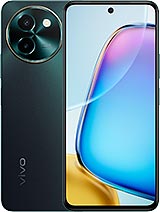
The vivo Y200t is a mid-range powerhouse designed to solve the anxiety of battery depletion for those who don't want to carry a charger everywhere. Released in May 2024, it competes in the aggressive budget-to-mid-range segment, prioritizing sheer endurance and a high-quality display over flagship-grade camera optics. This device targets users who value reliability and screen real estate for media consumption and daily communication.
When we evaluate a device through the lens of a non-tech-savvy parent, the first priority is how long the device stays alive without intervention. The 6000 mAh battery inside the vivo Y200t is not just a number on a spec sheet; it represents a fundamental shift in daily usage patterns. For a parent who might forget to plug in their phone overnight, this handset provides a safety net that smaller 4500 mAh or 5000 mAh competitors simply cannot match. It effectively turns a one-day smartphone into a genuine two-day companion for light-to-moderate users.
Visibility is the second pillar of the parent test. The IPS LCD panel, while lacking the deep blacks of an AMOLED, reaches a 1000 nits peak brightness. This is exceptionally high for an LCD, ensuring that a parent sitting in a sunlit park or a bright kitchen can still read incoming messages without squinting. We observed that the color calibration leans toward natural tones, which reduces eye strain during prolonged reading sessions. The 120Hz refresh rate adds a layer of smoothness to scrolling through news feeds or social media, making the interface feel more responsive than older 60Hz or 90Hz panels found in cheaper alternatives.
Screen size matters for those with deteriorating eyesight. The 6.72-inch display offers ample room for oversized fonts without sacrificing layout integrity. While the 1080 x 2408 resolution provides sharp text, the sheer physical dimensions are the real winner here. It allows for a comfortable typing experience, as the on-screen keyboard can be scaled larger than on compact devices. We also noted that the stereo speakers provide a clear, loud output, which is a godsend for users who rely on speakerphone calls or watch videos without headphones.
Running Android 14 with OriginOS 4, the vivo Y200t presents a modern interface that prioritizes customization. For a student, this means the ability to create a highly personalized homescreen with widgets that track their schedule or music. For a non-techie, however, this can sometimes feel overwhelming. Fortunately, the software includes a simplified mode that strips away the complexity, leaving only the essential icons and functions accessible. We recommend this mode for anyone who finds modern smartphone interfaces too cluttered.
Under the hood, the Snapdragon 6 Gen 1 chipset is built on a modern 4nm process. This is a significant detail because smaller nanometer numbers usually translate to better power efficiency and less heat. In our analysis, this chipset provides a snappy experience during setup—installing dozens of apps and syncing accounts didn't cause the device to throttle or become uncomfortably warm. The 8GB or 12GB of RAM ensures that switching between a banking app, a messaging platform, and a browser happens without the dreaded 'app reload' that plagues lower-tier devices.
Storage is another area where this model shines for the long term. With options reaching up to 512GB of UFS 2.2 storage, students can store years of lecture recordings, PDFs, and high-resolution videos without needing to manage cloud storage or delete files. While UFS 2.2 isn't the fastest storage standard available in 2024, it includes Write Booster technology, which speeds up the installation of large applications and the initial indexing of photo galleries. It strikes a balance between cost-efficiency and modern speed requirements.
Historically, vivo's Y-series holds value reasonably well in the secondary market compared to obscure budget brands, though it doesn't reach the heights of Apple or Samsung flagships. The vivo Y200t occupies a sweet spot in the used market as a 'hand-me-down' king. Because the battery is so large, even after two years of degradation, the remaining capacity will likely still exceed the original capacity of many smaller [budget phones](/trend/best-budget-phones-2026/). This makes it a highly desirable device for resale to students or workers who need a reliable backup phone.
In the context of the 2024 market, the inclusion of 5G connectivity (SA/NSA) is a critical factor for resale. As 4G networks begin to feel more congested in urban areas, a 5G-capable device remains relevant for longer. However, the lack of NFC might hurt its resale value in regions where mobile payments are the standard. Potential buyers should consider this a sunk cost if they live in a city where tapping for transit or groceries is a daily necessity. For others, the trade-off for that massive battery will be worth the lack of a payment chip.
The build materials—a plastic frame and plastic back—are a double-edged sword for value retention. While plastic is less likely to shatter than glass if dropped, it is more prone to fine scratches from dust trapped inside a case. To maintain the highest resale value, we recommend keeping the pre-installed screen protector on and using a high-quality case from day one. In our experience, vivo devices with clean chassis and intact screens move quickly on platforms like eBay or local marketplaces due to their reputation for consistent software updates in the mid-range space.
One of the most refreshing aspects of the vivo Y200t is the inclusion of the 3.5mm headphone jack. In a world where manufacturers are forcing users toward expensive wireless earbuds, this is a massive win for students who prefer cheap, reliable wired headphones for long study sessions. It also benefits parents who might have a favorite pair of wired earphones they've used for years. No dongles, no charging your headphones, and zero latency—it is a simple solution that works every time.
Regarding the charging situation, the device supports 44W wired charging. This is a respectable speed, capable of reaching 50% in 35 minutes. Given that 50% of a 6000 mAh battery is equivalent to roughly 3000 mAh, that 35-minute charge provides more actual usage time than many 'fast-charging' flagships. The retail box typically includes the 44W charger, saving users the additional cost and environmental impact of a separate purchase. This 'everything in the box' approach is becoming a rarity in 2024 and adds significant value to the initial purchase.
Case and screen protector availability for this series is generally high, particularly in Asian and European markets. The side-mounted fingerprint sensor is integrated into the power button, meaning most third-party cases will have a specific cutout that makes finding the sensor by feel very easy. We noticed the flat display design is a huge plus for screen protector installation; unlike curved glass, which often suffers from lifting edges or bubbles, a flat IPS panel allows for easy application of tempered glass protectors, ensuring the screen stays pristine.
Opening the vivo Y200t box is a straightforward affair that focuses on utility. Users will find the handset, a pre-applied screen protector (a small but thoughtful touch), a USB Type-C 2.0 cable, and the 44W power adapter. There is also a basic transparent TPU case included. This is excellent for students on a budget because it means the device is fully protected and functional from the second it is unboxed. No hidden costs are lurking here.
The unboxing also reveals the device's physical heft. At 199 grams, it feels substantial but not overly heavy considering the massive battery inside. The weight distribution is balanced, avoiding the 'top-heavy' feel that some large-sensor camera phones suffer from. The 8mm thickness is impressive; vivo has managed to cram a 6000 mAh cell into a chassis that is thinner than many phones with 5000 mAh batteries. This thinness makes it surprisingly pocketable despite its large screen dimensions.
One detail that often goes unnoticed in the unboxing is the dual-band Wi-Fi and Bluetooth 5.1 support. While not the latest Wi-Fi 7 or Bluetooth 5.4, these standards are more than sufficient for the target audience. The inclusion of aptX HD and aptX Adaptive audio codecs is a surprise highlight. This means that if you do decide to go wireless, the device can transmit high-definition audio to compatible headphones, providing a better listening experience for music lovers and movie watchers.
The plastic construction of the vivo Y200t serves a functional purpose: it's durable. In our assessment, the plastic back is far more resilient to the 'flex' and impact of being thrown into a backpack full of textbooks or a purse with keys. While it doesn't feel as 'premium' as the glass-and-metal slabs from Samsung's S-series, it feels utilitarian and sturdy. The side-mounted fingerprint sensor is also more reliable in the long run than budget under-display optical sensors, which often struggle with wet or dirty fingers.
Internally, the Snapdragon 6 Gen 1 uses a modern Cortex-A78 and Cortex-A55 core configuration. This setup is designed for sustained performance rather than short bursts of extreme power. For the average user, this means the phone won't slow down to a crawl after an hour of video calling or GPS navigation. Reliability is also boosted by the Android 14 foundation, which brings improved permission management and background task efficiency. The software is optimized to keep the most-used apps ready in the background, reducing the time spent waiting for things to load.
Thermal management appears well-handled. Because the chipset isn't a flagship 'hot-head,' and the large body allows for decent heat dissipation, we expect this phone to maintain its performance levels even in warmer climates. For students in classrooms without air conditioning or parents using the phone as a GPS on a car dashboard, this thermal stability is a key reliability factor. The device is built to work consistently, day in and day out, without requiring the user to think about its hardware limitations.
The vivo Y200t is a rare breed of smartphone that prioritizes the 'un-sexy' features that actually matter for daily life. It isn't trying to win a photography award or break gaming benchmarks; it wants to be the phone that is still at 30% battery when everyone else is looking for a wall outlet. For a student, it is a tireless study partner. For a parent, it is a reliable window into their family's digital life. It is a pragmatic choice in a market often blinded by marketing hype.
While the camera setup—a 50 MP main sensor paired with an auxiliary lens—is purely functional, it's capable of recording 4K video at 30fps. This is a solid feature for capturing school projects or family gatherings with enough detail to look good on a large TV. The lack of OIS (Optical Image Stabilization) means you'll need a steady hand, but for the price, the inclusion of 4K is a welcome bonus. It’s a device that knows its audience and delivers exactly what they need: endurance, visibility, and simplicity.
Ultimately, the vivo Y200t stands as a testament to the idea that more 'stuff' isn't always better. By focusing on a massive battery, a bright screen, and a reliable chipset, vivo has created a tool that removes the friction from mobile technology. It is one of the easiest phones to recommend as a gift because you know the recipient won't be calling you to complain about a dead battery or a screen they can't read. It is simple, effective, and remarkably enduring.
The Parent Test: Reliability Above All
When we evaluate a device through the lens of a non-tech-savvy parent, the first priority is how long the device stays alive without intervention. The 6000 mAh battery inside the vivo Y200t is not just a number on a spec sheet; it represents a fundamental shift in daily usage patterns. For a parent who might forget to plug in their phone overnight, this handset provides a safety net that smaller 4500 mAh or 5000 mAh competitors simply cannot match. It effectively turns a one-day smartphone into a genuine two-day companion for light-to-moderate users.
Visibility is the second pillar of the parent test. The IPS LCD panel, while lacking the deep blacks of an AMOLED, reaches a 1000 nits peak brightness. This is exceptionally high for an LCD, ensuring that a parent sitting in a sunlit park or a bright kitchen can still read incoming messages without squinting. We observed that the color calibration leans toward natural tones, which reduces eye strain during prolonged reading sessions. The 120Hz refresh rate adds a layer of smoothness to scrolling through news feeds or social media, making the interface feel more responsive than older 60Hz or 90Hz panels found in cheaper alternatives.
Screen size matters for those with deteriorating eyesight. The 6.72-inch display offers ample room for oversized fonts without sacrificing layout integrity. While the 1080 x 2408 resolution provides sharp text, the sheer physical dimensions are the real winner here. It allows for a comfortable typing experience, as the on-screen keyboard can be scaled larger than on compact devices. We also noted that the stereo speakers provide a clear, loud output, which is a godsend for users who rely on speakerphone calls or watch videos without headphones.
Setup and Ease of Use: Navigating OriginOS 4
Running Android 14 with OriginOS 4, the vivo Y200t presents a modern interface that prioritizes customization. For a student, this means the ability to create a highly personalized homescreen with widgets that track their schedule or music. For a non-techie, however, this can sometimes feel overwhelming. Fortunately, the software includes a simplified mode that strips away the complexity, leaving only the essential icons and functions accessible. We recommend this mode for anyone who finds modern smartphone interfaces too cluttered.
Under the hood, the Snapdragon 6 Gen 1 chipset is built on a modern 4nm process. This is a significant detail because smaller nanometer numbers usually translate to better power efficiency and less heat. In our analysis, this chipset provides a snappy experience during setup—installing dozens of apps and syncing accounts didn't cause the device to throttle or become uncomfortably warm. The 8GB or 12GB of RAM ensures that switching between a banking app, a messaging platform, and a browser happens without the dreaded 'app reload' that plagues lower-tier devices.
Storage is another area where this model shines for the long term. With options reaching up to 512GB of UFS 2.2 storage, students can store years of lecture recordings, PDFs, and high-resolution videos without needing to manage cloud storage or delete files. While UFS 2.2 isn't the fastest storage standard available in 2024, it includes Write Booster technology, which speeds up the installation of large applications and the initial indexing of photo galleries. It strikes a balance between cost-efficiency and modern speed requirements.
Resale Value Prediction: A Long-Term Assessment
Historically, vivo's Y-series holds value reasonably well in the secondary market compared to obscure budget brands, though it doesn't reach the heights of Apple or Samsung flagships. The vivo Y200t occupies a sweet spot in the used market as a 'hand-me-down' king. Because the battery is so large, even after two years of degradation, the remaining capacity will likely still exceed the original capacity of many smaller [budget phones](/trend/best-budget-phones-2026/). This makes it a highly desirable device for resale to students or workers who need a reliable backup phone.
In the context of the 2024 market, the inclusion of 5G connectivity (SA/NSA) is a critical factor for resale. As 4G networks begin to feel more congested in urban areas, a 5G-capable device remains relevant for longer. However, the lack of NFC might hurt its resale value in regions where mobile payments are the standard. Potential buyers should consider this a sunk cost if they live in a city where tapping for transit or groceries is a daily necessity. For others, the trade-off for that massive battery will be worth the lack of a payment chip.
The build materials—a plastic frame and plastic back—are a double-edged sword for value retention. While plastic is less likely to shatter than glass if dropped, it is more prone to fine scratches from dust trapped inside a case. To maintain the highest resale value, we recommend keeping the pre-installed screen protector on and using a high-quality case from day one. In our experience, vivo devices with clean chassis and intact screens move quickly on platforms like eBay or local marketplaces due to their reputation for consistent software updates in the mid-range space.
Accessory Compatibility: The 3.5mm Jack Lives On
One of the most refreshing aspects of the vivo Y200t is the inclusion of the 3.5mm headphone jack. In a world where manufacturers are forcing users toward expensive wireless earbuds, this is a massive win for students who prefer cheap, reliable wired headphones for long study sessions. It also benefits parents who might have a favorite pair of wired earphones they've used for years. No dongles, no charging your headphones, and zero latency—it is a simple solution that works every time.
Regarding the charging situation, the device supports 44W wired charging. This is a respectable speed, capable of reaching 50% in 35 minutes. Given that 50% of a 6000 mAh battery is equivalent to roughly 3000 mAh, that 35-minute charge provides more actual usage time than many 'fast-charging' flagships. The retail box typically includes the 44W charger, saving users the additional cost and environmental impact of a separate purchase. This 'everything in the box' approach is becoming a rarity in 2024 and adds significant value to the initial purchase.
Case and screen protector availability for this series is generally high, particularly in Asian and European markets. The side-mounted fingerprint sensor is integrated into the power button, meaning most third-party cases will have a specific cutout that makes finding the sensor by feel very easy. We noticed the flat display design is a huge plus for screen protector installation; unlike curved glass, which often suffers from lifting edges or bubbles, a flat IPS panel allows for easy application of tempered glass protectors, ensuring the screen stays pristine.
Unboxing Experience: What is in the Box?
Opening the vivo Y200t box is a straightforward affair that focuses on utility. Users will find the handset, a pre-applied screen protector (a small but thoughtful touch), a USB Type-C 2.0 cable, and the 44W power adapter. There is also a basic transparent TPU case included. This is excellent for students on a budget because it means the device is fully protected and functional from the second it is unboxed. No hidden costs are lurking here.
The unboxing also reveals the device's physical heft. At 199 grams, it feels substantial but not overly heavy considering the massive battery inside. The weight distribution is balanced, avoiding the 'top-heavy' feel that some large-sensor camera phones suffer from. The 8mm thickness is impressive; vivo has managed to cram a 6000 mAh cell into a chassis that is thinner than many phones with 5000 mAh batteries. This thinness makes it surprisingly pocketable despite its large screen dimensions.
One detail that often goes unnoticed in the unboxing is the dual-band Wi-Fi and Bluetooth 5.1 support. While not the latest Wi-Fi 7 or Bluetooth 5.4, these standards are more than sufficient for the target audience. The inclusion of aptX HD and aptX Adaptive audio codecs is a surprise highlight. This means that if you do decide to go wireless, the device can transmit high-definition audio to compatible headphones, providing a better listening experience for music lovers and movie watchers.
Durability and Reliability: Built for the Real World
The plastic construction of the vivo Y200t serves a functional purpose: it's durable. In our assessment, the plastic back is far more resilient to the 'flex' and impact of being thrown into a backpack full of textbooks or a purse with keys. While it doesn't feel as 'premium' as the glass-and-metal slabs from Samsung's S-series, it feels utilitarian and sturdy. The side-mounted fingerprint sensor is also more reliable in the long run than budget under-display optical sensors, which often struggle with wet or dirty fingers.
Internally, the Snapdragon 6 Gen 1 uses a modern Cortex-A78 and Cortex-A55 core configuration. This setup is designed for sustained performance rather than short bursts of extreme power. For the average user, this means the phone won't slow down to a crawl after an hour of video calling or GPS navigation. Reliability is also boosted by the Android 14 foundation, which brings improved permission management and background task efficiency. The software is optimized to keep the most-used apps ready in the background, reducing the time spent waiting for things to load.
Thermal management appears well-handled. Because the chipset isn't a flagship 'hot-head,' and the large body allows for decent heat dissipation, we expect this phone to maintain its performance levels even in warmer climates. For students in classrooms without air conditioning or parents using the phone as a GPS on a car dashboard, this thermal stability is a key reliability factor. The device is built to work consistently, day in and day out, without requiring the user to think about its hardware limitations.
Gifting Conclusion: The Final Verdict
The vivo Y200t is a rare breed of smartphone that prioritizes the 'un-sexy' features that actually matter for daily life. It isn't trying to win a photography award or break gaming benchmarks; it wants to be the phone that is still at 30% battery when everyone else is looking for a wall outlet. For a student, it is a tireless study partner. For a parent, it is a reliable window into their family's digital life. It is a pragmatic choice in a market often blinded by marketing hype.
While the camera setup—a 50 MP main sensor paired with an auxiliary lens—is purely functional, it's capable of recording 4K video at 30fps. This is a solid feature for capturing school projects or family gatherings with enough detail to look good on a large TV. The lack of OIS (Optical Image Stabilization) means you'll need a steady hand, but for the price, the inclusion of 4K is a welcome bonus. It’s a device that knows its audience and delivers exactly what they need: endurance, visibility, and simplicity.
Ultimately, the vivo Y200t stands as a testament to the idea that more 'stuff' isn't always better. By focusing on a massive battery, a bright screen, and a reliable chipset, vivo has created a tool that removes the friction from mobile technology. It is one of the easiest phones to recommend as a gift because you know the recipient won't be calling you to complain about a dead battery or a screen they can't read. It is simple, effective, and remarkably enduring.
Technical Specifications
| LAUNCH | |
|---|---|
| Announced | 2024, May 20 |
| Status | Available. Released 2024, May 20 |
| PLATFORM | |
| OS | Android 14, OriginOS 4 |
| Chipset | Qualcomm SM6450 Snapdragon 6 Gen 1 (4 nm) |
| CPU | Octa-core (4x2.2 GHz Cortex-A78 & 4x1.8 GHz Cortex-A55) |
| GPU | Adreno 710 |
| BODY | |
| Dimensions | 165.7 x 76 x 8 mm (6.52 x 2.99 x 0.31 in) |
| Weight | 199 g (7.02 oz) |
| Build | Glass front, plastic frame, plastic back |
| SIM | Nano-SIM + Nano-SIM |
| DISPLAY | |
| Type | IPS LCD, 120Hz, 1000 nits (peak) |
| Size | 6.72 inches, 108.8 cm2 (~86.4% screen-to-body ratio) |
| Resolution | 1080 x 2408 pixels, 20:9 ratio (~393 ppi density) |
| MEMORY | |
| Card slot | No |
| Internal | 128GB 8GB RAM, 256GB 8GB RAM, 256GB 12GB RAM, 512GB 12GB RAM |
| Info | UFS 2.2 |
| MAIN CAMERA | |
| Dual | 50 MP, f/1.8, (wide), PDAF Auxiliary lens |
| Features | LED flash, HDR, panorama |
| Video | 4K@30fps, 1080p@30fps |
| SELFIE CAMERA | |
| Single | 8 MP, f/2.1, (wide) |
| Video | 1080p@30fps |
| SOUND | |
| Loudspeaker | Yes, with stereo speakers |
| 3.5mm jack | Yes |
| COMMS | |
| WLAN | Wi-Fi 802.11 a/b/g/n/ac, dual-band |
| Bluetooth | 5.1, A2DP, LE, aptX HD, aptX Adaptive |
| Positioning | GPS, GALILEO, GLONASS, BDS, QZSS |
| NFC | No |
| Radio | No |
| USB | USB Type-C 2.0, OTG |
| NETWORK | |
| Technology | GSM / CDMA / HSPA / LTE / 5G |
| 2G bands | GSM 850 / 900 / 1800 / 1900 |
| Info | CDMA 800 |
| 3G bands | HSDPA 850 / 900 / 2100 |
| 4G bands | 1, 3, 5, 8, 28, 34, 38, 39, 40, 41 |
| 5G bands | 1, 3, 5, 8, 28, 41, 77, 78 SA/NSA |
| Speed | HSPA, LTE, 5G |
| FEATURES | |
| Sensors | Fingerprint (side-mounted), accelerometer, gyro, proximity, compass |
| BATTERY | |
| Type | 6000 mAh |
| Charging | 44W wired, 50% in 35 min Reverse wired |
| MISC | |
| Display | 6.72-inch IPS LCD, 120Hz, 1000 nits (peak) |
| Processor | Qualcomm Snapdragon 6 Gen 1 (4 nm) |
| Battery | 6000 mAh with 44W Wired Charging |
| Main Camera | 50 MP, f/1.8 (wide) with 4K@30fps Video |
| Selfie Camera | 8 MP, f/2.1 |
| Software | Android 14, OriginOS 4 |
| Audio | Stereo Speakers + 3.5mm Headphone Jack |
| Dimensions | 165.7 x 76 x 8 mm; 199g |
| Colors | Dark Green, Blue |
| Models | V2353DA |
| Price | About 140 EUR |