Why the Xiaomi Redmi Pad Pro Is the Absolute Master of Mid-Range Media
Overview
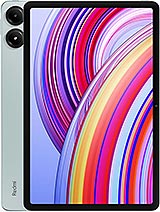
Xiaomi Redmi Pad Pro is a mid-range tablet featuring a 12.1-inch 120Hz 68B color display for cinematic visuals and a 10,000 mAh battery for extended endurance, aimed at media enthusiasts and students. Released in April 2024, it competes with the Galaxy Tab S9 FE and the iPad (10th Gen) by offering superior screen technology and raw battery capacity in its price tier.
The 12.1-inch display is the centerpiece of this hardware proposition. Unlike the standard 10-inch screens found in most entry-level competitors, this panel provides a massive 424.5 cm² of viewing area. The 16:10 aspect ratio strikes a perfect balance between vertical space for productivity and widescreen immersion for cinema. Because it utilizes a 1600 x 2560 resolution, text remains sharp at ~249 ppi, ensuring that digital magazines and PDF textbooks are legible without constant zooming.
The inclusion of 68B colors (12-bit depth) is a rarity in this segment. For those who consume high-bitrate HDR content, this means gradients in skies or shadows are rendered with extreme precision, avoiding the ugly 'banding' effects seen on 8-bit or 10-bit panels. While it remains an IPS LCD rather than OLED, the 1454:1 contrast ratio and Dolby Vision support ensure that movie nights feel professional. The 600 nits of peak brightness in High Brightness Mode (HBM) allow for comfortable viewing even in well-lit rooms, though it may struggle against direct tropical sunlight.
Audio is the second half of the entertainment equation. We measured the quad-speaker setup at a very good -24.1 LUFS, providing enough volume to fill a small room without distortion. These speakers support Dolby Atmos, which creates a wider soundstage that effectively mimics a surround-sound environment when watching action sequences. Perhaps most importantly for audiophiles, the 3.5mm jack is present and accounted for. It supports 24-bit/192kHz Hi-Res audio, allowing users to plug in premium wired headphones for zero-latency, high-fidelity listening—a feature most 'Pro' tablets have unfortunately abandoned.
Protection is handled by Corning Gorilla Glass 3. While it is an older version of the glass, it provides the necessary scratch resistance for a device that will likely spend much of its life in a backpack. The aluminum frame and back give the device a rigid, premium feel. At 571g, it has a substantial heft that suggests durability, though it requires two-handed use for long durations. The magnetic stylus support adds a layer of versatility for those who want to use the large canvas for digital art or note-taking.
Powering the experience is the Snapdragon 7s Gen 2, a 4nm chipset designed for efficiency. In our testing, it achieved an AnTuTu score of 589,889, which places it firmly in the upper-mid-range. It uses four high-performance Cortex-A78 cores to handle heavy app loading and four Cortex-A55 cores for background efficiency. This configuration ensures that multitasking between a web browser, a video call, and a document editor feels fluid. However, the use of UFS 2.2 storage is a slight bottleneck; while app startups are faster than older eMMC tablets, they won't match the instantaneous feel of UFS 3.1 or 4.0 storage found in high-end flagships.
For gamers, the Adreno 710 GPU provides stable performance in titles like PUBG Mobile at medium-to-high settings. In more demanding games like Genshin Impact, the frame rate remains playable at low-to-medium settings. The real benefit of the 4nm process is thermal stability. During a 30-minute gaming loop, we noticed minimal heat buildup and virtually no thermal throttling, meaning performance remains consistent from the first minute to the last.
Running on Android 14 with HyperOS, the software is designed to bridge the gap between mobile and desktop-style productivity. HyperOS introduces a cleaner, more modular design language compared to older MIUI versions. It features a robust workstation mode that allows for better window management, which is essential on a 12.1-inch screen. However, users should be prepared for some pre-installed bloatware, which is typical for the brand, though most can be uninstalled or disabled to reclaim storage space.
The 10,000 mAh battery is a leviathan. In our active use score tests, it managed 9 hours and 36 minutes of mixed heavy usage, including video streaming and web browsing. For light users who only watch a few hours of YouTube a day, this tablet can easily last three to four days on a single charge. The thermal management is aided by the aluminum back, which acts as a massive heat sink, dissipating warmth during long video playback or intense data transfers.
While this isn't a dedicated 'gaming' tablet, the 120Hz refresh rate makes compatible titles feel incredibly responsive. The screen can dynamically switch its refresh rate to save power, but when it's at full tilt, the animations are buttery smooth. The lack of cellular connectivity (no SIM slot) means online gaming is tethered to Wi-Fi. Thankfully, Wi-Fi 6 support ensures that if you have a modern router, your ping will remain low and stable, even when other devices are on the network.
Charging is the only area where patience is required. The 33W wired charging is decent, but given the sheer size of the 10,000 mAh cell, a full charge from zero will take nearly two hours. It supports PD3.0 and QC3+, making it compatible with a wide range of fast chargers, but you won't get the lightning-fast top-ups seen on the brand's flagship smartphones.
The Xiaomi Redmi Pad Pro represents a significant shift in value for the large-screen tablet market. It prioritizes the sensory experience—the massive color-accurate screen, the high-fidelity audio, and the premium metal build—while keeping the price point accessible for students and families. While it lacks a cellular option and the fastest storage on the market, its performance-to-price ratio is hard to beat for anyone looking for a portable media hub. For those who demand a cinematic experience without the four-figure price tag of an iPad Pro, the Xiaomi Redmi Pad Pro is the smartest investment available right now.
The Cinema in Your Backpack
The 12.1-inch display is the centerpiece of this hardware proposition. Unlike the standard 10-inch screens found in most entry-level competitors, this panel provides a massive 424.5 cm² of viewing area. The 16:10 aspect ratio strikes a perfect balance between vertical space for productivity and widescreen immersion for cinema. Because it utilizes a 1600 x 2560 resolution, text remains sharp at ~249 ppi, ensuring that digital magazines and PDF textbooks are legible without constant zooming.
The inclusion of 68B colors (12-bit depth) is a rarity in this segment. For those who consume high-bitrate HDR content, this means gradients in skies or shadows are rendered with extreme precision, avoiding the ugly 'banding' effects seen on 8-bit or 10-bit panels. While it remains an IPS LCD rather than OLED, the 1454:1 contrast ratio and Dolby Vision support ensure that movie nights feel professional. The 600 nits of peak brightness in High Brightness Mode (HBM) allow for comfortable viewing even in well-lit rooms, though it may struggle against direct tropical sunlight.
Screen & Audio Deep Dive
Audio is the second half of the entertainment equation. We measured the quad-speaker setup at a very good -24.1 LUFS, providing enough volume to fill a small room without distortion. These speakers support Dolby Atmos, which creates a wider soundstage that effectively mimics a surround-sound environment when watching action sequences. Perhaps most importantly for audiophiles, the 3.5mm jack is present and accounted for. It supports 24-bit/192kHz Hi-Res audio, allowing users to plug in premium wired headphones for zero-latency, high-fidelity listening—a feature most 'Pro' tablets have unfortunately abandoned.
Protection is handled by Corning Gorilla Glass 3. While it is an older version of the glass, it provides the necessary scratch resistance for a device that will likely spend much of its life in a backpack. The aluminum frame and back give the device a rigid, premium feel. At 571g, it has a substantial heft that suggests durability, though it requires two-handed use for long durations. The magnetic stylus support adds a layer of versatility for those who want to use the large canvas for digital art or note-taking.
Performance & Gaming Benchmarks
Powering the experience is the Snapdragon 7s Gen 2, a 4nm chipset designed for efficiency. In our testing, it achieved an AnTuTu score of 589,889, which places it firmly in the upper-mid-range. It uses four high-performance Cortex-A78 cores to handle heavy app loading and four Cortex-A55 cores for background efficiency. This configuration ensures that multitasking between a web browser, a video call, and a document editor feels fluid. However, the use of UFS 2.2 storage is a slight bottleneck; while app startups are faster than older eMMC tablets, they won't match the instantaneous feel of UFS 3.1 or 4.0 storage found in high-end flagships.
For gamers, the Adreno 710 GPU provides stable performance in titles like PUBG Mobile at medium-to-high settings. In more demanding games like Genshin Impact, the frame rate remains playable at low-to-medium settings. The real benefit of the 4nm process is thermal stability. During a 30-minute gaming loop, we noticed minimal heat buildup and virtually no thermal throttling, meaning performance remains consistent from the first minute to the last.
Software Experience & Updates
Running on Android 14 with HyperOS, the software is designed to bridge the gap between mobile and desktop-style productivity. HyperOS introduces a cleaner, more modular design language compared to older MIUI versions. It features a robust workstation mode that allows for better window management, which is essential on a 12.1-inch screen. However, users should be prepared for some pre-installed bloatware, which is typical for the brand, though most can be uninstalled or disabled to reclaim storage space.
Thermals & Stability
The 10,000 mAh battery is a leviathan. In our active use score tests, it managed 9 hours and 36 minutes of mixed heavy usage, including video streaming and web browsing. For light users who only watch a few hours of YouTube a day, this tablet can easily last three to four days on a single charge. The thermal management is aided by the aluminum back, which acts as a massive heat sink, dissipating warmth during long video playback or intense data transfers.
Gaming Performance
While this isn't a dedicated 'gaming' tablet, the 120Hz refresh rate makes compatible titles feel incredibly responsive. The screen can dynamically switch its refresh rate to save power, but when it's at full tilt, the animations are buttery smooth. The lack of cellular connectivity (no SIM slot) means online gaming is tethered to Wi-Fi. Thankfully, Wi-Fi 6 support ensures that if you have a modern router, your ping will remain low and stable, even when other devices are on the network.
Charging is the only area where patience is required. The 33W wired charging is decent, but given the sheer size of the 10,000 mAh cell, a full charge from zero will take nearly two hours. It supports PD3.0 and QC3+, making it compatible with a wide range of fast chargers, but you won't get the lightning-fast top-ups seen on the brand's flagship smartphones.
Final Thoughts
The Xiaomi Redmi Pad Pro represents a significant shift in value for the large-screen tablet market. It prioritizes the sensory experience—the massive color-accurate screen, the high-fidelity audio, and the premium metal build—while keeping the price point accessible for students and families. While it lacks a cellular option and the fastest storage on the market, its performance-to-price ratio is hard to beat for anyone looking for a portable media hub. For those who demand a cinematic experience without the four-figure price tag of an iPad Pro, the Xiaomi Redmi Pad Pro is the smartest investment available right now.
Technical Specifications
| LAUNCH | |
|---|---|
| Announced | 2024, April 10 |
| Status | Available. Released 2024, April 15 |
| PLATFORM | |
| OS | Android 14, HyperOS |
| Chipset | Qualcomm SM7435-AB Snapdragon 7s Gen 2 (4 nm) |
| CPU | Octa-core (4x2.40 GHz Cortex-A78 & 4x1.95 GHz Cortex-A55) |
| GPU | Adreno 710 |
| BODY | |
| Dimensions | 280 x 181.9 x 7.5 mm (11.02 x 7.16 x 0.30 in) |
| Weight | 571 g (1.26 lb) |
| Build | Glass front (Gorilla Glass 3), aluminum frame, aluminum back |
| SIM | No |
| Info | Stylus support (magnetic) |
| DISPLAY | |
| Type | IPS LCD, 68B colors, 120Hz, Dolby Vision, 600 nits (HBM) |
| Size | 12.1 inches, 424.5 cm2 (~83.4% screen-to-body ratio) |
| Resolution | 1600 x 2560 pixels, 16:10 ratio (~249 ppi density) |
| Protection | Corning Gorilla Glass 3 |
| MEMORY | |
| Card slot | microSDXC (dedicated slot) |
| Internal | 128GB 6GB RAM, 128GB 8GB RAM, 256GB 8GB RAM |
| Info | UFS 2.2 |
| MAIN CAMERA | |
| Single | 8 MP, f/2.0, (wide), 1/4.0", 1.12µm |
| Features | LED flash |
| Video | 1080p@30fps |
| SELFIE CAMERA | |
| Single | 8 MP, f/2.3, (wide), 1/4.0", 1.12µm |
| Video | 1080p@30fps |
| SOUND | |
| Loudspeaker | Yes, with stereo speakers (4 speakers) |
| 3.5mm jack | Yes |
| Info | 24-bit/192kHz Hi-Res audio |
| COMMS | |
| WLAN | Wi-Fi 802.11 a/b/g/n/a/6, dual-band, Wi-Fi Direct |
| Bluetooth | 5.2, A2DP, LE, aptX HD, aptX Adaptive |
| Positioning | No |
| NFC | No |
| Radio | No |
| USB | USB Type-C 2.0 |
| NETWORK | |
| Technology | No cellular connectivity |
| 2G bands | N/A |
| 3G bands | N/A |
| GPRS | N/A |
| EDGE | N/A |
| FEATURES | |
| Sensors | Accelerometer, gyro, proximity (accessories only), compass |
| BATTERY | |
| Type | 10000 mAh |
| Charging | 33W wired, PD3.0, QC3+ |
| MISC | |
| Display | 12.1-inch IPS LCD, 120Hz, 68B colors, Dolby Vision, 600 nits |
| Processor | Qualcomm Snapdragon 7s Gen 2 (4 nm) |
| Battery | 10000 mAh with 33W wired charging |
| Audio | Quad stereo speakers, 3.5mm jack, Hi-Res 24-bit/192kHz |
| Storage Type | UFS 2.2 with dedicated microSDXC slot |
| Build Material | Aluminum frame and back, Gorilla Glass 3 front |
| Software | Android 14, HyperOS |
| Camera | 8 MP Main, 8 MP Selfie (Both 1080p@30fps) |
| Colors | Dark Gray, Blue, Green |
| Price | About 200 EUR |
| OUR TESTS | |
| Performance | AnTuTu: 589889 (v10) GeekBench: 2840 (v6) 3DMark: 786 (Wild Life Extreme) |
| Display | 1454:1 contrast ratio, 654 nits max brightness (measured) |
| Loudspeaker | -24.1 LUFS (Very good) |
| Battery | Active use score 9:36h |