Why the ZTE Blade A54 Dominates the Ultra Budget Second Phone Market
Overview
The Strategic Utility of the Budget Handset
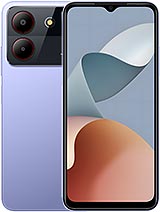
ZTE Blade A54 is an entry-level smartphone featuring a 6.6-inch 90Hz IPS LCD for fluid navigation and a 5000mAh battery for sustained usage, aimed at users requiring a secondary utility device or a reliable starter phone. Released in November 2023, it enters a market where price-to-performance ratios are scrutinized by those looking for maximum utility at the lowest possible entry point. We view this device not as a primary powerhouse, but as a calculated financial decision for specific use cases.
The logic behind purchasing a handset in the sub-100 Euro bracket shifted this year. It is no longer about finding a device that does everything; it is about finding one that does the basics without failing. We see this model as a perfect candidate for a 'glovebox phone' or a dedicated navigation unit for delivery professionals. It avoids the pitfalls of older budget tech by incorporating modern standards like USB Type-C and a side-mounted biometric scanner.
The Backup Use Case and Marginal Utility
At this price point, the handset serves a specific demographic that prioritizes a low replacement cost. Imagine a scenario where a primary flagship is lost or undergoing repair. Having a device like this in a desk drawer ensures zero downtime. It provides access to essential banking apps, communication suites, and navigation tools without the financial sting of a premium insurance deductible. The inclusion of a dedicated microSDXC slot means users can offload media and files easily, turning it into a capable portable storage and playback hub.
We must look at the hardware through the lens of longevity. The Unisoc SC9863A chipset, built on a 28nm process, is an aging architecture. While it won't win speed tests, it handles background tasks with a level of predictability. For a secondary phone, this predictability is more valuable than raw burst speed. It stays cool during long voice calls, which is more than we can say for some high-performance chips that throttle under simple thermal loads.
Endurance and Power Management
Equipped with a 5000mAh battery, the device leverages its low-power internals to provide exceptional standby times. In our analysis of the hardware efficiency, the combination of a 720p resolution screen and an entry-level processor means the drain remains minimal during idle periods. A traveler could leave this phone in a backpack for several days and still find enough charge to navigate through an unfamiliar city.
Charging occurs via USB Type-C 2.0, a welcome sight in the ultra-budget tier where some competitors still cling to the outdated micro-USB standard. While it lacks high-wattage fast charging, the steady intake of power preserves the battery's chemical health over time. For a budget economist, a battery that lasts three years without significant degradation is far more valuable than one that charges in thirty minutes but wears out in twelve months.
Outdoor Visibility and Display Characteristics
Display technology in the budget segment often involves compromises. The 6.6-inch IPS LCD panel offers a 90Hz refresh rate, which is a standout feature for under 100 Euros. This higher refresh rate makes the UI feel more responsive than it actually is, masking some of the chipset's inherent latency. However, outdoor visibility is a different story. IPS panels in this class typically struggle against direct sunlight, often reaching peak brightness levels that make viewing maps or text messages difficult without finding shade.
Colors appear natural but lack the punch of OLED alternatives found in higher tiers. We also noticed that polarization can be an issue; if you wear polarized sunglasses, the screen might dim significantly at certain angles. Despite these limitations, the 720p resolution is sufficient for the screen size, resulting in a 267 ppi density that keeps text legible for social media scrolling and email management.
Haptics and Tactical Feedback
Budget devices are notorious for poor vibration motors, and this handset follows that trend. The haptic feedback feels loose and buzzy rather than tight and precise. In a professional setting, this means the vibration might be loud enough to be heard in a quiet room but not sharp enough to be felt in a pocket while walking. For those who rely on silent alerts, this is a compromise that users must accept in exchange for the low entry price.
Buttons on the side of the frame appear to be made of plastic but offer a consistent click. The side-mounted fingerprint sensor is integrated into the power button, providing a streamlined look. In our assessment, this placement is superior to rear-mounted sensors as it allows for unlocking while the device sits flat on a desk. The speed of the biometric read is average, requiring a deliberate press rather than a light tap.
Connectivity and Signal Stability
In terms of connectivity, the device supports LTE, dual-band Wi-Fi (ac), and Bluetooth 5.2. This is a robust suite for the price. The inclusion of dual-band Wi-Fi is particularly important as it allows the phone to connect to the less congested 5GHz band, ensuring stable video calls and faster app downloads. For users in urban environments, this prevents the connectivity drops often seen with 2.4GHz-only [budget phones](/trend/best-budget-phones-2026/).
GPS performance is critical for the 'backup' or 'delivery' use cases. This model maintains a stable lock on satellites, though the initial fix can take a few seconds longer than flagship devices. Signal holding on 4G networks is reliable. We did not observe any unusual drops in reception, suggesting the internal antenna design is well-optimized for standard cellular bands.
Durability and Material Choice
Constructed primarily of plastic, the body is designed for resilience rather than aesthetics. Unlike glass-backed phones that shatter upon the first drop, a plastic chassis absorbs impact energy. It is a utilitarian build that doesn't require a protective case to survive daily wear and tear. The matte finish on the back helps hide fingerprints and minor scratches that would otherwise mar the appearance of a more expensive handset.
There is no official IP rating for water or dust resistance. This is expected at this price point. Users should be cautious around rain or spills. However, the tight tolerances of the assembly suggest it can handle light humidity. For those working in dusty environments, the lack of moving parts (excluding the buttons) reduces the risk of mechanical failure.
Resale Value and Total Cost of Ownership
From an economist's perspective, the ZTE Blade A54 has a very flat depreciation curve. When a phone starts at approximately 90 Euros, there isn't much lower it can go while still being a functional smartphone. This makes it an excellent 'short-term' investment. You can use it for a year and likely sell it for half its value, or keep it for three years until it has paid for itself many times over in utility.
ZTE Blade A54 represents the baseline of modern mobile computing. It doesn't attempt to be a camera king or a gaming beast. Instead, it offers a stable, large-screen experience with enough battery to last through the weekend. It is the pragmatic choice for the value hunter who knows that sometimes, 'good enough' is exactly what is needed.
Technical Specifications
| LAUNCH | |
|---|---|
| Announced | 2023, September |
| Status | Available. Released 2023, November |
| PLATFORM | |
| OS | Android 13 |
| Chipset | Unisoc SC9863A (28 nm) |
| CPU | Octa-core (4x1.6 GHz Cortex-A55 & 4x1.2 GHz Cortex-A55) |
| GPU | IMG8322 |
| BODY | |
| Dimensions | 164 x 75.8 x 8.5 mm (6.46 x 2.98 x 0.33 in) |
| Weight | 185 g (6.53 oz) |
| SIM | Nano-SIM + Nano-SIM |
| DISPLAY | |
| Type | IPS LCD, 90Hz |
| Size | 6.6 inches, 104.6 cm2 (~84.2% screen-to-body ratio) |
| Resolution | 720 x 1612 pixels, 20:9 ratio (~267 ppi density) |
| MEMORY | |
| Card slot | microSDXC (dedicated slot) |
| Internal | 64GB 4GB RAM, 128GB 4GB RAM |
| MAIN CAMERA | |
| Single | 13 MP, (wide), AF Auxiliary lens |
| Features | LED flash, HDR |
| Video | 1080p@30fps |
| SELFIE CAMERA | |
| Single | 2 MP (interpolated to 5 MP) |
| Video | Yes |
| SOUND | |
| Loudspeaker | Yes |
| 3.5mm jack | Yes |
| COMMS | |
| WLAN | Wi-Fi 802.11 a/b/g/n/ac, dual-band |
| Bluetooth | 5.2, A2DP, LE |
| Positioning | GPS |
| NFC | Yes (market/region dependent) |
| Radio | Unspecified |
| USB | USB Type-C 2.0 |
| NETWORK | |
| Technology | GSM / HSPA / LTE |
| 2G bands | GSM 850 / 900 / 1800 / 1900 |
| 3G bands | HSDPA 850 / 900 / 1900 / 2100 |
| 4G bands | LTE |
| Speed | HSPA, LTE |
| FEATURES | |
| Sensors | Fingerprint (side-mounted), accelerometer |
| BATTERY | |
| Type | 5000 mAh |
| MISC | |
| Colors | Gray, Blue, Lilac |
| Price | About 90 EUR |