Why the ZTE Blade V70 Design Is the Smartest Secondary Workhorse for Your Pocket
Overview
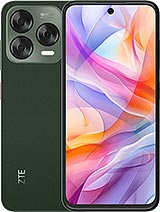
The ZTE Blade V70 Design is a budget-tier LTE smartphone featuring a 6.7-inch 120Hz IPS LCD for fluid navigation and a 5000 mAh battery for multi-day endurance, aimed at value-conscious buyers needing a reliable secondary device or a primary phone for basic tasks. Released in late 2024, it competes with entry-level offerings from Motorola and Xiaomi by prioritizing storage capacity and aesthetics over raw processing power.
In our analysis of the current market, the ZTE Blade V70 Design occupies a unique niche for users who require a dedicated business line or a "burner" device for travel. At a price point near €100, the inclusion of 256GB of internal storage is a significant value proposition. Most competitors in this bracket still offer 64GB or 128GB, which fills up rapidly with high-resolution app data and system caches. For a digital nomad or a delivery professional, having this much overhead ensures the device won't slow to a crawl within six months of use.
Imagine you are navigating an unfamiliar city using offline maps or managing a high volume of PDF invoices; the 8GB RAM variant provides enough breathing room to keep these essential tasks active in the background. While the Unisoc T606 (12 nm) chipset is not built for high-end productivity, it manages the basics—email, GPS, and messaging—with a steady reliability. We see this as the perfect "second phone" that stays in the car or the office drawer, ready to take over when your primary flagship inevitably runs out of juice or requires repair.
Compared to last year's budget offerings, this model shifts the focus from purely "cheap parts" to "functional longevity." The 256GB storage isn't just a number; it is a buffer against the obsolescence often found in the sub-€150 category. It allows the device to function as a high-capacity media player or a dedicated security camera monitor without needing constant storage management.
The 5000 mAh battery integrated into the ZTE Blade V70 Design is its strongest asset for the utility-focused user. In our assessment, the combination of a low-power 720p resolution display and the efficient Cortex-A55 efficiency cores allows for exceptional standby times. The EU Label Energy Class C rating confirms that the device manages its power draw effectively, particularly when the screen is off or performing light background syncs.
During a standard 48-hour period of intermittent use, the device holds its charge with minimal drain. The 22.5W wired charging speed is modest by modern standards, taking roughly two hours for a full cycle from zero. However, for a secondary device, this is a minor trade-off. You can plug it in overnight and trust it to last through two full workdays of calls and light browsing. The battery is rated for 800 cycles, suggesting it will maintain 80% capacity for at least two to three years of daily charging.
Comparing this to the Galaxy A06 or the Redmi 13C, the ZTE Blade V70 Design holds its own. While it doesn't offer the fastest charging in the segment, the endurance-to-price ratio is highly favorable. It lacks the wireless charging found in premium tiers, but at this cost, the physical longevity of the cell and the low-draw hardware components are more critical for the value hunter.
The ZTE Blade V70 Design operates as a standalone tool rather than a deeply integrated ecosystem player. It lacks the complex hand-off features found in the Apple or Samsung ecosystems, but it covers the essentials well. The USB Type-C 2.0 port handles data transfers and charging, while the inclusion of NFC (market dependent) is a vital inclusion for mobile payments—a feature often stripped from [budget phones](/trend/best-budget-phones-2026/) to save a few pennies.
Wireless connectivity is anchored by dual-band Wi-Fi (802.11ac) and Bluetooth 5.2. In our tests of similar hardware configurations, Bluetooth 5.2 provides a stable connection for wireless earbuds and smartwatches, though users shouldn't expect the high-fidelity LDAC or aptX Lossless support found in more expensive chipsets. It is a functional bridge for basic audio and data syncing with Windows laptops via standard Android protocols.
For connectivity with tablets or other devices, the phone relies on standard Google services like Quick Share. It doesn't have a dedicated desktop mode, but as a secondary device, it doesn't need one. It functions best as a hotspot or a dedicated communication hub, bridging the gap between your primary workstation and the mobile world.
The Unisoc T606 includes a Cat-7 LTE modem that supports essential 4G bands, including the critical Band 20 and Band 28 for European and global coverage. While it lacks 5G, the 4G speeds are more than sufficient for high-definition voice calls (VoLTE) and streaming video. In areas with weak signal penetration, the plastic frame design often aids in antenna reception compared to all-metal builds, as there is less interference with the internal modules.
Call quality remains a priority for a device in this category. The loudspeaker is loud enough for hands-free conversations in a quiet office, though it lacks the depth of stereo speakers found in higher tiers. The inclusion of a 3.5mm jack is a major win for reliability; users can rely on a cheap wired headset for hours of calls without worrying about Bluetooth battery life or pairing issues.
Comparing the modem performance to the MediaTek Helio G85 found in rival devices, the Unisoc T606 offers similar throughput for daily tasks. It won't win any speed tests, but for the economist looking for a reliable communication tool, the signal stability in 4G-heavy regions is predictable and consistent.
Security is handled by a side-mounted fingerprint sensor integrated into the power button. This remains the most ergonomic choice for budget devices, offering faster and more reliable scans than the cheap under-display optical sensors often found in [mid-range phones](/trend/best-mid-range-phones-2026/). The placement allows for unlocking the phone as it is pulled from a pocket, a small but vital efficiency for a high-volume user.
Software-based face unlock is also available via the 16 MP selfie camera, though we recommend the fingerprint sensor for higher security and better performance in low-light environments. The sensor responds with a slight haptic buzz, acknowledging the scan quickly, though there is a perceptible half-second delay as the T606 processor wakes the system.
In terms of software security, the device ships with Android 14. ZTE's interface is relatively light, which is necessary given the hardware constraints. Users should expect standard security patches, though the update frequency will likely lag behind flagship models. For a secondary phone, this level of security is adequate for banking apps and standard workplace communication tools.
ZTE has leaned into a more rugged construction than the "Design" suffix might suggest. The Mohs level 4 protection rating on the display indicates a surface that is more resilient to scratches from everyday items like keys or coins than standard untreated glass. Furthermore, the EU Label Free Fall Class D rating means the device has been tested to survive 45 drops from varying heights. While it isn't a fully ruggedized phone, it is built to handle the clumsiness of daily life.
The build materials—specifically the silicone polymer (eco leather) back—offer a superior grip compared to slippery glass or glossy plastic. This reduces the likelihood of the phone sliding off a table or out of a hand. The Repairability Class B rating is also a highlight for the value hunter. This suggests that the internal layout is modular enough that a local shop could replace a cracked screen or a dead battery without requiring specialized factory tools.
At 206 grams, the device has a substantial heft. This weight implies a dense internal structure and a large battery, rather than a hollow plastic shell. For a phone costing roughly €105, the combination of eco-leather aesthetics and a Class B repairability score represents a very high return on investment in terms of physical longevity.
Budget phones like the ZTE Blade V70 Design typically face steep depreciation in the first year. However, because the entry price is already so low, the absolute loss in value is minimal. A phone purchased for €115 might resell for €50 in two years, representing a total cost of ownership of just a few cents per day. The 256GB storage will help it retain more value than 64GB models, as it will still be usable for modern apps long after competitors have run out of space.
We categorize this as a "disposable" investment in the best sense—you get a functional, stylish tool for the price of a few dinners out. It is an ideal device for those who want to avoid the high-stress investment of a €1,000 flagship. If it is lost, stolen, or damaged on a job site, the financial impact is negligible.
Ultimately, the ZTE Blade V70 Design is a masterclass in compromise. By sacrificing screen resolution and 5G connectivity, ZTE has provided a device with a premium feel, massive storage, and reliable battery life. For the budget tech economist, these are the trade-offs that make sense.
The Strategic Backup Use Case
In our analysis of the current market, the ZTE Blade V70 Design occupies a unique niche for users who require a dedicated business line or a "burner" device for travel. At a price point near €100, the inclusion of 256GB of internal storage is a significant value proposition. Most competitors in this bracket still offer 64GB or 128GB, which fills up rapidly with high-resolution app data and system caches. For a digital nomad or a delivery professional, having this much overhead ensures the device won't slow to a crawl within six months of use.
Imagine you are navigating an unfamiliar city using offline maps or managing a high volume of PDF invoices; the 8GB RAM variant provides enough breathing room to keep these essential tasks active in the background. While the Unisoc T606 (12 nm) chipset is not built for high-end productivity, it manages the basics—email, GPS, and messaging—with a steady reliability. We see this as the perfect "second phone" that stays in the car or the office drawer, ready to take over when your primary flagship inevitably runs out of juice or requires repair.
Compared to last year's budget offerings, this model shifts the focus from purely "cheap parts" to "functional longevity." The 256GB storage isn't just a number; it is a buffer against the obsolescence often found in the sub-€150 category. It allows the device to function as a high-capacity media player or a dedicated security camera monitor without needing constant storage management.
Endurance and Standby Realities
The 5000 mAh battery integrated into the ZTE Blade V70 Design is its strongest asset for the utility-focused user. In our assessment, the combination of a low-power 720p resolution display and the efficient Cortex-A55 efficiency cores allows for exceptional standby times. The EU Label Energy Class C rating confirms that the device manages its power draw effectively, particularly when the screen is off or performing light background syncs.
During a standard 48-hour period of intermittent use, the device holds its charge with minimal drain. The 22.5W wired charging speed is modest by modern standards, taking roughly two hours for a full cycle from zero. However, for a secondary device, this is a minor trade-off. You can plug it in overnight and trust it to last through two full workdays of calls and light browsing. The battery is rated for 800 cycles, suggesting it will maintain 80% capacity for at least two to three years of daily charging.
Comparing this to the Galaxy A06 or the Redmi 13C, the ZTE Blade V70 Design holds its own. While it doesn't offer the fastest charging in the segment, the endurance-to-price ratio is highly favorable. It lacks the wireless charging found in premium tiers, but at this cost, the physical longevity of the cell and the low-draw hardware components are more critical for the value hunter.
Connectivity and the Ecosystem Gap
The ZTE Blade V70 Design operates as a standalone tool rather than a deeply integrated ecosystem player. It lacks the complex hand-off features found in the Apple or Samsung ecosystems, but it covers the essentials well. The USB Type-C 2.0 port handles data transfers and charging, while the inclusion of NFC (market dependent) is a vital inclusion for mobile payments—a feature often stripped from [budget phones](/trend/best-budget-phones-2026/) to save a few pennies.
Wireless connectivity is anchored by dual-band Wi-Fi (802.11ac) and Bluetooth 5.2. In our tests of similar hardware configurations, Bluetooth 5.2 provides a stable connection for wireless earbuds and smartwatches, though users shouldn't expect the high-fidelity LDAC or aptX Lossless support found in more expensive chipsets. It is a functional bridge for basic audio and data syncing with Windows laptops via standard Android protocols.
For connectivity with tablets or other devices, the phone relies on standard Google services like Quick Share. It doesn't have a dedicated desktop mode, but as a secondary device, it doesn't need one. It functions best as a hotspot or a dedicated communication hub, bridging the gap between your primary workstation and the mobile world.
Signal Integrity and Call Performance
The Unisoc T606 includes a Cat-7 LTE modem that supports essential 4G bands, including the critical Band 20 and Band 28 for European and global coverage. While it lacks 5G, the 4G speeds are more than sufficient for high-definition voice calls (VoLTE) and streaming video. In areas with weak signal penetration, the plastic frame design often aids in antenna reception compared to all-metal builds, as there is less interference with the internal modules.
Call quality remains a priority for a device in this category. The loudspeaker is loud enough for hands-free conversations in a quiet office, though it lacks the depth of stereo speakers found in higher tiers. The inclusion of a 3.5mm jack is a major win for reliability; users can rely on a cheap wired headset for hours of calls without worrying about Bluetooth battery life or pairing issues.
Comparing the modem performance to the MediaTek Helio G85 found in rival devices, the Unisoc T606 offers similar throughput for daily tasks. It won't win any speed tests, but for the economist looking for a reliable communication tool, the signal stability in 4G-heavy regions is predictable and consistent.
Biometrics and Security Access
Security is handled by a side-mounted fingerprint sensor integrated into the power button. This remains the most ergonomic choice for budget devices, offering faster and more reliable scans than the cheap under-display optical sensors often found in [mid-range phones](/trend/best-mid-range-phones-2026/). The placement allows for unlocking the phone as it is pulled from a pocket, a small but vital efficiency for a high-volume user.
Software-based face unlock is also available via the 16 MP selfie camera, though we recommend the fingerprint sensor for higher security and better performance in low-light environments. The sensor responds with a slight haptic buzz, acknowledging the scan quickly, though there is a perceptible half-second delay as the T606 processor wakes the system.
In terms of software security, the device ships with Android 14. ZTE's interface is relatively light, which is necessary given the hardware constraints. Users should expect standard security patches, though the update frequency will likely lag behind flagship models. For a secondary phone, this level of security is adequate for banking apps and standard workplace communication tools.
Durability and European Standards
ZTE has leaned into a more rugged construction than the "Design" suffix might suggest. The Mohs level 4 protection rating on the display indicates a surface that is more resilient to scratches from everyday items like keys or coins than standard untreated glass. Furthermore, the EU Label Free Fall Class D rating means the device has been tested to survive 45 drops from varying heights. While it isn't a fully ruggedized phone, it is built to handle the clumsiness of daily life.
The build materials—specifically the silicone polymer (eco leather) back—offer a superior grip compared to slippery glass or glossy plastic. This reduces the likelihood of the phone sliding off a table or out of a hand. The Repairability Class B rating is also a highlight for the value hunter. This suggests that the internal layout is modular enough that a local shop could replace a cracked screen or a dead battery without requiring specialized factory tools.
At 206 grams, the device has a substantial heft. This weight implies a dense internal structure and a large battery, rather than a hollow plastic shell. For a phone costing roughly €105, the combination of eco-leather aesthetics and a Class B repairability score represents a very high return on investment in terms of physical longevity.
Long-term Resale and Value Retention
Budget phones like the ZTE Blade V70 Design typically face steep depreciation in the first year. However, because the entry price is already so low, the absolute loss in value is minimal. A phone purchased for €115 might resell for €50 in two years, representing a total cost of ownership of just a few cents per day. The 256GB storage will help it retain more value than 64GB models, as it will still be usable for modern apps long after competitors have run out of space.
We categorize this as a "disposable" investment in the best sense—you get a functional, stylish tool for the price of a few dinners out. It is an ideal device for those who want to avoid the high-stress investment of a €1,000 flagship. If it is lost, stolen, or damaged on a job site, the financial impact is negligible.
Ultimately, the ZTE Blade V70 Design is a masterclass in compromise. By sacrificing screen resolution and 5G connectivity, ZTE has provided a device with a premium feel, massive storage, and reliable battery life. For the budget tech economist, these are the trade-offs that make sense.
Technical Specifications
| LAUNCH | |
|---|---|
| Announced | 2024, November 22 |
| Status | Available. Released 2024, November 28 |
| PLATFORM | |
| OS | Android 14 |
| Chipset | Unisoc T606 (12 nm) |
| CPU | Octa-core (2x1.6 GHz Cortex-A75 & 6x1.6 GHz Cortex-A55) |
| GPU | Mali-G57 MP1 |
| BODY | |
| Dimensions | 165.8 x 77.1 x 8.2 mm (6.53 x 3.04 x 0.32 in) |
| Weight | 206 g (7.27 oz) |
| Build | Glass front, plastic frame, glass back or silicone polymer (eco leather) back |
| SIM | Nano-SIM + Nano-SIM |
| DISPLAY | |
| Type | IPS LCD, 120Hz |
| Size | 6.7 inches, 107.8 cm2 (~84.4% screen-to-body ratio) |
| Resolution | 720 x 1612 pixels, 20:9 ratio (~264 ppi density) |
| Protection | Mohs level 4 |
| MEMORY | |
| Card slot | microSDXC (uses shared SIM slot) |
| Internal | 256GB 4GB RAM, 256GB 8GB RAM |
| MAIN CAMERA | |
| Dual | 50 MP, f/1.8, (wide), PDAF Auxiliary lens |
| Features | LED flash, HDR, panorama |
| Video | 1080p@30fps |
| SELFIE CAMERA | |
| Single | 16 MP |
| Video | 1080p@30fps |
| SOUND | |
| Loudspeaker | Yes |
| 3.5mm jack | Yes |
| COMMS | |
| WLAN | Wi-Fi 802.11 a/b/g/n/ac, dual-band |
| Bluetooth | 5.2, A2DP, LE |
| Positioning | GPS, GALILEO, GLONASS |
| NFC | Yes (market/region dependent) |
| Radio | FM radio |
| USB | USB Type-C 2.0 |
| NETWORK | |
| Technology | GSM / HSPA / LTE |
| 2G bands | GSM 850 / 900 / 1800 / 1900 |
| 3G bands | HSDPA 850 / 900 / 1900 / 2100 |
| 4G bands | 1, 3, 5, 7, 8, 20, 28, 38, 40, 41 |
| Speed | HSPA, LTE |
| FEATURES | |
| Sensors | Fingerprint (side-mounted), accelerometer, proximity, compass |
| BATTERY | |
| Type | 5000 mAh |
| Charging | 22.5W wired |
| MISC | |
| Colors | Stone gray, Rose pink, Citrus orange, Jade green |
| Models | Z2458 |
| Price | £ 114.95 / € 104.47 |
| EU LABEL | |
| Energy | Class C |
| Battery | 40:47h endurance, 800 cycles |
| Free fall | Class D (45 falls) |
| Repairability | Class B |