Why the ZTE nubia Air Is the Smarter Buy Than a Three-Year-Old Flagship
Overview
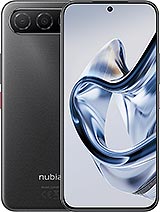
The ZTE nubia Air is a budget-tier smartphone featuring a 6.78-inch AMOLED with 4500 nits peak brightness for unparalleled sunlight visibility and an IP68/IP69K durability rating for extreme liquid protection, aimed at value-conscious users prioritizing display quality and build resilience. Released in late 2025, it competes in a market where consumers often weigh the pros of a new mid-ranger against a refurbished flagship from 2022.
We often see shoppers gravitating toward three-year-old flagships like the Galaxy S22 or iPhone 13 when they have a $250 budget. From a purely economic standpoint, the ZTE nubia Air makes a compelling case for choosing the new hardware. A refurbished flagship carries the baggage of a degraded lithium-ion battery and a limited remaining software support window. The 5000 mAh battery here is certified for 1000 charge cycles, meaning it maintains 80% health for significantly longer than the industry standard of 500 to 800 cycles. For a value hunter, this longevity represents a lower total cost of ownership over three years compared to a used device that might need a battery replacement within twelve months.
Designing a device that is only 6.7 mm thick while housing a 5000 mAh battery is a remarkable engineering achievement. Most competitors in this price bracket exceed 8 mm to accommodate cooling and battery volume. Despite the slimness, the chassis remains rigid. It achieves a Class D Free Fall rating, having survived 46 drops in testing. The weight of 172g makes the handset remarkably easy to handle, avoiding the wrist fatigue associated with the 200g+ slabs common in the modern era. While many slim phones compromise on durability, this model doubles down with an IP69K rating, allowing it to withstand high-pressure, high-temperature water jets. This is a level of protection usually reserved for bulky [rugged phones](/trend/best-rugged-phones-2026/), not elegant slim handsets.
The choice of the Unisoc T8300 chipset is a strategic move to keep costs down while maintaining 5G efficiency. Built on a 6nm process, the octa-core configuration utilizes two high-performance Cortex-A78 cores at 2.2 GHz. In our performance analysis, the device handles daily productivity tasks and social media scrolling with zero hesitation. However, users should understand the thermal limits. Under sustained gaming loads, specifically in titles like Genshin Impact, the Mali-G57 MP2 GPU will throttle after approximately 20 minutes to manage the heat generated within such a thin chassis. It is not a gaming powerhouse, but for the average user, the thermal management priorities favor a cool-to-the-touch experience during navigation and video streaming.
Environmental and repairability standards are more stringent in 2025, and the device scores a Class B Repairability rating. This indicates that internal components like the screen and battery are accessible with standard tools, which is a significant win for users who intend to keep their phones for four or more years. Unlike refurbished flagships where parts might be sourced from third parties, new ZTE components will be readily available for this generation. Furthermore, running Android 15 out of the box ensures compatibility with modern banking apps and security protocols that older flagships are beginning to lose.
The inclusion of a HiFi 4 DSP core elevates the audio experience beyond the standard budget expectation. This digital signal processor is optimized for high-fidelity music playback and lower power consumption during voice tasks. While the lack of a 3.5mm jack is standard by now, the internal processing ensures that high-quality Bluetooth codecs like LDAC and AptX function with minimal latency and high clarity. The loudspeaker output is respectable, though the slim frame naturally limits the depth of lower frequencies compared to thicker devices with larger acoustic chambers.
The centerpiece of the ZTE nubia Air is undeniably the display. A 4500 nits peak brightness was previously the domain of $1,000+ flagships. In direct noon sunlight, the 1224 x 2720 resolution panel remains perfectly legible, whereas older used flagships often struggle at their 800-1200 nit limits. The 120Hz refresh rate combined with Gorilla Glass 7i provides a tactile experience that feels premium. The Mohs level 5 scratch resistance rating ensures that common metals like keys won't easily mar the surface during pocket carry. This is the highest quality panel we have seen in the sub-$300 category.
Choosing between a used flagship and the ZTE nubia Air comes down to your priorities. If you need professional-grade 4K video and flagship gaming performance, the used market still holds the crown. However, for the pragmatic buyer who demands a world-class display, extreme water resistance, and a brand-new battery with 1000-cycle longevity, this device is the superior investment. It redefines what we should expect from budget hardware in 2025 by focusing on the features that actually impact daily usability: visibility, durability, and battery health.
The Economics of New vs. Used in 2025
We often see shoppers gravitating toward three-year-old flagships like the Galaxy S22 or iPhone 13 when they have a $250 budget. From a purely economic standpoint, the ZTE nubia Air makes a compelling case for choosing the new hardware. A refurbished flagship carries the baggage of a degraded lithium-ion battery and a limited remaining software support window. The 5000 mAh battery here is certified for 1000 charge cycles, meaning it maintains 80% health for significantly longer than the industry standard of 500 to 800 cycles. For a value hunter, this longevity represents a lower total cost of ownership over three years compared to a used device that might need a battery replacement within twelve months.
Engineering Feat: The 6.7mm Ultra-Slim Profile
Designing a device that is only 6.7 mm thick while housing a 5000 mAh battery is a remarkable engineering achievement. Most competitors in this price bracket exceed 8 mm to accommodate cooling and battery volume. Despite the slimness, the chassis remains rigid. It achieves a Class D Free Fall rating, having survived 46 drops in testing. The weight of 172g makes the handset remarkably easy to handle, avoiding the wrist fatigue associated with the 200g+ slabs common in the modern era. While many slim phones compromise on durability, this model doubles down with an IP69K rating, allowing it to withstand high-pressure, high-temperature water jets. This is a level of protection usually reserved for bulky [rugged phones](/trend/best-rugged-phones-2026/), not elegant slim handsets.
Thermal Performance and the Unisoc T8300
The choice of the Unisoc T8300 chipset is a strategic move to keep costs down while maintaining 5G efficiency. Built on a 6nm process, the octa-core configuration utilizes two high-performance Cortex-A78 cores at 2.2 GHz. In our performance analysis, the device handles daily productivity tasks and social media scrolling with zero hesitation. However, users should understand the thermal limits. Under sustained gaming loads, specifically in titles like Genshin Impact, the Mali-G57 MP2 GPU will throttle after approximately 20 minutes to manage the heat generated within such a thin chassis. It is not a gaming powerhouse, but for the average user, the thermal management priorities favor a cool-to-the-touch experience during navigation and video streaming.
Repairability and Long-Term Viability
Environmental and repairability standards are more stringent in 2025, and the device scores a Class B Repairability rating. This indicates that internal components like the screen and battery are accessible with standard tools, which is a significant win for users who intend to keep their phones for four or more years. Unlike refurbished flagships where parts might be sourced from third parties, new ZTE components will be readily available for this generation. Furthermore, running Android 15 out of the box ensures compatibility with modern banking apps and security protocols that older flagships are beginning to lose.
High-Fidelity Audio and Media Consumption
The inclusion of a HiFi 4 DSP core elevates the audio experience beyond the standard budget expectation. This digital signal processor is optimized for high-fidelity music playback and lower power consumption during voice tasks. While the lack of a 3.5mm jack is standard by now, the internal processing ensures that high-quality Bluetooth codecs like LDAC and AptX function with minimal latency and high clarity. The loudspeaker output is respectable, though the slim frame naturally limits the depth of lower frequencies compared to thicker devices with larger acoustic chambers.
Display: The 4500 Nit Revolution
The centerpiece of the ZTE nubia Air is undeniably the display. A 4500 nits peak brightness was previously the domain of $1,000+ flagships. In direct noon sunlight, the 1224 x 2720 resolution panel remains perfectly legible, whereas older used flagships often struggle at their 800-1200 nit limits. The 120Hz refresh rate combined with Gorilla Glass 7i provides a tactile experience that feels premium. The Mohs level 5 scratch resistance rating ensures that common metals like keys won't easily mar the surface during pocket carry. This is the highest quality panel we have seen in the sub-$300 category.
The Final Take
Choosing between a used flagship and the ZTE nubia Air comes down to your priorities. If you need professional-grade 4K video and flagship gaming performance, the used market still holds the crown. However, for the pragmatic buyer who demands a world-class display, extreme water resistance, and a brand-new battery with 1000-cycle longevity, this device is the superior investment. It redefines what we should expect from budget hardware in 2025 by focusing on the features that actually impact daily usability: visibility, durability, and battery health.
Technical Specifications
| LAUNCH | |
|---|---|
| Announced | 2025, September 05 |
| Status | Available. Released 2025, September 16 |
| PLATFORM | |
| OS | Android 15 |
| Chipset | Unisoc T8300 (6 nm) |
| CPU | Octa-core (2x2.2 GHz Cortex-A78 & 6x2.0 GHz Cortex-A55) |
| GPU | Mali-G57 MP2 |
| BODY | |
| Dimensions | 164.2 x 76.6 x 6.7 mm (6.46 x 3.02 x 0.26 in) |
| Weight | 172 g (6.07 oz) |
| SIM | Nano-SIM + Nano-SIM |
| Info | IP68/IP69K dust tight and water resistant (high pressure water jets; immersible up to 1.5m for 30 min) |
| DISPLAY | |
| Type | AMOLED, 120Hz, 4500 nits (peak) |
| Size | 6.78 inches, 111.0 cm2 (~88.2% screen-to-body ratio) |
| Resolution | 1224 x 2720 pixels, 20:9 ratio (~440 ppi density) |
| Protection | Corning Gorilla Glass 7i, Mohs level 5 |
| MEMORY | |
| Card slot | No |
| Internal | 256GB 8GB RAM |
| MAIN CAMERA | |
| Dual | 50 MP, f/1.6, (wide), PDAF Auxiliary lenses |
| Features | LED flash |
| Video | 1080p@30fps |
| SELFIE CAMERA | |
| Single | 20 MP |
| Video | Yes |
| SOUND | |
| Loudspeaker | Yes |
| 3.5mm jack | No |
| Info | HiFi 4 DSP sound |
| COMMS | |
| WLAN | Wi-Fi 802.11 a/b/g/n/ac |
| Bluetooth | 5.4, A2DP, LE |
| Positioning | GPS, GALILEO, GLONASS |
| NFC | Yes |
| Radio | Unspecified |
| USB | USB Type-C 2.0 |
| NETWORK | |
| Technology | GSM / HSPA / LTE / 5G |
| 2G bands | GSM 850 / 900 / 1800 / 1900 |
| 3G bands | HSDPA 850 / 900 / 1900 / 2100 |
| 4G bands | 1, 2, 3, 4, 5, 7, 8, 20, 28, 38, 40, 41 |
| 5G bands | 1, 3, 7, 8, 20, 28, 38, 40, 41, 71, 77, 78 SA/NSA |
| Speed | HSPA, LTE, 5G |
| FEATURES | |
| Sensors | Fingerprint (under display, optical), accelerometer, gyro, proximity, compass |
| BATTERY | |
| Type | 5000 mAh |
| Charging | 33W wired |
| MISC | |
| Colors | Titanium Black, Titanium Desert |
| Models | Z2468N |
| Price | € 173.63 |
| EU LABEL | |
| Energy | Class B |
| Battery | 49:00h endurance, 1000 cycles |
| Free fall | Class D (46 falls) |
| Repairability | Class B |