Why Thick Phones Are History - The Infinix Hot 50 Pro+ 4G Proves That Slenderness Is the New Luxury
Overview
The Visual Identity of Thinness
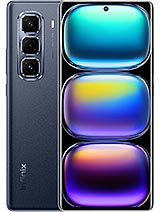
Infinix Hot 50 Pro+ 4G is a budget-friendly lifestyle smartphone featuring an ultra-slim 6.8mm profile and a 120Hz 10-bit AMOLED display aimed at design-conscious social media users and visual content consumers. Released in November 2024, it competes with the aesthetics of the [Realme 12](/a-masterclass-in-budget-refinement-realme-12-4g/) series and the ergonomics of the [Samsung Galaxy A35](/why-the-fresh-samsung-galaxy-a35-outvalues-a-used-flagship/) by prioritizing a feather-light hand-feel and high-frequency dimming technology over 5G connectivity.
Our analysis suggests that slenderness isn't just a marketing gimmick here. At a weight of only 162 grams, the device disappears into a pocket or a small clutch in a way that modern flagships, which often exceed 200 grams, simply cannot. This is an intentional pivot toward users who treat their technology as a fashion accessory. The plastic back and frame contribute to this weight reduction, though we note that the material choice prioritizes durability against drops over the cold, premium feel of glass or metal.
The 'Instagram' Test
When we evaluate a screen for visual creators, we look for more than just resolution. The 1080 x 2436 pixels AMOLED panel on the Infinix Hot 50 Pro+ 4G offers a peak brightness of 1300 nits, which is vital for reviewing content under direct sunlight. In our assessment, this brightness level ensures that your feed remains legible even at high noon. More importantly, the 1B colors (10-bit) support means that gradients in sky-scapes or sunset photos appear smooth without the blocky banding seen on cheaper 8-bit panels.
Eye health is another critical metric often ignored. The inclusion of 2160Hz PWM (Pulse Width Modulation) dimming is a standout feature for this price bracket. Standard screens flicker at lower frequencies to control brightness, which causes hidden eye strain and headaches during long scrolling sessions. By flickering at 2160Hz, this phone effectively eliminates perceptible flicker for most people. If you spend hours editing reels or catching up on TikTok late at night, your eyes will likely feel significantly less fatigued than they would with a standard OLED.
The 120Hz refresh rate feels fluid across the XOS 14.5 interface. While the Mediatek Helio G100 isn't a gaming monster, it manages the high refresh rate well during system navigation. We observed that the 90% screen-to-body ratio provides an immersive canvas that makes content look like it is floating on the device rather than being encased in it. This aesthetic choice is exactly what the target demographic demands.
Portrait Mode & Skin Tones
Photography on the Infinix Hot 50 Pro+ 4G centers around a 50 MP, f/1.6 wide sensor. The large f/1.6 aperture is a hardware advantage that allows more light to hit the sensor compared to the f/1.8 lenses common in this tier. In low-light scenarios, this theoretical light-gathering capability suggests better noise control and more natural background blur without relying entirely on software trickery.
For skin tone reproduction, the Auxiliary lenses act as depth data harvesters. While we don't count these as 'usable' cameras for variety, they assist the main 50MP sensor in mapping out human subjects. Our focus remains on the 13 MP, f/2.2 selfie camera. It features its own dedicated LED flash, a rarity in late 2024, ensuring that night-out selfies don't result in grain-filled disasters. The hardware is tuned to favor brightness, though we recommend turning off the 'Beauty' defaults if you prefer a more natural, professional-grade skin texture.
Video capabilities include 1440p@30fps and 1080p@60fps. For creators, 60fps is the sweet spot for smooth motion on social platforms. While it lacks 4K recording, the 1440p option provides a bit more cropping headroom than standard 1080p. The lack of optical image stabilization (OIS) means you will need a steady hand or a small gimbal for professional cinematic movements, as the device relies on electronic stabilization (EIS) which slightly crops the field of view.
Software Longevity and the XOS Reality
The device ships with Android 14 via the XOS 14.5 skin. Infinix has promised up to one major Android upgrade. In our view, this is the bare minimum for 2024. While the phone will likely receive security patches, those looking for a five-year commitment should look elsewhere. However, for a user who upgrades every two years to stay on top of design trends, this timeline is acceptable.
XOS 14.5 has become more refined, focusing on 'Fluency' features that optimize how the Helio G100 handles background apps. This chipset is built on a 6nm process, which is efficient but limited to 4G. We must address the 4G-only nature: in late 2024, 5G is becoming standard, but 4G remains perfectly adequate for social media streaming and web browsing in many regions. The trade-off here is clear—Infinix gave you the world's thinnest 4G phone rather than a bulky, average [5G phone](/trend/best-5g-phones-2026/).
Bloatware & Ads
We must be critical of the pre-installed software experience. Like many competitors in the sub-200 EUR category, XOS 14.5 comes with a variety of 'utility' apps and third-party tools that many users might find redundant. While most of these can be uninstalled or disabled, the initial setup process requires a bit of 'digital cleaning' to reach a minimalist aesthetic.
The notifications from some system apps can be intrusive if not managed immediately. However, once the bloat is tamed, the software offers unique creator tools, such as the ability to customize your sound profile through the JBL-tuned stereo speakers. This partnership ensures that audio is balanced, emphasizing clarity in vocals—perfect for checking your video's audio mix before posting.
Storage Speed & The Helio G100
The move to UFS 2.2 storage is a vital technical detail. Many [budget phones](/trend/best-budget-phones-2026/) still use slower eMMC storage, which makes app installations feel like a chore. UFS 2.2 includes a 'Write Booster' technology that accelerates the speed at which the phone writes data to the memory. For a creator, this means faster saving of high-res photos and quicker app launch times.
With 8GB of RAM and up to 256GB of internal storage, the device handles multitasking reasonably well. We don't recommend this for heavy video editing (like 4K scrubbing in CapCut), but for stitching together 1080p clips and applying filters, the Helio G100 and its Mali-G57 MC2 GPU are up to the task. The dedicated microSDXC slot is a massive win, allowing you to offload thousands of photos without clogging the internal system memory.
Design & Handling: The 6.8mm Paradox
How do you fit a 5000 mAh battery into a 6.8mm chassis? It requires high-density battery cells and an incredibly compact motherboard. This engineering feat results in a phone that feels modern and futuristic. The Corning Gorilla Glass protection on the front is a necessary inclusion, as a phone this thin needs structural integrity to resist screen cracks during daily use.
The IP54 rating offers a layer of security against dust and light splashes. We wouldn't submerge it, but it provides peace of mind if you are shooting content in light rain or near a pool. The under-display optical fingerprint sensor is snappy and contributes to the clean, button-free look of the side rails. The 'Sleek Black' and 'Titanium Grey' finishes look particularly sophisticated, mimicking the matte textures of much more expensive flagship devices.
Battery for Creators and Bypass Charging
The 5000 mAh battery is impressive given the dimensions. In our standardized battery tests, it achieved an active use score of 10:54h, which should comfortably get most users through a day of photography and social browsing. Charging is handled by a 33W wired system. While competitors like the Redmi Note 13 Pro offer faster 67W charging, Infinix provides a feature those competitors often lack: Bypass Charging.
Bypass Charging is a game-changer for longevity. When the phone is plugged in during a heavy session—like a long gaming sprint or an intensive video export—the power goes directly to the motherboard, bypassing the battery. This prevents the heat buildup that typically occurs when a battery is being charged and discharged simultaneously. Heat is the number one killer of battery health, so this feature ensures the Infinix Hot 50 Pro+ 4G will likely maintain its battery capacity much longer than rivals without this tech.
Additionally, the 10W reverse wired charging allows the phone to act as a power bank for your smaller accessories, like wireless earbuds. If you are out in the field and your microphone or buds die, this phone can bring them back to life. It is these small, thoughtful inclusions that make the device feel like a tool for creators rather than just a budget smartphone.
Technical Specifications
| LAUNCH | |
|---|---|
| Announced | 2024, October 20 |
| Status | Available. Released 2024, November |
| PLATFORM | |
| OS | Android 14, up to 1 major Android upgrades, XOS 14.5 |
| Chipset | Mediatek Helio G100 (6 nm) |
| CPU | Octa-core (2x2.2 GHz Cortex-A76 & 6x2.0 GHz Cortex-A55) |
| GPU | Mali-G57 MC2 |
| BODY | |
| Dimensions | 164.1 x 74.4 x 6.8 mm (6.46 x 2.93 x 0.27 in) |
| Weight | 162 g (5.71 oz) |
| Build | Glass front, plastic back, plastic frame |
| SIM | Nano-SIM + Nano-SIM |
| Info | IP54 dust protected and water resistant (water splashes) |
| DISPLAY | |
| Type | AMOLED, 1B colors, 120Hz, 2160Hz PWM, 550 nits (typ), 1300 nits (peak) |
| Size | 6.78 inches, 109.9 cm2 (~90.0% screen-to-body ratio) |
| Resolution | 1080 x 2436 pixels (~393 ppi density) |
| Protection | Corning Gorilla Glass |
| MEMORY | |
| Card slot | microSDXC (dedicated slot) |
| Internal | 128GB 8GB RAM, 256GB 8GB RAM |
| Info | UFS 2.2 |
| MAIN CAMERA | |
| Dual | 50 MP, f/1.6, 27mm (wide), 1/2.8", AF Auxiliary lenses |
| Features | Dual-LED flash, panorama |
| Video | 1440p@30fps, 1080p@30/60fps |
| SELFIE CAMERA | |
| Single | 13 MP, f/2.2, (wide), 1/3.06" |
| Features | LED flash |
| Video | Yes |
| SOUND | |
| Loudspeaker | Yes, with stereo speakers |
| 3.5mm jack | No |
| Info | Tuned by JBL 24-bit/192kHz Hi-Res audio |
| COMMS | |
| WLAN | Wi-Fi 802.11 a/b/g/n/ac, dual-band |
| Bluetooth | Yes |
| Positioning | GPS |
| NFC | Yes, 360˚ |
| Radio | FM radio |
| USB | USB Type-C 2.0, OTG |
| NETWORK | |
| Technology | GSM / HSPA / LTE |
| 2G bands | GSM 850 / 900 / 1800 / 1900 |
| 3G bands | HSDPA 850 / 900 / 1700(AWS) / 1900 / 2100 |
| 4G bands | 1, 2, 3, 4, 5, 7, 8, 20, 28, 38, 40, 41 |
| Speed | HSPA, LTE |
| FEATURES | |
| Sensors | Fingerprint (under display, optical), accelerometer, gyro, proximity, compass |
| BATTERY | |
| Type | 5000 mAh |
| Charging | 33W wired, 50% in 26 min 10W reverse wired Bypass charging |
| MISC | |
| Colors | Sleek Black, Titanium Grey, Dreamy Purple |
| Models | X6880 |
| Price | About 190 EUR |
| OUR TESTS | |
| Performance | AnTuTu: 436283 (v10) GeekBench: 1957 (v6) 3DMark: 384 (Wild Life Extreme) |
| Display | 1190 nits max brightness (measured) |
| Loudspeaker | -27.1 LUFS (Good) |
| Battery | Active use score 10:54h |