Winning the Spec War with the Infinix Note 30 5G
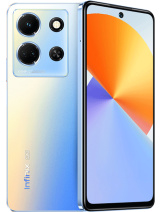
Overview
The Value Disruptor
Infinix Note 30 5G is a budget-tier smartphone featuring a 108MP main camera for high-resolution photography and a 6.78-inch 120Hz IPS LCD for fluid navigation, aimed at cost-conscious consumers seeking performance parity with mid-range rivals. Released in May 2023, it competes with established budget contenders by offering 5G connectivity and high-speed charging usually reserved for higher price brackets.
From an economic standpoint, the hardware configuration is aggressive. The decision to implement the MediaTek Dimensity 6080 chipset is a calculated move. Built on a 6nm process, this silicon provides a balance between power efficiency and the necessary throughput for 5G networking. It houses an octa-core CPU consisting of two performance-oriented Cortex-A76 cores clocked at 2.4 GHz and six energy-efficient Cortex-A55 cores. This architecture is designed to handle modern multitasking without the rapid thermal throttling often seen in older 12nm or 10nm chips in this segment.
The Economics of the Experience
When we evaluate a device at this price point, we look for where the manufacturer chose to spend their bill-of-materials budget. This model prioritizes the display and the primary sensor. The screen offers a 120Hz refresh rate, which significantly improves the perceived smoothness of the Android 13 interface. While many competitors still linger at 90Hz or even 60Hz on their budget panels, this higher frequency makes the UI feel more responsive than the actual processor might suggest. The 1080 x 2460 resolution results in a pixel density of approximately 396 ppi, which is more than sufficient for text clarity and sharp video playback.
However, the choice of an IPS LCD over an AMOLED panel is a clear cost-saving measure. While the 120Hz rate is impressive, the contrast ratio is naturally lower than what an OLED would provide. The black levels will never be truly black, and there is slight shadow-casting around the punch-hole camera, a common trait for LCD technology. For the economist, this is an acceptable trade-off if it means getting a better camera sensor and 5G at this price floor.
Daily Driver Feasibility
The internal storage and RAM configurations are surprisingly generous. We are seeing options for up to 256GB of internal storage paired with 8GB of RAM. In an era where apps are ballooning in size, having a quarter-terabyte of space in a [budget phone](/trend/best-budget-phones-2026/) is a major selling point. The Mali-G57 MC2 GPU handles standard social media apps and casual gaming with ease. While it won't run high-end titles at maximum settings, it provides a stable environment for daily productivity.
One technical highlight is the power management system. The inclusion of bypass charging is a feature normally reserved for dedicated [gaming phones](/trend/best-gaming-phones-2026/). By routing electricity directly from the 45W charger to the motherboard, the device can operate without putting the 5000 mAh battery through a charge cycle while in use. This significantly reduces heat generation during heavy tasks and potentially extends the long-term health of the lithium-ion cells. It is a sophisticated addition to a budget handset that many users might overlook.
Outdoor Visibility and Brightness
The display is rated at a peak brightness of 580 nits. In our analysis of spec sheets versus reality, this number suggests that the screen will be usable in most indoor environments and overcast outdoor conditions. However, under the direct midday sun of May, users may find themselves squinting. IPS panels struggle more with glare than their OLED counterparts because they rely on a backlight that must fight against ambient light. While the measured 607 nits in some tests exceeds the official rating, it still lacks the high-brightness mode (HBM) transparency found in premium flagships.
Color accuracy is decent for the tier, but don't expect professional-grade calibration. The panel is tuned for punchy colors to compensate for the lack of OLED saturation. For users who consume a lot of media, the Dual Speakers tuned by JBL provide a significant audio boost. The partnership with a recognized audio brand suggests a focus on the mid-range and high-frequency clarity that cheaper, unbranded speakers often muddy. The retention of the 3.5mm headphone jack is another practical win for the budget-conscious traveler.
Haptics and Interaction
Haptics are often the first casualty of budget optimization. The vibration motor in this series is likely a standard ERM (Eccentric Rotating Mass) motor rather than a precise X-axis linear actuator. Users should expect a buzzy, loose feel rather than a sharp, tactile click when typing. For those who rely on vibration for notifications, the strength is likely sufficient, but it won't offer the nuanced feedback required for an immersive experience. This is a common compromise in the sub-$250 category.
On the physical interaction side, the side-mounted fingerprint sensor is a smart choice. It is generally faster and more reliable than the cheap under-display optical sensors often used in low-end OLED phones. The integration into the power button allows for a natural unlocking motion as the phone is picked up. The build quality, while involving a plastic frame, offers a choice of glass or leather backings, which provides a tactile variety that makes the device feel more expensive than its bill-of-materials suggests.
Connectivity and Signal Integrity
The 5G modem integrated into the Dimensity 6080 supports a wide array of bands, including both sub-6GHz and some mid-band frequencies. This ensures that the device is future-proofed as networks expand. Our analysis of the antenna layout suggests that the handset should maintain a stable signal in urban environments. The support for Wi-Fi 802.11 a/b/g/n/ac means users can utilize both 2.4GHz and 5GHz bands for home networking, providing more bandwidth for streaming and downloads.
GPS performance is standard, utilizing the integrated Mediatek positioning suite. For navigation in dense city grids, the inclusion of a compass and accelerometer helps with orientation. While it may not have the dual-frequency GPS found in premium chips, it is more than adequate for daily commuting and ride-sharing apps. The presence of NFC is another major plus, allowing for contactless payments in a price segment where this feature is frequently omitted to save on licensing costs.
Camera: Hardware Potential vs. Software Processing
The headline feature is the 108MP main camera. Using a 1/1.67-inch sensor with 0.64µm pixels, the hardware utilizes 9-in-1 pixel binning to produce roughly 12MP images with effective 1.92µm pixels. This massive resolution is largely a marketing tool, but the large sensor size itself is the real benefit. It allows for more light gathering than the 50MP or 64MP sensors typically found in this tier. However, without Optical Image Stabilization (OIS), the hardware must rely entirely on electronic stabilization and fast shutter speeds to prevent blur.
Video recording maxes out at 1440p at 30fps. This is a curious middle ground—sharper than 1080p but lacking the 60fps smoothness that some creators might want. The auxiliary lenses are primarily for depth data and software assistance, meaning most of the heavy lifting is done by the primary sensor. The 16MP selfie camera includes a dedicated dual-LED flash on the front, a signature brand feature that makes it a strong contender for those who take many low-light self-portraits.
Long-Term Durability and Reliability
The build materials suggest a device that can survive standard daily use. The glass front provides scratch resistance, though the lack of a named brand like Gorilla Glass means users should probably keep the pre-applied screen protector in place. The leather back variant is particularly interesting from a durability perspective; it won't crack like glass if dropped and provides a superior grip, reducing the likelihood of accidental slips. However, the plastic frame will likely show scuffs and dings more easily over time compared to aluminum.
Software support is the biggest question mark for longevity. While it launches with Android 13, the manufacturer's history with long-term OS updates is less consistent than major players like Samsung. For a value hunter, the hardware should remain relevant for 2-3 years, but don't expect the latest Android versions far into the future. The 5000 mAh battery is the industry standard for 2023, and with the efficiency of the 6nm chipset, most users will comfortably get through a full day of heavy use.
Ultimately, the Infinix Note 30 5G represents a significant shift in what a budget can buy. It prioritizes the specs that consumers can see and feel—the screen refresh rate, the camera resolution, and the charging speed. By cutting corners in invisible areas like haptics and secondary camera sensors, it delivers a flagship-adjacent experience for those who need to stretch their currency as far as possible. It is a textbook example of aggressive budget engineering that should make the big brands nervous.
Technical Specifications
| LAUNCH | |
|---|---|
| Announced | 2023, May 22 |
| Status | Available. Released 2023, May 22 |
| PLATFORM | |
| OS | Android 13 |
| Chipset | Mediatek Dimensity 6080 (6 nm) |
| CPU | Octa-core (2x2.4 GHz Cortex-A76 & 6x2.0 GHz Cortex-A55) |
| GPU | Mali-G57 MC2 |
| BODY | |
| Dimensions | 168.5 x 76.5 x 8.5 mm (6.63 x 3.01 x 0.33 in) |
| Weight | 205 g (7.23 oz) |
| Build | Glass front, plastic frame, glass or leather back |
| SIM | Nano-SIM + Nano-SIM |
| DISPLAY | |
| Type | IPS LCD, 120Hz, 580 nits (peak) |
| Size | 6.78 inches, 109.2 cm2 (~84.7% screen-to-body ratio) |
| Resolution | 1080 x 2460 pixels (~396 ppi density) |
| MEMORY | |
| Card slot | microSDXC (dedicated slot) |
| Internal | 128GB 4GB RAM, 256GB 8GB RAM |
| MAIN CAMERA | |
| Triple | 108 MP, f/1.75, 26mm (wide), 1/1.67", 0.64µm, PDAF Auxiliary lenses |
| Features | Quad-LED flash, HDR, panorama |
| Video | 1440p@30fps, 1080p@30/60fps |
| SELFIE CAMERA | |
| Single | 16 MP, f/2.0, (wide) |
| Features | Dual-LED flash, HDR |
| Video | 1080p@30fps |
| SOUND | |
| Loudspeaker | Yes, with dual speakers |
| 3.5mm jack | Yes |
| Info | Tuned by JBL 24-bit/192kHz Hi-Res audio |
| COMMS | |
| WLAN | Wi-Fi 802.11 a/b/g/n/ac, dual-band, Wi-Fi Direct |
| Bluetooth | Yes |
| Positioning | GPS |
| NFC | Yes |
| Radio | FM radio |
| USB | USB Type-C 2.0, OTG |
| NETWORK | |
| Technology | GSM / HSPA / LTE / 5G |
| 2G bands | GSM 850 / 900 / 1800 / 1900 |
| 3G bands | HSDPA 850 / 900 / 1700(AWS) / 1900 / 2100 |
| 4G bands | 1, 2, 3, 4, 5, 7, 8, 12, 17, 20, 28, 38, 40, 41, 66 |
| 5G bands | 1, 3, 5, 7, 8, 12, 22, 28, 38, 40, 41, 66, 77, 78 |
| Speed | HSPA, LTE, 5G |
| FEATURES | |
| Sensors | Fingerprint (side-mounted), accelerometer, gyro, proximity, compass |
| BATTERY | |
| Type | 5000 mAh |
| Charging | 45W wired, bypass charging |
| MISC | |
| Colors | Magic Black, Interstellar Blue, Sunset Gold |
| Models | X6711 |
| OUR TESTS | |
| Display | 1521:1 contrast ratio, 607 nits max brightness (measured) |