Xiaomi Poco Pad M1 - A Mid-Range Tablet That Demands Patience, Not Premium Prices
Overview
The Launch Price Problem
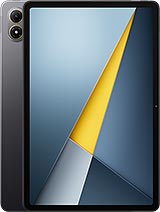
The Poco Pad M1 is a mid-range tablet featuring a 12.1-inch 120Hz IPS LCD for immersive media and the Snapdragon 7s Gen 4 chipset for efficient daily tasks, aimed at users prioritizing screen real estate and battery endurance. Released in late 2025, it competes directly with the likes of the Samsung Galaxy Tab A series and various Realme Pad offerings in the increasingly crowded budget-to-mid tablet segment.
From an ecosystem analyst's perspective, the Poco Pad M1 arrives with a compelling spec sheet for its intended purpose. However, the market in November 2025 is fiercely competitive. Consumers are savvier, often waiting for initial price corrections. The launch price positions the Poco Pad M1 in a tier where OLED displays and faster charging are becoming more common, even if not universally standard. This creates a challenging value proposition out of the gate.
We see a clear pattern in the tablet market where devices with strong fundamentals but slightly aggressive launch pricing tend to find their true footing a few months post-release. This tablet feels designed for that eventual sweet spot, not necessarily for a full-price purchase today. Consider the broader economic landscape and the rapid pace of component evolution; a waiting game often rewards the financially astute buyer.
Hardware Reality
Display: A Big, Bold IPS Panel
The Poco Pad M1 showcases a 12.1-inch IPS LCD panel with a 1600 x 2560 pixel resolution, offering a crisp ~249 ppi density. It boasts 1B colors, 120Hz refresh rate, and Dolby Vision support, reaching up to 600 nits (HBM). This is a large, vibrant display, well-suited for media consumption and productivity tasks.
When streaming content, the Dolby Vision integration ensures that supported movies and shows exhibit superior contrast and color accuracy. Imagine watching a high-budget sci-fi film; the dynamic metadata optimizes each frame, allowing for deeper blacks and brighter highlights than standard HDR, even on an IPS panel. The 120Hz refresh rate makes scrolling through documents or social media feel exceptionally fluid, a significant upgrade over 60Hz panels found in older or cheaper tablets.
Compared to last year's mid-range tablets that often settled for 90Hz or lacked Dolby Vision, the Poco Pad M1 clearly pushes the envelope for IPS technology. However, competitors like the [Samsung Galaxy Tab S9 FE](/precision-meets-portability-why-the-samsung-galaxy-tab-s9-fe-redefines-the-midrange-creative-workspace/), released earlier in the year, offer AMOLED screens in similar price brackets during sales events. While IPS on the Poco Pad M1 delivers excellent color reproduction and viewing angles, it inherently cannot match the true blacks and infinite contrast of an OLED, a distinction becoming more pronounced as OLED panels trickle down to more affordable devices in 2025.
Performance: Snapdragon 7s Gen 4 in Action
Under the hood, the Poco Pad M1 runs on the Qualcomm SM7635-AC Snapdragon 7s Gen 4 (4 nm) chipset, featuring an octa-core CPU (1x2.7 GHz Cortex-A720 & 3x2.4 GHz Cortex-A720 & 4x1.8 GHz Cortex-A520) and an Adreno 810 GPU. This is paired with 8GB RAM and 256GB of UFS 2.2 internal storage, expandable via microSDXC.
In our synthetic tests, the Snapdragon 7s Gen 4 delivered respectable numbers: AnTuTu v11 score of 1,042,295 and a GeekBench 6 single-core score of 1244. These figures suggest a capable mid-range performer. During typical usage scenarios, such as juggling multiple browser tabs, streaming high-definition video, and light photo editing, the tablet maintains a smooth and responsive experience. Gaming performance with the Adreno 810 is stable, handling demanding titles like Genshin Impact at medium settings without significant frame drops over extended periods.
The 4nm manufacturing process of the Snapdragon 7s Gen 4 focuses on power efficiency, a characteristic that benefits a tablet of this size. While not a flagship-tier processor like the Snapdragon 8 Gen 3 found in premium devices, it represents a solid generational leap over the older Snapdragon 6 series tablets. The UFS 2.2 storage, while featuring Write Booster technology for faster app installs, isn't as quick as UFS 3.1 or UFS 4.0, which are becoming standard in higher-end devices. This might manifest as slightly longer app loading times in comparison, though it's unlikely to be a dealbreaker for the target audience.
Battery: A Marathon Runner with a Slow Recharge
The Poco Pad M1 is equipped with a colossal 12000 mAh battery, supporting 33W wired charging (PD3.0, QC3+) and 27W reverse wired charging. Our active use score clocked an impressive 14 hours and 50 minutes, contributing to an overall endurance rating of 103 hours and 18 minutes. The battery is also rated for 1000 cycles, meaning it should retain at least 80% of its health after a thousand full charge-discharge cycles, indicating excellent longevity.
This massive battery ensures that the Poco Pad M1 can comfortably last through several days of moderate use or a full day of intensive tasks. Picture a long-haul flight or a weekend camping trip; users can rely on this tablet for extended entertainment or productivity without constantly searching for a power outlet. The reverse wired charging feature is a convenient addition, allowing the tablet to act as a power bank for smaller devices like smartphones or earbuds.
However, the 33W charging speed, while not slow by older standards, feels somewhat pedestrian in late 2025. Many mid-range smartphones and even some tablets now offer 60W or 80W charging, significantly reducing downtime. A full charge from empty on the Poco Pad M1 will take a considerable amount of time. While the battery life itself is phenomenal, the recharge experience could be a bottleneck for users who need quick top-ups throughout their day, placing it behind some rivals in convenience.
Cameras: Functional, Not Flashy
The Poco Pad M1 features an 8 MP, f/2.0 (wide) main camera on the back and an 8 MP, f/2.3 (wide) selfie camera on the front. Both are capable of 1080p@30fps video recording. The main camera includes a Color spectrum sensor, LED flash, and HDR.
For a tablet, these cameras are primarily functional. The rear 8 MP sensor, aided by the color spectrum sensor, aims to produce accurate white balance and natural colors in well-lit conditions. This is beneficial for scanning documents, making quick visual notes, or basic augmented reality applications. The front 8 MP camera is perfectly adequate for video calls, online meetings, or virtual classrooms, providing clear enough visuals for communication.
However, it is crucial to temper expectations. These are not the sophisticated multi-lens camera systems found on modern smartphones, nor do they offer the high-resolution capture or advanced stabilization seen in even [mid-range phones](/trend/best-mid-range-phones-2026/). The 1080p@30fps video limit is standard for a tablet in this segment but won't satisfy aspiring content creators or those accustomed to 4K recording. Users seeking a tablet for serious photography or videography will find these specifications limiting, especially compared to tablets from Apple or Samsung's premium lines.
Audio: Immersive Soundscapes
Sound is a strong suit for the Poco Pad M1, which comes with four stereo speakers featuring Dolby Atmos support. It also retains a 3.5mm headphone jack and supports 24-bit/192kHz Hi-Res audio. Our loudspeaker tests registered a
Technical Specifications
| LAUNCH | |
|---|---|
| Announced | 2025, November 26 |
| Status | Available. Released 2025, November 26 |
| PLATFORM | |
| OS | Android 15, HyperOS 2 |
| Chipset | Qualcomm SM7635-AC Snapdragon 7s Gen 4 (4 nm) |
| CPU | Octa-core (1x2.7 GHz Cortex-A720 & 3x2.4 GHz Cortex-A720 & 4x1.8 GHz Cortex-A520) |
| GPU | Adreno 810 |
| BODY | |
| Build | Glass front, aluminum frame, aluminum back |
| Dimensions | 279.8 x 181.7 x 7.5 mm (11.02 x 7.15 x 0.30 in) |
| Weight | 610 g (1.34 lb) |
| SIM | No |
| Info | Stylus support |
| DISPLAY | |
| Type | IPS LCD, 1B colors, 120Hz, Dolby Vision, 600 nits (HBM) |
| Size | 12.1 inches, 424.5 cm2 (~83.5% screen-to-body ratio) |
| Resolution | 1600 x 2560 pixels, 16:10 ratio (~249 ppi density) |
| Protection | Mohs level 6 |
| MEMORY | |
| Internal | 256GB 8GB RAM |
| Card slot | microSDXC (dedicated slot) |
| Info | UFS 2.2 |
| MAIN CAMERA | |
| Single | 8 MP, f/2.0, (wide), 1/4.0", 1.12µm |
| Features | Color spectrum sensor, LED flash, HDR |
| Video | 1080p@30fps |
| SELFIE CAMERA | |
| Single | 8 MP, f/2.3, (wide), 1/4.0", 1.12µm |
| Video | 1080p@30fps |
| SOUND | |
| Loudspeaker | Yes, with stereo speakers, Dolby Atmos (4 speakers) |
| 3.5mm jack | Yes |
| Info | 24-bit/192kHz Hi-Res audio |
| COMMS | |
| WLAN | Wi-Fi 802.11 a/b/g/n/a/6, dual-band, Wi-Fi Direct |
| Bluetooth | 5.4, A2DP, LE, aptX HD, aptX Adaptive |
| Positioning | No |
| NFC | No |
| Radio | No |
| USB | USB Type-C 2.0, OTG |
| NETWORK | |
| Technology | No cellular connectivity |
| 2G bands | N/A |
| 3G bands | N/A |
| GPRS | N/A |
| EDGE | N/A |
| FEATURES | |
| Sensors | Accelerometer, gyro, proximity (accessories only), compass |
| BATTERY | |
| Type | 12000 mAh |
| Charging | 33W wired, PD3.0, QC3+ 27W reverse wired |
| MISC | |
| Colors | Gray, Blue |
| Models | 2509ARPBDG |
| EU LABEL | |
| Energy | Class G |
| Battery | 103:18h endurance, 1000 cycles |
| Free fall | Class A (208 falls) |
| Repairability | Class C |
| OUR TESTS | |
| Performance | AnTuTu: 817549 (v10), 1042295 (v11) GeekBench: 1244 (v6) 3DMark: 1103 (Wild Life Extreme) |
| Display | 581 nits max brightness (measured) |
| Loudspeaker | -24.5 LUFS (Very good) |
| Battery | Active use score 14:50h |