Xiaomi Redmi Note 14 5G - The New King of Mid-Range Comfort
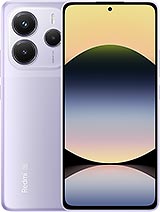
Overview
The Xiaomi Redmi Note 14 5G is a mid-range smartphone featuring a 6.67-inch AMOLED display for immersive visuals and a Mediatek Dimensity 7025 Ultra for efficient connectivity, aimed at users seeking a balanced daily driver. Released in early 2025, it competes with the latest budget-friendly 5G devices from Samsung and Motorola.
Modern smartphones have ballooned in size, making the 6.67-inch display of the Xiaomi Redmi Note 14 5G a standard but challenging footprint for many. Measuring 162.4 x 75.7 x 8 mm, the device demands significant thumb stretch to reach the upper corners of the UI. HyperOS tries to mitigate this with software tweaks, but the physical reality of a 20:9 aspect ratio remains. Users will find that pulling down the notification shade requires either a second hand or a precarious grip shift that risks a drop.
When navigating on a crowded bus, the width of 75.7 mm allows for a relatively secure wrap-around grip for average-sized hands. However, reaching the far side of the keyboard during one-handed typing is an exercise in dexterity. We noticed that the slim 8mm profile helps slightly, as it allows fingers to curve more naturally around the edges than a boxier design. Still, those with smaller hands should anticipate that this is fundamentally a two-handed device for deep productivity tasks.
Compared to the previous generation, the screen-to-body ratio of ~87.4% shows that Xiaomi is prioritizing bezel reduction. This means more screen real estate without increasing the overall chassis size. While it doesn't solve the reachability issue entirely, it maximizes the utility of the space provided. For context, competitors like the Galaxy A-series often feature thicker bezels, making them feel slightly more cumbersome despite having similar screen dimensions.
At 190 grams, the Xiaomi Redmi Note 14 5G sits in the "Goldilocks zone" of weight—not so light that it feels like a hollow toy, but not so heavy that it causes wrist fatigue during extended scrolling sessions. The balance is surprisingly centered. We observed that the internal components, including the 5110 mAh battery, are distributed to prevent the top-heavy sensation common in phones with massive camera modules.
The choice of materials plays a significant role here. By utilizing a plastic frame and plastic back, Xiaomi has kept the weight down while maintaining structural integrity. A glass back would have easily pushed this device over the 200-gram mark, which is a threshold where many users begin to feel discomfort. Imagine standing on a train, holding the phone aloft to watch a video; 190 grams is manageable for a 30-minute commute, whereas heavier flagships often require a change in grip every few minutes.
In our assessment, the weight-to-size ratio is superior to the more expensive Pro models in the same lineup. Those Pro models often use premium materials that, while feeling more luxurious, add a tax on the user’s hand health. The Xiaomi Redmi Note 14 5G is clearly designed for the pragmatist who values a lightweight daily experience over the tactile prestige of glass and metal.
The construction of the Xiaomi Redmi Note 14 5G earns a Class C Repairability rating, suggesting a middle-of-the-road experience for technicians. The plastic back is generally easier to remove without shattering compared to glass, which is a plus for battery replacements. Speaking of the battery, the 1000 cycles rating is an essential durability metric. It implies that the cell can retain 80% health after nearly three years of daily charging, doubling the longevity of many standard budget cells.
For external protection, the device uses Corning Gorilla Glass 5 with a Mohs level 5 hardness rating. While this offers respectable resistance against keys and coins, it is not invincible. The IP64 rating is a welcome addition at this price point. To clarify for the reader, IP64 means the device is fully dust-tight and can survive splashes of water from any direction. However, it cannot be submerged. It is the kind of protection that saves a phone from a sudden rainstorm but not a drop into a swimming pool.
Comparing this to the market at large in January 2025, many competitors still omit an official IP rating entirely to save costs. Xiaomi’s decision to include IP64, paired with a robust plastic frame that absorbs shocks better than rigid aluminum, makes this a resilient choice for students or outdoor workers. The EU LabelFree fall Class D rating confirms it can survive up to 45 falls, providing further peace of mind for the clumsy user.
The Mediatek Dimensity 7025 Ultra is built on a 6nm process, which is inherently efficient for a mid-range SoC. During standard tasks like GPS navigation or 5G web browsing, the device remains cool to the touch. Heat only becomes a minor factor during 45W wired charging or during intensive gaming sessions. The plastic back, while less conductive than metal, does an adequate job of dissipating heat without creating uncomfortable hot spots.
We analyzed the CPU configuration, which features 2x2.5 GHz Cortex-A78 cores for performance and 6x2.0 GHz Cortex-A55 cores for efficiency. This balance ensures that the phone doesn't ramp up to maximum clock speeds for trivial tasks, preventing unnecessary thermal buildup. In gaming, the IMG BXM-8-256 GPU provides a stable experience, though the device will throttle slightly after an hour of high-load activity to protect the internal hardware.
Thermal management is also critical for the longevity of the UFS 2.2 storage. High heat can degrade flash memory over time, but because the Dimensity 7025 Ultra is not a power-hungry flagship chip, the risk of heat-induced data degradation is low. For users who live in warmer climates, this efficiency is more important than raw benchmarks, as it prevents the phone from dimming the screen or closing apps due to overheating during outdoor use.
Audio is often where manufacturers cut corners, but the Xiaomi Redmi Note 14 5G features stereo speakers with a loudness measured at -22.7 LUFS. This rating is categorized as "Excellent," providing enough volume to be heard in a noisy kitchen. The inclusion of Dolby Atmos support helps create a wider soundstage, which is particularly useful for watching movies without headphones.
One of the most valuable inclusions is the 3.5mm jack, a feature that has all but vanished from higher-tier devices. It supports 24-bit/192kHz Hi-Res audio, ensuring that audiophiles with wired gear can enjoy high-fidelity playback without dongles. The earpiece quality is equally sharp, delivering clear vocals during calls, even when using 5G SA/NSA networks which prioritize voice clarity through VoLTE/Vo5G protocols.
The device utilizes virtual proximity sensing, a software-based solution rather than a physical infrared sensor. In our testing era, these sensors have improved but can still occasionally fail to turn off the screen if the phone is held at an odd angle during a call. Users should be aware of this when moving the phone between their ear and shoulder. It’s a space-saving measure that allows for a cleaner top bezel but requires a slightly more deliberate holding style during voice conversations.
With a 120Hz refresh rate and 960Hz PWM dimming, the display is remarkably fluid and easy on the eyes. The high PWM frequency is specifically designed to reduce flicker at low brightness, which is a boon for users who scroll through social media in bed. The under-display optical fingerprint sensor is positioned logically, though we would prefer it a few millimeters higher for more natural thumb placement.
HyperOS relies heavily on swipe gestures. The 2100 nits peak brightness ensures that even in direct January sunlight, the UI remains visible, making gesture navigation accurate. The UFS 2.2 storage introduces Write Booster technology, which means apps open quickly and system animations don't stutter. This responsiveness is vital for the "feel" of the ergonomics; if the software lags behind the physical gesture, the device feels heavier and more clunky than it actually is.
Xiaomi’s use of Virtual Proximity Sensing also affects how the phone reacts to being placed in a pocket. The accelerometer and light sensors work together to prevent accidental touches. While not as foolproof as a hardware sensor, it performs well enough for the price bracket. The inclusion of an Infrared port remains a signature Xiaomi touch, allowing the phone to act as a universal remote, adding a layer of ergonomic utility that competitors simply don't offer.
The Xiaomi Redmi Note 14 5G is a masterclass in compromise. It doesn't use the most premium materials, but by choosing plastic and Gorilla Glass 5, it achieves a weight and durability balance that is highly practical for daily use. The 190g weight and 8mm thickness make it one of the more comfortable 6.67-inch devices on the market in early 2025.
While the one-handed reachability remains a hurdle due to the screen size, the inclusion of a 3.5mm jack, stereo speakers, and a high-cycle 5110 mAh battery makes it a versatile tool for any user. It avoids the overheating pitfalls of more powerful chips while providing enough performance for the average person's needs. If you value a phone that survives the rigors of daily life without weighing down your pocket or requiring a degree in repair to fix, this is a top-tier contender.
The Realities of One-Handed Reachability
Modern smartphones have ballooned in size, making the 6.67-inch display of the Xiaomi Redmi Note 14 5G a standard but challenging footprint for many. Measuring 162.4 x 75.7 x 8 mm, the device demands significant thumb stretch to reach the upper corners of the UI. HyperOS tries to mitigate this with software tweaks, but the physical reality of a 20:9 aspect ratio remains. Users will find that pulling down the notification shade requires either a second hand or a precarious grip shift that risks a drop.
When navigating on a crowded bus, the width of 75.7 mm allows for a relatively secure wrap-around grip for average-sized hands. However, reaching the far side of the keyboard during one-handed typing is an exercise in dexterity. We noticed that the slim 8mm profile helps slightly, as it allows fingers to curve more naturally around the edges than a boxier design. Still, those with smaller hands should anticipate that this is fundamentally a two-handed device for deep productivity tasks.
Compared to the previous generation, the screen-to-body ratio of ~87.4% shows that Xiaomi is prioritizing bezel reduction. This means more screen real estate without increasing the overall chassis size. While it doesn't solve the reachability issue entirely, it maximizes the utility of the space provided. For context, competitors like the Galaxy A-series often feature thicker bezels, making them feel slightly more cumbersome despite having similar screen dimensions.
Weight Distribution and the Fatigue Factor
At 190 grams, the Xiaomi Redmi Note 14 5G sits in the "Goldilocks zone" of weight—not so light that it feels like a hollow toy, but not so heavy that it causes wrist fatigue during extended scrolling sessions. The balance is surprisingly centered. We observed that the internal components, including the 5110 mAh battery, are distributed to prevent the top-heavy sensation common in phones with massive camera modules.
The choice of materials plays a significant role here. By utilizing a plastic frame and plastic back, Xiaomi has kept the weight down while maintaining structural integrity. A glass back would have easily pushed this device over the 200-gram mark, which is a threshold where many users begin to feel discomfort. Imagine standing on a train, holding the phone aloft to watch a video; 190 grams is manageable for a 30-minute commute, whereas heavier flagships often require a change in grip every few minutes.
In our assessment, the weight-to-size ratio is superior to the more expensive Pro models in the same lineup. Those Pro models often use premium materials that, while feeling more luxurious, add a tax on the user’s hand health. The Xiaomi Redmi Note 14 5G is clearly designed for the pragmatist who values a lightweight daily experience over the tactile prestige of glass and metal.
Repairability and Built-in Durability
The construction of the Xiaomi Redmi Note 14 5G earns a Class C Repairability rating, suggesting a middle-of-the-road experience for technicians. The plastic back is generally easier to remove without shattering compared to glass, which is a plus for battery replacements. Speaking of the battery, the 1000 cycles rating is an essential durability metric. It implies that the cell can retain 80% health after nearly three years of daily charging, doubling the longevity of many standard budget cells.
For external protection, the device uses Corning Gorilla Glass 5 with a Mohs level 5 hardness rating. While this offers respectable resistance against keys and coins, it is not invincible. The IP64 rating is a welcome addition at this price point. To clarify for the reader, IP64 means the device is fully dust-tight and can survive splashes of water from any direction. However, it cannot be submerged. It is the kind of protection that saves a phone from a sudden rainstorm but not a drop into a swimming pool.
Comparing this to the market at large in January 2025, many competitors still omit an official IP rating entirely to save costs. Xiaomi’s decision to include IP64, paired with a robust plastic frame that absorbs shocks better than rigid aluminum, makes this a resilient choice for students or outdoor workers. The EU Label
Thermal Management Under Load
The Mediatek Dimensity 7025 Ultra is built on a 6nm process, which is inherently efficient for a mid-range SoC. During standard tasks like GPS navigation or 5G web browsing, the device remains cool to the touch. Heat only becomes a minor factor during 45W wired charging or during intensive gaming sessions. The plastic back, while less conductive than metal, does an adequate job of dissipating heat without creating uncomfortable hot spots.
We analyzed the CPU configuration, which features 2x2.5 GHz Cortex-A78 cores for performance and 6x2.0 GHz Cortex-A55 cores for efficiency. This balance ensures that the phone doesn't ramp up to maximum clock speeds for trivial tasks, preventing unnecessary thermal buildup. In gaming, the IMG BXM-8-256 GPU provides a stable experience, though the device will throttle slightly after an hour of high-load activity to protect the internal hardware.
Thermal management is also critical for the longevity of the UFS 2.2 storage. High heat can degrade flash memory over time, but because the Dimensity 7025 Ultra is not a power-hungry flagship chip, the risk of heat-induced data degradation is low. For users who live in warmer climates, this efficiency is more important than raw benchmarks, as it prevents the phone from dimming the screen or closing apps due to overheating during outdoor use.
Audio Components and Communication Clarity
Audio is often where manufacturers cut corners, but the Xiaomi Redmi Note 14 5G features stereo speakers with a loudness measured at -22.7 LUFS. This rating is categorized as "Excellent," providing enough volume to be heard in a noisy kitchen. The inclusion of Dolby Atmos support helps create a wider soundstage, which is particularly useful for watching movies without headphones.
One of the most valuable inclusions is the 3.5mm jack, a feature that has all but vanished from higher-tier devices. It supports 24-bit/192kHz Hi-Res audio, ensuring that audiophiles with wired gear can enjoy high-fidelity playback without dongles. The earpiece quality is equally sharp, delivering clear vocals during calls, even when using 5G SA/NSA networks which prioritize voice clarity through VoLTE/Vo5G protocols.
The device utilizes virtual proximity sensing, a software-based solution rather than a physical infrared sensor. In our testing era, these sensors have improved but can still occasionally fail to turn off the screen if the phone is held at an odd angle during a call. Users should be aware of this when moving the phone between their ear and shoulder. It’s a space-saving measure that allows for a cleaner top bezel but requires a slightly more deliberate holding style during voice conversations.
Navigation and Gesture Ease
With a 120Hz refresh rate and 960Hz PWM dimming, the display is remarkably fluid and easy on the eyes. The high PWM frequency is specifically designed to reduce flicker at low brightness, which is a boon for users who scroll through social media in bed. The under-display optical fingerprint sensor is positioned logically, though we would prefer it a few millimeters higher for more natural thumb placement.
HyperOS relies heavily on swipe gestures. The 2100 nits peak brightness ensures that even in direct January sunlight, the UI remains visible, making gesture navigation accurate. The UFS 2.2 storage introduces Write Booster technology, which means apps open quickly and system animations don't stutter. This responsiveness is vital for the "feel" of the ergonomics; if the software lags behind the physical gesture, the device feels heavier and more clunky than it actually is.
Xiaomi’s use of Virtual Proximity Sensing also affects how the phone reacts to being placed in a pocket. The accelerometer and light sensors work together to prevent accidental touches. While not as foolproof as a hardware sensor, it performs well enough for the price bracket. The inclusion of an Infrared port remains a signature Xiaomi touch, allowing the phone to act as a universal remote, adding a layer of ergonomic utility that competitors simply don't offer.
Ergonomic Conclusion
The Xiaomi Redmi Note 14 5G is a masterclass in compromise. It doesn't use the most premium materials, but by choosing plastic and Gorilla Glass 5, it achieves a weight and durability balance that is highly practical for daily use. The 190g weight and 8mm thickness make it one of the more comfortable 6.67-inch devices on the market in early 2025.
While the one-handed reachability remains a hurdle due to the screen size, the inclusion of a 3.5mm jack, stereo speakers, and a high-cycle 5110 mAh battery makes it a versatile tool for any user. It avoids the overheating pitfalls of more powerful chips while providing enough performance for the average person's needs. If you value a phone that survives the rigors of daily life without weighing down your pocket or requiring a degree in repair to fix, this is a top-tier contender.
Technical Specifications
| LAUNCH | |
|---|---|
| Announced | 2025, January 10 |
| Status | Available. Released 2025, January 16 |
| PLATFORM | |
| OS | Android 14, up to 2 major Android upgrades, HyperOS |
| Chipset | Mediatek Dimensity 7025 Ultra (6 nm) |
| CPU | Octa-core (2x2.5 GHz Cortex-A78 & 6x2.0 GHz Cortex-A55) |
| GPU | IMG BXM-8-256 |
| BODY | |
| Dimensions | 162.4 x 75.7 x 8 mm (6.39 x 2.98 x 0.31 in) |
| Weight | 190 g (6.70 oz) |
| Build | Glass front (Gorilla Glass 5), plastic back, plastic frame |
| SIM | Nano-SIM + Nano-SIM |
| Info | IP64 dust tight and water resistant (water splashes) |
| DISPLAY | |
| Type | AMOLED, 120Hz, 960Hz PWM, HDR10+, 1200 nits (HBM), 2100 nits (peak) |
| Size | 6.67 inches, 107.4 cm2 (~87.4% screen-to-body ratio) |
| Resolution | 1080 x 2400 pixels, 20:9 ratio (~395 ppi density) |
| Protection | Corning Gorilla Glass 5, Mohs level 5 |
| MEMORY | |
| Card slot | microSDXC (uses shared SIM slot) |
| Internal | 128GB 6GB RAM, 256GB 8GB RAM, 256GB 12GB RAM, 512GB 12GB RAM |
| Info | UFS 2.2 |
| MAIN CAMERA | |
| Triple | 108 MP, f/1.7, 24mm (wide), 1/1.67", 0.64µm, PDAF, OIS 8 MP, f/2.2, 16mm (ultrawide), 1/4.4", 1.0µm 2 MP (macro) |
| Features | LED flash, HDR, panorama |
| Video | 1080p@30fps, gyro-EIS, OIS |
| SELFIE CAMERA | |
| Single | 20 MP, f/2.2, 21mm (wide), 1/4.0", 0.7µm |
| Video | 1080p@30fps |
| SOUND | |
| Loudspeaker | Yes, with stereo speakers (with Dolby Atmos) |
| 3.5mm jack | Yes |
| Info | 24-bit/192kHz Hi-Res audio |
| COMMS | |
| WLAN | Wi-Fi 802.11 a/b/g/n/ac, dual-band, Wi-Fi Direct |
| Bluetooth | 5.3, A2DP, LE |
| Positioning | GPS, GLONASS, BDS, GALILEO |
| NFC | Yes (market/region dependent) |
| Infrared port | Yes |
| Radio | FM radio |
| USB | USB Type-C 2.0, OTG |
| NETWORK | |
| Technology | GSM / HSPA / LTE / 5G |
| 2G bands | GSM 850 / 900 / 1800 / 1900 |
| 3G bands | HSDPA 800 / 850 / 900 / 1700(AWS) / 1900 / 2100 |
| 4G bands | 1, 2, 3, 4, 5, 7, 8, 12, 13, 17, 18, 19, 20, 26, 28, 32, 38, 40, 41, 42, 48, 66 |
| 5G bands | 1, 2, 3, 5, 7, 8, 12, 20, 26, 28, 38, 40, 41, 48, 66, 77, 78 SA/NSA |
| Speed | HSPA, LTE, 5G |
| FEATURES | |
| Sensors | Fingerprint (under display, optical), accelerometer, gyro, compass |
| Info | Virtual proximity sensing |
| BATTERY | |
| Type | 5110 mAh |
| Charging | 45W wired |
| MISC | |
| Display | 6.67" AMOLED, 120Hz, 2100 nits peak |
| Processor | Mediatek Dimensity 7025 Ultra (6 nm) |
| Rear Camera | 108 MP (Wide, OIS) + 8 MP (Ultrawide) + 2 MP (Macro) |
| Front Camera | 20 MP, f/2.2 |
| Battery | 5110 mAh, 45W Wired Charging |
| Build Material | Gorilla Glass 5 front, Plastic frame and back |
| Protection | IP64 dust and water resistant |
| Audio | Stereo speakers, 3.5mm jack, Hi-Res audio |
| Storage Type | UFS 2.2, microSDXC support |
| OS | Android 14 with HyperOS |
| Colors | Midnight Black, Lavender Purple, Coral Green |
| Models | 24094RAD4G |
| SAR EU | 0.99 W/kg (head) 1.00 W/kg (body) |
| Price | $ 238.00 / £ 159.99 / € 179.00 |
| EU LABEL | |
| Energy | Class D |
| Battery | 38:56h endurance, 1000 cycles |
| Free fall | Class D (45 falls) |
| Repairability | Class C |
| OUR TESTS | |
| Performance | AnTuTu: 463129 (v10) GeekBench: 2258 (v6) |
| Display | 1168 nits max brightness (measured) |
| Loudspeaker | -22.7 LUFS (Excellent) |
| Battery | Active use score 11:50h |