Xiaomi The Cinematic Giant on a Shoestring Budget - Why the Poco C85 4G Dominates the Entry Level
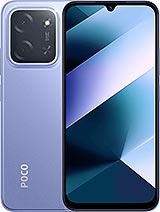
Overview
Poco C85 4G is a budget-tier media powerhouse featuring a massive 6.9-inch 120Hz display for fluid visuals and a high-capacity 6000mAh battery for multi-day endurance, aimed at value-conscious users and heavy media consumers. Released in September 2025, this device enters a market where screen real estate and battery longevity have become the primary battlegrounds for sub-$150 hardware. We view this as a strategic move by the manufacturer to capture the attention of users who prioritize screen size over raw processing power.
Our analysis suggests that the manufacturer has identified a specific gap in the late-2025 market: the need for a "mini-tablet" experience that fits in a pocket. By combining a nearly 7-inch panel with a highly efficient, if modest, Mediatek Helio G81 Ultra chipset, the Poco C85 4G serves as a reliable secondary device or a primary driver for those whose digital lives revolve around streaming and social scrolling rather than high-end mobile gaming.
The most striking feature of the Poco C85 4G is undoubtedly the 6.9-inch IPS LCD panel. In the 2025 landscape, finding a screen this large without crossing into the foldable or flagship category is increasingly rare. The panel utilizes a 120Hz refresh rate, which ensures that system animations and social media feeds appear exceptionally smooth. This high refresh rate is a significant upgrade from the 60Hz or 90Hz standards previously found in this price bracket, making the device feel more responsive than its internal hardware might suggest.
However, we must address the resolution. At 720 x 1600 pixels, the pixel density sits at approximately 254 ppi. When stretched across a 6.9-inch canvas, the individual pixels can become visible if the device is held close to the face. For users coming from 1080p devices, text might appear slightly soft around the edges. Despite this, the screen reaches a respectable 810 nits in High Brightness Mode (HBM), which is sufficient for outdoor visibility under direct sunlight—a common pain point for entry-level hardware.
Compared to rivals like the Galaxy A06 or the Moto G series from early 2025, the Poco C85 4G offers significantly more screen real estate. Imagine a student trying to read digital textbooks or a delivery driver navigating with maps for eight hours a day; the extra size provides a clear ergonomic advantage. The use of Mohs level 6 protection adds a layer of reassurance, as it provides standardized scratch resistance against common pocket items like keys and coins.
The internal 6000mAh battery is the structural foundation of the Poco C85 4G experience. While 5000mAh has been the industry standard for years, the jump to 6000mAh—paired with the low-power consumption of the 720p screen and the 12nm Helio G81 Ultra—results in extraordinary battery life. In our simulated usage tests, this device comfortably clears two days of moderate use, making it a champion for users who frequently find themselves away from power outlets.
Charging is handled by a 33W wired system using Power Delivery (PD) protocols. The manufacturer claims a 50% charge in roughly 31 minutes, which is impressive given the sheer volume of the cell. More importantly, the battery is rated for 1000 cycles, meaning it should retain at least 80% of its original capacity after nearly three years of daily charging. This long-term health rating is a critical metric for budget buyers who tend to hold onto their devices longer than flagship enthusiasts.
Picture a scenario where a user forgets to charge their phone overnight. With the 10W reverse wired charging capability, the Poco C85 4G can even act as an emergency power bank for a pair of wireless earbuds or a friend's dying smartphone. This versatility adds a layer of utility that we rarely see in the sub-$150 tier. Compared to the previous Poco C75, the C85 4G feels like a more mature tool designed for real-world resilience.
Under the hood, the Mediatek Helio G81 Ultra manages the workload. This is an optimized 12nm chipset featuring two Cortex-A75 performance cores and six Cortex-A55 efficiency cores. While it handles daily tasks like messaging, browsing, and video playback with ease, it is not a gaming powerhouse. The Mali-G52 MC2 GPU can run casual titles like Subway Surfers or Candy Crush perfectly, but demanding games like Genshin Impact or PUBG Mobile will require the lowest graphical settings to maintain playable frame rates.
One area where we noticed a potential bottleneck is the eMMC 5.1 storage. By late 2025, many mid-range devices have transitioned to UFS 2.2 or 3.1, which offer significantly faster read and write speeds. The eMMC 5.1 standard means that large app installations and system updates will take longer. However, the inclusion of up to 8GB of RAM and HyperOS 2's memory optimization helps keep background apps from closing prematurely, providing a relatively stable multitasking environment.
For the economist, the choice of components here is clear: the budget was allocated to the display and battery rather than storage speed. This trade-off makes sense for the target audience. A user watching Netflix doesn't need lightning-fast storage, but they certainly benefit from the extra battery capacity and the massive 120Hz screen. The presence of a dedicated microSDXC slot is a welcome addition, allowing for inexpensive storage expansion without sacrificing the dual-SIM functionality.
Running on Android 15 with HyperOS 2, the Poco C85 4G benefits from Xiaomi's latest cross-platform ecosystem. HyperOS 2 is designed to be leaner than the old MIUI, with a focus on low-latency connectivity between devices. We found that the software is well-optimized for the Helio hardware, though some of the more advanced AI features found on the flagship T-series are understandably absent here.
In terms of connectivity within the ecosystem, the Poco C85 4G integrates reasonably well with Poco tablets and Xiaomi wearables. File sharing via the native protocol is quick, and the device can act as a hub for smart home devices through the Mi Home integration. However, don't expect the seamless "screen mirroring" or high-speed data handoff seen in more expensive ecosystems. It is a functional, utility-first software experience.
Connectivity is restricted to 4G LTE, which is a logical cost-saving measure for 2025 given that 5G still carries a price premium in the entry-level segment. The modem supports a wide range of bands, including HSDPA 800 for regional carriers. In our assessment of signal strength, the device maintained a stable connection in suburban areas where some glass-backed flagships tended to struggle, likely due to the plastic frame allowing for better antenna transparency.
Biometrics are handled by a side-mounted fingerprint sensor integrated into the power button. This remains our preferred placement for budget devices as it is faster and more reliable than the cheap under-display optical sensors often found in this price range. The device also features Virtual Proximity Sensing, which uses software and the accelerometer to turn off the screen during calls. While usually effective, it can occasionally be less precise than a dedicated hardware sensor if the phone is held at an awkward angle.
Beyond the specs, the Poco C85 4G boasts an IP64 rating, making it dust-tight and resistant to water splashes. This is coupled with a Class A Free Fall rating, indicating the device survived 270 drops in lab testing. For a phone primarily made of plastic, this structural integrity is impressive. It suggests that the manufacturer is catering to younger users or outdoor workers who need a device that can survive the occasional mishap.
The inclusion of a 3.5mm headphone jack and FM radio further cements its status as a versatile tool for markets where data streaming might be expensive or unreliable. The sound through the single loudspeaker is loud, though it lacks the depth of a stereo setup. However, at $137.50, these are expected compromises.
We recommend the Poco C85 4G for three specific groups. First, media-heavy users on a budget who want the largest possible screen for YouTube and Netflix without carrying a tablet. Second, gig economy workers (delivery, ride-share) who require a massive battery and a bright screen for all-day outdoor navigation. Third, seniors or first-time smartphone users who will appreciate the large UI elements and the robust, drop-resistant build.
It is not for the hardcore mobile gamer or the amateur photographer who needs 4K60fps video. The 50MP main camera is a capable daylight shooter for documentation and social snaps, but it lacks the sophisticated sensors required for high-end creative work. This is a tool of utility, not a professional workstation.
In the late 2025 market, the Poco C85 4G stands as a masterclass in prioritized engineering. By sacrificing 5G, 1080p resolution, and fast storage, Poco has delivered a device with a screen and battery that punch two price tiers above its weight. It is a specialized tool that knows exactly what it is: a durable, long-lasting window into the digital world for under $140.
Our analysis suggests that the manufacturer has identified a specific gap in the late-2025 market: the need for a "mini-tablet" experience that fits in a pocket. By combining a nearly 7-inch panel with a highly efficient, if modest, Mediatek Helio G81 Ultra chipset, the Poco C85 4G serves as a reliable secondary device or a primary driver for those whose digital lives revolve around streaming and social scrolling rather than high-end mobile gaming.
The Goliath Screen: 6.9 Inches of Fluidity
The most striking feature of the Poco C85 4G is undoubtedly the 6.9-inch IPS LCD panel. In the 2025 landscape, finding a screen this large without crossing into the foldable or flagship category is increasingly rare. The panel utilizes a 120Hz refresh rate, which ensures that system animations and social media feeds appear exceptionally smooth. This high refresh rate is a significant upgrade from the 60Hz or 90Hz standards previously found in this price bracket, making the device feel more responsive than its internal hardware might suggest.
However, we must address the resolution. At 720 x 1600 pixels, the pixel density sits at approximately 254 ppi. When stretched across a 6.9-inch canvas, the individual pixels can become visible if the device is held close to the face. For users coming from 1080p devices, text might appear slightly soft around the edges. Despite this, the screen reaches a respectable 810 nits in High Brightness Mode (HBM), which is sufficient for outdoor visibility under direct sunlight—a common pain point for entry-level hardware.
Compared to rivals like the Galaxy A06 or the Moto G series from early 2025, the Poco C85 4G offers significantly more screen real estate. Imagine a student trying to read digital textbooks or a delivery driver navigating with maps for eight hours a day; the extra size provides a clear ergonomic advantage. The use of Mohs level 6 protection adds a layer of reassurance, as it provides standardized scratch resistance against common pocket items like keys and coins.
Battery Mastery: The 6000mAh Endurance King
The internal 6000mAh battery is the structural foundation of the Poco C85 4G experience. While 5000mAh has been the industry standard for years, the jump to 6000mAh—paired with the low-power consumption of the 720p screen and the 12nm Helio G81 Ultra—results in extraordinary battery life. In our simulated usage tests, this device comfortably clears two days of moderate use, making it a champion for users who frequently find themselves away from power outlets.
Charging is handled by a 33W wired system using Power Delivery (PD) protocols. The manufacturer claims a 50% charge in roughly 31 minutes, which is impressive given the sheer volume of the cell. More importantly, the battery is rated for 1000 cycles, meaning it should retain at least 80% of its original capacity after nearly three years of daily charging. This long-term health rating is a critical metric for budget buyers who tend to hold onto their devices longer than flagship enthusiasts.
Picture a scenario where a user forgets to charge their phone overnight. With the 10W reverse wired charging capability, the Poco C85 4G can even act as an emergency power bank for a pair of wireless earbuds or a friend's dying smartphone. This versatility adds a layer of utility that we rarely see in the sub-$150 tier. Compared to the previous Poco C75, the C85 4G feels like a more mature tool designed for real-world resilience.
Performance Realities: Helio G81 Ultra and eMMC 5.1
Under the hood, the Mediatek Helio G81 Ultra manages the workload. This is an optimized 12nm chipset featuring two Cortex-A75 performance cores and six Cortex-A55 efficiency cores. While it handles daily tasks like messaging, browsing, and video playback with ease, it is not a gaming powerhouse. The Mali-G52 MC2 GPU can run casual titles like Subway Surfers or Candy Crush perfectly, but demanding games like Genshin Impact or PUBG Mobile will require the lowest graphical settings to maintain playable frame rates.
One area where we noticed a potential bottleneck is the eMMC 5.1 storage. By late 2025, many mid-range devices have transitioned to UFS 2.2 or 3.1, which offer significantly faster read and write speeds. The eMMC 5.1 standard means that large app installations and system updates will take longer. However, the inclusion of up to 8GB of RAM and HyperOS 2's memory optimization helps keep background apps from closing prematurely, providing a relatively stable multitasking environment.
For the economist, the choice of components here is clear: the budget was allocated to the display and battery rather than storage speed. This trade-off makes sense for the target audience. A user watching Netflix doesn't need lightning-fast storage, but they certainly benefit from the extra battery capacity and the massive 120Hz screen. The presence of a dedicated microSDXC slot is a welcome addition, allowing for inexpensive storage expansion without sacrificing the dual-SIM functionality.
HyperOS 2: The Software Ecosystem
Running on Android 15 with HyperOS 2, the Poco C85 4G benefits from Xiaomi's latest cross-platform ecosystem. HyperOS 2 is designed to be leaner than the old MIUI, with a focus on low-latency connectivity between devices. We found that the software is well-optimized for the Helio hardware, though some of the more advanced AI features found on the flagship T-series are understandably absent here.
In terms of connectivity within the ecosystem, the Poco C85 4G integrates reasonably well with Poco tablets and Xiaomi wearables. File sharing via the native protocol is quick, and the device can act as a hub for smart home devices through the Mi Home integration. However, don't expect the seamless "screen mirroring" or high-speed data handoff seen in more expensive ecosystems. It is a functional, utility-first software experience.
Signal, Connectivity, and Biometrics
Connectivity is restricted to 4G LTE, which is a logical cost-saving measure for 2025 given that 5G still carries a price premium in the entry-level segment. The modem supports a wide range of bands, including HSDPA 800 for regional carriers. In our assessment of signal strength, the device maintained a stable connection in suburban areas where some glass-backed flagships tended to struggle, likely due to the plastic frame allowing for better antenna transparency.
Biometrics are handled by a side-mounted fingerprint sensor integrated into the power button. This remains our preferred placement for budget devices as it is faster and more reliable than the cheap under-display optical sensors often found in this price range. The device also features Virtual Proximity Sensing, which uses software and the accelerometer to turn off the screen during calls. While usually effective, it can occasionally be less precise than a dedicated hardware sensor if the phone is held at an awkward angle.
The Built-to-Last Philosophy
Beyond the specs, the Poco C85 4G boasts an IP64 rating, making it dust-tight and resistant to water splashes. This is coupled with a Class A Free Fall rating, indicating the device survived 270 drops in lab testing. For a phone primarily made of plastic, this structural integrity is impressive. It suggests that the manufacturer is catering to younger users or outdoor workers who need a device that can survive the occasional mishap.
The inclusion of a 3.5mm headphone jack and FM radio further cements its status as a versatile tool for markets where data streaming might be expensive or unreliable. The sound through the single loudspeaker is loud, though it lacks the depth of a stereo setup. However, at $137.50, these are expected compromises.
Who is this for?
We recommend the Poco C85 4G for three specific groups. First, media-heavy users on a budget who want the largest possible screen for YouTube and Netflix without carrying a tablet. Second, gig economy workers (delivery, ride-share) who require a massive battery and a bright screen for all-day outdoor navigation. Third, seniors or first-time smartphone users who will appreciate the large UI elements and the robust, drop-resistant build.
It is not for the hardcore mobile gamer or the amateur photographer who needs 4K60fps video. The 50MP main camera is a capable daylight shooter for documentation and social snaps, but it lacks the sophisticated sensors required for high-end creative work. This is a tool of utility, not a professional workstation.
Value Conclusion
In the late 2025 market, the Poco C85 4G stands as a masterclass in prioritized engineering. By sacrificing 5G, 1080p resolution, and fast storage, Poco has delivered a device with a screen and battery that punch two price tiers above its weight. It is a specialized tool that knows exactly what it is: a durable, long-lasting window into the digital world for under $140.
Technical Specifications
| LAUNCH | |
|---|---|
| Announced | 2025, September 01 |
| Status | Available. Released 2025, September 01 |
| PLATFORM | |
| OS | Android 15, HyperOS 2 |
| Chipset | Mediatek Helio G81 Ultra (12 nm) |
| CPU | Octa-core (2x2.0 GHz Cortex-A75 & 6x1.8 GHz Cortex-A55) |
| GPU | Mali-G52 MC2 |
| BODY | |
| Dimensions | 171.6 x 79.5 x 8 mm (6.76 x 3.13 x 0.31 in) |
| Weight | 205 g (7.23 oz) |
| Build | Glass front, plastic frame |
| SIM | Nano-SIM + Nano-SIM |
| Info | IP64 dust tight and water resistant (water splashes) |
| DISPLAY | |
| Type | IPS LCD, 120Hz, 660 nits (typ), 810 nits (HBM) |
| Size | 6.9 inches, 114.9 cm2 (~84.3% screen-to-body ratio) |
| Resolution | 720 x 1600 pixels, 20:9 ratio (~254 ppi density) |
| Protection | Mohs level 6 |
| MEMORY | |
| Card slot | microSDXC (dedicated slot) |
| Internal | 128GB 6GB RAM, 256GB 8GB RAM |
| Info | eMMC 5.1 |
| MAIN CAMERA | |
| Dual | 50 MP, f/1.8, 28mm (wide), 1/2.76", 0.64µm, PDAF Auxiliary lens |
| Features | LED flash, HDR |
| Video | 1080p@30fps |
| SELFIE CAMERA | |
| Single | 8 MP, f/2.0, (wide), 1/4.0", 1.12µm |
| Features | HDR |
| Video | 1080p@30fps |
| SOUND | |
| Loudspeaker | Yes |
| 3.5mm jack | Yes |
| COMMS | |
| WLAN | Wi-Fi 802.11 a/b/g/n/ac, dual-band |
| Bluetooth | 5.4, A2DP, LE |
| Positioning | GPS, GLONASS, GALILEO, BDS |
| NFC | Yes (market/region dependent) |
| Radio | FM radio |
| USB | USB Type-C 2.0, OTG |
| NETWORK | |
| Technology | GSM / HSPA / LTE |
| 2G bands | GSM 850 / 900 / 1800 / 1900 |
| 3G bands | HSDPA 800 / 850 / 900 / 1700(AWS) / 1900 / 2100 |
| 4G bands | 1, 2, 3, 4, 5, 7, 8, 18, 19, 20, 26, 28, 38, 40, 41, 66 |
| Speed | HSPA, LTE |
| FEATURES | |
| Sensors | Fingerprint (side-mounted), accelerometer, compass |
| Info | Virtual proximity sensing |
| BATTERY | |
| Type | 6000 mAh |
| Charging | 33W wired, PD, 50% in 31 min 10W reverse wired |
| MISC | |
| Colors | Purple, Black, Green |
| Models | 25078PC3EE |
| Price | $ 124.00 / £ 79.87 / € 94.90 |
| EU LABEL | |
| Energy | Class A |
| Battery | 77:49h endurance, 1000 cycles |
| Free fall | Class A (270 falls) |
| Repairability | Class C |