Xiaomi The New Value Champion - Why the Poco M6 4G Shames Aging Used Flagships
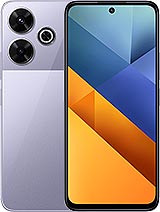
Overview
The Poco M6 4G is an entry-level smartphone featuring a 108 MP main camera for high-resolution photography and a Mediatek Helio G91 Ultra chipset for daily tasks, aimed at cost-conscious users seeking modern features. Released in June 2024, it competes with rivals like the [Samsung Galaxy A15](/why-the-samsung-galaxy-a15-makes-buying-a-used-flagship-a-risky-gamble/) and older refurbished mid-rangers from previous cycles.
In the current market, the decision usually falls between a shiny new budget device or a three-year-old flagship like a refurbished iPhone 11 or Galaxy S21. We view the Poco M6 4G as the safer economic bet. Buying used often means inheriting a degraded lithium-ion battery that has already lost 20% of its original capacity. This handset arrives with a fresh 5030 mAh cell, ensuring that the total cost of ownership stays low because no immediate battery replacement or service is required. The warranty coverage alone provides a layer of financial protection that the used market simply cannot match.
When we look at the internal hardware, the Helio G91 Ultra (12 nm) might not win a raw speed competition against an older Snapdragon 888, but it wins on longevity. Older flagships often struggle with heat dissipation as their thermal paste dries out, leading to aggressive throttling. This new model operates within its thermal design power limits, providing a consistent experience without the 'lottery' aspect of buying secondhand gear. For the price of a used device with a cracked back or a flickering screen, we are seeing a brand-new unit with a 90Hz display and a 108MP sensor.
Choosing a modern [budget phone](/trend/best-budget-phones-2026/) also ensures better compatibility with 2024 software standards. HyperOS is built on a modern kernel that handles background processes more efficiently than the bloated, outdated operating system versions found on many older devices that have reached their end-of-life for security patches. While a 2021 flagship might have a faster GPU, it likely lacks the modern connectivity optimizations found in this 2024 release.
This device presents a curious build profile. It features a glass front, which is standard, but the frame and back are constructed from plastic. At 205 grams, it carries a significant heft. This weight makes the device feel substantial rather than hollow, which is a common complaint in the sub-$150 segment. The dimensions of 168.6 x 76.3 x 8.3 mm suggest a large-screen experience that caters to media consumption. We noticed that the plastic frame provides a degree of impact absorption that glass-sandwich designs lack, making it potentially more durable for users who don't use a case.
The 6.79-inch IPS LCD is a highlights of the package. While it isn't an OLED panel, the 1080 x 2460 resolution provides a high pixel density of approximately 396 ppi. This is critical because many competitors at this price point still revert to 720p panels, which look grainy at this size. The 90Hz refresh rate adds a layer of perceived smoothness to the interface, though the Helio G91 Ultra chipset occasionally struggles to maintain those 90 frames per second during heavy system animations.
Brightness levels reach 550 nits in High Brightness Mode (HBM). This is adequate for most indoor and overcast conditions, though direct June sunlight will still challenge the legibility of the screen. We appreciate the inclusion of a 3.5mm headphone jack and an infrared port, features that are increasingly becoming 'legacy' but remain highly valuable for users who want to control their TV or use high-quality wired IEMs without adapters.
Operating the handset reveals the strengths and weaknesses of HyperOS on entry-level hardware. The software is visually cleaner than previous iterations of MIUI, but the presence of pre-installed bloatware is an unfortunate side effect of the low MSRP. We found that the primary bottleneck isn't the CPU, but the eMMC 5.1 storage. Unlike the UFS storage found in mid-range devices, eMMC 5.1 has slower sequential read and write speeds. This results in longer app installation times and a slight delay when opening large files like high-resolution photos.
Virtual Proximity Sensing is another cost-saving measure used here. Instead of a dedicated hardware infrared sensor to turn the screen off during calls, the phone uses a software algorithm involving the accelerometer and touch data. While this saves internal space and cost, it can occasionally be less reliable than a hardware sensor, leading to accidental ear-touches on the screen during long phone calls. It is a trade-off that users must be aware of when choosing this tier of device.
Despite the storage speed, the 6GB or 8GB of RAM configurations help with multitasking. We suggest going for the 8GB variant if the budget allows, as HyperOS tends to be memory-hungry. The 12nm architecture of the chipset is older, meaning it is less power-efficient than the 4nm or 6nm chips found in expensive phones. However, the sheer size of the battery helps mask this inefficiency for the average user.
The 5030 mAh battery is the heart of this phone's value proposition. In our analysis, this capacity comfortably provides over 8 hours of screen-on time for basic tasks like web browsing and social media. Even with the 12nm Helio G91 Ultra being somewhat less efficient than newer chips, the sheer volume of the battery carries it through a full day of heavy use or two days of light use. This is a level of reliability that a refurbished flagship with a degraded battery can rarely provide.
Charging is handled by a 33W wired system. In a world where some flagships still charge at 25W, having 33W in a budget device is a win. It allows the phone to go from 0% to 50% in approximately 30 minutes, which is sufficient for a quick morning top-up. We should note that the device does generate some heat during fast charging, which is typical for 12nm chipsets, but it remains within safe operating temperatures.
Power management settings within HyperOS allow for significant customization. Users can choose to limit background data or toggle the refresh rate down to 60Hz to squeeze even more life out of the cell. For a budget economist, the long-term health of this battery is helped by the fact that 33W is fast but not 'extreme,' potentially leading to less chemical degradation over a two-year ownership cycle compared to 120W charging systems.
Audio performance is a mixed bag. The inclusion of the 3.5mm jack is a massive win for the budget-conscious consumer who doesn't want to spend extra on Bluetooth earbuds or dongles. It also supports FM radio, a feature that is practically extinct in the high-end market but essential in regions with expensive data plans. The sound output through the jack is clean and provides enough power for most consumer-grade headphones.
The external loudspeaker, however, is a single mono unit. While it is loud enough for ringtones and casual YouTube viewing, it lacks the depth and stereo separation required for an immersive movie experience. At high volumes, we noticed some distortion in the treble. This is a common compromise in the sub-$150 category. Users looking for a better audio experience should definitely utilize the headphone jack.
Haptic feedback is another area where the budget nature of the device is apparent. The vibration motor is a standard 'buzzy' ERM type rather than the sharp, precise X-axis linear motors found in more expensive phones. It gets the job done for notifications, but we recommend turning off haptic feedback for typing, as the slow response of the motor can make the keyboard feel sluggish.
The Mediatek Helio G91 Ultra is essentially a refreshed G88, optimized to handle the massive 108MP camera sensor. It features two Cortex-A75 cores for performance and six Cortex-A55 cores for efficiency. In daily use, the phone feels responsive enough for navigation, messaging, and video streaming. However, it is not a gaming powerhouse. Titles like Genshin Impact will run, but only at low settings with occasional frame drops. For lighter games like Mobile Legends or Subway Surfers, it performs perfectly well.
The 108 MP main camera is the 'hero' feature. It uses a 1/1.67" sensor, which is quite large for this price point. In good lighting, the hardware potential for detail is high, especially when using the full 108MP mode for landscapes. In low light, the sensor utilizes pixel binning to improve light intake, though the lack of Optical Image Stabilization (OIS) means users must have steady hands to avoid blurry shots. The 2 MP macro lens is largely decorative, but the 13 MP selfie camera is surprisingly competent for video calls.
Video recording is capped at 1080p at 30fps for both the front and rear cameras. This is a limitation of the Helio G91 Ultra's Image Signal Processor (ISP). While we would have liked to see 60fps for smoother motion, the 30fps footage is stable enough for social media. The lack of 4K recording is standard for this price tier, but something to keep in mind if you plan on doing serious content creation.
This device represents a calculated trade-off. By choosing the Poco M6 4G, you are sacrificing 5G connectivity and raw processing power in exchange for a superior display resolution, a high-end main camera sensor, and the peace of mind that comes with a new battery and warranty. For a student or a casual user who prioritizes photography and battery life over competitive gaming, the economic utility of this handset is undeniable.
The Poco M6 4G proves that in June 2024, the budget market has matured to a point where 'entry-level' no longer means 'unusable.' It is a competent, well-rounded tool for the modern digital life. While it won't win any benchmark trophies, it wins the most important battle: the one for your wallet's long-term health. It is a solid, reliable choice that focuses on the features that actually matter for daily productivity and entertainment.
Fresh Silicon or Fading Flagships
In the current market, the decision usually falls between a shiny new budget device or a three-year-old flagship like a refurbished iPhone 11 or Galaxy S21. We view the Poco M6 4G as the safer economic bet. Buying used often means inheriting a degraded lithium-ion battery that has already lost 20% of its original capacity. This handset arrives with a fresh 5030 mAh cell, ensuring that the total cost of ownership stays low because no immediate battery replacement or service is required. The warranty coverage alone provides a layer of financial protection that the used market simply cannot match.
When we look at the internal hardware, the Helio G91 Ultra (12 nm) might not win a raw speed competition against an older Snapdragon 888, but it wins on longevity. Older flagships often struggle with heat dissipation as their thermal paste dries out, leading to aggressive throttling. This new model operates within its thermal design power limits, providing a consistent experience without the 'lottery' aspect of buying secondhand gear. For the price of a used device with a cracked back or a flickering screen, we are seeing a brand-new unit with a 90Hz display and a 108MP sensor.
Choosing a modern [budget phone](/trend/best-budget-phones-2026/) also ensures better compatibility with 2024 software standards. HyperOS is built on a modern kernel that handles background processes more efficiently than the bloated, outdated operating system versions found on many older devices that have reached their end-of-life for security patches. While a 2021 flagship might have a faster GPU, it likely lacks the modern connectivity optimizations found in this 2024 release.
Glass Front Meets Plastic Realities
This device presents a curious build profile. It features a glass front, which is standard, but the frame and back are constructed from plastic. At 205 grams, it carries a significant heft. This weight makes the device feel substantial rather than hollow, which is a common complaint in the sub-$150 segment. The dimensions of 168.6 x 76.3 x 8.3 mm suggest a large-screen experience that caters to media consumption. We noticed that the plastic frame provides a degree of impact absorption that glass-sandwich designs lack, making it potentially more durable for users who don't use a case.
The 6.79-inch IPS LCD is a highlights of the package. While it isn't an OLED panel, the 1080 x 2460 resolution provides a high pixel density of approximately 396 ppi. This is critical because many competitors at this price point still revert to 720p panels, which look grainy at this size. The 90Hz refresh rate adds a layer of perceived smoothness to the interface, though the Helio G91 Ultra chipset occasionally struggles to maintain those 90 frames per second during heavy system animations.
Brightness levels reach 550 nits in High Brightness Mode (HBM). This is adequate for most indoor and overcast conditions, though direct June sunlight will still challenge the legibility of the screen. We appreciate the inclusion of a 3.5mm headphone jack and an infrared port, features that are increasingly becoming 'legacy' but remain highly valuable for users who want to control their TV or use high-quality wired IEMs without adapters.
HyperOS and the eMMC Bottleneck
Operating the handset reveals the strengths and weaknesses of HyperOS on entry-level hardware. The software is visually cleaner than previous iterations of MIUI, but the presence of pre-installed bloatware is an unfortunate side effect of the low MSRP. We found that the primary bottleneck isn't the CPU, but the eMMC 5.1 storage. Unlike the UFS storage found in mid-range devices, eMMC 5.1 has slower sequential read and write speeds. This results in longer app installation times and a slight delay when opening large files like high-resolution photos.
Virtual Proximity Sensing is another cost-saving measure used here. Instead of a dedicated hardware infrared sensor to turn the screen off during calls, the phone uses a software algorithm involving the accelerometer and touch data. While this saves internal space and cost, it can occasionally be less reliable than a hardware sensor, leading to accidental ear-touches on the screen during long phone calls. It is a trade-off that users must be aware of when choosing this tier of device.
Despite the storage speed, the 6GB or 8GB of RAM configurations help with multitasking. We suggest going for the 8GB variant if the budget allows, as HyperOS tends to be memory-hungry. The 12nm architecture of the chipset is older, meaning it is less power-efficient than the 4nm or 6nm chips found in expensive phones. However, the sheer size of the battery helps mask this inefficiency for the average user.
The Two-Day Endurance Challenge
The 5030 mAh battery is the heart of this phone's value proposition. In our analysis, this capacity comfortably provides over 8 hours of screen-on time for basic tasks like web browsing and social media. Even with the 12nm Helio G91 Ultra being somewhat less efficient than newer chips, the sheer volume of the battery carries it through a full day of heavy use or two days of light use. This is a level of reliability that a refurbished flagship with a degraded battery can rarely provide.
Charging is handled by a 33W wired system. In a world where some flagships still charge at 25W, having 33W in a budget device is a win. It allows the phone to go from 0% to 50% in approximately 30 minutes, which is sufficient for a quick morning top-up. We should note that the device does generate some heat during fast charging, which is typical for 12nm chipsets, but it remains within safe operating temperatures.
Power management settings within HyperOS allow for significant customization. Users can choose to limit background data or toggle the refresh rate down to 60Hz to squeeze even more life out of the cell. For a budget economist, the long-term health of this battery is helped by the fact that 33W is fast but not 'extreme,' potentially leading to less chemical degradation over a two-year ownership cycle compared to 120W charging systems.
Analog Relics and Mono Sound
Audio performance is a mixed bag. The inclusion of the 3.5mm jack is a massive win for the budget-conscious consumer who doesn't want to spend extra on Bluetooth earbuds or dongles. It also supports FM radio, a feature that is practically extinct in the high-end market but essential in regions with expensive data plans. The sound output through the jack is clean and provides enough power for most consumer-grade headphones.
The external loudspeaker, however, is a single mono unit. While it is loud enough for ringtones and casual YouTube viewing, it lacks the depth and stereo separation required for an immersive movie experience. At high volumes, we noticed some distortion in the treble. This is a common compromise in the sub-$150 category. Users looking for a better audio experience should definitely utilize the headphone jack.
Haptic feedback is another area where the budget nature of the device is apparent. The vibration motor is a standard 'buzzy' ERM type rather than the sharp, precise X-axis linear motors found in more expensive phones. It gets the job done for notifications, but we recommend turning off haptic feedback for typing, as the slow response of the motor can make the keyboard feel sluggish.
The 12nm Helio G91 Ultra Reality
The Mediatek Helio G91 Ultra is essentially a refreshed G88, optimized to handle the massive 108MP camera sensor. It features two Cortex-A75 cores for performance and six Cortex-A55 cores for efficiency. In daily use, the phone feels responsive enough for navigation, messaging, and video streaming. However, it is not a gaming powerhouse. Titles like Genshin Impact will run, but only at low settings with occasional frame drops. For lighter games like Mobile Legends or Subway Surfers, it performs perfectly well.
The 108 MP main camera is the 'hero' feature. It uses a 1/1.67" sensor, which is quite large for this price point. In good lighting, the hardware potential for detail is high, especially when using the full 108MP mode for landscapes. In low light, the sensor utilizes pixel binning to improve light intake, though the lack of Optical Image Stabilization (OIS) means users must have steady hands to avoid blurry shots. The 2 MP macro lens is largely decorative, but the 13 MP selfie camera is surprisingly competent for video calls.
Video recording is capped at 1080p at 30fps for both the front and rear cameras. This is a limitation of the Helio G91 Ultra's Image Signal Processor (ISP). While we would have liked to see 60fps for smoother motion, the 30fps footage is stable enough for social media. The lack of 4K recording is standard for this price tier, but something to keep in mind if you plan on doing serious content creation.
The Value Hunter Verdict
This device represents a calculated trade-off. By choosing the Poco M6 4G, you are sacrificing 5G connectivity and raw processing power in exchange for a superior display resolution, a high-end main camera sensor, and the peace of mind that comes with a new battery and warranty. For a student or a casual user who prioritizes photography and battery life over competitive gaming, the economic utility of this handset is undeniable.
The Poco M6 4G proves that in June 2024, the budget market has matured to a point where 'entry-level' no longer means 'unusable.' It is a competent, well-rounded tool for the modern digital life. While it won't win any benchmark trophies, it wins the most important battle: the one for your wallet's long-term health. It is a solid, reliable choice that focuses on the features that actually matter for daily productivity and entertainment.
Technical Specifications
| LAUNCH | |
|---|---|
| Announced | 2024, June 10 |
| Status | Available. Released 2024, June 13 |
| PLATFORM | |
| OS | Android 14, HyperOS |
| Chipset | Mediatek Helio G91 Ultra (12 nm) |
| CPU | Octa-core (2x2.0 GHz Cortex-A75 & 6x1.8 GHz Cortex-A55) |
| GPU | Mali-G52 MC2 |
| BODY | |
| Dimensions | 168.6 x 76.3 x 8.3 mm (6.64 x 3.00 x 0.33 in) |
| Weight | 205 g (7.23 oz) |
| Build | Glass front, plastic frame |
| SIM | Nano-SIM + Nano-SIM |
| DISPLAY | |
| Type | IPS LCD, 90Hz, 550 nits (HBM) |
| Size | 6.79 inches, 109.5 cm2 (~85.1% screen-to-body ratio) |
| Resolution | 1080 x 2460 pixels (~396 ppi density) |
| Protection | Unspecified |
| MEMORY | |
| Card slot | microSDXC (uses shared SIM slot) |
| Internal | 128GB 6GB RAM, 256GB 8GB RAM |
| Info | eMMC 5.1 |
| MAIN CAMERA | |
| Dual | 108 MP, f/1.8, (wide), 1/1.67", 0.64µm, PDAF 2 MP (macro) |
| Features | LED flash, HDR |
| Video | 1080p@30fps |
| SELFIE CAMERA | |
| Single | 13 MP, f/2.5, (wide) |
| Features | HDR |
| Video | 1080p@30fps |
| SOUND | |
| Loudspeaker | Yes |
| 3.5mm jack | Yes |
| COMMS | |
| WLAN | Wi-Fi 802.11 a/b/g/n/ac, dual-band |
| Bluetooth | 5.4, A2DP, LE, aptX |
| Positioning | GPS, GLONASS, GALILEO, BDS |
| NFC | Yes (market/region dependent) |
| Infrared port | Yes |
| Radio | FM radio |
| USB | USB Type-C |
| NETWORK | |
| Technology | GSM / HSPA / LTE |
| 2G bands | GSM 850 / 900 / 1800 / 1900 |
| 3G bands | HSDPA 850 / 900 / 1700(AWS) / 1900 / 2100 |
| 4G bands | 1, 2, 3, 4, 5, 7, 8, 20, 28, 38, 40, 41, 66 |
| Speed | HSPA, LTE |
| FEATURES | |
| Sensors | Fingerprint (side-mounted), accelerometer, compass |
| Info | Virtual proximity sensing |
| BATTERY | |
| Type | 5030 mAh |
| Charging | 33W wired |
| MISC | |
| Display | 6.79-inch IPS LCD, 90Hz, 1080 x 2460 pixels |
| Chipset | Mediatek Helio G91 Ultra (12 nm) |
| Main Camera | 108 MP, f/1.8 (wide), 1/1.67", PDAF |
| Battery | 5030 mAh with 33W Wired Charging |
| Storage Type | eMMC 5.1 (128GB/256GB variants) |
| OS | Android 14, HyperOS |
| Weight | 205 g (7.23 oz) |
| Selfie Camera | 13 MP, f/2.5 |
| Sensors | Side-mounted fingerprint, accelerometer, compass, virtual proximity |
| Colors | Black, Silver, Purple |
| Models | 2404APC5FG |
| SAR | 1.09 W/kg (head) 1.01 W/kg (body) |
| SAR EU | 0.98 W/kg (head) 1.00 W/kg (body) |
| Price | $ 137.64 / € 169.90 |