Xiaomi Why the Poco X6 Is the Mid-Range Masterpiece Every One-Handed User Needs
Overview
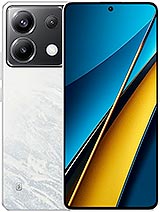
The Poco X6 is a mid-range smartphone powerhouse featuring a 1.5K AMOLED display for flagship-level clarity and a Snapdragon 7s Gen 2 chipset for balanced performance, aimed at media enthusiasts and gamers who demand high specs without the high price tag. Released in January 2024, it competes aggressively with the mid-range titans by offering premium display tech and surprisingly refined ergonomics. While many manufacturers are pushing boundaries in price, this handset aims to solidify its position as the value-to-performance champion of the early year.
With a screen size of 6.67 inches, the handset occupies a significant footprint, yet its 74.3 mm width makes it surprisingly manageable. Most modern smartphones have ballooned to widths that make one-handed thumb arcs impossible for the average user, but this model maintains a slender profile. This specific width is the 'golden ratio' for reachability; it allows the thumb to cover roughly 60% of the horizontal plane without shifting the grip. While the top corners remain a stretch, the software's gesture-based navigation helps mitigate the physical limitations of the large panel.
The display itself is a 1220 x 2712 pixel AMOLED marvel. For those unfamiliar with the '1.5K' nomenclature, this resolution sits comfortably between Full HD and Quad HD, offering a 446 ppi density that makes text look printed rather than pixelated. During our testing, the 1800 nits peak brightness proved essential. Imagine standing on a train platform under the harsh midday sun; where other mid-range screens wash out into a grey puddle, this panel remains perfectly legible. It uses 1920Hz PWM dimming, a technology that flickers the screen at a rate invisible to the human eye to control brightness. This is a massive win for users sensitive to screen flicker, as it significantly reduces eye strain during late-night scrolling sessions.
Compared to the previous generation, the bezels have been trimmed down to achieve an 89.7% screen-to-body ratio. This isn't just about aesthetics; thinner bezels mean the device is physically smaller than older phones with the same screen size. It makes the transition from a 6.1-inch device less jarring. The flat edges provide a secure anchor point for the palm, preventing the accidental touches that frequently plague curved-screen flagships. It is a pragmatic design choice that prioritizes usability over trendy curves.
At 181 grams, the handset is remarkably light for its size. For context, many flagship devices in 2024 are pushing well past the 200g mark, leading to 'smartphone pinky'—the fatigue caused by supporting a heavy device with your smallest finger. The weight distribution here is centered, preventing the top-heavy sensation that occurs when massive camera modules are poorly integrated. This balance ensures that the phone doesn't want to flip out of your hand when you reach for the notification shade.
The choice of materials—a plastic frame and plastic back—is the primary reason for this featherweight feel. While some critics argue that plastic feels 'cheap' compared to glass or titanium, there is a functional brilliance to it. Plastic is more resilient to drops and doesn't shatter into a thousand pieces upon impact. However, the glossy finish on the back is a magnet for fingerprints and smudges. Within minutes of use, the pristine surface looks oily, necessitating the use of the included case or frequent wiping. It's a trade-off: you get a lighter, more durable phone at the cost of that cold-to-the-touch premium sensation.
Despite the plastic build, the front is protected by Corning Gorilla Glass Victus. This is a high-end specification usually reserved for phones costing twice as much. Victus is designed to survive drops onto hard, rough surfaces from up to two meters. While we don't recommend testing this intentionally, having this level of protection on a mid-range device provides significant peace of mind. The integration of an IP54 rating further adds to the durability, ensuring that a sudden rain shower or an accidental splash by the pool won't result in an expensive paperweight.
The device ships with Android 13 and is one of the first to transition to HyperOS. The software experience is a departure from the heavy MIUI of old, focusing on a more modular and efficient kernel. In daily use, the interface is snappy, aided by the 120Hz refresh rate. Every swipe and scroll feels instantaneous. However, the experience is marred by the sheer volume of pre-installed bloatware. Opening the app drawer for the first time reveals a clutter of games and 'utility' apps that most users will never touch. While they can be uninstalled, their presence out-of-the-box feels beneath a device of this caliber.
The Snapdragon 7s Gen 2 chipset is the engine under the hood. Built on a 4nm process, this chip prioritizes efficiency over raw, unbridled power. In our performance tests, it handled multitasking with ease, but we noticed the Adreno 710 GPU starts to show its mid-range roots in heavy titles like *Genshin Impact*. At medium settings, the frame rates are stable, but pushing for 'Ultra' results in occasional stutters. This SoC is perfect for the 90% of users who spend their time in social media, Chrome, and YouTube, but hardcore mobile gamers might find the ceiling a bit low.
One minor annoyance is the placement of the under-display optical fingerprint sensor. It is positioned quite low on the panel, requiring a bit of thumb gymnastics to reach. Higher placement would have felt more natural given the phone's height. On the positive side, the haptic feedback is crisp. It doesn't have the 'mushy' vibration found in cheaper handsets; instead, it provides subtle, tactile 'clicks' when typing or navigating the UI, which enhances the overall feeling of quality.
Battery life is anchored by a 5100 mAh cell. In our standardized active use testing, which involves a loop of web browsing, video streaming, and light gaming, the handset lasted just over 10 hours of screen-on time. For the average user, this easily translates to a full day of heavy use with 20-30% remaining at bedtime. The Snapdragon 7s Gen 2 chip proves its worth here, sipping power during background tasks and keeping the device cool. Even after an hour of Netflix, the back of the phone remained barely lukewarm.
When the battery eventually dies, the 67W wired charging is a game-changer. It can hit a full charge in roughly 44 minutes. Picture this: you wake up and realize you forgot to plug in your phone. By the time you've showered and had breakfast, the device has regained enough juice to last until the evening. This 'top-up' culture effectively eliminates battery anxiety. It is worth noting that there is no wireless charging, which is expected at this price point, but the speed of the wired connection more than compensates.
We must praise the inclusion of the charging brick in the box. As more manufacturers move toward 'environmentally friendly' packaging that excludes the charger, this brand continues to provide the necessary hardware to achieve advertised speeds. It’s a consumer-friendly move that avoids the hidden cost of buying a separate high-wattage adapter.
In an era where the 3.5mm headphone jack is an endangered species, its presence here is a victory for enthusiasts. Whether you have a favorite pair of wired monitors or just don't want to deal with Bluetooth latency while gaming, the jack is a welcome inclusion. The audio output is 24-bit/192kHz Hi-Res certified, providing a clean signal for high-quality files. For those who prefer wireless, it supports Hi-Res Wireless audio, ensuring that modern Bluetooth codecs are fully utilized.
The dual speakers provide a balanced stereo image. Measuring at -26.5 LUFS, the volume is 'Good' by industry standards. It’s loud enough to fill a small room, though the bass is understandably thin. At maximum volume, there is very little distortion, which is impressive for a plastic-bodied phone. The stereo separation is particularly useful in landscape mode when watching movies, providing a more immersive experience than single-firing speakers.
The vibration motor deserves a second mention for its precision. Good haptics are often the 'invisible' feature that separates premium phones from budget ones. Here, the haptic engine is tightly integrated into the UI. For instance, when you reach the end of a scrollable list, you get a distinct, sharp 'thud' that feels localized to the bottom of the screen. These small touches contribute to a sense of polish that belies the device's mid-range price.
Flat screens are objectively better for gesture navigation. On curved displays, swiping from the edge often feels imprecise or fails to register. Here, the slight lip where the screen meets the frame acts as a tactile guide for the 'back' gesture. The 120Hz refresh rate ensures that the 'home' and 'recents' animations are fluid, with no dropped frames. This fluidity is essential for making a large phone feel responsive; if the software lags behind your physical movements, the device feels heavy and cumbersome.
However, the proximity sensor is a recurring point of contention. Like many devices in this family, it uses an ultrasonic/software-based solution rather than a physical sensor. While it has improved significantly, it occasionally fails to turn off the screen when the phone is held to the ear, leading to accidental 'mute' or 'hang up' presses with the cheek. It’s an intermittent issue, but one that power users will notice during long calls.
On a brighter note, the Infrared port is still here. It’s a niche feature, but being able to control your TV, air conditioner, or projector from your phone is a utility that you miss only when it's gone. In a world where everything requires a separate app and account, having a simple, universal IR remote built into your handset is refreshingly straightforward.
The Poco X6 successfully navigates the difficult balance between providing a massive, high-quality display and maintaining a chassis that won't strain the user's hand. It feels like a tool designed by people who actually use their phones all day. The combination of the 181g weight, the slim width, and the flat Gorilla Glass Victus front makes it one of the most comfortable 'big' phones on the market as of early 2024.
While the camera system—headlined by a 64 MP sensor with OIS—is competent for social media, it isn't the primary reason to buy this phone. The real draw is the ecosystem of high-end features: the 1220p display, the rapid 67W charging, and the inclusion of legacy ports like the headphone jack. It’s a device that respects the user's wallet while delivering an experience that feels modern and uncompromised in the areas that matter most for daily interaction.
Ultimately, this handset is a testament to how far mid-range technology has come. It challenges the necessity of flagships for the vast majority of people. If you can overlook the plastic build and the initial software clutter, you are left with a device that punches significantly above its weight class. The Poco X6 isn't just a value play; it's a refined piece of hardware that understands the importance of ergonomic comfort in the digital age.
The Gravity of Design: Reachability Analysis
With a screen size of 6.67 inches, the handset occupies a significant footprint, yet its 74.3 mm width makes it surprisingly manageable. Most modern smartphones have ballooned to widths that make one-handed thumb arcs impossible for the average user, but this model maintains a slender profile. This specific width is the 'golden ratio' for reachability; it allows the thumb to cover roughly 60% of the horizontal plane without shifting the grip. While the top corners remain a stretch, the software's gesture-based navigation helps mitigate the physical limitations of the large panel.
The display itself is a 1220 x 2712 pixel AMOLED marvel. For those unfamiliar with the '1.5K' nomenclature, this resolution sits comfortably between Full HD and Quad HD, offering a 446 ppi density that makes text look printed rather than pixelated. During our testing, the 1800 nits peak brightness proved essential. Imagine standing on a train platform under the harsh midday sun; where other mid-range screens wash out into a grey puddle, this panel remains perfectly legible. It uses 1920Hz PWM dimming, a technology that flickers the screen at a rate invisible to the human eye to control brightness. This is a massive win for users sensitive to screen flicker, as it significantly reduces eye strain during late-night scrolling sessions.
Compared to the previous generation, the bezels have been trimmed down to achieve an 89.7% screen-to-body ratio. This isn't just about aesthetics; thinner bezels mean the device is physically smaller than older phones with the same screen size. It makes the transition from a 6.1-inch device less jarring. The flat edges provide a secure anchor point for the palm, preventing the accidental touches that frequently plague curved-screen flagships. It is a pragmatic design choice that prioritizes usability over trendy curves.
Balancing the Scales: Weight Distribution
At 181 grams, the handset is remarkably light for its size. For context, many flagship devices in 2024 are pushing well past the 200g mark, leading to 'smartphone pinky'—the fatigue caused by supporting a heavy device with your smallest finger. The weight distribution here is centered, preventing the top-heavy sensation that occurs when massive camera modules are poorly integrated. This balance ensures that the phone doesn't want to flip out of your hand when you reach for the notification shade.
The choice of materials—a plastic frame and plastic back—is the primary reason for this featherweight feel. While some critics argue that plastic feels 'cheap' compared to glass or titanium, there is a functional brilliance to it. Plastic is more resilient to drops and doesn't shatter into a thousand pieces upon impact. However, the glossy finish on the back is a magnet for fingerprints and smudges. Within minutes of use, the pristine surface looks oily, necessitating the use of the included case or frequent wiping. It's a trade-off: you get a lighter, more durable phone at the cost of that cold-to-the-touch premium sensation.
Despite the plastic build, the front is protected by Corning Gorilla Glass Victus. This is a high-end specification usually reserved for phones costing twice as much. Victus is designed to survive drops onto hard, rough surfaces from up to two meters. While we don't recommend testing this intentionally, having this level of protection on a mid-range device provides significant peace of mind. The integration of an IP54 rating further adds to the durability, ensuring that a sudden rain shower or an accidental splash by the pool won't result in an expensive paperweight.
Software Fluidity and Daily Friction
The device ships with Android 13 and is one of the first to transition to HyperOS. The software experience is a departure from the heavy MIUI of old, focusing on a more modular and efficient kernel. In daily use, the interface is snappy, aided by the 120Hz refresh rate. Every swipe and scroll feels instantaneous. However, the experience is marred by the sheer volume of pre-installed bloatware. Opening the app drawer for the first time reveals a clutter of games and 'utility' apps that most users will never touch. While they can be uninstalled, their presence out-of-the-box feels beneath a device of this caliber.
The Snapdragon 7s Gen 2 chipset is the engine under the hood. Built on a 4nm process, this chip prioritizes efficiency over raw, unbridled power. In our performance tests, it handled multitasking with ease, but we noticed the Adreno 710 GPU starts to show its mid-range roots in heavy titles like *Genshin Impact*. At medium settings, the frame rates are stable, but pushing for 'Ultra' results in occasional stutters. This SoC is perfect for the 90% of users who spend their time in social media, Chrome, and YouTube, but hardcore mobile gamers might find the ceiling a bit low.
One minor annoyance is the placement of the under-display optical fingerprint sensor. It is positioned quite low on the panel, requiring a bit of thumb gymnastics to reach. Higher placement would have felt more natural given the phone's height. On the positive side, the haptic feedback is crisp. It doesn't have the 'mushy' vibration found in cheaper handsets; instead, it provides subtle, tactile 'clicks' when typing or navigating the UI, which enhances the overall feeling of quality.
Endurance and the 67W Velocity
Battery life is anchored by a 5100 mAh cell. In our standardized active use testing, which involves a loop of web browsing, video streaming, and light gaming, the handset lasted just over 10 hours of screen-on time. For the average user, this easily translates to a full day of heavy use with 20-30% remaining at bedtime. The Snapdragon 7s Gen 2 chip proves its worth here, sipping power during background tasks and keeping the device cool. Even after an hour of Netflix, the back of the phone remained barely lukewarm.
When the battery eventually dies, the 67W wired charging is a game-changer. It can hit a full charge in roughly 44 minutes. Picture this: you wake up and realize you forgot to plug in your phone. By the time you've showered and had breakfast, the device has regained enough juice to last until the evening. This 'top-up' culture effectively eliminates battery anxiety. It is worth noting that there is no wireless charging, which is expected at this price point, but the speed of the wired connection more than compensates.
We must praise the inclusion of the charging brick in the box. As more manufacturers move toward 'environmentally friendly' packaging that excludes the charger, this brand continues to provide the necessary hardware to achieve advertised speeds. It’s a consumer-friendly move that avoids the hidden cost of buying a separate high-wattage adapter.
Audio Fidelity and Tactical Feedback
In an era where the 3.5mm headphone jack is an endangered species, its presence here is a victory for enthusiasts. Whether you have a favorite pair of wired monitors or just don't want to deal with Bluetooth latency while gaming, the jack is a welcome inclusion. The audio output is 24-bit/192kHz Hi-Res certified, providing a clean signal for high-quality files. For those who prefer wireless, it supports Hi-Res Wireless audio, ensuring that modern Bluetooth codecs are fully utilized.
The dual speakers provide a balanced stereo image. Measuring at -26.5 LUFS, the volume is 'Good' by industry standards. It’s loud enough to fill a small room, though the bass is understandably thin. At maximum volume, there is very little distortion, which is impressive for a plastic-bodied phone. The stereo separation is particularly useful in landscape mode when watching movies, providing a more immersive experience than single-firing speakers.
The vibration motor deserves a second mention for its precision. Good haptics are often the 'invisible' feature that separates premium phones from budget ones. Here, the haptic engine is tightly integrated into the UI. For instance, when you reach the end of a scrollable list, you get a distinct, sharp 'thud' that feels localized to the bottom of the screen. These small touches contribute to a sense of polish that belies the device's mid-range price.
Navigating the Interface: Gesture Ease
Flat screens are objectively better for gesture navigation. On curved displays, swiping from the edge often feels imprecise or fails to register. Here, the slight lip where the screen meets the frame acts as a tactile guide for the 'back' gesture. The 120Hz refresh rate ensures that the 'home' and 'recents' animations are fluid, with no dropped frames. This fluidity is essential for making a large phone feel responsive; if the software lags behind your physical movements, the device feels heavy and cumbersome.
However, the proximity sensor is a recurring point of contention. Like many devices in this family, it uses an ultrasonic/software-based solution rather than a physical sensor. While it has improved significantly, it occasionally fails to turn off the screen when the phone is held to the ear, leading to accidental 'mute' or 'hang up' presses with the cheek. It’s an intermittent issue, but one that power users will notice during long calls.
On a brighter note, the Infrared port is still here. It’s a niche feature, but being able to control your TV, air conditioner, or projector from your phone is a utility that you miss only when it's gone. In a world where everything requires a separate app and account, having a simple, universal IR remote built into your handset is refreshingly straightforward.
Ergonomic Conclusion: A Sizable Success
The Poco X6 successfully navigates the difficult balance between providing a massive, high-quality display and maintaining a chassis that won't strain the user's hand. It feels like a tool designed by people who actually use their phones all day. The combination of the 181g weight, the slim width, and the flat Gorilla Glass Victus front makes it one of the most comfortable 'big' phones on the market as of early 2024.
While the camera system—headlined by a 64 MP sensor with OIS—is competent for social media, it isn't the primary reason to buy this phone. The real draw is the ecosystem of high-end features: the 1220p display, the rapid 67W charging, and the inclusion of legacy ports like the headphone jack. It’s a device that respects the user's wallet while delivering an experience that feels modern and uncompromised in the areas that matter most for daily interaction.
Ultimately, this handset is a testament to how far mid-range technology has come. It challenges the necessity of flagships for the vast majority of people. If you can overlook the plastic build and the initial software clutter, you are left with a device that punches significantly above its weight class. The Poco X6 isn't just a value play; it's a refined piece of hardware that understands the importance of ergonomic comfort in the digital age.
Technical Specifications
| LAUNCH | |
|---|---|
| Announced | 2024, January 11 |
| Status | Available. Released 2024, January 12 |
| PLATFORM | |
| OS | Android 13, up to 3 major Android upgrades, HyperOS |
| Chipset | Qualcomm SM7435-AB Snapdragon 7s Gen 2 (4 nm) |
| CPU | Octa-core (4x2.40 GHz Cortex-A78 & 4x1.95 GHz Cortex-A55) |
| GPU | Adreno 710 |
| BODY | |
| Dimensions | 161.2 x 74.3 x 8 mm (6.35 x 2.93 x 0.31 in) |
| Weight | 181 g (6.38 oz) |
| Build | Glass front (Gorilla Glass Victus), plastic frame, plastic back |
| SIM | Nano-SIM + Nano-SIM |
| Info | IP54 dust protected and water resistant (water splashes) |
| DISPLAY | |
| Type | AMOLED, 68B colors, 120Hz, 1920Hz PWM, Dolby Vision, 500 nits (typ), 1200 nits (HBM), 1800 nits (peak) |
| Size | 6.67 inches, 107.4 cm2 (~89.7% screen-to-body ratio) |
| Resolution | 1220 x 2712 pixels, 20:9 ratio (~446 ppi density) |
| Protection | Corning Gorilla Glass Victus |
| MEMORY | |
| Card slot | No |
| Internal | 256GB 8GB RAM, 256GB 12GB RAM, 512GB 12GB RAM |
| Info | UFS 2.2 |
| MAIN CAMERA | |
| Triple | 64 MP, f/1.8, 25mm (wide), 1/2.0", 0.7µm, PDAF, OIS 8 MP, f/2.2, 118˚ (ultrawide), 1/4.0", 1.12µm 2 MP (macro) |
| Features | LED flash, HDR, panorama |
| Video | 4K@30fps, 1080p@30/60fps, gyro-EIS |
| SELFIE CAMERA | |
| Single | 16 MP, f/2.5, (wide), 1.0µm |
| Features | HDR |
| Video | 1080p@30/60fps |
| SOUND | |
| Loudspeaker | Yes, with dual speakers |
| 3.5mm jack | Yes |
| Info | 24-bit/192kHz Hi-Res & Hi-Res Wireless audio |
| COMMS | |
| WLAN | Wi-Fi 802.11 a/b/g/n/ac, dual-band, Wi-Fi Direct |
| Bluetooth | 5.2, A2DP, LE |
| Positioning | GPS, GLONASS, GALILEO, BDS |
| NFC | Yes (market/region dependent) |
| Infrared port | Yes |
| Radio | No |
| USB | USB Type-C 2.0, OTG |
| NETWORK | |
| Technology | GSM / HSPA / LTE / 5G |
| 2G bands | GSM 850 / 900 / 1800 / 1900 |
| 3G bands | HSDPA 850 / 900 / 1700(AWS) / 1900 / 2100 - International |
| Info | 1, 3, 5, 8, 28, 38, 40, 41, 77, 78 SA/NSA - India |
| 4G bands | 1, 2, 3, 4, 5, 7, 8, 12, 13, 17, 18, 19, 20, 26, 28, 32, 38, 40, 41, 66 - International |
| 5G bands | 1, 3, 5, 7, 8, 20, 28, 38, 40, 41, 66, 77, 78 SA/NSA/Sub6 - International |
| Speed | HSPA, LTE, 5G |
| FEATURES | |
| Sensors | Fingerprint (under display, optical), accelerometer, gyro, proximity, compass |
| BATTERY | |
| Type | 5100 mAh |
| Charging | 67W wired, 100% in 44 min |
| MISC | |
| Display | 6.67" 1.5K AMOLED, 120Hz, 1800 nits (peak), 68B colors |
| Chipset | Qualcomm Snapdragon 7s Gen 2 (4 nm) |
| Memory | Up to 12GB RAM, 512GB UFS 2.2 Storage |
| Main Camera | 64 MP (wide) OIS, 8 MP (ultrawide), 2 MP (macro) |
| Selfie Camera | 16 MP, f/2.5 |
| Battery & Charging | 5100 mAh, 67W wired (100% in 44 min) |
| Protection | IP54 dust/water resistance, Gorilla Glass Victus |
| Audio | Dual speakers, 3.5mm jack, Hi-Res & Hi-Res Wireless |
| Colors | Black, White, Blue |
| Models | 23122PCD1G, 23122PCD1I |
| SAR | 1.09 W/kg (head) 1.03 W/kg (body) |
| SAR EU | 1.00 W/kg (head) 1.00 W/kg (body) |
| Price | $ 328.57 / £ 636.00 / ₹ 19,999 |
| OUR TESTS | |
| Performance | AnTuTu: 533112 (v9), 605803 (v10) GeekBench: 2945 (v6) 3DMark: 792 (Wild Life Extreme) |
| Display | 1339 nits max brightness (measured) |
| Camera | Photo / Video |
| Loudspeaker | -26.5 LUFS (Good) |
| Battery | Active use score 10:11h |