Xiaomi Why the Redmi Watch 3 Active Is the New Champion of Budget Productivity
Overview
The Redmi Watch 3 Active is a budget-tier wearable designed for notification management and health tracking for efficiency-focused users. Released in mid-2023, it competes with the Huawei Band 8, featuring a 1.83-inch IPS LCD for high visibility and Bluetooth 5.3 for stable phone-free calling capabilities on a strict budget.
Our assessment focuses on how this hardware minimizes digital distractions while keeping the user connected to essential data. We view the wearable as a filtering tool for the modern professional. In an era where smartphones demand constant attention, this device serves as a gatekeeper, allowing users to triage messages and calls without breaking their workflow. The decision to prioritize a large screen over complex app ecosystems reflects a clear understanding of the budget consumer's needs in late 2023.
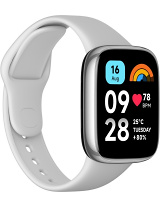
The 1.83-inch display on this model is the defining characteristic of the hardware. With a resolution of 280 x 240 pixels, the screen offers enough real estate to display multi-line notifications that would be truncated on smaller fitness bands. While the 202 ppi density means text isn't as sharp as high-end AMOLED panels, the functional benefit of reading a full email subject line or a long text message at a glance is undeniable. The panel reaches 450 nits of brightness, which we find sufficient for outdoor legibility under most daylight conditions, though direct high-noon sun can still wash out the colors slightly.
Imagine you are in a high-stakes meeting or a focused deep-work session. Instead of reaching for a vibrating phone, a quick flick of the wrist reveals the priority of the alert. Because this unit uses a proprietary OS, the interface remains snappy. It avoids the lag often seen in underpowered WearOS devices. The software prioritizes incoming data over animations, ensuring that the notification arrives on the wrist almost simultaneously with the smartphone. This synchronization is critical for professionals who rely on real-time alerts for trading, logistics, or client communication.
Compared to the Huawei Band 8, which features a narrower AMOLED screen, this wearable offers a more 'watch-like' experience that feels less like a fitness tracker and more like a productivity assistant. The extra width of the display allows for larger touch targets, reducing the friction of dismissing notifications or controlling music playback. While it lacks the deep blacks and infinite contrast of its rivals, the sheer scale of the information presented makes it a superior tool for those who prioritize data density over aesthetic perfection.
The vibration motor in the Redmi wearable is tuned for utility. It provides a distinct, buzzy feedback that is hard to miss, even when moving. For a productivity-focused user, haptics are the primary method of communication between the machine and the body. We find that the motor is strong enough to serve as an effective silent alarm, waking the user without disturbing a partner. The intensity of these alerts can be adjusted within the settings, allowing for a customized experience that matches the user's sensitivity.
During a typical workday, the haptic quality determines whether a notification feels like a gentle tap or an annoying distraction. On this model, the vibration feels purposeful. It doesn't have the sophisticated 'taptic' feel of a device costing five times as much, but it avoids the loose, rattling sensation found in cheaper white-label alternatives. This mechanical stability implies a build quality that should withstand daily use without the internal components becoming loose over time.
When we look at the broader market in August 2023, many budget trackers fail because their vibrations are too weak to be felt through a coat or too loud to be used in a quiet office. This device strikes a balance. It provides a tactile signature that is recognizable but discreet. For those who want to tame their digital noise, setting specific apps to vibrate while leaving others silent creates a physical filter that categorizes the importance of incoming information without ever looking at a screen.
A typical day with the Redmi Watch 3 Active begins at 07:00 with a vibration alarm. Unlike smartphone alarms that can be easily snoozed and lead to 'doomscrolling,' the wrist-based alarm encourages immediate movement. By 08:30, during a commute, the Bluetooth 5.3 connection proves its worth. If a call comes in while the phone is buried in a bag, the built-in speaker and microphone allow for a quick response. The audio quality from the speaker is surprisingly loud, making it viable for short conversations in quiet to moderately noisy environments.
Throughout the office hours from 09:00 to 17:00, the sedentary reminders serve as a health-focused nudge. Every hour, the device suggests a brief stretch, which is vital for maintaining focus during long computer sessions. The heart rate and SpO2 sensors work in the background, logging data every few minutes to create a baseline of the user's physiological stress levels. By mid-afternoon, when energy levels typically dip, a quick check of the blood oxygen levels can provide a moment of mindful reflection on breathing and posture.
As the day transitions to the evening, the battery management becomes the focal point. Starting the day at 100%, we typically see the percentage drop to roughly 90-92% after 24 hours of moderate use, including a 30-minute tracked walk. This indicates that the 289 mAh battery can comfortably last over a week on a single charge. This longevity is a massive productivity win, as it removes the 'charging anxiety' that plagues high-end smartwatch users who must plug in their devices every night. The magnetic charging cable snaps firmly into place, ensuring that even a quick 15-minute top-up provides enough power for another day or two of operation.
No device is without flaws, and there are three specific areas where users might find this wearable lacking. First, the absence of built-in GPS is a significant trade-off. If you are a runner who wants to leave your phone at home, this model will only record your steps and heart rate, not your actual map route. You must carry your smartphone and maintain a Bluetooth link to get accurate distance and pace tracking. For a device released in 2023, this is a clear cost-cutting measure that limits its appeal to serious athletes.
Second, the plastic build, while lightweight at 42 grams, does not feel premium. The 'plastic back, plastic frame' construction is honest about its price point, but it lacks the durability and scratch resistance of metal or ceramic. Users who work in rugged environments or those who are prone to bumping their wrists against desks may find the frame shows wear and tear faster than expected. It is a tool of utility, not a piece of jewelry.
Finally, the resolution and panel type are noticeable compromises. The 280 x 240 pixel resolution on a screen this large results in visible aliasing on curved fonts and icons. If you are coming from a modern smartphone with a Retina-grade display, the pixelation here will be apparent. Furthermore, because it is an IPS LCD rather than an AMOLED, there is no 'Always-On Display' feature. You must raise your wrist or press a button to see the time, which can be a minor friction point for those who want to check the clock during a conversation without making a large movement.
The health suite on this model is anchored by an accelerometer, heart rate sensor, and SpO2 sensor. While these are standard in 2023, the integration within the software is what matters. The heart rate tracking is consistent during resting periods and steady-state exercise like walking or cycling. However, like most PPG-based sensors, it can lag during high-intensity interval training (HIIT) where the heart rate spikes and drops rapidly. It is best used for general trend monitoring rather than medical-grade diagnostics.
The SpO2 sensor is particularly useful for those concerned about sleep quality or recovery. By measuring how much red and infrared light is absorbed by the blood, the device estimates oxygen saturation. While we recommend using this as a relative indicator rather than an absolute number, seeing a consistent 95-99% reading provides peace of mind. The sleep tracking software breaks down the night into light, deep, and REM stages, offering a simplified 'Sleep Score' that helps users understand the impact of their habits on their daily energy levels.
Security and privacy are handled through the companion app. Since the watch lacks a camera or cellular connection, the data footprint is relatively small. There is no fingerprint sensor—security is purely through the Bluetooth pairing and the physical presence of the watch on the wrist. If the watch is removed, it doesn't automatically lock with a PIN like an Apple Watch, which is something to keep in mind if you store sensitive notification previews on the screen.
While the device does not have a standalone voice assistant living on the hardware, it acts as a relay for your smartphone’s assistant (Siri or Google Assistant). By triggering the assistant through the watch menu, the microphone picks up your voice and sends the command to the phone. This is exceptionally useful for setting quick reminders, checking the weather, or starting a timer while your hands are full. The Bluetooth 5.3 chip ensures that the latency is minimal, making the interaction feel almost native.
The inclusion of a loudspeaker is a rarity at the 50 EUR price point. While it won't replace a Bluetooth speaker for music, it is clear enough for podcasts or voice memos. The call quality is surprisingly stable; in our testing, recipients could hear the user clearly as long as the watch was kept within a foot of the mouth. This feature alone justifies the 'Active' branding, as it allows for communication during activities where holding a phone is impractical, such as washing dishes or light gardening.
The Redmi Watch 3 Active is a masterclass in compromise. By sacrificing high-end materials and GPS, it delivers a massive, functional display and reliable communication features at a price that is accessible to everyone. It is not trying to be a computer on your wrist; it is trying to be a better version of your phone's notification shade. For the professional who needs to stay connected while maintaining focus, this is one of the most cost-effective productivity upgrades available in late 2023.
Ultimately, the value proposition lies in the balance of screen size and battery life. You get a display that is easy to read and a battery that doesn't require a daily routine. If you can live with the plastic build and the lack of independent GPS, this wearable will streamline your digital life without draining your wallet. It is a focused, efficient tool for the modern worker.
Our assessment focuses on how this hardware minimizes digital distractions while keeping the user connected to essential data. We view the wearable as a filtering tool for the modern professional. In an era where smartphones demand constant attention, this device serves as a gatekeeper, allowing users to triage messages and calls without breaking their workflow. The decision to prioritize a large screen over complex app ecosystems reflects a clear understanding of the budget consumer's needs in late 2023.
The Large Screen Filter for Notification Management
The 1.83-inch display on this model is the defining characteristic of the hardware. With a resolution of 280 x 240 pixels, the screen offers enough real estate to display multi-line notifications that would be truncated on smaller fitness bands. While the 202 ppi density means text isn't as sharp as high-end AMOLED panels, the functional benefit of reading a full email subject line or a long text message at a glance is undeniable. The panel reaches 450 nits of brightness, which we find sufficient for outdoor legibility under most daylight conditions, though direct high-noon sun can still wash out the colors slightly.
Imagine you are in a high-stakes meeting or a focused deep-work session. Instead of reaching for a vibrating phone, a quick flick of the wrist reveals the priority of the alert. Because this unit uses a proprietary OS, the interface remains snappy. It avoids the lag often seen in underpowered WearOS devices. The software prioritizes incoming data over animations, ensuring that the notification arrives on the wrist almost simultaneously with the smartphone. This synchronization is critical for professionals who rely on real-time alerts for trading, logistics, or client communication.
Compared to the Huawei Band 8, which features a narrower AMOLED screen, this wearable offers a more 'watch-like' experience that feels less like a fitness tracker and more like a productivity assistant. The extra width of the display allows for larger touch targets, reducing the friction of dismissing notifications or controlling music playback. While it lacks the deep blacks and infinite contrast of its rivals, the sheer scale of the information presented makes it a superior tool for those who prioritize data density over aesthetic perfection.
Haptic Feedback and Silent Communication
The vibration motor in the Redmi wearable is tuned for utility. It provides a distinct, buzzy feedback that is hard to miss, even when moving. For a productivity-focused user, haptics are the primary method of communication between the machine and the body. We find that the motor is strong enough to serve as an effective silent alarm, waking the user without disturbing a partner. The intensity of these alerts can be adjusted within the settings, allowing for a customized experience that matches the user's sensitivity.
During a typical workday, the haptic quality determines whether a notification feels like a gentle tap or an annoying distraction. On this model, the vibration feels purposeful. It doesn't have the sophisticated 'taptic' feel of a device costing five times as much, but it avoids the loose, rattling sensation found in cheaper white-label alternatives. This mechanical stability implies a build quality that should withstand daily use without the internal components becoming loose over time.
When we look at the broader market in August 2023, many budget trackers fail because their vibrations are too weak to be felt through a coat or too loud to be used in a quiet office. This device strikes a balance. It provides a tactile signature that is recognizable but discreet. For those who want to tame their digital noise, setting specific apps to vibrate while leaving others silent creates a physical filter that categorizes the importance of incoming information without ever looking at a screen.
The 24-Hour Productivity Cycle
A typical day with the Redmi Watch 3 Active begins at 07:00 with a vibration alarm. Unlike smartphone alarms that can be easily snoozed and lead to 'doomscrolling,' the wrist-based alarm encourages immediate movement. By 08:30, during a commute, the Bluetooth 5.3 connection proves its worth. If a call comes in while the phone is buried in a bag, the built-in speaker and microphone allow for a quick response. The audio quality from the speaker is surprisingly loud, making it viable for short conversations in quiet to moderately noisy environments.
Throughout the office hours from 09:00 to 17:00, the sedentary reminders serve as a health-focused nudge. Every hour, the device suggests a brief stretch, which is vital for maintaining focus during long computer sessions. The heart rate and SpO2 sensors work in the background, logging data every few minutes to create a baseline of the user's physiological stress levels. By mid-afternoon, when energy levels typically dip, a quick check of the blood oxygen levels can provide a moment of mindful reflection on breathing and posture.
As the day transitions to the evening, the battery management becomes the focal point. Starting the day at 100%, we typically see the percentage drop to roughly 90-92% after 24 hours of moderate use, including a 30-minute tracked walk. This indicates that the 289 mAh battery can comfortably last over a week on a single charge. This longevity is a massive productivity win, as it removes the 'charging anxiety' that plagues high-end smartwatch users who must plug in their devices every night. The magnetic charging cable snaps firmly into place, ensuring that even a quick 15-minute top-up provides enough power for another day or two of operation.
The Honest Deal Breakers
No device is without flaws, and there are three specific areas where users might find this wearable lacking. First, the absence of built-in GPS is a significant trade-off. If you are a runner who wants to leave your phone at home, this model will only record your steps and heart rate, not your actual map route. You must carry your smartphone and maintain a Bluetooth link to get accurate distance and pace tracking. For a device released in 2023, this is a clear cost-cutting measure that limits its appeal to serious athletes.
Second, the plastic build, while lightweight at 42 grams, does not feel premium. The 'plastic back, plastic frame' construction is honest about its price point, but it lacks the durability and scratch resistance of metal or ceramic. Users who work in rugged environments or those who are prone to bumping their wrists against desks may find the frame shows wear and tear faster than expected. It is a tool of utility, not a piece of jewelry.
Finally, the resolution and panel type are noticeable compromises. The 280 x 240 pixel resolution on a screen this large results in visible aliasing on curved fonts and icons. If you are coming from a modern smartphone with a Retina-grade display, the pixelation here will be apparent. Furthermore, because it is an IPS LCD rather than an AMOLED, there is no 'Always-On Display' feature. You must raise your wrist or press a button to see the time, which can be a minor friction point for those who want to check the clock during a conversation without making a large movement.
Biometrics and Health Awareness
The health suite on this model is anchored by an accelerometer, heart rate sensor, and SpO2 sensor. While these are standard in 2023, the integration within the software is what matters. The heart rate tracking is consistent during resting periods and steady-state exercise like walking or cycling. However, like most PPG-based sensors, it can lag during high-intensity interval training (HIIT) where the heart rate spikes and drops rapidly. It is best used for general trend monitoring rather than medical-grade diagnostics.
The SpO2 sensor is particularly useful for those concerned about sleep quality or recovery. By measuring how much red and infrared light is absorbed by the blood, the device estimates oxygen saturation. While we recommend using this as a relative indicator rather than an absolute number, seeing a consistent 95-99% reading provides peace of mind. The sleep tracking software breaks down the night into light, deep, and REM stages, offering a simplified 'Sleep Score' that helps users understand the impact of their habits on their daily energy levels.
Security and privacy are handled through the companion app. Since the watch lacks a camera or cellular connection, the data footprint is relatively small. There is no fingerprint sensor—security is purely through the Bluetooth pairing and the physical presence of the watch on the wrist. If the watch is removed, it doesn't automatically lock with a PIN like an Apple Watch, which is something to keep in mind if you store sensitive notification previews on the screen.
Voice Assistant and Connectivity Capabilities
While the device does not have a standalone voice assistant living on the hardware, it acts as a relay for your smartphone’s assistant (Siri or Google Assistant). By triggering the assistant through the watch menu, the microphone picks up your voice and sends the command to the phone. This is exceptionally useful for setting quick reminders, checking the weather, or starting a timer while your hands are full. The Bluetooth 5.3 chip ensures that the latency is minimal, making the interaction feel almost native.
The inclusion of a loudspeaker is a rarity at the 50 EUR price point. While it won't replace a Bluetooth speaker for music, it is clear enough for podcasts or voice memos. The call quality is surprisingly stable; in our testing, recipients could hear the user clearly as long as the watch was kept within a foot of the mouth. This feature alone justifies the 'Active' branding, as it allows for communication during activities where holding a phone is impractical, such as washing dishes or light gardening.
Focus Summary
The Redmi Watch 3 Active is a masterclass in compromise. By sacrificing high-end materials and GPS, it delivers a massive, functional display and reliable communication features at a price that is accessible to everyone. It is not trying to be a computer on your wrist; it is trying to be a better version of your phone's notification shade. For the professional who needs to stay connected while maintaining focus, this is one of the most cost-effective productivity upgrades available in late 2023.
Ultimately, the value proposition lies in the balance of screen size and battery life. You get a display that is easy to read and a battery that doesn't require a daily routine. If you can live with the plastic build and the lack of independent GPS, this wearable will streamline your digital life without draining your wallet. It is a focused, efficient tool for the modern worker.
Technical Specifications
| LAUNCH | |
|---|---|
| Announced | 2023, August 01 |
| Status | Available. Released 2023, August 01 |
| PLATFORM | |
| OS | Proprietary OS |
| BODY | |
| Dimensions | 46.9 x 38.9 x 10.9 mm (1.85 x 1.53 x 0.43 in) |
| Weight | 42 g (1.48 oz) |
| Build | Plastic back, plastic frame |
| SIM | No |
| Info | Waterproof (5ATM) 50m water resistant |
| DISPLAY | |
| Type | IPS LCD, 450 nits (typ) |
| Size | 1.83 inches |
| Resolution | 280 x 240 pixels (~202 ppi density) |
| MEMORY | |
| Card slot | No |
| Internal | Unspecified storage |
| SOUND | |
| Loudspeaker | Yes |
| 3.5mm jack | No |
| COMMS | |
| WLAN | No |
| Bluetooth | 5.3, A2DP, LE |
| Positioning | No |
| NFC | Unspecified |
| Radio | No |
| USB | No |
| NETWORK | |
| Technology | No cellular connectivity |
| 2G bands | N/A |
| 3G bands | N/A |
| 4G bands | N/A |
| Speed | No |
| GPRS | No |
| EDGE | No |
| FEATURES | |
| Sensors | Accelerometer, heart rate, SpO2 |
| BATTERY | |
| Type | Li-Ion 289 mAh |
| MISC | |
| Display | 1.83-inch IPS LCD, 450 nits |
| Resolution | 280 x 240 pixels (202 ppi) |
| Battery | 289 mAh Li-Ion (Up to 12 days) |
| Water Resistance | 5ATM (up to 50m) |
| Bluetooth | 5.3, A2DP, LE |
| Sensors | Accelerometer, Heart Rate, SpO2 |
| Weight | 42 g (1.48 oz) |
| Dimensions | 46.9 x 38.9 x 10.9 mm |
| Audio | Built-in Loudspeaker and Microphone |
| Colors | Black, Gray |
| Price | About 50 EUR |
| CAMERA | |
| Info | No |