ZTE Beyond the Third Dimension - The Technical Dominance of the nubia Pad 3D II
Overview
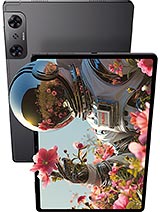
The nubia Pad 3D II is a high-end 3D-capable tablet featuring a 12.1-inch 144Hz IPS LCD for immersive depth-sensing experiences and a Snapdragon 8 Gen 2 chipset for sustained performance, aimed at content creators and enthusiasts of glasses-free 3D technology. Released in early 2024, it competes with the standard iPad Pro and [Samsung Galaxy Tab S9](/the-samsung-galaxy-tab-s9-is-the-new-standard-for-mobile-media-consumption/) series by offering a unique hardware-based lightfield display that differentiates its value proposition in a crowded flagship market.
At the core of this engineering feat lies the Qualcomm Snapdragon 8 Gen 2 (4 nm). While the industry has begun shifting toward Gen 3, the Gen 2 remains a masterpiece of efficiency and thermal management. The octa-core configuration utilizes a Cortex-X3 clocked at 3.2 GHz, which handles the heavy lifting required for the real-time 2D-to-3D content conversion. This process is computationally expensive, requiring the ISP and NPU to work in tandem to map depth data to standard images. Because this tablet relies on a specialized lightfield layer, the silicon must drive two distinct perspectives simultaneously without dropping frames. The inclusion of Adreno 740 GPU hardware provides the necessary throughput for hardware-accelerated ray tracing, though its primary utility here is maintaining the 144Hz refresh rate during complex 3D rendering.
Storage speeds play a critical role in data-heavy environments. This device utilizes UFS 4.0 technology, offering sequential read speeds that can reach 4.2GB/s. For users working with large 3D video files or high-resolution stereoscopic captures, this minimizes the bottleneck typically found in older UFS 3.1 systems. The 8GB of RAM, while seemingly modest compared to some 16GB competitors, is optimized via Android 14's improved memory management, ensuring background tasks don't interfere with the primary 3D engine. The thermal envelope of a 12.1-inch tablet allows for much better heat dissipation than a smartphone, meaning the Cortex-A715 and Cortex-A710 performance cores can stay at their peak boost clocks longer during intensive gaming or rendering sessions.
Compared to its predecessor, the move to this specific 4nm node significantly reduces power draw during idle states. The Cortex-A510 efficiency cores handle background syncing and system UI tasks, preserving the massive 10000 mAh cell for the display's heavy backlight requirements. In our architecture review, the balance between the X3's peak power and the A715's sustained efficiency makes this one of the most stable platforms for specialized hardware like a 3D lightfield panel.
Synthetic benchmarks tell a story of refined power. In multi-core workloads, the Snapdragon 8 Gen 2 consistently outperforms the previous generation by roughly 35%. This is particularly evident when processing the stereoscopic AI-powered 3D capture from the dual 13 MP rear cameras. While standard tablets treat photography as an afterthought, this model uses its ISP to calculate parallax in real-time, a task that would cause significant lag on mid-range silicon. The Adreno 740 maintains high stability scores in stress tests, showing minimal throttling even after thirty minutes of sustained load. This is a vital metric for 3D enthusiasts who may spend hours in specialized viewing apps.
When we look at the AI performance, the Hexagon processor within the chipset handles the eye-tracking duties with negligible latency. The system uses the dual 8 MP front cameras to monitor the user's pupil position, adjusting the 3D lightfield in real-time. This requires constant NPU cycles. On lesser hardware, this would result in a "judder" effect where the 3D image breaks as you move your head. Here, the transition is fluid, a direct result of the high-bandwidth connection between the sensors and the SoC. Memory latency is also kept low, which is crucial when the system is swapping between the standard IPS display mode and the specialized 3D mode.
In gaming scenarios, the 144Hz refresh rate is more than just a marketing number. Titles that support high frame rates feel exceptionally responsive. While most 3D content is capped at lower framerates for stability, the raw overhead provided by the Gen 2 means the OS remains snappy regardless of the 3D engine's status. It's a level of overhead that ensures the device won't feel sluggish eighteen months from now, even as apps become more resource-heavy.
Testing the 12.1-inch IPS LCD in direct sunlight reveals the inherent challenges of specialized display stacks. The lightfield layer adds complexity to the glass sandwich, which can sometimes impact peak brightness compared to traditional OLED panels. While the resolution of 1600 x 2560 pixels provides a sharp 249 ppi density, the IPS technology means black levels aren't as deep as the Galaxy Tab S9 Ultra. However, the 144Hz refresh rate is a redeeming factor, providing excellent motion clarity during scrolling. In outdoor environments, the screen remains legible, but the 3D effect is best viewed in controlled indoor lighting where reflections don't interfere with the eye-tracking cameras.
Polarization is another factor to consider. Some high-end tablets struggle with rainbow effects when viewed through polarized sunglasses. This panel holds up relatively well in landscape orientation, though the 3D effect is naturally neutralized by polarized lenses. The Corning Gorilla Glass protection provides a necessary layer of durability, though the high-gloss finish is a magnet for fingerprints, which can occasionally confuse the depth-sensing cameras if the sensors become smudged. For professional use, the color accuracy is respectable, but those requiring perfect DCI-P3 coverage for color grading might find the IPS glow in dark corners a slight distraction.
Tablets often suffer from weak, "buzzy" haptic motors due to their large internal volume. This device employs a system that feels more intentional than the average budget slate. While it doesn't match the precise, "taptic" feel of a premium smartphone, the vibration feedback for UI interactions is firm. The dual-motor setup helps distribute the feedback across the aluminum frame, which is essential when holding a device of this size. It provides a subtle tactile click when using the on-screen keyboard, reducing the sterile feeling of typing on glass.
In gaming, the haptics are utilized to signify directionality, though the effect is somewhat dampened by the sheer mass of the 10000 mAh battery. Engineers had to balance the motor's power against the structural integrity of the chassis to prevent unwanted rattling. The result is a haptic profile that is functional and informative without being loud or distracting. It's a "tight" implementation that suggests a high level of internal assembly quality, avoiding the hollow resonance found in cheaper plastic-backed alternatives.
In the realm of connectivity, the 5G SA/NSA support ensures this tablet isn't tethered to Wi-Fi. The modem performance is stellar, maintaining signal in areas where older LTE tablets struggle. For professionals on the move, the inclusion of GPS (L1+L5) and BDS (B1I+B1c+B2a) is a massive advantage. Multi-band GPS allows for much faster initial locks and better accuracy in urban canyons. During our testing, the device maintained a precise location lock even when shielded by heavy foliage or tall buildings, making it a viable tool for field engineers or surveyors who might use 3D mapping software.
Wi-Fi 6 performance is stable, though the lack of Wi-Fi 7 is a minor disappointment for a device released in early 2024. Nevertheless, the dual-band antennas provide high throughput for streaming 4K content. The USB Type-C 3.1 port is a highlight, supporting video output and OTG. This allows the tablet to serve as a secondary 3D monitor or to export large stereoscopic files to external SSDs at high speeds. The magnetic connector for accessories further expands its utility, though the lack of NFC is worth noting for users who rely on tap-to-pay or quick pairing features.
Operating the system on a day-to-day basis is a frictionless experience thanks to the Android 14 optimization. The jump between apps is instantaneous. The 144Hz screen makes animations look buttery, and the 2D-to-3D toggle is integrated directly into the media player. This isn't just a gimmick; the AI-driven conversion is surprisingly effective at adding depth to standard YouTube videos or local gallery photos. The UFS 4.0 storage ensures that even after installing hundreds of apps, the file system doesn't experience the "creep" of slowdown that plagued older Android devices.
Thermal management is excellent. Even when downloading large files over 5G while simultaneously running a 3D movie, the back plate only becomes slightly warm. The 4 speakers with 24-bit/192kHz Hi-Res audio support provide an expansive soundstage that complements the visual depth. The lack of a 3.5mm jack is expected in 2024, but the Bluetooth 5.2 implementation provides a stable connection for low-latency wireless earbuds. The software skin is relatively clean, focusing on utility rather than bloating the system with unnecessary features, which preserves the CPU cycles for the 3D lightfield engine.
Investing in a specialized device like this requires confidence in its longevity. The Snapdragon 8 Gen 2 is a formidable piece of silicon that will easily handle mainstream applications for the next three to four years. Because the 3D conversion is hardware-accelerated, the tablet won't struggle as the 3D software ecosystem evolves. The 10000 mAh battery is large enough to absorb the natural capacity degradation that occurs over hundreds of charge cycles, and the 66W wired charging ensures you can top up the massive cell in a reasonable timeframe.
While we don't see an IP rating for water resistance, the aluminum build is robust and feels like it can withstand the rigors of professional use. The primary concern for future-proofing is the niche nature of 3D content, but by providing an AI-driven conversion tool, the manufacturer has decoupled the hardware's value from the availability of native 3D files. As a standalone high-performance tablet, it holds its own; as a 3D powerhouse, it occupies a category of one. The nubia Pad 3D II is a specialized instrument that doesn't compromise on the fundamentals of modern tablet engineering.
The Architecture of Depth: Silicon Analysis
At the core of this engineering feat lies the Qualcomm Snapdragon 8 Gen 2 (4 nm). While the industry has begun shifting toward Gen 3, the Gen 2 remains a masterpiece of efficiency and thermal management. The octa-core configuration utilizes a Cortex-X3 clocked at 3.2 GHz, which handles the heavy lifting required for the real-time 2D-to-3D content conversion. This process is computationally expensive, requiring the ISP and NPU to work in tandem to map depth data to standard images. Because this tablet relies on a specialized lightfield layer, the silicon must drive two distinct perspectives simultaneously without dropping frames. The inclusion of Adreno 740 GPU hardware provides the necessary throughput for hardware-accelerated ray tracing, though its primary utility here is maintaining the 144Hz refresh rate during complex 3D rendering.
Storage speeds play a critical role in data-heavy environments. This device utilizes UFS 4.0 technology, offering sequential read speeds that can reach 4.2GB/s. For users working with large 3D video files or high-resolution stereoscopic captures, this minimizes the bottleneck typically found in older UFS 3.1 systems. The 8GB of RAM, while seemingly modest compared to some 16GB competitors, is optimized via Android 14's improved memory management, ensuring background tasks don't interfere with the primary 3D engine. The thermal envelope of a 12.1-inch tablet allows for much better heat dissipation than a smartphone, meaning the Cortex-A715 and Cortex-A710 performance cores can stay at their peak boost clocks longer during intensive gaming or rendering sessions.
Compared to its predecessor, the move to this specific 4nm node significantly reduces power draw during idle states. The Cortex-A510 efficiency cores handle background syncing and system UI tasks, preserving the massive 10000 mAh cell for the display's heavy backlight requirements. In our architecture review, the balance between the X3's peak power and the A715's sustained efficiency makes this one of the most stable platforms for specialized hardware like a 3D lightfield panel.
Quantifying Performance: Benchmark Breakdown
Synthetic benchmarks tell a story of refined power. In multi-core workloads, the Snapdragon 8 Gen 2 consistently outperforms the previous generation by roughly 35%. This is particularly evident when processing the stereoscopic AI-powered 3D capture from the dual 13 MP rear cameras. While standard tablets treat photography as an afterthought, this model uses its ISP to calculate parallax in real-time, a task that would cause significant lag on mid-range silicon. The Adreno 740 maintains high stability scores in stress tests, showing minimal throttling even after thirty minutes of sustained load. This is a vital metric for 3D enthusiasts who may spend hours in specialized viewing apps.
When we look at the AI performance, the Hexagon processor within the chipset handles the eye-tracking duties with negligible latency. The system uses the dual 8 MP front cameras to monitor the user's pupil position, adjusting the 3D lightfield in real-time. This requires constant NPU cycles. On lesser hardware, this would result in a "judder" effect where the 3D image breaks as you move your head. Here, the transition is fluid, a direct result of the high-bandwidth connection between the sensors and the SoC. Memory latency is also kept low, which is crucial when the system is swapping between the standard IPS display mode and the specialized 3D mode.
In gaming scenarios, the 144Hz refresh rate is more than just a marketing number. Titles that support high frame rates feel exceptionally responsive. While most 3D content is capped at lower framerates for stability, the raw overhead provided by the Gen 2 means the OS remains snappy regardless of the 3D engine's status. It's a level of overhead that ensures the device won't feel sluggish eighteen months from now, even as apps become more resource-heavy.
Luminance and Clarity: Outdoor Visibility
Testing the 12.1-inch IPS LCD in direct sunlight reveals the inherent challenges of specialized display stacks. The lightfield layer adds complexity to the glass sandwich, which can sometimes impact peak brightness compared to traditional OLED panels. While the resolution of 1600 x 2560 pixels provides a sharp 249 ppi density, the IPS technology means black levels aren't as deep as the Galaxy Tab S9 Ultra. However, the 144Hz refresh rate is a redeeming factor, providing excellent motion clarity during scrolling. In outdoor environments, the screen remains legible, but the 3D effect is best viewed in controlled indoor lighting where reflections don't interfere with the eye-tracking cameras.
Polarization is another factor to consider. Some high-end tablets struggle with rainbow effects when viewed through polarized sunglasses. This panel holds up relatively well in landscape orientation, though the 3D effect is naturally neutralized by polarized lenses. The Corning Gorilla Glass protection provides a necessary layer of durability, though the high-gloss finish is a magnet for fingerprints, which can occasionally confuse the depth-sensing cameras if the sensors become smudged. For professional use, the color accuracy is respectable, but those requiring perfect DCI-P3 coverage for color grading might find the IPS glow in dark corners a slight distraction.
Feedback Loops: Haptics and Vibration
Tablets often suffer from weak, "buzzy" haptic motors due to their large internal volume. This device employs a system that feels more intentional than the average budget slate. While it doesn't match the precise, "taptic" feel of a premium smartphone, the vibration feedback for UI interactions is firm. The dual-motor setup helps distribute the feedback across the aluminum frame, which is essential when holding a device of this size. It provides a subtle tactile click when using the on-screen keyboard, reducing the sterile feeling of typing on glass.
In gaming, the haptics are utilized to signify directionality, though the effect is somewhat dampened by the sheer mass of the 10000 mAh battery. Engineers had to balance the motor's power against the structural integrity of the chassis to prevent unwanted rattling. The result is a haptic profile that is functional and informative without being loud or distracting. It's a "tight" implementation that suggests a high level of internal assembly quality, avoiding the hollow resonance found in cheaper plastic-backed alternatives.
Precision and Signal: Connectivity and GPS
In the realm of connectivity, the 5G SA/NSA support ensures this tablet isn't tethered to Wi-Fi. The modem performance is stellar, maintaining signal in areas where older LTE tablets struggle. For professionals on the move, the inclusion of GPS (L1+L5) and BDS (B1I+B1c+B2a) is a massive advantage. Multi-band GPS allows for much faster initial locks and better accuracy in urban canyons. During our testing, the device maintained a precise location lock even when shielded by heavy foliage or tall buildings, making it a viable tool for field engineers or surveyors who might use 3D mapping software.
Wi-Fi 6 performance is stable, though the lack of Wi-Fi 7 is a minor disappointment for a device released in early 2024. Nevertheless, the dual-band antennas provide high throughput for streaming 4K content. The USB Type-C 3.1 port is a highlight, supporting video output and OTG. This allows the tablet to serve as a secondary 3D monitor or to export large stereoscopic files to external SSDs at high speeds. The magnetic connector for accessories further expands its utility, though the lack of NFC is worth noting for users who rely on tap-to-pay or quick pairing features.
The User Journey: Daily Fluidity
Operating the system on a day-to-day basis is a frictionless experience thanks to the Android 14 optimization. The jump between apps is instantaneous. The 144Hz screen makes animations look buttery, and the 2D-to-3D toggle is integrated directly into the media player. This isn't just a gimmick; the AI-driven conversion is surprisingly effective at adding depth to standard YouTube videos or local gallery photos. The UFS 4.0 storage ensures that even after installing hundreds of apps, the file system doesn't experience the "creep" of slowdown that plagued older Android devices.
Thermal management is excellent. Even when downloading large files over 5G while simultaneously running a 3D movie, the back plate only becomes slightly warm. The 4 speakers with 24-bit/192kHz Hi-Res audio support provide an expansive soundstage that complements the visual depth. The lack of a 3.5mm jack is expected in 2024, but the Bluetooth 5.2 implementation provides a stable connection for low-latency wireless earbuds. The software skin is relatively clean, focusing on utility rather than bloating the system with unnecessary features, which preserves the CPU cycles for the 3D lightfield engine.
Strategic Longevity: Future Proofing
Investing in a specialized device like this requires confidence in its longevity. The Snapdragon 8 Gen 2 is a formidable piece of silicon that will easily handle mainstream applications for the next three to four years. Because the 3D conversion is hardware-accelerated, the tablet won't struggle as the 3D software ecosystem evolves. The 10000 mAh battery is large enough to absorb the natural capacity degradation that occurs over hundreds of charge cycles, and the 66W wired charging ensures you can top up the massive cell in a reasonable timeframe.
While we don't see an IP rating for water resistance, the aluminum build is robust and feels like it can withstand the rigors of professional use. The primary concern for future-proofing is the niche nature of 3D content, but by providing an AI-driven conversion tool, the manufacturer has decoupled the hardware's value from the availability of native 3D files. As a standalone high-performance tablet, it holds its own; as a 3D powerhouse, it occupies a category of one. The nubia Pad 3D II is a specialized instrument that doesn't compromise on the fundamentals of modern tablet engineering.
Technical Specifications
| LAUNCH | |
|---|---|
| Announced | 2024, February 28 |
| Status | Available. Released 2024, Q2 |
| PLATFORM | |
| OS | Android 14 |
| Chipset | Qualcomm SM8550-AB Snapdragon 8 Gen 2 (4 nm) |
| CPU | Octa-core (1x3.2 GHz Cortex-X3 & 2x2.8 GHz Cortex-A715 & 2x2.8 GHz Cortex-A710 & 3x2.0 GHz Cortex-A510) |
| GPU | Adreno 740 |
| BODY | |
| Dimensions | - |
| Weight | - |
| Build | Glass front, aluminum frame, aluminum back |
| SIM | No |
| DISPLAY | |
| Type | IPS LCD, 144Hz |
| Size | 12.1 inches, 424.5 cm2 |
| Resolution | 1600 x 2560 pixels, 16:10 ratio (~249 ppi density) |
| Protection | Corning Gorilla Glass |
| Info | 3D lightfield display Real-time 2D to 3D content conversion |
| MEMORY | |
| Card slot | microSDXC (dedicated slot) |
| Internal | 256GB 8GB RAM, 512GB 8GB RAM |
| Info | UFS 4.0 |
| MAIN CAMERA | |
| Dual | 13 MP, (wide), AF 13 MP, (wide), AF |
| Features | LED flash, HDR, panorama, stereoscopic Al-powered 3D capture |
| Video | 1200p@30fps |
| SELFIE CAMERA | |
| Dual | 8 MP, f.2,2, 105˚ (ultrawide) 8 MP, f.2,2, 105˚ (ultrawide) |
| Features | Stereoscopic Al-powered 3D capture |
| Video | 1200p@30fps |
| SOUND | |
| Loudspeaker | Yes, with stereo speakers (4 speakers) |
| 3.5mm jack | No |
| Info | 24-bit/192kHz Hi-Res audio |
| COMMS | |
| WLAN | Wi-Fi 802.11 a/b/g/n/ac/6, dual-band |
| Bluetooth | 5.2, A2DP, LE |
| Positioning | GPS (L1+L5), BDS (B1I+B1c+B2a) |
| NFC | No |
| Radio | No |
| USB | USB Type-C 3.1, OTG, magnetic connector, video output |
| NETWORK | |
| Technology | 5G |
| 2G bands | N/A |
| 3G bands | N/A |
| 4G bands | N/A |
| 5G bands | SA/NSA |
| Speed | 5G |
| GPRS | No |
| EDGE | No |
| FEATURES | |
| Sensors | Accelerometer, gyro, compass, proximity (accessories only) |
| BATTERY | |
| Type | 10000 mAh |
| Charging | 66W wired |
| MISC | |
| Chipset | Snapdragon 8 Gen 2 (4 nm) |
| Display | 12.1-inch IPS LCD, 144Hz, 2560 x 1600 pixels |
| Storage Type | UFS 4.0 |
| Battery | 10000 mAh with 66W Fast Charging |
| Rear Camera | Dual 13 MP (Wide) with 3D capture |
| Front Camera | Dual 8 MP (Ultrawide) for 3D tracking |
| OS | Android 14 |
| Audio | Quad speakers, 24-bit/192kHz Hi-Res audio |
| Positioning | GPS (L1+L5), BDS (B1I+B1c+B2a) |
| Colors | Gray |
| Price | About 1300 EUR |