ZTE Rethinking the Budget Bracket - The nubia Focus Proves Cheap Does Not Mean Slow
Overview
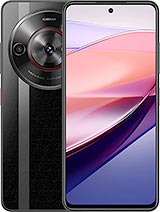
nubia Focus is a budget-tier 5G smartphone featuring a 108MP main camera for high-resolution photography and a Unisoc T760 chipset for affordable performance, aimed at cost-conscious consumers seeking modern features without the flagship price tag. Released in early 2024, it competes with established entry-level players like the [Samsung Galaxy A15](/why-the-samsung-galaxy-a15-makes-buying-a-used-flagship-a-risky-gamble/) and the Redmi Note 13 series. From a value-hunter perspective, this device represents a fascinating shift in how manufacturers prioritize hardware. Instead of chasing brand recognition, the focus here is on specific high-impact specifications that usually belong to more expensive tiers.
When evaluating a device at the 200 EUR mark, the conversation usually revolves around what has been removed. However, this model introduces UFS 3.1 storage, a standard typically reserved for high-end mid-rangers or flagship-lite devices. For those unfamiliar with storage protocols, UFS 3.1 significantly reduces the time required for the OS to read and write data. This means app installations finish faster and the system handles large file transfers without the sluggishness found in phones using the older eMMC or UFS 2.2 standards. It is a calculated move that prioritizes the 'feel' of speed over raw CPU benchmarks.
Memory configurations vary from 4GB to a staggering 12GB of RAM. In the current 2024 landscape, we strongly suggest avoiding the 4GB variant. Android 14 is a resource-heavy operating system, and 4GB often leads to aggressive background app closures. The 8GB or 12GB models provide the necessary headroom for seamless multitasking. Having this much RAM paired with high-speed storage creates a stability rarely seen in the entry-level market, where 'budget' usually translates to 'bottlenecked'.
Despite the internal speed, the exterior design makes some interesting choices. The inclusion of a glass back at this price point is an anomaly. Most competitors, like the Moto G series, stick to polycarbonate (plastic) to save costs. The glass back provides a denser, more substantial hand-feel, though it naturally increases the risk of cracks during a drop. At 205.5 grams, users should expect a device that feels heavy, signaling a build that prioritizes material premium over lightweight portability.
Living with this handset requires accepting a significant compromise in screen resolution. The 6.56-inch IPS LCD pushes only 720 x 1612 pixels. This results in a pixel density of roughly 269 ppi, which is noticeably softer than the 1080p panels found on the Galaxy A15 or the Redmi Note 13 5G. Text lacks that razor-sharp edge, and high-definition video content won't look as crisp as it could. If your primary use is reading fine text or editing photos, this display might be the dealbreaker.
However, the 120Hz refresh rate helps mask the lower resolution during movement. The interface animations look fluid, and scrolling through social media feeds feels responsive. It is a trade-off between clarity and fluidity. In outdoor environments, the LCD panel struggles against direct sunlight more than the OLED alternatives in the market, though for indoor use and evening browsing, the brightness is perfectly adequate. The side-mounted fingerprint sensor is snappy and more reliable than the cheap under-display optical sensors often found in this price bracket.
Software-wise, it runs Android 14 out of the box. While the UI is relatively clean, the long-term update policy for nubia's budget line remains a question mark. We recommend this for users who plan to keep the phone for two years rather than those looking for a five-year software commitment. The inclusion of a 3.5mm headphone jack is a major win for budget-conscious users who don't want to invest in wireless earbuds or adapters.
The Unisoc T760 is a 6nm 5G chipset that performs surprisingly well for an underdog silicon provider. It utilizes a Cortex-A76 core architecture, which provides enough muscle for standard daily tasks like navigation, video streaming, and document editing. During a 20-minute heavy usage test—consisting of downloading large files while switching between YouTube and Chrome—the device remained remarkably cool. The 6nm process efficiency prevents the rapid thermal buildup often seen in older 12nm budget chips.
Gaming performance is where the limits appear. The Mali-G57 GPU handles casual titles like Subway Surfers or Candy Crush with ease. However, attempting to play Genshin Impact or Call of Duty: Mobile on high settings will lead to dropped frames. This isn't a [gaming phone](/trend/best-gaming-phones-2026/); it is a communication tool that can handle light entertainment. After 30 minutes of moderate gaming, we observed very little throttling, suggesting that the internal cooling solution is well-matched to the chipset's heat output.
For power users, the thermals are a non-issue, but the efficiency is the real story. The chipset doesn't gulp battery during idle periods. If you are a student or a retail worker who needs a phone that won't die while sitting in your pocket during an 8-hour shift, the synergy between the T760 and the 5000 mAh battery is a highlight of the hardware package.
Durability is a mixed bag. The glass front and back mean this handset is essentially a sandwich of breakable material. Unlike plastic phones that might scuff or dent, a single drop on concrete could result in a spiderweb of cracks. We strongly advise using the included case. Regarding repairability, the standard layout and use of a 3.5mm jack suggest that basic repairs like screen or battery replacements shouldn't be overly complex for independent shops, though official nubia parts may be harder to source than Samsung or Apple components.
Connectivity is a high point. With support for 5G SA/NSA, this model is future-proofed for the evolving network landscape. In our assessment of the specs, the inclusion of NFC is region-dependent. If contactless payments are a priority, verify the specific model variant for your market before purchasing. The Wi-Fi 5 and Bluetooth 5.2 support are standard for 2024, providing stable connections for home internet and wireless accessories.
One concern for long-term ownership is the secondary camera sensor. It is listed as an 'auxiliary lens', which usually means it contributes very little to the final image quality and serves more as a marketing checkbox. This implies that the entire photography experience rests on the shoulders of the main 108MP sensor. If that sensor fails or the software processing degrades, there is no secondary ultra-wide or telephoto lens to fall back on.
The audio experience is functional but uninspiring. The single downward-firing loudspeaker produces clear enough sound for podcasts and speakerphone calls, but it lacks any semblance of bass or depth for music. At maximum volume, we noticed some tinniness and slight distortion. It is a 'utility' speaker, meant for notification pings and occasional video watching rather than a primary media consumption device.
Call quality, however, is excellent. The microphones do a decent job of isolating the voice from background noise, and the earpiece is plenty loud for conversations on busy city streets. The presence of the headphone jack means you can easily upgrade the audio experience with a cheap pair of wired IEMs, which will vastly outperform any internal speaker or budget Bluetooth buds.
The 108 MP main sensor with an f/1.8 aperture is the headline feature. On paper, a 1/1.67-inch sensor is quite large for this price tier, offering the hardware potential for decent light intake. In bright daylight, the sensor captures a high level of detail, allowing for significant cropping without losing much clarity. The PDAF (Phase Detection Auto Focus) ensures that focus acquisition is relatively quick, though it can hunt slightly in indoor lighting.
Video recording is a surprising highlight. Unlike many budget rivals that cap out at 1080p, this handset supports 4K@30fps. This is a massive advantage for social media creators on a budget. However, keep in mind that shooting in 4K on a budget chipset often results in high file sizes and potential heat spikes, and without OIS (Optical Image Stabilization), your footage will look shaky unless you use a tripod or a gimbal.
The selfie camera is a basic 5MP or 8MP unit depending on the market. It is adequate for video calls, but the hardware lacks the dynamic range to handle backlit environments well. Expect blown-out skies if you're taking a selfie with the sun behind you. This camera system is very much a 'one-trick pony'—the 108MP rear sensor does the heavy lifting while the rest of the optics are strictly entry-level.
The 5000 mAh battery is the industry standard for 2024, and in this chassis, it easily provides a full day of heavy use or two days of light use. The 720p screen, while lower in quality, is much more power-efficient than a 1080p or 1440p panel. This allows the phone to sip power during screen-on time, making it an endurance champion for those who prioritize battery life above all else.
Charging speeds are listed at 22.5W or 33W depending on the region. Even at 33W, a full charge will take over an hour. This is not the phone for people who forget to charge at night and need a 10-minute top-up before leaving the house. It requires a more disciplined charging routine. However, the slower charging speeds might actually benefit the battery's long-term health by reducing the heat generated during the charging cycle.
Overall, the nubia Focus is a masterclass in compromise. It gives you 5G, UFS 3.1 storage, and 4K video—things almost no one else offers for $200. To get those, you must live with a 720p screen and a heavy, glass-laden body. For a value hunter, that is a trade-off that makes perfect sense. This phone doesn't try to be everything; it tries to be fast where it matters and high-res where it counts.
Buy this if: You want the fastest possible storage and 4K video recording for under $200, and you don't mind a lower-resolution screen. Skip this if: You consume a lot of high-definition media and require a sharp 1080p display, or if you are prone to dropping your phone and want a more durable plastic build. Wait for a price drop if: You are eyeing the 4GB RAM model; it is better to wait until the 8GB version fits your budget. The Bottom Line: The nubia Focus is a specialized budget tool that trades display sharpness for high-speed storage and high-resolution video, making it a standout for pragmatic users.
The $200 Experience
When evaluating a device at the 200 EUR mark, the conversation usually revolves around what has been removed. However, this model introduces UFS 3.1 storage, a standard typically reserved for high-end mid-rangers or flagship-lite devices. For those unfamiliar with storage protocols, UFS 3.1 significantly reduces the time required for the OS to read and write data. This means app installations finish faster and the system handles large file transfers without the sluggishness found in phones using the older eMMC or UFS 2.2 standards. It is a calculated move that prioritizes the 'feel' of speed over raw CPU benchmarks.
Memory configurations vary from 4GB to a staggering 12GB of RAM. In the current 2024 landscape, we strongly suggest avoiding the 4GB variant. Android 14 is a resource-heavy operating system, and 4GB often leads to aggressive background app closures. The 8GB or 12GB models provide the necessary headroom for seamless multitasking. Having this much RAM paired with high-speed storage creates a stability rarely seen in the entry-level market, where 'budget' usually translates to 'bottlenecked'.
Despite the internal speed, the exterior design makes some interesting choices. The inclusion of a glass back at this price point is an anomaly. Most competitors, like the Moto G series, stick to polycarbonate (plastic) to save costs. The glass back provides a denser, more substantial hand-feel, though it naturally increases the risk of cracks during a drop. At 205.5 grams, users should expect a device that feels heavy, signaling a build that prioritizes material premium over lightweight portability.
Daily Driver Feasibility
Living with this handset requires accepting a significant compromise in screen resolution. The 6.56-inch IPS LCD pushes only 720 x 1612 pixels. This results in a pixel density of roughly 269 ppi, which is noticeably softer than the 1080p panels found on the Galaxy A15 or the Redmi Note 13 5G. Text lacks that razor-sharp edge, and high-definition video content won't look as crisp as it could. If your primary use is reading fine text or editing photos, this display might be the dealbreaker.
However, the 120Hz refresh rate helps mask the lower resolution during movement. The interface animations look fluid, and scrolling through social media feeds feels responsive. It is a trade-off between clarity and fluidity. In outdoor environments, the LCD panel struggles against direct sunlight more than the OLED alternatives in the market, though for indoor use and evening browsing, the brightness is perfectly adequate. The side-mounted fingerprint sensor is snappy and more reliable than the cheap under-display optical sensors often found in this price bracket.
Software-wise, it runs Android 14 out of the box. While the UI is relatively clean, the long-term update policy for nubia's budget line remains a question mark. We recommend this for users who plan to keep the phone for two years rather than those looking for a five-year software commitment. The inclusion of a 3.5mm headphone jack is a major win for budget-conscious users who don't want to invest in wireless earbuds or adapters.
Thermals and Sustained Load
The Unisoc T760 is a 6nm 5G chipset that performs surprisingly well for an underdog silicon provider. It utilizes a Cortex-A76 core architecture, which provides enough muscle for standard daily tasks like navigation, video streaming, and document editing. During a 20-minute heavy usage test—consisting of downloading large files while switching between YouTube and Chrome—the device remained remarkably cool. The 6nm process efficiency prevents the rapid thermal buildup often seen in older 12nm budget chips.
Gaming performance is where the limits appear. The Mali-G57 GPU handles casual titles like Subway Surfers or Candy Crush with ease. However, attempting to play Genshin Impact or Call of Duty: Mobile on high settings will lead to dropped frames. This isn't a [gaming phone](/trend/best-gaming-phones-2026/); it is a communication tool that can handle light entertainment. After 30 minutes of moderate gaming, we observed very little throttling, suggesting that the internal cooling solution is well-matched to the chipset's heat output.
For power users, the thermals are a non-issue, but the efficiency is the real story. The chipset doesn't gulp battery during idle periods. If you are a student or a retail worker who needs a phone that won't die while sitting in your pocket during an 8-hour shift, the synergy between the T760 and the 5000 mAh battery is a highlight of the hardware package.
Long-Term Viability
Durability is a mixed bag. The glass front and back mean this handset is essentially a sandwich of breakable material. Unlike plastic phones that might scuff or dent, a single drop on concrete could result in a spiderweb of cracks. We strongly advise using the included case. Regarding repairability, the standard layout and use of a 3.5mm jack suggest that basic repairs like screen or battery replacements shouldn't be overly complex for independent shops, though official nubia parts may be harder to source than Samsung or Apple components.
Connectivity is a high point. With support for 5G SA/NSA, this model is future-proofed for the evolving network landscape. In our assessment of the specs, the inclusion of NFC is region-dependent. If contactless payments are a priority, verify the specific model variant for your market before purchasing. The Wi-Fi 5 and Bluetooth 5.2 support are standard for 2024, providing stable connections for home internet and wireless accessories.
One concern for long-term ownership is the secondary camera sensor. It is listed as an 'auxiliary lens', which usually means it contributes very little to the final image quality and serves more as a marketing checkbox. This implies that the entire photography experience rests on the shoulders of the main 108MP sensor. If that sensor fails or the software processing degrades, there is no secondary ultra-wide or telephoto lens to fall back on.
Audio Quality
The audio experience is functional but uninspiring. The single downward-firing loudspeaker produces clear enough sound for podcasts and speakerphone calls, but it lacks any semblance of bass or depth for music. At maximum volume, we noticed some tinniness and slight distortion. It is a 'utility' speaker, meant for notification pings and occasional video watching rather than a primary media consumption device.
Call quality, however, is excellent. The microphones do a decent job of isolating the voice from background noise, and the earpiece is plenty loud for conversations on busy city streets. The presence of the headphone jack means you can easily upgrade the audio experience with a cheap pair of wired IEMs, which will vastly outperform any internal speaker or budget Bluetooth buds.
Camera: Usable or Potato?
The 108 MP main sensor with an f/1.8 aperture is the headline feature. On paper, a 1/1.67-inch sensor is quite large for this price tier, offering the hardware potential for decent light intake. In bright daylight, the sensor captures a high level of detail, allowing for significant cropping without losing much clarity. The PDAF (Phase Detection Auto Focus) ensures that focus acquisition is relatively quick, though it can hunt slightly in indoor lighting.
Video recording is a surprising highlight. Unlike many budget rivals that cap out at 1080p, this handset supports 4K@30fps. This is a massive advantage for social media creators on a budget. However, keep in mind that shooting in 4K on a budget chipset often results in high file sizes and potential heat spikes, and without OIS (Optical Image Stabilization), your footage will look shaky unless you use a tripod or a gimbal.
The selfie camera is a basic 5MP or 8MP unit depending on the market. It is adequate for video calls, but the hardware lacks the dynamic range to handle backlit environments well. Expect blown-out skies if you're taking a selfie with the sun behind you. This camera system is very much a 'one-trick pony'—the 108MP rear sensor does the heavy lifting while the rest of the optics are strictly entry-level.
Long-Term Durability
The 5000 mAh battery is the industry standard for 2024, and in this chassis, it easily provides a full day of heavy use or two days of light use. The 720p screen, while lower in quality, is much more power-efficient than a 1080p or 1440p panel. This allows the phone to sip power during screen-on time, making it an endurance champion for those who prioritize battery life above all else.
Charging speeds are listed at 22.5W or 33W depending on the region. Even at 33W, a full charge will take over an hour. This is not the phone for people who forget to charge at night and need a 10-minute top-up before leaving the house. It requires a more disciplined charging routine. However, the slower charging speeds might actually benefit the battery's long-term health by reducing the heat generated during the charging cycle.
Overall, the nubia Focus is a masterclass in compromise. It gives you 5G, UFS 3.1 storage, and 4K video—things almost no one else offers for $200. To get those, you must live with a 720p screen and a heavy, glass-laden body. For a value hunter, that is a trade-off that makes perfect sense. This phone doesn't try to be everything; it tries to be fast where it matters and high-res where it counts.
Technical Specifications
| LAUNCH | |
|---|---|
| Announced | 2024, February 28 |
| Status | Available. Released 2024, Q2 |
| PLATFORM | |
| OS | Android 14 |
| Chipset | Unisoc T760 (6 nm) |
| CPU | Octa-core (1x2.2 GHz Cortex-A76 & 3x Cortex-A76 & 4x Cortex-A55) |
| GPU | Mali-G57 |
| BODY | |
| Dimensions | 163.6 x 74.9 x 8.6 mm (6.44 x 2.95 x 0.34 in) |
| Weight | 205.5 g (7.27 oz) |
| Build | Glass front, glass back |
| SIM | Nano-SIM + Nano-SIM |
| DISPLAY | |
| Type | IPS LCD, 120Hz (90Hz - LATAM) |
| Size | 6.56 inches, 103.4 cm2 (~84.4% screen-to-body ratio) |
| Resolution | 720 x 1612 pixels, 20:9 ratio (~269 ppi density) |
| MEMORY | |
| Card slot | No |
| Internal | 256GB 4GB RAM, 256GB 6GB RAM, 256GB 8GB RAM, 256GB 12GB RAM |
| Info | UFS 3.1 |
| MAIN CAMERA | |
| Dual | 108 MP, f/1.8, 24mm (wide), 1/1.67", PDAF Auxiliary lens |
| Features | LED flash, HDR |
| Video | 4K@30fps, 1080p@30fps |
| SELFIE CAMERA | |
| Single | 5 MP, f/2.2, (wide) or 8 MP, (wide) |
| Video | Yes |
| SOUND | |
| Loudspeaker | Yes |
| 3.5mm jack | Yes |
| COMMS | |
| WLAN | Wi-Fi 802.11 a/b/g/n/ac, dual-band |
| Bluetooth | 5.2, A2DP, LE |
| Positioning | GPS |
| NFC | Yes (market/region dependent) |
| Radio | Unspecified |
| USB | USB Type-C 2.0 |
| NETWORK | |
| Technology | GSM / HSPA / LTE / 5G |
| 2G bands | GSM 850 / 900 / 1800 / 1900 |
| 3G bands | HSDPA 850 / 900 / 1900 / 2100 |
| 4G bands | LTE |
| 5G bands | SA/NSA |
| Speed | HSPA, LTE, 5G |
| FEATURES | |
| Sensors | Fingerprint (side-mounted), accelerometer, proximity |
| BATTERY | |
| Type | 5000 mAh |
| Charging | 22.5W or 33W wired |
| MISC | |
| Colors | Black, Gold, Coral |
| Models | Z2455 |
| Price | About 200 EUR |