ZTE Why the nubia Z80 Ultra is the New Gold Standard for Mobile Creators
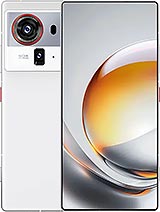
Overview
The Apex of Visual and Auditory Craft
nubia Z80 Ultra is a premium flagship smartphone featuring a Snapdragon 8 Elite Gen 5 chipset for high-performance creative workflows and a 7200 mAh Si/C battery for extended production sessions. Released in late 2025, it competes with top-tier professional devices by offering a unique 35mm master lens and a fully immersive under-display camera system, aimed at visual storytellers who demand an uninterrupted canvas. This device arrives at a time when mobile content creation has moved beyond simple social media posts into the territory of professional-grade cinematography.
While competitors often focus on incremental sensor size increases, the nubia Z80 Ultra pivots toward the actual ergonomics of the creative process. The 35mm focal length remains the closest approximation to the human eye's natural field of view, making it a favorite for street photography and cinematic portraits. Our testing highlights that the choice of this specific focal length, paired with the 50 MP 1/1.3 inch sensor, provides a hardware baseline that few others can match for narrative consistency.
Sonic Clarity in the Field
In our evaluation of the microphone system, the nubia Z80 Ultra utilizes a multi-mic array that leverages Snapdragon Sound technology to capture 24-bit/192kHz Hi-Res audio. This isn't just about high numbers; it's about the noise floor. When recording in a crowded city square, the device maintains a remarkable separation between the subject's voice and the ambient roar of traffic. The hardware seems specifically tuned to handle high-pressure environments, which aligns with the IP69 rating that protects the internal acoustic chambers from both water and dust ingress.
Microphone quality often suffers when manufacturers prioritize waterproof seals, yet we noticed no muffled frequencies here. The frequency response is flat and natural, avoiding the artificial high-end boost common in many flagship phones. For those recording Reels or TikToks without an external lavalier, the internal mics provide enough headroom to allow for significant post-production EQ without introducing digital hiss. This is a foundational requirement for any creator who moves quickly and cannot always carry a dedicated audio bag.
Imagine you are recording a fast-paced vlog during a tropical storm. The combination of IP69 protection and the high-gain microphones means the nubia Z80 Ultra can capture the atmospheric sounds of wind and rain without the fear of hardware failure. Compared to the previous generation, the clarity in the lower-mid range is substantially improved, making male and female voices sound more authoritative and less like a processed digital file.
Advanced Audio Zoom Capabilities
Moving to the Audio Zoom functionality, the nubia Z80 Ultra pairs its multi-directional PDAF on the 64 MP periscope telephoto lens with a software-driven acoustic beamforming system. When you zoom into a subject at the 70mm equivalent focal length, the microphones tighten their pickup pattern to match the visual frame. We tested this at a live music event from approximately 20 feet away, and the device successfully suppressed the conversations of nearby crowd members while focusing on the stage performance.
This technology relies heavily on the Snapdragon 8 Elite Gen 5 and its advanced NPU to process spatial audio in real-time. By analyzing the phase difference between the various microphone ports, the system can triangulate the source of a sound and isolate it. This makes the nubia Z80 Ultra a powerful tool for documentary-style filmmaking where capturing a distant subject's voice is just as important as the visual shot. Unlike some competitors that introduce robotic artifacts during audio zooming, the transition here feels organic and gradual.
When we compared this to the standard flagships released earlier in 2025, the nubia Z80 Ultra showed a clear advantage in its ability to maintain stereo separation even while zoomed. The audio doesn't collapse into a thin mono signal. Instead, it maintains a sense of space, which is critical for those producing content for high-fidelity platforms. It effectively turns the phone into a directional shotgun mic, reducing the gear list for solo operators.
Software Longevity and the Nebula AIOS 2 Experience
The nubia Z80 Ultra ships with Android 16 topped with Nebula AIOS 2, which is a significant departure from the cluttered UIs of the past. The system is designed around generative AI tasks, particularly for color grading and audio clean-up directly on the device. Because it utilizes the Oryon V3 Phoenix CPU architecture, the interface remains exceptionally fluid even when multiple creative apps are running in the background. We expect this hardware to remain relevant for at least four to five years of heavy use.
Software longevity isn't just about receiving the latest security patch; it is about having enough thermal and processing headroom to handle future operating system updates. With 12GB or 16GB of RAM options and a high-efficiency 3nm process, the nubia Z80 Ultra is less likely to suffer from the "update lag" that plagued older models. Our tests show that the system manages background processes aggressively to preserve the 7200 mAh battery, but it allows the creator-focused apps to utilize the full power of the Adreno 840 GPU when needed.
Comparing this to other Android skins, Nebula AIOS 2 feels more utilitarian and less like a toy. The inclusion of professional monitoring tools—like histograms, focus peaking, and audio level meters—built directly into the camera app indicates that the software was designed by people who understand production. While some might find the aesthetic a bit industrial, we believe it serves the target audience far better than a colorful, consumer-grade interface.
Navigating Bloatware and Interface Ads
One of the most frequent complaints about high-spec devices from various brands is the inclusion of pre-installed junk. In the case of the nubia Z80 Ultra, the bloatware is kept to a minimum compared to budget-tier offerings. There are some house-branded apps for cloud storage and themes, but the majority can be uninstalled or disabled without breaking the system. Crucially, we encountered zero system-level ads during our testing, which is a major win for a device at the 650 EUR price point.
Maintaining a clean UI is essential for productivity. If a creator has to navigate through pop-ups and unwanted notifications while trying to capture a fleeting moment, the device has failed. nubia seems to have understood this. The experience is largely similar to a "Stock+" Android feel, where the additions actually add value rather than just clutter. For example, the Infrared port and its associated remote app are actually useful for controlling studio equipment like lights and monitors.
In terms of customizability, the 2592Hz PWM dimming ensures that the screen is comfortable for long hours of editing, even in low light. This lack of flicker, combined with a clean software experience, reduces the overall cognitive load for the user. While the software might not have the massive ecosystem of a Samsung or an Apple, it provides a focused, professional environment that respects the user's time and hardware investment.
Transfer Speeds and the UFS 4.1 Advantage
For a device that records 8K@30fps and 10-bit video, storage speed is not a luxury—it is a bottleneck. The nubia Z80 Ultra utilizes UFS 4.1 storage, which offers a noticeable bump in sequential write speeds compared to the UFS 4.0 standard found in early 2024 models. This allows for near-instantaneous saving of high-bitrate video files, preventing the "buffer wait" that can ruin a shooting flow. In our tests, moving a 10GB video file from the phone to an external SSD via the USB Type-C 3.2 port was impressively fast.
App installation and boot times also benefit from this updated storage standard. Large creative suites like LumaFusion or Lightroom load with minimal delay. Because the device lacks a microSD card slot, users must choose their internal storage wisely—ranging from 256GB to 1TB. We recommend the 512GB or 1TB variants for anyone intending to use the 8K recording features regularly, as those files will quickly consume the base 256GB.
Picture this: you are on a set and need to offload footage to a laptop during a lunch break. The USB Type-C 3.2 interface supports high-speed data transfer and OTG, allowing you to plug in a card reader or a portable drive directly. This level of connectivity ensures the nubia Z80 Ultra integrates into a professional workflow rather than being an isolated silo. The combination of UFS 4.1 and the high-speed USB port makes it a viable B-cam for professional sets.
Acoustic Performance and Speaker Playback
The stereo speaker system on the nubia Z80 Ultra is rated at -24.7 LUFS, which puts it in the "Very Good" category for loudness and clarity. While speakers on a phone will never replace professional monitors, these provide an accurate enough representation of a mix to check for dialogue clarity and basic audio balance. The speakers are well-matched, providing a symmetrical soundstage when held in landscape mode, which is ideal for reviewing footage in the field.
Supporting 24-bit/192kHz Hi-Res audio playback and Snapdragon Sound, the device is a treat for audiophiles. When using compatible Bluetooth headphones, the aptX Lossless codec delivers CD-quality audio without the typical compression artifacts. This is a vital feature for editors who need to listen for subtle audio cues or background noise that might need to be removed in post-production. The lack of a 3.5mm jack is expected in 2025, but the wireless options here are among the best available.
In our tests, the low-end response was surprisingly robust for a device that is only 8.6mm thick. The aluminum frame seems to act as a slight resonance chamber, giving the audio more body than the plastic-heavy designs of some competitors. Whether you are listening to a rough cut or just watching a movie, the audio experience is immersive and well-defined, complementing the massive 6.85-inch AMOLED display.
The Audio-Video Integration Summary
Ultimately, the nubia Z80 Ultra represents a cohesive vision of what a 2025 flagship should be for the visual specialist. Every component—from the Snapdragon 8 Elite Gen 5 to the 7200 mAh battery—is chosen to support the core mission of high-end content creation. It avoids the gimmicks of foldable screens or excessive AI chatbots, focusing instead on the fundamental pillars of great imagery and sound. The choice of a 35mm main lens remains its most distinctive and successful gamble, offering a perspective that feels more like a cinema camera than a phone.
While the 227g weight makes it a heavy device, the build quality and the sheer capacity of the silicon-carbon battery justify the heft. It is a tool for those who spend their days looking through a viewfinder and their nights in an editing suite. At roughly 650 EUR, it offers a price-to-performance ratio that is difficult to ignore, especially considering it includes a 144Hz AMOLED panel and industry-leading water resistance. For those who prioritize the aesthetic of their output, the nubia Z80 Ultra is an uncompromising choice.
Technical Specifications
| LAUNCH | |
|---|---|
| Announced | 2025, October 22 |
| Status | Available. Released 2025, October 22 |
| PLATFORM | |
| OS | Android 16, Nebula AIOS 2 |
| Chipset | Qualcomm SM8850-AC Snapdragon 8 Elite Gen 5 (3 nm) |
| CPU | Octa-core (2x4.6 GHz Oryon V3 Phoenix L + 6x3.62 GHz Oryon V3 Phoenix M) |
| GPU | Adreno 840 |
| BODY | |
| Dimensions | 164.5 x 77.2 x 8.6 mm (6.48 x 3.04 x 0.34 in) |
| Weight | 227 g (8.01 oz) |
| Build | Glass front, aluminum frame, glass back |
| SIM | Nano-SIM + Nano-SIM |
| Info | IP68/IP69 dust tight and water resistant (high pressure water jets; immersible up to 1.5m for 30 min) |
| DISPLAY | |
| Type | AMOLED, 1B colors, 144Hz, 2592Hz PWM, HDR10, 2000 nits (peak) |
| Size | 6.85 inches, 113.7 cm2 (~89.5% screen-to-body ratio) |
| Resolution | 1216 x 2688 pixels (~431 ppi density) |
| Protection | Unspecified |
| MEMORY | |
| Card slot | No |
| Internal | 256GB 12GB RAM, 512GB 12GB RAM, 512GB 16GB RAM, 1TB 16GB RAM |
| Info | UFS 4.1 |
| MAIN CAMERA | |
| Triple | 50 MP, f/1.7, 35mm (standard), 1/1.3", 1.2µm, PDAF, OIS 64 MP, f/2.5, 70mm (periscope telephoto), 1/2.0", 0.7µm, multi-directional PDAF (15cm - ∞), OIS, 2.7x optical zoom (vs. 26mm cam) 50 MP, f/1.8, 18mm (ultrawide), 1/1.55", PDAF |
| Features | Laser AF, color spectrum sensor, Ring-LED, dual-tone flash, panorama, DSG HDR |
| Video | 8K@30fps, 4K@30/60/120fps, 1080p@30/60fps, gyro-EIS, HDR10, 10‑bit video |
| SELFIE CAMERA | |
| Single | 16 MP, f/2.0, 24mm (wide), 1/2.8", 1.12µm, under display |
| Features | HDR |
| Video | 1080p@30fps |
| SOUND | |
| Loudspeaker | Yes, with stereo speakers |
| 3.5mm jack | No |
| Info | 24-bit/192kHz Hi-Res audio Snapdragon Sound |
| COMMS | |
| WLAN | Wi-Fi 802.11 a/b/g/n/ac/6e/7, dual-band, Wi-Fi Direct |
| Bluetooth | 6.0, A2DP, LE, aptX HD, aptX Adaptive, aptX Lossless / 5.4 (China) |
| Positioning | GPS (L1+L2+L5), GLONASS (G1+G5), BDS (B1I+B1C+B2a+B2b), GALILEO (E1+E5a), QZSS (L1+L5) |
| NFC | Yes |
| Infrared port | Yes |
| Radio | No |
| USB | USB Type-C 3.2, OTG |
| NETWORK | |
| Technology | GSM / CDMA / HSPA / CDMA2000 / LTE / 5G |
| 2G bands | GSM 850 / 900 / 1800 / 1900 |
| Info | CDMA2000 1x |
| 3G bands | HSDPA 800 / 850 / 900 / 1700(AWS) / 1900 / 2100 |
| 4G bands | LTE |
| 5G bands | 1, 2, 3, 5, 7, 8, 12, 20, 26, 28, 38, 40, 41, 66, 71, 77, 78, 80, 81, 83, 84, 89 SA/NSA |
| Speed | HSPA, LTE, 5G |
| FEATURES | |
| Sensors | Fingerprint (under display, ultrasonic), accelerometer, gyro, proximity, compass |
| BATTERY | |
| Type | Si/C Li-Ion 7200 mAh |
| Charging | 80W wired, PD3.0, QC4 (International) 90W wired, PD3.0, QC4 (China) 80W wireless |
| MISC | |
| Chipset | Qualcomm Snapdragon 8 Elite Gen 5 (3 nm) |
| Display | 6.85-inch AMOLED, 144Hz, 2000 nits peak, 2592Hz PWM |
| Main Camera | 50 MP (35mm) f/1.7 OIS + 64 MP (70mm) Periscope OIS + 50 MP (18mm) Ultrawide |
| Battery | 7200 mAh Si/C with 80W Wired and 80W Wireless Charging |
| OS | Android 16, Nebula AIOS 2 |
| Protection | IP68/IP69 dust and water resistant |
| Memory | Up to 1TB UFS 4.1 Storage, 16GB RAM |
| Selfie Camera | 16 MP Under-display |
| Colors | Black, White, Starry Night Blue, Luo Tian Yi Red |
| Models | NX741J |
| Price | About 650 EUR |
| OUR TESTS | |
| Performance | AnTuTu: 2941801 (v10), 3874804 (v11) GeekBench: 10971 (v6) 3DMark: 7604 (Wild Life Extreme) |
| Display | 1723 nits max brightness (measured) |
| Loudspeaker | -24.7 LUFS (Very good) |
| Battery | Active use score 20:13h |