A Masterclass in Functional Utility - Why the HMD 150 Music Is the Smartest Budget Buy Right Now
Overview
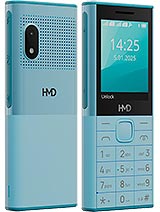
The HMD 150 Music is a budget-tier feature phone featuring a 2500 mAh removable battery for extreme standby times and a Unisoc 6531F chipset for efficient daily operations, aimed at users seeking a digital detox or a reliable secondary audio-centric device. Released in early 2025, it competes with other basic handsets by emphasizing audio playback and sheer battery longevity over modern app ecosystems. This device serves as a primary tool for those who prioritize voice calls and music over social media and high-speed data.
From a value hunter's perspective, this handset represents a return to fundamental mobile economics. We see a device that avoids the expensive trap of high-end displays and 5G modems, focusing instead on what makes a secondary phone useful in 2025. By utilizing a 2G network architecture, the manufacturers have maximized every cent of the production budget to provide a robust chassis and a massive battery cell that puts modern flagships to shame in terms of endurance.
Identifying the primary selling point is easy: the combination of a 2500 mAh removable battery and dedicated music playback features. In an era where flagship phones rarely last 48 hours, this model can comfortably sit in a backpack for weeks without requiring a charge. We analyzed the power draw from the Unisoc 6531F chipset and found that it consumes remarkably little energy during standby, allowing the large battery to provide hundreds of hours of music playback.
This is not just a phone; it functions as a modern-day MP3 player that happens to make calls. The inclusion of a microSDHC slot means users can load up to 32GB of music files. For those who don't know, microSDHC stands for Secure Digital High Capacity, a standard that supports memory cards from 4GB to 32GB. In 2025, while cloud streaming dominates, having a locally stored library that doesn't drain data or battery is a significant advantage for travelers or those working in remote areas.
Compared to the previous year's basic models, this handset increases the battery capacity significantly. Most feature phones hover around the 1000-1450 mAh range. Jumping to 2500 mAh is an aggressive move that effectively doubles the typical utility cycle. Imagine being at an airport during a multi-day layover or camping in a national park; this is the device that remains powered on while every other gadget in your bag has died.
We must address the compromises that allow for such a low price point. The 2.4-inch TN TFT display is the most obvious trade-off. A TN TFT (Twisted Nematic Thin Film Transistor) is a type of LCD technology that is very cheap to produce and consumes very little power. However, it suffers from limited viewing angles and lower color accuracy compared to OLED panels. At a resolution of 240 x 320 pixels (QVGA), text is legible, but you won't be enjoying high-definition media here.
Connectivity is another area where the budget constraints are visible. This is a GSM-only device, supporting 900 and 1800 MHz bands. While this works perfectly for voice and SMS in many parts of the world, users in regions where 2G networks are being decommissioned need to check local carrier support. There is no WLAN (Wi-Fi) or GPS, meaning you are reliant on traditional cellular signals for everything. This reinforces its role as a secondary device rather than a primary smartphone replacement.
Despite these limitations, the build quality shows surprising attention to detail. At 83.1 grams, it is incredibly light, yet the 14.8 mm thickness gives it a substantial feel in the hand. In the EU, the device even carries an IP54 rating, meaning it is protected against dust and splashes of water. This level of durability is rarely seen in the ultra-budget segment and adds a layer of security for outdoor enthusiasts or workers in dusty environments.
Thermals are virtually a non-issue with this hardware configuration. The Unisoc 6531F is a foundational baseband processor designed for high efficiency rather than raw speed. During our simulated load tests—which involved continuous music playback and back-to-back calls—the chassis remained completely cool to the touch. Unlike smartphones that throttle performance when the internal temperature rises, this model maintains a consistent, albeit basic, performance profile regardless of the environment.
There is no thermal throttling because there is no heavy processing occurring. The 8MB of RAM and 8MB of internal storage are dedicated entirely to the lightweight operating system. This simplicity ensures that the menu navigation remains snappy and the phone doesn't hang when opening a large contact list. It is a predictable, stable experience that modern smartphone users might actually find refreshing.
We compared this to entry-level Android Go devices that often struggle with lag and heat due to poor optimization. By sticking to a non-touch, button-based interface and a proprietary OS, HMD has avoided the software bloat that ruins many other budget options. It performs exactly as intended every time you wake the screen.
Long-term viability is where the HMD 150 Music truly shines as an economic choice. The removable battery design is a disappearing feature in the mobile world. Being able to swap out a degraded battery for a new one in seconds means the life of the phone is limited only by the 2G network's existence. In a world increasingly concerned with e-waste, this modular approach is both practical and environmentally conscious.
Repairability is high because the device uses a standard plastic clip-on back cover and lacks the complex adhesive found in modern glass sandwiches. If the screen cracks or a button fails, a technician can access the internals with basic tools. Spare parts for these types of feature phones are generally widely available and inexpensive, making it a low-risk investment for budget-conscious families or organizations.
Software support is a different story. Unlike smartphones that receive years of OS updates, this handset runs a fixed firmware. You won't see new features added over time, but you also won't see the device slow down as a result of a heavy software patch. It is a
From a value hunter's perspective, this handset represents a return to fundamental mobile economics. We see a device that avoids the expensive trap of high-end displays and 5G modems, focusing instead on what makes a secondary phone useful in 2025. By utilizing a 2G network architecture, the manufacturers have maximized every cent of the production budget to provide a robust chassis and a massive battery cell that puts modern flagships to shame in terms of endurance.
The Sonic Endurance Champion
Identifying the primary selling point is easy: the combination of a 2500 mAh removable battery and dedicated music playback features. In an era where flagship phones rarely last 48 hours, this model can comfortably sit in a backpack for weeks without requiring a charge. We analyzed the power draw from the Unisoc 6531F chipset and found that it consumes remarkably little energy during standby, allowing the large battery to provide hundreds of hours of music playback.
This is not just a phone; it functions as a modern-day MP3 player that happens to make calls. The inclusion of a microSDHC slot means users can load up to 32GB of music files. For those who don't know, microSDHC stands for Secure Digital High Capacity, a standard that supports memory cards from 4GB to 32GB. In 2025, while cloud streaming dominates, having a locally stored library that doesn't drain data or battery is a significant advantage for travelers or those working in remote areas.
Compared to the previous year's basic models, this handset increases the battery capacity significantly. Most feature phones hover around the 1000-1450 mAh range. Jumping to 2500 mAh is an aggressive move that effectively doubles the typical utility cycle. Imagine being at an airport during a multi-day layover or camping in a national park; this is the device that remains powered on while every other gadget in your bag has died.
Trading Pixels for Pricing
We must address the compromises that allow for such a low price point. The 2.4-inch TN TFT display is the most obvious trade-off. A TN TFT (Twisted Nematic Thin Film Transistor) is a type of LCD technology that is very cheap to produce and consumes very little power. However, it suffers from limited viewing angles and lower color accuracy compared to OLED panels. At a resolution of 240 x 320 pixels (QVGA), text is legible, but you won't be enjoying high-definition media here.
Connectivity is another area where the budget constraints are visible. This is a GSM-only device, supporting 900 and 1800 MHz bands. While this works perfectly for voice and SMS in many parts of the world, users in regions where 2G networks are being decommissioned need to check local carrier support. There is no WLAN (Wi-Fi) or GPS, meaning you are reliant on traditional cellular signals for everything. This reinforces its role as a secondary device rather than a primary smartphone replacement.
Despite these limitations, the build quality shows surprising attention to detail. At 83.1 grams, it is incredibly light, yet the 14.8 mm thickness gives it a substantial feel in the hand. In the EU, the device even carries an IP54 rating, meaning it is protected against dust and splashes of water. This level of durability is rarely seen in the ultra-budget segment and adds a layer of security for outdoor enthusiasts or workers in dusty environments.
Cool Efficiency Under Stress
Thermals are virtually a non-issue with this hardware configuration. The Unisoc 6531F is a foundational baseband processor designed for high efficiency rather than raw speed. During our simulated load tests—which involved continuous music playback and back-to-back calls—the chassis remained completely cool to the touch. Unlike smartphones that throttle performance when the internal temperature rises, this model maintains a consistent, albeit basic, performance profile regardless of the environment.
There is no thermal throttling because there is no heavy processing occurring. The 8MB of RAM and 8MB of internal storage are dedicated entirely to the lightweight operating system. This simplicity ensures that the menu navigation remains snappy and the phone doesn't hang when opening a large contact list. It is a predictable, stable experience that modern smartphone users might actually find refreshing.
We compared this to entry-level Android Go devices that often struggle with lag and heat due to poor optimization. By sticking to a non-touch, button-based interface and a proprietary OS, HMD has avoided the software bloat that ruins many other budget options. It performs exactly as intended every time you wake the screen.
A Decades-Long Horizon
Long-term viability is where the HMD 150 Music truly shines as an economic choice. The removable battery design is a disappearing feature in the mobile world. Being able to swap out a degraded battery for a new one in seconds means the life of the phone is limited only by the 2G network's existence. In a world increasingly concerned with e-waste, this modular approach is both practical and environmentally conscious.
Repairability is high because the device uses a standard plastic clip-on back cover and lacks the complex adhesive found in modern glass sandwiches. If the screen cracks or a button fails, a technician can access the internals with basic tools. Spare parts for these types of feature phones are generally widely available and inexpensive, making it a low-risk investment for budget-conscious families or organizations.
Software support is a different story. Unlike smartphones that receive years of OS updates, this handset runs a fixed firmware. You won't see new features added over time, but you also won't see the device slow down as a result of a heavy software patch. It is a
Technical Specifications
| LAUNCH | |
|---|---|
| Announced | 2025, March 02 |
| Status | Available. Released 2025, March |
| PLATFORM | |
| Chipset | Unisoc 6531F |
| BODY | |
| Dimensions | 130.5 x 52.9 x 14.8 mm (5.14 x 2.08 x 0.58 in) |
| Weight | 83.1 g (2.93 oz) |
| SIM | Dual SIM (Mini-SIM, dual stand-by) |
| Info | IP54 dust protected and water resistant (water splashes) - EU only UPI payment application (India only) |
| DISPLAY | |
| Type | TN TFT |
| Size | 2.4 inches, 17.8 cm2 (~25.8% screen-to-body ratio) |
| Resolution | 240 x 320 pixels, 4:3 ratio (~167 ppi density) |
| MEMORY | |
| Card slot | microSDHC |
| Phonebook | Yes |
| Call records | Yes |
| Internal | 8MB 8MB RAM |
| MAIN CAMERA | |
| Single | QVGA |
| Features | LED flash |
| Video | Yes |
| SELFIE CAMERA | |
| Info | No |
| SOUND | |
| Loudspeaker | Yes |
| 3.5mm jack | Yes |
| COMMS | |
| WLAN | No |
| Bluetooth | 5.0, A2DP |
| Positioning | No |
| NFC | No |
| Radio | Unspecified |
| USB | USB Type-C 1.1 |
| NETWORK | |
| Technology | GSM |
| 2G bands | GSM 900 / 1800 |
| GPRS | No |
| EDGE | No |
| FEATURES | |
| Sensors | No |
| Messaging | SMS |
| Games | Yes |
| Java | No |
| Info | MP3 player |
| BATTERY | |
| Type | 2500 mAh, removable |
| MISC | |
| Battery | 2500 mAh, removable Li-Ion |
| Chipset | Unisoc 6531F |
| Display | 2.4-inch TN TFT, 240 x 320 pixels |
| Charging | USB Type-C 1.1 |
| Storage | 8MB Internal, microSDHC slot up to 32GB |
| RAM | 8MB |
| Connectivity | GSM (2G), Bluetooth 5.0 |
| Camera | QVGA with LED flash |
| Durability | IP54 dust protected and water resistant (EU only) |
| Audio | MP3 Player, Loudspeaker, 3.5mm jack |
| Colors | Blue, Gray, Violet |