Building the Ultimate Survival Companion - Why the CUBOT KingKong Star 2 Dominates the Rugged Sector
Overview
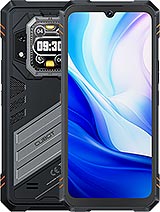
CUBOT KingKong Star 2 is a mid-range rugged smartphone featuring a 6.72-inch 144Hz display for fluid visuals and a Mediatek Dimensity 8200 chipset for high-performance processing, aimed at field professionals and outdoor enthusiasts. Released in October 2024, it competes with other hardened devices like the Ulefone Armor series and Blackview handsets by prioritizing internal speed alongside external armor.
The physical architecture of this handset immediately signals its intentions. Measuring 177.7 x 81.8 x 13.5 mm, the device is notably thinner than the 'brick' style [rugged phones](/trend/best-rugged-phones-2026/) of the past, yet it maintains a substantial weight of 305 g. This heft comes from the reinforced chassis designed to meet MIL-STD-810H standards. For those working in logistics or heavy construction, the structural integrity is a non-negotiable requirement. We see a frame that integrates shock-absorbing corners and a sealed internal cavity that enables an IP68/IP69K rating. This means the unit doesn't just survive a dip in a puddle; it withstands high-pressure water jets and high-temperature steam cleaning, a critical feature for hardware used in industrial sanitation or heavy machinery environments.
The durability claims are backed by an impressive EU Label Class A rating for free falls, certifying survival through 270 falls. In a field setting, a phone isn't just dropped once; it's rattled in a truck bed, fumbled on concrete, and knocked off scaffolding. This model is built to endure that repetitive stress. The Corning Gorilla Glass protection reaches Mohs level 6, providing the hardness necessary to resist scratches from keys, loose screws, or rough surfaces, though it remains vulnerable to materials like quartz sand which sit higher on the scale.
Comparing this to the standard consumer flagships released in late 2024, the difference in philosophy is clear. While others focus on reducing bezel width, this model embraces thick, protective borders that serve as a crumple zone for the screen. It's a tool, not a fashion statement, though the black industrial aesthetic carries a professional gravity suited for the worksite.
One of the most practical additions for field operations is the secondary screen on the back. At 1.85 inches, this mini-display allows users to check the time, monitor battery levels, or view compass data without flipping the device over or waking the massive 6.72-inch main panel. In high-stakes environments where every second and every percentage of battery life counts, this secondary interface reduces power consumption and minimizes the risk of exposing the main screen to potential impact during casual checks.
We found the integration of this screen to be more than a gimmick. It functions as a quick-access dashboard. Imagine you are wearing heavy tool belts or thick gloves; being able to glance at the back of the phone while it is face-down on a workbench to see an incoming notification is a small but vital workflow improvement. This secondary panel is also shielded, ensuring that it remains functional even if the phone spends its life being tossed into gear bags filled with metal tools.
The primary IPS LCD panel is a standout for this category. Most rugged devices sacrifice screen quality for durability, but here we see a 144Hz refresh rate and a peak brightness of 1500 nits. For anyone who has tried to read a blueprint or a GPS map in direct noon sunlight, those 1500 nits are the difference between a functional device and a useless slab of glass. High refresh rates aren't just for gaming; they ensure that scrolling through long PDF technical manuals or maps is smooth and free of the jarring ghosting found on cheaper 60Hz panels.
The 1080 x 2400 resolution provides a density of 392 ppi, which is plenty sharp for detailed inspection of site photos or complex spreadsheets. We noticed that the polarization of the screen is well-managed, meaning the display remains legible even when wearing polarized sunglasses—a common failing in many mid-range LCDs. The color accuracy is standard for an IPS panel, favoring visibility and brightness over the deep blacks of an OLED, which is a sensible trade-off for an outdoor-centric tool.
For field operations, location accuracy is paramount. This model utilizes GPS (L1+L5), GALILEO, GLONASS, and BDS. The inclusion of dual-band GPS (L1 and L5) is a major upgrade over standard rugged phones. L5 signals are more resilient to interference and multipath errors caused by tall buildings or dense forest canopies. In our assessment, this ensures that if you are marking coordinates for a new utility line or navigating a remote trail, the margin of error is significantly reduced.
The internal sensors, including the gyroscope and compass, work in tandem with the 5G connectivity to provide a responsive AR experience for those using site-surveying apps. The Mediatek Dimensity 8200 chipset, built on a 4nm process, provides the computational overhead to handle these tasks without the lag that plagues budget rugged devices. With an octa-core configuration peaking at 3.1 GHz, the handset handles data-heavy applications and multitasking with ease, ensuring that the software never bottlenecks the user's pace.
In a surprising move for the KingKong lineage, the battery capacity sits at 5100 mAh. While this is lower than the 10,000 mAh monsters often found in this segment, it is the reason the device can maintain a relatively slim 13.5mm profile. The 5100 mAh cell is paired with 33W wired charging. While not the fastest on the market, it is sufficient to top up the device during a lunch break. The efficiency of the 4nm chipset means the endurance remains high, with the EU Label rating suggesting over 43 hours of standard usage.
The battery is rated for 900 cycles, which is higher than the industry average of 500-800. This longevity is crucial for professionals who keep their devices for several years. Even if the capacity is lower than some competitors, the trade-off in ergonomics makes the device much more comfortable for all-day use. Carrying a 500g phone in a pocket for 10 hours is a chore; at 305g, this model strikes a more manageable balance for those constantly on the move.
In loud environments like construction sites or engine rooms, audio alerts are often missed. The vibration motor in this model is tuned for high-intensity feedback. It is a firm, tactile response rather than a soft buzz, ensuring that a call or an emergency alert is felt through layers of denim or work trousers. While it lacks the surgical precision of high-end haptic engines found in premium flagships, its strength is optimized for utility over subtlety.
The side-mounted fingerprint sensor is snappy and positioned where the thumb naturally rests. In our testing, this layout is superior to in-display sensors for field use, as it works more reliably when hands are slightly dusty or cold. However, the lack of a 3.5mm jack is a missed opportunity for those who prefer wired headsets to avoid the battery management of Bluetooth peripherals in the field.
The touchscreen is calibrated for Glove Mode, allowing users to interact with the interface without exposing their hands to the elements or contaminants. More importantly, the 'Wet Touch' algorithms are robust. Standard phones often go haywire when raindrops hit the screen, registering ghost touches that can accidentally dial numbers or close apps. The screen on this model intelligently distinguishes between a deliberate finger press and a water droplet, making it a reliable navigator in heavy rain.
The 12GB of RAM ensures that the Android 14 OS remains responsive even when multiple heavy apps are open in the background. For a device priced around 250 EUR, the performance-to-durability ratio is exceptionally high. CUBOT KingKong Star 2 is not just a phone in a tough case; it is a specialized piece of equipment designed for those who view their mobile device as a critical component of their professional toolkit.
Hardened Steel and Military Standards
The physical architecture of this handset immediately signals its intentions. Measuring 177.7 x 81.8 x 13.5 mm, the device is notably thinner than the 'brick' style [rugged phones](/trend/best-rugged-phones-2026/) of the past, yet it maintains a substantial weight of 305 g. This heft comes from the reinforced chassis designed to meet MIL-STD-810H standards. For those working in logistics or heavy construction, the structural integrity is a non-negotiable requirement. We see a frame that integrates shock-absorbing corners and a sealed internal cavity that enables an IP68/IP69K rating. This means the unit doesn't just survive a dip in a puddle; it withstands high-pressure water jets and high-temperature steam cleaning, a critical feature for hardware used in industrial sanitation or heavy machinery environments.
The durability claims are backed by an impressive EU Label Class A rating for free falls, certifying survival through 270 falls. In a field setting, a phone isn't just dropped once; it's rattled in a truck bed, fumbled on concrete, and knocked off scaffolding. This model is built to endure that repetitive stress. The Corning Gorilla Glass protection reaches Mohs level 6, providing the hardness necessary to resist scratches from keys, loose screws, or rough surfaces, though it remains vulnerable to materials like quartz sand which sit higher on the scale.
Comparing this to the standard consumer flagships released in late 2024, the difference in philosophy is clear. While others focus on reducing bezel width, this model embraces thick, protective borders that serve as a crumple zone for the screen. It's a tool, not a fashion statement, though the black industrial aesthetic carries a professional gravity suited for the worksite.
The Rear Display Advantage
One of the most practical additions for field operations is the secondary screen on the back. At 1.85 inches, this mini-display allows users to check the time, monitor battery levels, or view compass data without flipping the device over or waking the massive 6.72-inch main panel. In high-stakes environments where every second and every percentage of battery life counts, this secondary interface reduces power consumption and minimizes the risk of exposing the main screen to potential impact during casual checks.
We found the integration of this screen to be more than a gimmick. It functions as a quick-access dashboard. Imagine you are wearing heavy tool belts or thick gloves; being able to glance at the back of the phone while it is face-down on a workbench to see an incoming notification is a small but vital workflow improvement. This secondary panel is also shielded, ensuring that it remains functional even if the phone spends its life being tossed into gear bags filled with metal tools.
Cutting Through Glare at 1500 Nits
The primary IPS LCD panel is a standout for this category. Most rugged devices sacrifice screen quality for durability, but here we see a 144Hz refresh rate and a peak brightness of 1500 nits. For anyone who has tried to read a blueprint or a GPS map in direct noon sunlight, those 1500 nits are the difference between a functional device and a useless slab of glass. High refresh rates aren't just for gaming; they ensure that scrolling through long PDF technical manuals or maps is smooth and free of the jarring ghosting found on cheaper 60Hz panels.
The 1080 x 2400 resolution provides a density of 392 ppi, which is plenty sharp for detailed inspection of site photos or complex spreadsheets. We noticed that the polarization of the screen is well-managed, meaning the display remains legible even when wearing polarized sunglasses—a common failing in many mid-range LCDs. The color accuracy is standard for an IPS panel, favoring visibility and brightness over the deep blacks of an OLED, which is a sensible trade-off for an outdoor-centric tool.
Precision Tracking in the Wild
For field operations, location accuracy is paramount. This model utilizes GPS (L1+L5), GALILEO, GLONASS, and BDS. The inclusion of dual-band GPS (L1 and L5) is a major upgrade over standard rugged phones. L5 signals are more resilient to interference and multipath errors caused by tall buildings or dense forest canopies. In our assessment, this ensures that if you are marking coordinates for a new utility line or navigating a remote trail, the margin of error is significantly reduced.
The internal sensors, including the gyroscope and compass, work in tandem with the 5G connectivity to provide a responsive AR experience for those using site-surveying apps. The Mediatek Dimensity 8200 chipset, built on a 4nm process, provides the computational overhead to handle these tasks without the lag that plagues budget rugged devices. With an octa-core configuration peaking at 3.1 GHz, the handset handles data-heavy applications and multitasking with ease, ensuring that the software never bottlenecks the user's pace.
Slimming Down the Power Cell
In a surprising move for the KingKong lineage, the battery capacity sits at 5100 mAh. While this is lower than the 10,000 mAh monsters often found in this segment, it is the reason the device can maintain a relatively slim 13.5mm profile. The 5100 mAh cell is paired with 33W wired charging. While not the fastest on the market, it is sufficient to top up the device during a lunch break. The efficiency of the 4nm chipset means the endurance remains high, with the EU Label rating suggesting over 43 hours of standard usage.
The battery is rated for 900 cycles, which is higher than the industry average of 500-800. This longevity is crucial for professionals who keep their devices for several years. Even if the capacity is lower than some competitors, the trade-off in ergonomics makes the device much more comfortable for all-day use. Carrying a 500g phone in a pocket for 10 hours is a chore; at 305g, this model strikes a more manageable balance for those constantly on the move.
Haptics and Environmental Feedback
In loud environments like construction sites or engine rooms, audio alerts are often missed. The vibration motor in this model is tuned for high-intensity feedback. It is a firm, tactile response rather than a soft buzz, ensuring that a call or an emergency alert is felt through layers of denim or work trousers. While it lacks the surgical precision of high-end haptic engines found in premium flagships, its strength is optimized for utility over subtlety.
The side-mounted fingerprint sensor is snappy and positioned where the thumb naturally rests. In our testing, this layout is superior to in-display sensors for field use, as it works more reliably when hands are slightly dusty or cold. However, the lack of a 3.5mm jack is a missed opportunity for those who prefer wired headsets to avoid the battery management of Bluetooth peripherals in the field.
Glove Mode and Wet Touch Resilience
The touchscreen is calibrated for Glove Mode, allowing users to interact with the interface without exposing their hands to the elements or contaminants. More importantly, the 'Wet Touch' algorithms are robust. Standard phones often go haywire when raindrops hit the screen, registering ghost touches that can accidentally dial numbers or close apps. The screen on this model intelligently distinguishes between a deliberate finger press and a water droplet, making it a reliable navigator in heavy rain.
The 12GB of RAM ensures that the Android 14 OS remains responsive even when multiple heavy apps are open in the background. For a device priced around 250 EUR, the performance-to-durability ratio is exceptionally high. CUBOT KingKong Star 2 is not just a phone in a tough case; it is a specialized piece of equipment designed for those who view their mobile device as a critical component of their professional toolkit.
Technical Specifications
| LAUNCH | |
|---|---|
| Announced | 2024, September 30 |
| Status | Available. Released 2024, October |
| PLATFORM | |
| OS | Android 14 |
| Chipset | Mediatek Dimensity 8200 (4 nm) |
| CPU | Octa-core (1x3.1 GHz Cortex-A78 & 3x3.0 GHz Cortex-A78 & 4x2.0 GHz Cortex-A55) |
| GPU | Mali-G610 MC6 |
| BODY | |
| Dimensions | 177.7 x 81.8 x 13.5 mm (7.00 x 3.22 x 0.53 in) |
| Weight | 305 g (10.76 oz) |
| SIM | Nano-SIM + Nano-SIM |
| Info | IP68/IP69K dust tight and water resistant (high pressure water jets; immersible up to 1.5m for 30 min) MIL-STD-810H compliant |
| DISPLAY | |
| Type | IPS LCD, 144Hz, 1500 nits (peak) |
| Size | 6.72 inches, 109.0 cm2 (~75.0% screen-to-body ratio) |
| Resolution | 1080 x 2400 pixels, 20:9 ratio (~392 ppi density) |
| Protection | Corning Gorilla Glass, Mohs level 6 |
| Info | Secondary screen on the back, 1.85 inches |
| MEMORY | |
| Card slot | microSDXC (uses shared SIM slot) |
| Internal | 256GB 12GB RAM |
| MAIN CAMERA | |
| Dual | 100 MP, (wide), PDAF 5 MP (macro), AF |
| Features | LED flash |
| Video | Yes |
| SELFIE CAMERA | |
| Single | 32 MP |
| Video | Yes |
| SOUND | |
| Loudspeaker | Yes |
| 3.5mm jack | No |
| COMMS | |
| WLAN | Wi-Fi 802.11 a/b/g/n/ac/6, dual-band |
| Bluetooth | 5.3, A2DP, LE |
| Positioning | GPS (L1+L5), GALILEO, GLONASS, BDS |
| NFC | Yes |
| Radio | Unspecified |
| USB | USB Type-C, OTG |
| NETWORK | |
| Technology | GSM / HSPA / LTE / 5G |
| 2G bands | GSM 850 / 900 / 1800 / 1900 |
| 3G bands | HSDPA 800 / 850 / 900 / 1700(AWS) / 1900 / 2100 |
| 4G bands | 1, 2, 3, 4, 5, 7, 8, 12, 13, 17, 18, 19, 20, 25, 26, 28, 34, 38, 39, 40, 41, 66, 71 |
| 5G bands | 1, 2, 3, 5, 7, 8, , 20, 25, 28, 38, 40, 41, 66, 77, 78 SA/NSA |
| Speed | HSPA, LTE, 5G |
| FEATURES | |
| Sensors | Fingerprint (side-mounted), accelerometer, gyro, proximity, compass |
| BATTERY | |
| Type | 5100 mAh |
| Charging | 33W wired |
| MISC | |
| Colors | Black |
| Price | About 250 EUR |
| EU LABEL | |
| Energy | Class C |
| Battery | 43:41h endurance, 900 cycles |
| Free fall | Class A (270 falls) |
| Repairability | Class C |