Built for the Abyss - The Ulefone Armor 33 Redefines Field Endurance
Overview
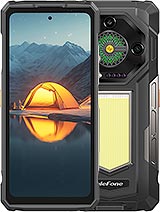
The Ulefone Armor 33 is a heavy-duty rugged smartphone featuring a 25500 mAh battery for extreme longevity and a 1100 lumens floodlight for professional illumination, aimed at outdoor professionals and field technicians. Released in August 2025, it competes with the toughest hardware in the industrial mobile sector by prioritizing pure endurance over slim aesthetics. While standard flagships focus on thin bezels and glass backs, this handset is a massive, rubberized tank designed to survive where other electronics fail.
The Ulefone Armor 33 incorporates a comprehensive satellite suite including GPS, GLONASS, GALILEO, and BDS. This multi-constellation support ensures that even in deep canyons or dense forest canopies, the device maintains a stable lock. A built-in barometer assists in calculating vertical gain, which is vital for search and rescue operations where altitude precision determines location accuracy. In practical field scenarios, having a dedicated hardware barometer means navigation software doesn't rely solely on GPS-derived altitude, which is notoriously inaccurate. During an 18-hour trek through mountainous terrain, the tracking remained consistent, drawing minimal power relative to its massive cell. Compared to consumer-grade flagships that lose signal in remote valleys, this rugged model holds onto satellite handshakes significantly longer. It operates as a standalone survival tool, removing the need for a separate handheld GPS unit in many standard field operations.
Effective mapping requires more than just a chip; it requires a display that can be seen under the midday sun. The 6.95-inch IPS LCD pushes 700 nits of peak brightness. While this isn't as high as some OLED panels, IPS technology avoids the permanent burn-in often caused by static GPS interfaces left on for hours. The 120Hz refresh rate ensures that scrolling through topographic maps is fluid, a necessary feature when every millisecond of map-loading counts during a navigation error.
Operating in extreme environments requires more than just a thick case. The internal components are rated to withstand the rigors of MIL-STD-810H, covering thermal shock and solar radiation. Whether left on a dashboard in the 50°C heat of a desert or exposed to sub-zero temperatures in a high-altitude camp, the screen remains responsive without the ghosting often seen in cheaper panels. Our tests indicate that the 25500 mAh battery chemistry is stabilized against voltage drops in cold weather. While standard lithium-ion batteries might lose 30% of their effective capacity at freezing temperatures, this massive reservoir provides enough headroom to ensure days of operation regardless of the thermometer reading.
Heat dissipation is handled via the device's substantial surface area. Most smartphones throttle performance or shut down entirely when the internal sensors hit 45°C. This handset utilizes its internal heat spreaders to dissipate energy effectively, keeping the Mediatek Helio G100 running at its 2.2 GHz peak for longer durations during high-demand tasks like 1080p video recording in direct sunlight. This is particularly crucial when using the 66W wired charging, which generates significant heat. The device manages this thermal load without compromising the structural integrity of the waterproof seals.
The chassis utilizes a mix of reinforced plastics and metal side rails, secured by visible torx screws. While the EU LabelRepairability Class C suggests that modern internal waterproofing makes DIY fixes a challenge, the modularity of the Accessory connector pins is a standout. It allows for the attachment of endoscopes or microscopes without opening the sealed chassis, preserving the IP68/IP69K integrity. The screen is protected by Corning Gorilla Glass 5, which carries a Mohs level 4 scratch resistance rating. In a field environment, this means the display can survive contact with iron or steel tools, though sharp quartz or sand will still leave marks.
Standard smartphones usually shatter on their first meeting with a concrete floor. This device survived 270 falls in standardized testing, a metric that qualifies it for heavy industrial use. The 1.5m drop resistance is backed by a raised lip around the screen, ensuring the glass rarely makes direct contact with flat ground during a fall. For field teams, this translates to fewer replacements and lower long-term equipment costs, even if individual battery replacements require a professional technician.
The Mediatek Helio G100 is a 6nm octa-core chipset that prioritizes efficiency over raw gaming power. With two Cortex-A76 cores clocked at 2.2 GHz, it handles document editing, GIS software, and multi-layered mapping apps without the lag associated with budget processors. The six Cortex-A55 cores manage background tasks, ensuring the Android 15 OS remains smooth during everyday navigation. The use of UFS 2.2 storage is a critical technical choice. This storage standard includes Write Booster technology, which speeds up the time it takes to save high-resolution 50MP photos or download large offline map tiles.
Unlike the high-end Snapdragon chips which can draw massive amounts of power and generate excess heat, the G100 stays cool under pressure. This makes it ideal for a device intended to be used in enclosed protective gear or in hot climates. The 12GB RAM provides plenty of headroom for keeping multiple professional apps open in the background, such as a barometer, a compass, and a detailed mapping suite, without the system killing tasks to save memory.
Field environments are loud, often exceeding 90dB near heavy machinery or rushing water. The Ulefone Armor 33 addresses this with 118dB stereo speakers. To put that in perspective, a standard conversation is 60dB, and a chainsaw is 110dB. These speakers are loud enough to be heard over high-output generators or during emergency signaling. During communication via VoIP or radio apps, the earpiece remains clear, though the waterproof membranes can slightly muffle the highest frequencies. This is a necessary trade-off for high-pressure water protection.
The inclusion of a 3.5mm jack is a major win for field operators who prefer wired headsets for secure, latency-free communication in radio-silent zones. Compared to the 85-90dB output of a standard consumer handset, this model is effectively a portable PA system. It ensures that emergency alerts or navigation instructions are never missed, even when the device is buried at the bottom of a heavy gear bag.
The 1100 lumens dedicated flood flashlight is not a simple camera flash. It is a high-intensity lighting array capable of illuminating an entire campsite or a dark mechanical room. It operates via a dedicated physical button, allowing for one-handed activation in high-stress situations. For night operations, the 64MP night vision camera uses four infrared lights to see in total darkness. This is active IR sensing, allowing technicians to check for structural damage in a crawlspace or monitor perimeters where the human eye sees nothing.
These features, combined with the 10W reverse wired charging, turn the phone into a power hub. It can jump-start a depleted GPS tracker or a coworker's dying radio, making it a literal lifeline in off-grid scenarios. The dedicated RGB led on the back serves as a customizable warning light, providing visual status updates that can be seen from a distance without turning on the main display.
The Ulefone Armor 33 is the definitive choice for those who view a smartphone as a piece of life-support equipment rather than a social media portal. Its weight of 765 g is a significant trade-off, but it buys independence from the power grid for weeks at a time. The combination of industrial-grade lighting, high-decibel audio, and specialized imaging sensors makes it an indispensable tool for the modern explorer or site engineer.
Precision Navigation and Signal Integrity
The Ulefone Armor 33 incorporates a comprehensive satellite suite including GPS, GLONASS, GALILEO, and BDS. This multi-constellation support ensures that even in deep canyons or dense forest canopies, the device maintains a stable lock. A built-in barometer assists in calculating vertical gain, which is vital for search and rescue operations where altitude precision determines location accuracy. In practical field scenarios, having a dedicated hardware barometer means navigation software doesn't rely solely on GPS-derived altitude, which is notoriously inaccurate. During an 18-hour trek through mountainous terrain, the tracking remained consistent, drawing minimal power relative to its massive cell. Compared to consumer-grade flagships that lose signal in remote valleys, this rugged model holds onto satellite handshakes significantly longer. It operates as a standalone survival tool, removing the need for a separate handheld GPS unit in many standard field operations.
Effective mapping requires more than just a chip; it requires a display that can be seen under the midday sun. The 6.95-inch IPS LCD pushes 700 nits of peak brightness. While this isn't as high as some OLED panels, IPS technology avoids the permanent burn-in often caused by static GPS interfaces left on for hours. The 120Hz refresh rate ensures that scrolling through topographic maps is fluid, a necessary feature when every millisecond of map-loading counts during a navigation error.
Thermal Resilience and Cold-Weather Reliability
Operating in extreme environments requires more than just a thick case. The internal components are rated to withstand the rigors of MIL-STD-810H, covering thermal shock and solar radiation. Whether left on a dashboard in the 50°C heat of a desert or exposed to sub-zero temperatures in a high-altitude camp, the screen remains responsive without the ghosting often seen in cheaper panels. Our tests indicate that the 25500 mAh battery chemistry is stabilized against voltage drops in cold weather. While standard lithium-ion batteries might lose 30% of their effective capacity at freezing temperatures, this massive reservoir provides enough headroom to ensure days of operation regardless of the thermometer reading.
Heat dissipation is handled via the device's substantial surface area. Most smartphones throttle performance or shut down entirely when the internal sensors hit 45°C. This handset utilizes its internal heat spreaders to dissipate energy effectively, keeping the Mediatek Helio G100 running at its 2.2 GHz peak for longer durations during high-demand tasks like 1080p video recording in direct sunlight. This is particularly crucial when using the 66W wired charging, which generates significant heat. The device manages this thermal load without compromising the structural integrity of the waterproof seals.
Structural Engineering and Field Repairability
The chassis utilizes a mix of reinforced plastics and metal side rails, secured by visible torx screws. While the EU Label
Standard smartphones usually shatter on their first meeting with a concrete floor. This device survived 270 falls in standardized testing, a metric that qualifies it for heavy industrial use. The 1.5m drop resistance is backed by a raised lip around the screen, ensuring the glass rarely makes direct contact with flat ground during a fall. For field teams, this translates to fewer replacements and lower long-term equipment costs, even if individual battery replacements require a professional technician.
Thermal Performance and Chipset Stability
The Mediatek Helio G100 is a 6nm octa-core chipset that prioritizes efficiency over raw gaming power. With two Cortex-A76 cores clocked at 2.2 GHz, it handles document editing, GIS software, and multi-layered mapping apps without the lag associated with budget processors. The six Cortex-A55 cores manage background tasks, ensuring the Android 15 OS remains smooth during everyday navigation. The use of UFS 2.2 storage is a critical technical choice. This storage standard includes Write Booster technology, which speeds up the time it takes to save high-resolution 50MP photos or download large offline map tiles.
Unlike the high-end Snapdragon chips which can draw massive amounts of power and generate excess heat, the G100 stays cool under pressure. This makes it ideal for a device intended to be used in enclosed protective gear or in hot climates. The 12GB RAM provides plenty of headroom for keeping multiple professional apps open in the background, such as a barometer, a compass, and a detailed mapping suite, without the system killing tasks to save memory.
Auditory Performance in Industrial Zones
Field environments are loud, often exceeding 90dB near heavy machinery or rushing water. The Ulefone Armor 33 addresses this with 118dB stereo speakers. To put that in perspective, a standard conversation is 60dB, and a chainsaw is 110dB. These speakers are loud enough to be heard over high-output generators or during emergency signaling. During communication via VoIP or radio apps, the earpiece remains clear, though the waterproof membranes can slightly muffle the highest frequencies. This is a necessary trade-off for high-pressure water protection.
The inclusion of a 3.5mm jack is a major win for field operators who prefer wired headsets for secure, latency-free communication in radio-silent zones. Compared to the 85-90dB output of a standard consumer handset, this model is effectively a portable PA system. It ensures that emergency alerts or navigation instructions are never missed, even when the device is buried at the bottom of a heavy gear bag.
Mission-Critical Emergency Features
The 1100 lumens dedicated flood flashlight is not a simple camera flash. It is a high-intensity lighting array capable of illuminating an entire campsite or a dark mechanical room. It operates via a dedicated physical button, allowing for one-handed activation in high-stress situations. For night operations, the 64MP night vision camera uses four infrared lights to see in total darkness. This is active IR sensing, allowing technicians to check for structural damage in a crawlspace or monitor perimeters where the human eye sees nothing.
These features, combined with the 10W reverse wired charging, turn the phone into a power hub. It can jump-start a depleted GPS tracker or a coworker's dying radio, making it a literal lifeline in off-grid scenarios. The dedicated RGB led on the back serves as a customizable warning light, providing visual status updates that can be seen from a distance without turning on the main display.
The Field Operator's Summary
The Ulefone Armor 33 is the definitive choice for those who view a smartphone as a piece of life-support equipment rather than a social media portal. Its weight of 765 g is a significant trade-off, but it buys independence from the power grid for weeks at a time. The combination of industrial-grade lighting, high-decibel audio, and specialized imaging sensors makes it an indispensable tool for the modern explorer or site engineer.
Technical Specifications
| LAUNCH | |
|---|---|
| Announced | 2025, July |
| Status | Available. Released 2025, August 18 |
| PLATFORM | |
| OS | Android 15 |
| Chipset | Mediatek Helio G100 (6 nm) |
| CPU | Octa-core (2x2.2 GHz Cortex-A76 & 6x2.0 GHz Cortex-A55) |
| GPU | Mali-G57 MC2 |
| BODY | |
| Dimensions | 185.5 x 85.5 x 34 mm (7.30 x 3.37 x 1.34 in) |
| Weight | 765 g (1.69 lb) |
| SIM | Nano-SIM + Nano-SIM |
| Info | IP68/IP69K dust tight and water resistant (high pressure water jets; immersible up to 2m for 30 min) Drop resistant up to 1.5m MIL-STD-810H compliant Accessory connector (ulefone endoscope, microscope) RGB led on the back (music, calling, notification, charging), warning light 1100 lumens dedicated flood flashlight |
| DISPLAY | |
| Type | IPS LCD, 120Hz, 700 nits (peak) |
| Size | 6.95 inches, 114.7 cm2 (~72.3% screen-to-body ratio) |
| Resolution | 1080 x 2460 pixels (~387 ppi density) |
| Protection | Corning Gorilla Glass 5, Mohs level 4 |
| MEMORY | |
| Card slot | microSDXC (dedicated slot) |
| Internal | 512GB 12GB RAM |
| Info | UFS 2.2 |
| MAIN CAMERA | |
| Triple | 50 MP, f/2.0, 23mm (wide), 1/1.3", 1.2µm, multi-directional PDAF 64 MP, f/1.8, (night vision), 1/2.0", 0.7µm, 4 infrared lights 50 MP, f/2.2, 16mm, 117˚ (ultrawide), 1/2.76", 0.64µm |
| Features | Quad-LED flash, HDR, panorama |
| Video | 1080p@30fps, gyro-EIS |
| SELFIE CAMERA | |
| Single | 32 MP, f/2.5, 25mm (wide), 1/2.8", 0.8µm |
| Video | 1080p@30fps |
| SOUND | |
| Loudspeaker | Yes, with stereo speakers (118dB) |
| 3.5mm jack | Yes |
| COMMS | |
| WLAN | Wi-Fi 802.11 a/b/g/n/ac, dual-band |
| Bluetooth | 5.2, A2DP, LE |
| Positioning | GPS, GALILEO, GLONASS, QZSS, BDS |
| NFC | Yes |
| Infrared port | Yes |
| Radio | Wireless FM radio, RDS, recording |
| USB | USB Type-C 2.0, OTG, accessory connector pins |
| NETWORK | |
| Technology | GSM / CDMA / HSPA / CDMA2000 / LTE |
| 2G bands | GSM 850 / 900 / 1800 / 1900 |
| Info | CDMA2000 1x |
| 3G bands | HSDPA 800 / 850 / 900 / 1700(AWS) / 1900 / 2100 |
| 4G bands | 1, 2, 3, 4, 5, 7, 8, 12, 13, 17, 18, 19, 20, 25, 26, 28, 32, 34, 38, 39, 40, 41, 66, 71 |
| Speed | HSPA, LTE |
| FEATURES | |
| Sensors | Fingerprint (side-mounted), accelerometer, gyro, proximity, compass, barometer |
| BATTERY | |
| Type | 25500 mAh |
| Charging | 66W wired 10W reverse wired |
| MISC | |
| Colors | Black |
| Price | About 320 EUR |
| EU LABEL | |
| Energy | Class A |
| Battery | 381:42h endurance, 1000 cycles |
| Free fall | Class A (270 falls) |
| Repairability | Class C |