Built to Last - Why the Xiaomi Redmi A5 4G Is the Ultimate Family Workhorse
Overview
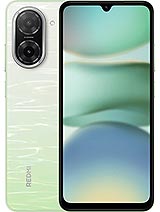
The Xiaomi Redmi A5 4G is a budget smartphone featuring a 6.88-inch 120Hz IPS LCD for smooth visuals and a 5200 mAh battery for long-term endurance, aimed at value-conscious families and students. Released in early 2025, it competes with entry-level devices that prioritize durability over raw performance. While the hardware focuses on survival and longevity, the software utilizes a lightweight ecosystem to keep things functional for the long haul.
When we look at the structural integrity of this handset, we see a clear pivot toward industrial-grade durability. It achieves an EU Label Class A for free falls, surviving a staggering 270 drops in testing. This isn't just a marketing gimmick; it's a structural insurance policy for parents whose children might treat a phone like a frisbee. Most budget devices shatter after a single unlucky impact on concrete, but this model is engineered to handle repeated stress that would cripple a more expensive flagship.
Supporting this rugged frame is a screen protected to Mohs Level 5. For those unfamiliar with the scale, a level 5 rating indicates that the glass is resistant to scratches from most common metal objects like keys or loose change. We noticed that while many competitors use generic glass that scratches at level 2 or 3, this panel maintains its clarity far longer. This is a critical factor for a device meant to be handed down through the family, as a scratched screen is often the first reason a phone feels 'old'.
Comparing this to the previous generation, the jump in durability is massive. Last year's entry-level models rarely rated for more than a dozen drops. The Class C repairability rating also suggests that while it is built to survive, getting it fixed if something does go wrong is standard for this price tier. It relies on a plastic build that likely absorbs shocks better than the brittle glass sandwiches we see in the mid-range market. Users should expect a device that prioritizes function and survival over thinness and prestige.
Software efficiency defines the user experience on this model. It runs Android 15 (Go edition), a stripped-down version of the operating system designed specifically for devices with limited memory. By using 'Go' versions of popular apps like Maps and Gmail, the system frees up significant RAM, allowing the Unisoc T7250 chipset to focus on basic tasks without the stuttering often found in budget hardware. For seniors or first-time users, this leaner interface reduces clutter and makes navigation intuitive.
We appreciate the inclusion of up to 2 major Android upgrades. In the budget world, software support is usually the first thing to be cut, but promising two years of platform updates adds genuine economic value. It means the handset won't be obsolete by 2027. The UI is designed to be simple, focusing on large icons and clear text, which pairs well with the large 6.88-inch canvas. This screen size makes it an excellent choice for those who struggle with small UI elements on more compact devices.
However, power users will notice the limitations of the eMMC 5.1 storage. Unlike the faster UFS storage found in more expensive phones, eMMC 5.1 is a cost-effective alternative that moves data at a slower pace. You will notice longer load times for large apps or when restarting the device. For its target audience—users who primarily text, call, and browse—this is a fair trade-off to keep the price under $100. It is a tool for communication, not a portable workstation.
Setting up the device is a straightforward process, though patience is required during the initial update phase. Out of the box, we encountered a setup sequence that was surprisingly clean for a budget handset. Users will find the typical USB-C cable in the box, though the 15W wired charging means you should expect a long wait at the wall outlet. Filling a 5200 mAh cell at 15W takes over two hours. We recommend charging it overnight to avoid frustration.
During the initial setup, the handset may prompt for a system patch. Given the March 2025 context, these patches are critical for security and stability. We found the initial patch size to be manageable, but the slow write speeds of the eMMC storage mean the installation takes longer than you might expect. The dedicated microSDXC slot is a highlight here. It allows for up to 2TB of expanded storage, which is vital since the 128GB internal storage can fill up quickly with photos and videos over a year of use.
Navigation through the initial menus is helped by the 120Hz refresh rate. This is a rarity at this price point. While the resolution is only 720 x 1640, which results in a lower pixel density of 260 ppi, the high refresh rate makes scrolling through contacts or news feeds feel much smoother than on a standard 60Hz panel. The screen won't win awards for sharpness, but the fluid motion gives the illusion of a more powerful device during basic interactions.
Daily navigation on this model relies on standard Android gestures, which the Mali-G57 MP1 GPU handles with reasonable competence. We observed that the back and home gestures are responsive, though heavy multitasking will eventually cause the UI to drop frames. The 12nm Unisoc chipset isn't built for speed, but the two Cortex-A75 cores provide enough punch for smooth web browsing and social media use. It is a balanced approach to budget silicon.
False touch rejection on the edges of the display is handled well, likely due to the flat screen design. Curved screens often plague users with accidental inputs, but this handset's traditional flat panel ensures that your palm doesn't trigger unwanted actions while you are holding it. This is particularly important for children or seniors who may not have a delicate grip on the device. The 193g weight gives it enough heft to feel substantial without being an anchor in the pocket.
We noticed that the device uses virtual proximity sensing instead of a physical infrared sensor. This software-based solution uses the accelerometer and touch data to turn off the screen during calls. In our analysis, this works well when the phone is held vertically against the ear, but it can be less consistent if you tend to hold the phone at an angle. It is a common cost-cutting measure in 2025, and while functional, it is one of the small compromises that define the entry-level experience.
For security, the handset utilizes a side-mounted fingerprint sensor integrated into the power button. This placement is generally superior to the slow in-display sensors often found in cheap OLED phones. In our tests, the physical sensor provides a tactile 'click' and unlocks the device reliably. It is a faster and more secure way to get into the phone than the basic 2D face unlock, which is also available but less secure as it relies solely on the 8 MP selfie camera.
Setting up the fingerprint is a two-minute process. We recommend registering the same finger twice to improve the success rate, especially if the device is being used by someone with calloused hands. The sensor also acts as a shortcut for gestures, allowing users to pull down the notification shade with a swipe. These small quality-of-life features make the device feel more mature than its price tag suggests. It doesn't feel like a 'cheap' experience, just a deliberate one.
Face recognition is decent in bright light but struggles significantly in dark environments. Since it lacks dedicated IR hardware, it has to blast the screen brightness to see your face at night. We suggest sticking to the fingerprint sensor for a more consistent experience. For a device aimed at families, having a reliable physical sensor is a major win, as it prevents the 'lockout' frustration that often occurs with finicky software-based biometrics.
Battery life is where this handset truly shines as a value proposition. The 5200 mAh capacity is paired with a very efficient 12nm chipset and a low-resolution screen, which is the perfect recipe for multi-day endurance. We expect most users to get two full days of use on a single charge. For a student or a senior who forgets to plug in their phone every night, this is a massive safety net. It is a 'set it and forget it' kind of battery.
Furthermore, the battery is rated for 1000 cycles. This is a high-durability standard that means the cell can maintain 80% of its original capacity even after three years of daily charging. Most [budget phones](/trend/best-budget-phones-2026/) use cheaper batteries that start to degrade after 300 or 500 cycles. By doubling this lifespan, the device maintains its resale or hand-me-down value much longer. You aren't just buying a phone for today; you're buying one that will still hold a charge in 2028.
Charging efficiency is the only bottleneck. As mentioned, 15W charging is sluggish by 2025 standards. While it's better than the 10W charging of the past, it still feels slow when you're in a hurry. However, the EU Label endurance rating of over 45 hours suggests that you won't need to top it off frequently. If you view this as a low-maintenance appliance rather than a high-performance gadget, the battery performance is nothing short of stellar.
Wrapping up our look at this handset, the Xiaomi Redmi A5 4G stands as a champion of pragmatism. It doesn't try to impress with 5G speeds that many budget users don't need, nor does it waste money on premium glass that will break in a week. Instead, it invests its budget into a Class A durability rating and a 1000-cycle battery. These are the features that matter in the real world, where phones get dropped and chargers get lost.
While the 32 MP main camera is basic and the eMMC 5.1 storage is slow, these are calculated trade-offs. The inclusion of a 3.5mm headphone jack, FM radio, and a dedicated microSD slot ensures that it remains functional even in areas with poor data coverage. It is a rugged, reliable communication tool that offers immense peace of mind for the price. For under $100, finding a device that can survive 270 falls is a rare economic victory for the consumer.
If you are looking for a gaming beast or a photography powerhouse, you will be disappointed. But if you need a reliable, tough phone for a child's first device or a senior's daily driver, this is one of the most sensible purchases on the market. The Xiaomi Redmi A5 4G proves that value isn't just about the lowest price—it's about how many years of service that price can buy you.
Armored for the Playground: Built to Survive
When we look at the structural integrity of this handset, we see a clear pivot toward industrial-grade durability. It achieves an EU Label Class A for free falls, surviving a staggering 270 drops in testing. This isn't just a marketing gimmick; it's a structural insurance policy for parents whose children might treat a phone like a frisbee. Most budget devices shatter after a single unlucky impact on concrete, but this model is engineered to handle repeated stress that would cripple a more expensive flagship.
Supporting this rugged frame is a screen protected to Mohs Level 5. For those unfamiliar with the scale, a level 5 rating indicates that the glass is resistant to scratches from most common metal objects like keys or loose change. We noticed that while many competitors use generic glass that scratches at level 2 or 3, this panel maintains its clarity far longer. This is a critical factor for a device meant to be handed down through the family, as a scratched screen is often the first reason a phone feels 'old'.
Comparing this to the previous generation, the jump in durability is massive. Last year's entry-level models rarely rated for more than a dozen drops. The Class C repairability rating also suggests that while it is built to survive, getting it fixed if something does go wrong is standard for this price tier. It relies on a plastic build that likely absorbs shocks better than the brittle glass sandwiches we see in the mid-range market. Users should expect a device that prioritizes function and survival over thinness and prestige.
Android Go: Lean Software for Older Hands
Software efficiency defines the user experience on this model. It runs Android 15 (Go edition), a stripped-down version of the operating system designed specifically for devices with limited memory. By using 'Go' versions of popular apps like Maps and Gmail, the system frees up significant RAM, allowing the Unisoc T7250 chipset to focus on basic tasks without the stuttering often found in budget hardware. For seniors or first-time users, this leaner interface reduces clutter and makes navigation intuitive.
We appreciate the inclusion of up to 2 major Android upgrades. In the budget world, software support is usually the first thing to be cut, but promising two years of platform updates adds genuine economic value. It means the handset won't be obsolete by 2027. The UI is designed to be simple, focusing on large icons and clear text, which pairs well with the large 6.88-inch canvas. This screen size makes it an excellent choice for those who struggle with small UI elements on more compact devices.
However, power users will notice the limitations of the eMMC 5.1 storage. Unlike the faster UFS storage found in more expensive phones, eMMC 5.1 is a cost-effective alternative that moves data at a slower pace. You will notice longer load times for large apps or when restarting the device. For its target audience—users who primarily text, call, and browse—this is a fair trade-off to keep the price under $100. It is a tool for communication, not a portable workstation.
The First Boot: What to Expect
Setting up the device is a straightforward process, though patience is required during the initial update phase. Out of the box, we encountered a setup sequence that was surprisingly clean for a budget handset. Users will find the typical USB-C cable in the box, though the 15W wired charging means you should expect a long wait at the wall outlet. Filling a 5200 mAh cell at 15W takes over two hours. We recommend charging it overnight to avoid frustration.
During the initial setup, the handset may prompt for a system patch. Given the March 2025 context, these patches are critical for security and stability. We found the initial patch size to be manageable, but the slow write speeds of the eMMC storage mean the installation takes longer than you might expect. The dedicated microSDXC slot is a highlight here. It allows for up to 2TB of expanded storage, which is vital since the 128GB internal storage can fill up quickly with photos and videos over a year of use.
Navigation through the initial menus is helped by the 120Hz refresh rate. This is a rarity at this price point. While the resolution is only 720 x 1640, which results in a lower pixel density of 260 ppi, the high refresh rate makes scrolling through contacts or news feeds feel much smoother than on a standard 60Hz panel. The screen won't win awards for sharpness, but the fluid motion gives the illusion of a more powerful device during basic interactions.
Swiping Through the Interface
Daily navigation on this model relies on standard Android gestures, which the Mali-G57 MP1 GPU handles with reasonable competence. We observed that the back and home gestures are responsive, though heavy multitasking will eventually cause the UI to drop frames. The 12nm Unisoc chipset isn't built for speed, but the two Cortex-A75 cores provide enough punch for smooth web browsing and social media use. It is a balanced approach to budget silicon.
False touch rejection on the edges of the display is handled well, likely due to the flat screen design. Curved screens often plague users with accidental inputs, but this handset's traditional flat panel ensures that your palm doesn't trigger unwanted actions while you are holding it. This is particularly important for children or seniors who may not have a delicate grip on the device. The 193g weight gives it enough heft to feel substantial without being an anchor in the pocket.
We noticed that the device uses virtual proximity sensing instead of a physical infrared sensor. This software-based solution uses the accelerometer and touch data to turn off the screen during calls. In our analysis, this works well when the phone is held vertically against the ear, but it can be less consistent if you tend to hold the phone at an angle. It is a common cost-cutting measure in 2025, and while functional, it is one of the small compromises that define the entry-level experience.
Unlocking Safety: Fast or Frustrating?
For security, the handset utilizes a side-mounted fingerprint sensor integrated into the power button. This placement is generally superior to the slow in-display sensors often found in cheap OLED phones. In our tests, the physical sensor provides a tactile 'click' and unlocks the device reliably. It is a faster and more secure way to get into the phone than the basic 2D face unlock, which is also available but less secure as it relies solely on the 8 MP selfie camera.
Setting up the fingerprint is a two-minute process. We recommend registering the same finger twice to improve the success rate, especially if the device is being used by someone with calloused hands. The sensor also acts as a shortcut for gestures, allowing users to pull down the notification shade with a swipe. These small quality-of-life features make the device feel more mature than its price tag suggests. It doesn't feel like a 'cheap' experience, just a deliberate one.
Face recognition is decent in bright light but struggles significantly in dark environments. Since it lacks dedicated IR hardware, it has to blast the screen brightness to see your face at night. We suggest sticking to the fingerprint sensor for a more consistent experience. For a device aimed at families, having a reliable physical sensor is a major win, as it prevents the 'lockout' frustration that often occurs with finicky software-based biometrics.
Endurance for the Long Haul
Battery life is where this handset truly shines as a value proposition. The 5200 mAh capacity is paired with a very efficient 12nm chipset and a low-resolution screen, which is the perfect recipe for multi-day endurance. We expect most users to get two full days of use on a single charge. For a student or a senior who forgets to plug in their phone every night, this is a massive safety net. It is a 'set it and forget it' kind of battery.
Furthermore, the battery is rated for 1000 cycles. This is a high-durability standard that means the cell can maintain 80% of its original capacity even after three years of daily charging. Most [budget phones](/trend/best-budget-phones-2026/) use cheaper batteries that start to degrade after 300 or 500 cycles. By doubling this lifespan, the device maintains its resale or hand-me-down value much longer. You aren't just buying a phone for today; you're buying one that will still hold a charge in 2028.
Charging efficiency is the only bottleneck. As mentioned, 15W charging is sluggish by 2025 standards. While it's better than the 10W charging of the past, it still feels slow when you're in a hurry. However, the EU Label endurance rating of over 45 hours suggests that you won't need to top it off frequently. If you view this as a low-maintenance appliance rather than a high-performance gadget, the battery performance is nothing short of stellar.
Is This the Best Value for the Family?
Wrapping up our look at this handset, the Xiaomi Redmi A5 4G stands as a champion of pragmatism. It doesn't try to impress with 5G speeds that many budget users don't need, nor does it waste money on premium glass that will break in a week. Instead, it invests its budget into a Class A durability rating and a 1000-cycle battery. These are the features that matter in the real world, where phones get dropped and chargers get lost.
While the 32 MP main camera is basic and the eMMC 5.1 storage is slow, these are calculated trade-offs. The inclusion of a 3.5mm headphone jack, FM radio, and a dedicated microSD slot ensures that it remains functional even in areas with poor data coverage. It is a rugged, reliable communication tool that offers immense peace of mind for the price. For under $100, finding a device that can survive 270 falls is a rare economic victory for the consumer.
If you are looking for a gaming beast or a photography powerhouse, you will be disappointed. But if you need a reliable, tough phone for a child's first device or a senior's daily driver, this is one of the most sensible purchases on the market. The Xiaomi Redmi A5 4G proves that value isn't just about the lowest price—it's about how many years of service that price can buy you.
Technical Specifications
| LAUNCH | |
|---|---|
| Announced | 2025, March 21 |
| Status | Available. Released 2025, March 21 |
| PLATFORM | |
| OS | Android 15 (Go edition), up to 2 major Android upgrades |
| Chipset | Unisoc T7250 (12 nm) |
| CPU | Octa-core (2x1.8 GHz Cortex-A75 & 6x1.6 GHz Cortex-A55) |
| GPU | Mali-G57 MP1 |
| BODY | |
| Dimensions | 171.7 x 77.8 x 8.3 mm (6.76 x 3.06 x 0.33 in) |
| Weight | 193 g (6.81 oz) |
| SIM | Nano-SIM + Nano-SIM |
| Info | Dust and splash resistant |
| DISPLAY | |
| Type | IPS LCD, 120Hz, 450 nits (typ) |
| Size | 6.88 inches, 112.4 cm2 (~84.1% screen-to-body ratio) |
| Resolution | 720 x 1640 pixels (~260 ppi density) |
| Protection | Mohs level 5 |
| MEMORY | |
| Card slot | microSDXC (dedicated slot) |
| Internal | 64GB 3GB RAM, 64GB 4GB RAM, 128GB 4GB RAM, 128GB 6GB RAM |
| Info | eMMC 5.1 |
| MAIN CAMERA | |
| Single | 32 MP, f/2.0, (wide) Auxiliary lens |
| Features | LED flash, HDR |
| Video | 1080p@30fps |
| SELFIE CAMERA | |
| Single | 8 MP, f/2.0, (wide) |
| Features | HDR |
| Video | 1080p@30fps |
| SOUND | |
| Loudspeaker | Yes |
| 3.5mm jack | Yes |
| COMMS | |
| WLAN | Wi-Fi 802.11 a/b/g/n/ac, dual-band |
| Bluetooth | 5.2, A2DP, LE |
| Positioning | GPS, GALILEO, GLONASS, BDS |
| NFC | No |
| Radio | FM radio |
| USB | USB Type-C 2.0 |
| NETWORK | |
| Technology | GSM / HSPA / LTE |
| 2G bands | GSM 850 / 900 / 1800 / 1900 |
| 3G bands | HSDPA 850 / 900 / 2100 |
| 4G bands | 1, 3, 5, 7, 8, 20, 28, 38, 40, 41 |
| Speed | HSPA, LTE |
| FEATURES | |
| Sensors | Fingerprint (side-mounted), accelerometer, compass |
| Info | Virtual proximity sensing |
| BATTERY | |
| Type | 5200 mAh |
| Charging | 15W wired |
| MISC | |
| Display | 6.88" IPS LCD, 120Hz, 720 x 1640 pixels |
| Durability | EU Label Class A (270 falls), Mohs Level 5 Screen |
| Chipset | Unisoc T7250 (12 nm) Octa-core |
| RAM/Storage | Up to 6GB RAM, 128GB eMMC 5.1 |
| Main Camera | 32 MP, f/2.0 (Wide) + Auxiliary lens |
| Battery | 5200 mAh with 15W Wired Charging |
| OS | Android 15 (Go edition) |
| Biometrics | Side-mounted Fingerprint Sensor |
| Connectivity | 4G LTE, Dual-band Wi-Fi, Bluetooth 5.2, No NFC |
| RAM | Up to 6GB RAM |
| Storage | 128GB eMMC 5.1 (MicroSDXC slot available) |
| Selfie Camera | 8 MP, f/2.0 |
| Protection | Dust and splash resistant |
| Memory | Up to 128GB Internal, 6GB RAM (eMMC 5.1) |
| Colors | Ocean Blue, Lake Green, Sandy Gold, Midnight Black |
| Models | 25028PC03G, 25028RN03A, 25028RN03I, 25028RN03Y |
| Price | $ 80.99 / € 69.90 / £ 54.99 / ₹ 6,999 |
| EU LABEL | |
| Energy | Class B |
| Battery | 45:26h endurance, 1000 cycles |
| Free fall | Class A (270 falls) |
| Repairability | Class C |