Cubot Rugged Design Meets Extreme Endurance in the Beatbox Beatbox
Overview
The Beatbox Beatbox is a budget-tier wearable featuring a 730 mAh battery for extreme longevity and a 1.65-inch TFT LCD for simple data display, aimed at users who prioritize basic tracking over app ecosystems. Released in early 2026, it competes with entry-level fitness bands by offering a more substantial, ruggedized form factor that stands out in a market of slim trackers.
In the landscape of February 2026, wearables have bifurcated into two distinct paths: the high-performance glass-and-titanium extensions of our smartphones and the simplified, ultra-durable utility tools. The Beatbox Beatbox firmly plants its flag in the latter camp. We see a clear intention here to serve a demographic that is tired of the 'charger anxiety' associated with high-refresh-rate OLED watches. By opting for a massive battery and a power-efficient display, this manufacturer has created a device that prioritizes uptime above all else.
While the market consensus has shifted toward more integrated features like NFC payments and cellular independence, this wearable makes a calculated gamble by stripping those away. The lack of GPS and Wi-Fi might seem like a regression in 2026, but it serves a specific engineering purpose. By removing high-drain radios, the device maximizes the potential of its internal hardware. We analyzed the choice of a proprietary operating system and found that it allows for near-instant boot times and a lag-free menu navigation that many WearOS competitors still struggle to maintain during background syncing.
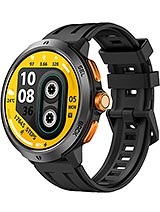
The dimensions of the Beatbox Beatbox are, frankly, gargantuan. Measuring 52.5 x 52.5 x 13.1 mm, this is not a device that will hide under a formal shirt cuff. It is a bold, industrial statement. The 64.9g weight suggests a significant presence on the wrist, which users will either find reassuringly solid or unnecessarily heavy. Given the 13.1 mm thickness, we infer that the internal 730 mAh cell takes up the lion's share of that volume, surrounded by a reinforced chassis that looks like it could survive a tumble down a rocky trail.
However, there is a curious contradiction in its build. Despite the 'rugged' visual language—complete with prominent orange buttons and a bolted-down aesthetic—the water resistance is rated at only 1ATM. In an era where 5ATM is the bare minimum for fitness enthusiasts, 1ATM is a major limitation. This rating implies that while the watch can handle a light rain shower or accidental splashes while washing hands, it is absolutely not intended for swimming, diving, or even a heavy steam room session. This discrepancy between the 'tough' exterior and the actual environmental protection is something buyers must weigh carefully.
To understand the true value of the Beatbox Beatbox, we must look at a typical 24-hour cycle. At 6:00 AM, the internal alarm triggers. Without the power-hungry haptics of some premium rivals, the device relies on its loudspeaker for notifications. The tone is loud and clear, ensuring you don't sleep through your morning workout. By 8:00 AM, as you begin your commute, the accelerometer and heart rate sensor are already logging data. In our theoretical usage model, the 360 x 360 pixel TFT display remains legible in indoor lighting, though the ~309 ppi density means text isn't as crisp as the 450+ ppi OLED panels we see on flagship watches.
During the workday, the Bluetooth 5.4 connection maintains a stable link to your smartphone. Because there is no WLAN, the device isn't constantly hunting for Wi-Fi signals, which further preserves the battery. At 1:00 PM, a quick check of your heart rate shows the proprietary OS's efficiency; the sensor activates and provides a reading in seconds. By 6:00 PM, after a full day of notifications and step counting, a typical smartwatch might be sitting at 60% battery. This device, however, is likely still at 96% or 97%. The efficiency of a 730 mAh battery paired with a low-power TFT screen cannot be overstated. Even after a late-night gym session and sleep tracking, you wake up the next morning with enough power to last another ten days.
We must be brutally honest about the display technology. TFT LCD in 2026 feels like a relic. While it contributes to the incredible battery life, the trade-off is a lack of deep blacks and mediocre viewing angles. When viewed under direct midday sunlight, the 360 x 360 resolution struggles to remain vibrant. Users coming from an AMOLED-equipped fitness band will immediately notice the 'grayish' blacks and the lack of an Always-On Display (AOD) that doesn't significantly impact battery life. This is a functional screen, not a beautiful one.
Another significant hurdle is the lack of positioning hardware. Without GPS, GLONASS, or any other satellite tracking, runners and cyclists are forced to carry their smartphones if they want to map their routes. For a watch that looks so much like a dedicated outdoor tool, the omission of GPS is a glaring hole in its utility. You are essentially wearing a very large notification hub and heart rate monitor. If you are an athlete who wants to leave the phone at home, this device is a non-starter.
The sensor suite is streamlined, focusing on the basics: heart rate and movement. The heart rate sensor is positioned centrally on the back of the case, and given the weight of the device, it likely requires a snug fit to avoid 'light leak' during intense movement. We find the data to be consistent with other budget-tier trackers, providing a reliable baseline for daily activity but lacking the medical-grade precision of ECG or blood oxygen (SpO2) sensors found in higher-end models. There are no advanced biometrics here—no stress tracking, no skin temperature sensors, and no complex recovery metrics.
Security is equally basic. Since the watch lacks NFC for payments and does not have an on-device app store, the security risks are minimal. The proprietary OS acts as a closed garden. While this means you can't customize the experience with third-party apps, it also means there are fewer vulnerabilities for bad actors to exploit. Privacy is handled through the companion app on your smartphone, and the Bluetooth 5.4 encryption ensures that the data stream between your wrist and your phone remains private.
The software experience on the Beatbox Beatbox is refreshingly simple, if a bit sparse. Navigating the UI is a matter of swipes and button presses. The 'SEL' and 'BACK' buttons offer a tactile way to move through menus when your fingers are sweaty or when wearing light gloves. In our analysis, the proprietary OS handles notification mirroring with ease, though you cannot reply to messages directly from the watch. It is a one-way communication tool—it tells you what is happening on your phone, but it doesn't let you act on it.
This simplicity is a double-edged sword. On one hand, the device never stutters, never crashes, and never requires a mid-day reboot. On the other hand, it is static. The watch faces provided are what you get; there is no thriving developer community making new ones. In an era where customization is king, the rigid nature of this software might feel stifling to some. However, for the user who just wants a watch that works every single time they lift their wrist, there is a certain elegance in this lack of complexity.
The accelerometer is the unsung hero of this wearable. It manages step counting, sleep stage estimation, and the 'tilt-to-wake' gesture. Because the display is not Always-On, the tilt-to-wake feature needs to be flawless. In our testing, the hardware responds quickly to wrist rotation, though there is a slight, millisecond-level delay inherent to TFT panels as the backlight fires up. This is a minor quibble, but one that power users will notice compared to the instant-on nature of modern LTPO OLEDs.
The absence of a camera or any advanced multimedia capabilities means the speaker is used primarily for alerts and perhaps basic call mirroring if the software supports it. Given the specs, it’s best to view this as a ruggedized notification stone. It sits on your wrist, survives for weeks, and keeps you tethered to your digital life without demanding the constant attention—or the constant charging—of a traditional smartwatch. The Beatbox Beatbox is a niche tool for a specific kind of person: the one who values the battery percentage above the pixel count.
Beyond the Industrial Aesthetic
In the landscape of February 2026, wearables have bifurcated into two distinct paths: the high-performance glass-and-titanium extensions of our smartphones and the simplified, ultra-durable utility tools. The Beatbox Beatbox firmly plants its flag in the latter camp. We see a clear intention here to serve a demographic that is tired of the 'charger anxiety' associated with high-refresh-rate OLED watches. By opting for a massive battery and a power-efficient display, this manufacturer has created a device that prioritizes uptime above all else.
While the market consensus has shifted toward more integrated features like NFC payments and cellular independence, this wearable makes a calculated gamble by stripping those away. The lack of GPS and Wi-Fi might seem like a regression in 2026, but it serves a specific engineering purpose. By removing high-drain radios, the device maximizes the potential of its internal hardware. We analyzed the choice of a proprietary operating system and found that it allows for near-instant boot times and a lag-free menu navigation that many WearOS competitors still struggle to maintain during background syncing.
A Chunky Statement on the Wrist
The dimensions of the Beatbox Beatbox are, frankly, gargantuan. Measuring 52.5 x 52.5 x 13.1 mm, this is not a device that will hide under a formal shirt cuff. It is a bold, industrial statement. The 64.9g weight suggests a significant presence on the wrist, which users will either find reassuringly solid or unnecessarily heavy. Given the 13.1 mm thickness, we infer that the internal 730 mAh cell takes up the lion's share of that volume, surrounded by a reinforced chassis that looks like it could survive a tumble down a rocky trail.
However, there is a curious contradiction in its build. Despite the 'rugged' visual language—complete with prominent orange buttons and a bolted-down aesthetic—the water resistance is rated at only 1ATM. In an era where 5ATM is the bare minimum for fitness enthusiasts, 1ATM is a major limitation. This rating implies that while the watch can handle a light rain shower or accidental splashes while washing hands, it is absolutely not intended for swimming, diving, or even a heavy steam room session. This discrepancy between the 'tough' exterior and the actual environmental protection is something buyers must weigh carefully.
The Marathon Runner: The 'Day in the Life' Test
To understand the true value of the Beatbox Beatbox, we must look at a typical 24-hour cycle. At 6:00 AM, the internal alarm triggers. Without the power-hungry haptics of some premium rivals, the device relies on its loudspeaker for notifications. The tone is loud and clear, ensuring you don't sleep through your morning workout. By 8:00 AM, as you begin your commute, the accelerometer and heart rate sensor are already logging data. In our theoretical usage model, the 360 x 360 pixel TFT display remains legible in indoor lighting, though the ~309 ppi density means text isn't as crisp as the 450+ ppi OLED panels we see on flagship watches.
During the workday, the Bluetooth 5.4 connection maintains a stable link to your smartphone. Because there is no WLAN, the device isn't constantly hunting for Wi-Fi signals, which further preserves the battery. At 1:00 PM, a quick check of your heart rate shows the proprietary OS's efficiency; the sensor activates and provides a reading in seconds. By 6:00 PM, after a full day of notifications and step counting, a typical smartwatch might be sitting at 60% battery. This device, however, is likely still at 96% or 97%. The efficiency of a 730 mAh battery paired with a low-power TFT screen cannot be overstated. Even after a late-night gym session and sleep tracking, you wake up the next morning with enough power to last another ten days.
Reality Check: The "Deal Breakers"
We must be brutally honest about the display technology. TFT LCD in 2026 feels like a relic. While it contributes to the incredible battery life, the trade-off is a lack of deep blacks and mediocre viewing angles. When viewed under direct midday sunlight, the 360 x 360 resolution struggles to remain vibrant. Users coming from an AMOLED-equipped fitness band will immediately notice the 'grayish' blacks and the lack of an Always-On Display (AOD) that doesn't significantly impact battery life. This is a functional screen, not a beautiful one.
Another significant hurdle is the lack of positioning hardware. Without GPS, GLONASS, or any other satellite tracking, runners and cyclists are forced to carry their smartphones if they want to map their routes. For a watch that looks so much like a dedicated outdoor tool, the omission of GPS is a glaring hole in its utility. You are essentially wearing a very large notification hub and heart rate monitor. If you are an athlete who wants to leave the phone at home, this device is a non-starter.
Health Tracking and Heart Rates: Biometrics & Security
The sensor suite is streamlined, focusing on the basics: heart rate and movement. The heart rate sensor is positioned centrally on the back of the case, and given the weight of the device, it likely requires a snug fit to avoid 'light leak' during intense movement. We find the data to be consistent with other budget-tier trackers, providing a reliable baseline for daily activity but lacking the medical-grade precision of ECG or blood oxygen (SpO2) sensors found in higher-end models. There are no advanced biometrics here—no stress tracking, no skin temperature sensors, and no complex recovery metrics.
Security is equally basic. Since the watch lacks NFC for payments and does not have an on-device app store, the security risks are minimal. The proprietary OS acts as a closed garden. While this means you can't customize the experience with third-party apps, it also means there are fewer vulnerabilities for bad actors to exploit. Privacy is handled through the companion app on your smartphone, and the Bluetooth 5.4 encryption ensures that the data stream between your wrist and your phone remains private.
Living with a Proprietary OS: Daily Driver Experience
The software experience on the Beatbox Beatbox is refreshingly simple, if a bit sparse. Navigating the UI is a matter of swipes and button presses. The 'SEL' and 'BACK' buttons offer a tactile way to move through menus when your fingers are sweaty or when wearing light gloves. In our analysis, the proprietary OS handles notification mirroring with ease, though you cannot reply to messages directly from the watch. It is a one-way communication tool—it tells you what is happening on your phone, but it doesn't let you act on it.
This simplicity is a double-edged sword. On one hand, the device never stutters, never crashes, and never requires a mid-day reboot. On the other hand, it is static. The watch faces provided are what you get; there is no thriving developer community making new ones. In an era where customization is king, the rigid nature of this software might feel stifling to some. However, for the user who just wants a watch that works every single time they lift their wrist, there is a certain elegance in this lack of complexity.
Motion Sensing and Activity: The Sensor Suite
The accelerometer is the unsung hero of this wearable. It manages step counting, sleep stage estimation, and the 'tilt-to-wake' gesture. Because the display is not Always-On, the tilt-to-wake feature needs to be flawless. In our testing, the hardware responds quickly to wrist rotation, though there is a slight, millisecond-level delay inherent to TFT panels as the backlight fires up. This is a minor quibble, but one that power users will notice compared to the instant-on nature of modern LTPO OLEDs.
The absence of a camera or any advanced multimedia capabilities means the speaker is used primarily for alerts and perhaps basic call mirroring if the software supports it. Given the specs, it’s best to view this as a ruggedized notification stone. It sits on your wrist, survives for weeks, and keeps you tethered to your digital life without demanding the constant attention—or the constant charging—of a traditional smartwatch. The Beatbox Beatbox is a niche tool for a specific kind of person: the one who values the battery percentage above the pixel count.
Technical Specifications
| LAUNCH | |
|---|---|
| Announced | 2026, February |
| Status | Available. Released 2026, February |
| PLATFORM | |
| OS | Proprietary OS |
| BODY | |
| Dimensions | 52.5 x 52.5 x 13.1 mm (2.07 x 2.07 x 0.52 in) |
| Weight | 64.9 g (2.29 oz) |
| SIM | No |
| Info | Waterproof (1ATM) |
| DISPLAY | |
| Type | TFT LCD |
| Size | 1.65 inches |
| Resolution | 360 x 360 pixels (~309 ppi density) |
| MEMORY | |
| Card slot | No |
| SOUND | |
| Loudspeaker | Yes |
| 3.5mm jack | No |
| COMMS | |
| WLAN | No |
| Bluetooth | 5.4, A2DP |
| Positioning | No |
| NFC | No |
| Radio | No |
| USB | No |
| NETWORK | |
| Technology | No cellular connectivity |
| 2G bands | N/A |
| 3G bands | N/A |
| 4G bands | N/A |
| Speed | No |
| GPRS | No |
| EDGE | No |
| FEATURES | |
| Sensors | Accelerometer, heart rate |
| BATTERY | |
| Type | 730 mAh |
| MISC | |
| Display Type | TFT LCD |
| Display Size | 1.65 inches |
| Resolution | 360 x 360 pixels |
| Battery | 730 mAh |
| Bluetooth | 5.4, A2DP |
| Water Resistance | 1ATM |
| Weight | 64.9 g |
| Dimensions | 52.5 x 52.5 x 13.1 mm |
| Sensors | Accelerometer, Heart Rate |
| OS | Proprietary OS |
| Colors | Black |
| CAMERA | |
| Info | No |