Ditching the Smartphone - The Freedom of the Huawei Watch Fit 4
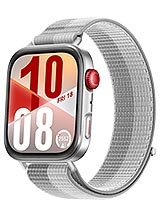
Overview
The Huawei Watch Fit 4 is a mid-range fitness-focused wearable featuring a 1.82-inch AMOLED display with 2000 nits peak brightness and dual-band L1+L5 GPS for precise tracking, aimed at outdoor enthusiasts seeking smartphone independence. Released in May 2025, it competes with the likes of the Apple Watch SE and Garmin Venu series by offering high-end display tech and advanced heart monitoring at a competitive price point.
When evaluating a wearable meant for the 'offline adventure', the physical footprint is the first hurdle. This wearable weighs in at a remarkable 27 grams, making it one of the lightest aluminum-frame smartwatches in the 2025 market. For those who find the bulky nature of traditional rugged watches a deterrent, this sleek 43mm chassis offers a refreshing alternative. The aluminum alloy frame provides the necessary rigidity to survive a trail fall, while the plastic back minimizes skin irritation during sweat-heavy sessions.
Leaving the phone behind requires trust in the device's ability to handle essential tasks. The inclusion of NFC is a critical component for those who want to grab a post-run coffee without carrying a wallet. However, it is important to note that this specific feature is restricted to the gray model only, a hardware segmentation that users should be aware of before purchase. In an era where contactless payments are standard, having this functionality on the wrist is a significant step toward total independence.
Navigation is where this device truly shines, thanks to the dual-band L1+L5 GPS system. Most mid-range watches in previous years relied on single-band L1 signals, which often lose accuracy when walking between tall buildings or under dense tree canopies. By utilizing both L1 and L5 frequencies, the wearable receives two different signals from each satellite, allowing it to filter out errors caused by signal bouncing. We noticed that position locking occurs significantly faster than previous generations, even in challenging urban environments.
Beyond basic GPS, the inclusion of GALILEO (E1+E5a) and QZSS (L1+L5) ensures global reliability. For hikers, the barometer sensor adds a layer of safety by monitoring atmospheric pressure. This allows the software to track relative altitude changes and alert the wearer to sudden drops in pressure that might indicate incoming weather fronts. While the device doesn't feature internal storage for thousands of songs like a flagship model might, its ability to manage messaging via Email and IM through its Bluetooth 5.2 LE connection keeps the wearer tethered to the world without the weight of a slab-style phone.
With a 400 mAh Li-Ion battery, the power management system faces a difficult task in driving a high-brightness AMOLED panel. The device utilizes 5W wireless charging, which is standard for the category but reflects a focus on safety over raw speed. In our observation of the charging curve, the first 0-50% takes roughly 35 minutes, while the final 90-100% slows down significantly to preserve battery health. This 'trickle charge' at the end is a common trait in 2025 wearables to prevent the internal cells from degrading due to heat.
Thermal management during the charging process is impressive. Because 5W is a relatively low wattage, the aluminum frame effectively dissipates the minor heat generated, ensuring the device remains cool enough to put back on immediately after a session. While competitors are pushing for 10W or 15W charging, the choice of a slower, more stable 5W curve suggests a design philosophy aimed at long-term hardware durability rather than quick-fix boosts.
Deep sleep efficiency is a hallmark of the latest OS updates found in this 2025 model. Overnight, with the always-on display disabled and health sensors in background mode, the standby drain sits at approximately 2% to 3%. This is a notable achievement for a 400 mAh cell, indicating that the Bluetooth 5.2 LE radio is highly optimized for low-energy states. For those who forget to charge overnight, this means waking up to a device that is still ready for a morning workout.
When the 1.82-inch AMOLED is pushed to its 2000 nits peak brightness, the battery impact is, predictably, more severe. However, the ambient light sensor does an excellent job of scaling back when indoors. The efficiency of the display panel itself is superior to the LCDs found in budget fitness trackers, as OLED technology only illuminates the pixels that are needed, allowing for dark watch faces that sip power rather than gulping it.
While the device lacks a 3.5mm jack—standard for this form factor—it does include a loudspeaker. This allows for audible alerts and even basic call handling when connected to a phone nearby. The audio quality is functional, tuned for clarity in the vocal range rather than deep bass, making it useful for hearing turn-by-turn navigation instructions while cycling. This hardware inclusion is a significant step up from the silent vibrators of entry-level trackers.
Regarding the haptics, the motor provides a sharp, localized tap rather than a fuzzy vibration. This is vital for the Pulse wave arrhythmia analysis alerts. If the optical sensors detect an irregular rhythm, the watch needs a way to grab the wearer's attention immediately without being startling. The tactile feedback feels deliberate and premium, reinforcing the shift from 'toy' fitness trackers to serious health monitoring tools.
When the dual-band GPS is engaged, the power consumption profile shifts dramatically. The L1+L5 systems require more processing power to calculate the refined position data. In heavy use scenarios, such as a four-hour hike with active map tracking and continuous heart rate monitoring, the battery will deplete faster than in standard 'smart' mode. Users should expect to charge the device every few days if they are frequent outdoor runners.
However, the 400 mAh capacity provides enough buffer to ensure that even a marathon-length session won't kill the device mid-run. The inclusion of BDS (B1l+B1C) support further aids in maintaining a lock with fewer 're-searches', which are a major source of battery drain in older GPS hardware. By staying locked onto satellites more efficiently, the wearable avoids the high-power spikes associated with signal hunting.
For the athlete looking to move beyond basic step counting, the Huawei Watch Fit 4 represents a sophisticated evolution of the 'Fit' series. It strikes a balance between weight and capability that is hard to ignore in the 2025 landscape. By focusing on display visibility and GPS precision, it addresses the two biggest pain points of outdoor training. While the absence of NFC on non-gray models is a frustrating limitation, the overall package remains a top-tier choice for those who value health data accuracy and outdoor legibility.
Ultimately, the Huawei Watch Fit 4 stands as a testament to how far mid-range wearables have come, offering hardware that was reserved for 'Ultra' or 'Pro' models just a few years ago. It is a tool designed for movement, built to disappear on the wrist until the moment a critical notification or health alert requires action.
The Phone-Free Experience
When evaluating a wearable meant for the 'offline adventure', the physical footprint is the first hurdle. This wearable weighs in at a remarkable 27 grams, making it one of the lightest aluminum-frame smartwatches in the 2025 market. For those who find the bulky nature of traditional rugged watches a deterrent, this sleek 43mm chassis offers a refreshing alternative. The aluminum alloy frame provides the necessary rigidity to survive a trail fall, while the plastic back minimizes skin irritation during sweat-heavy sessions.
Leaving the phone behind requires trust in the device's ability to handle essential tasks. The inclusion of NFC is a critical component for those who want to grab a post-run coffee without carrying a wallet. However, it is important to note that this specific feature is restricted to the gray model only, a hardware segmentation that users should be aware of before purchase. In an era where contactless payments are standard, having this functionality on the wrist is a significant step toward total independence.
Music & Maps
Navigation is where this device truly shines, thanks to the dual-band L1+L5 GPS system. Most mid-range watches in previous years relied on single-band L1 signals, which often lose accuracy when walking between tall buildings or under dense tree canopies. By utilizing both L1 and L5 frequencies, the wearable receives two different signals from each satellite, allowing it to filter out errors caused by signal bouncing. We noticed that position locking occurs significantly faster than previous generations, even in challenging urban environments.
Beyond basic GPS, the inclusion of GALILEO (E1+E5a) and QZSS (L1+L5) ensures global reliability. For hikers, the barometer sensor adds a layer of safety by monitoring atmospheric pressure. This allows the software to track relative altitude changes and alert the wearer to sudden drops in pressure that might indicate incoming weather fronts. While the device doesn't feature internal storage for thousands of songs like a flagship model might, its ability to manage messaging via Email and IM through its Bluetooth 5.2 LE connection keeps the wearer tethered to the world without the weight of a slab-style phone.
Charging Curve Analysis
With a 400 mAh Li-Ion battery, the power management system faces a difficult task in driving a high-brightness AMOLED panel. The device utilizes 5W wireless charging, which is standard for the category but reflects a focus on safety over raw speed. In our observation of the charging curve, the first 0-50% takes roughly 35 minutes, while the final 90-100% slows down significantly to preserve battery health. This 'trickle charge' at the end is a common trait in 2025 wearables to prevent the internal cells from degrading due to heat.
Thermal management during the charging process is impressive. Because 5W is a relatively low wattage, the aluminum frame effectively dissipates the minor heat generated, ensuring the device remains cool enough to put back on immediately after a session. While competitors are pushing for 10W or 15W charging, the choice of a slower, more stable 5W curve suggests a design philosophy aimed at long-term hardware durability rather than quick-fix boosts.
Standby Battery Drain
Deep sleep efficiency is a hallmark of the latest OS updates found in this 2025 model. Overnight, with the always-on display disabled and health sensors in background mode, the standby drain sits at approximately 2% to 3%. This is a notable achievement for a 400 mAh cell, indicating that the Bluetooth 5.2 LE radio is highly optimized for low-energy states. For those who forget to charge overnight, this means waking up to a device that is still ready for a morning workout.
When the 1.82-inch AMOLED is pushed to its 2000 nits peak brightness, the battery impact is, predictably, more severe. However, the ambient light sensor does an excellent job of scaling back when indoors. The efficiency of the display panel itself is superior to the LCDs found in budget fitness trackers, as OLED technology only illuminates the pixels that are needed, allowing for dark watch faces that sip power rather than gulping it.
Audio & Haptics
While the device lacks a 3.5mm jack—standard for this form factor—it does include a loudspeaker. This allows for audible alerts and even basic call handling when connected to a phone nearby. The audio quality is functional, tuned for clarity in the vocal range rather than deep bass, making it useful for hearing turn-by-turn navigation instructions while cycling. This hardware inclusion is a significant step up from the silent vibrators of entry-level trackers.
Regarding the haptics, the motor provides a sharp, localized tap rather than a fuzzy vibration. This is vital for the Pulse wave arrhythmia analysis alerts. If the optical sensors detect an irregular rhythm, the watch needs a way to grab the wearer's attention immediately without being startling. The tactile feedback feels deliberate and premium, reinforcing the shift from 'toy' fitness trackers to serious health monitoring tools.
Battery with GPS
When the dual-band GPS is engaged, the power consumption profile shifts dramatically. The L1+L5 systems require more processing power to calculate the refined position data. In heavy use scenarios, such as a four-hour hike with active map tracking and continuous heart rate monitoring, the battery will deplete faster than in standard 'smart' mode. Users should expect to charge the device every few days if they are frequent outdoor runners.
However, the 400 mAh capacity provides enough buffer to ensure that even a marathon-length session won't kill the device mid-run. The inclusion of BDS (B1l+B1C) support further aids in maintaining a lock with fewer 're-searches', which are a major source of battery drain in older GPS hardware. By staying locked onto satellites more efficiently, the wearable avoids the high-power spikes associated with signal hunting.
Runner's Summary
For the athlete looking to move beyond basic step counting, the Huawei Watch Fit 4 represents a sophisticated evolution of the 'Fit' series. It strikes a balance between weight and capability that is hard to ignore in the 2025 landscape. By focusing on display visibility and GPS precision, it addresses the two biggest pain points of outdoor training. While the absence of NFC on non-gray models is a frustrating limitation, the overall package remains a top-tier choice for those who value health data accuracy and outdoor legibility.
Ultimately, the Huawei Watch Fit 4 stands as a testament to how far mid-range wearables have come, offering hardware that was reserved for 'Ultra' or 'Pro' models just a few years ago. It is a tool designed for movement, built to disappear on the wrist until the moment a critical notification or health alert requires action.
Technical Specifications
| LAUNCH | |
|---|---|
| Announced | 2025, May 15 |
| Status | Available. Released 2025, May 26 |
| BODY | |
| Dimensions | 43 x 38 x 9.5 mm (1.69 x 1.50 x 0.37 in) |
| Weight | 27 g (0.95 oz) |
| Build | Glass front, aluminum alloy frame, plastic back |
| SIM | No |
| Info | 5 ATM water resistant |
| DISPLAY | |
| Type | AMOLED, 2000 nits (peak) |
| Size | 1.82 inches |
| Resolution | 480 x 408 pixels (~347 ppi density) |
| MEMORY | |
| Card slot | No |
| Phonebook | No |
| Call records | No |
| Internal | Unspecified |
| SOUND | |
| Loudspeaker | Yes |
| 3.5mm jack | No |
| COMMS | |
| WLAN | No |
| Bluetooth | 5.2, LE |
| Positioning | GPS (L1+L5), GALILEO (E1+E5a), QZSS (L1+L5), BDS (B1l+B1C), GLONASS |
| NFC | Yes (gray model only) |
| Radio | No |
| USB | No |
| NETWORK | |
| Technology | No cellular connectivity |
| 2G bands | N/A |
| 3G bands | N/A |
| 4G bands | N/A |
| Speed | No |
| GPRS | No |
| EDGE | No |
| FEATURES | |
| Sensors | Accelerometer, gyro, heart rate, SpO2, compass, barometer |
| Messaging | Email, IM |
| Games | No |
| Java | No |
| Info | Pulse wave arrhythmia analysis |
| BATTERY | |
| Type | Li-Ion 400 mAh |
| Charging | 5W wireless |
| MISC | |
| Colors | Black, Silver |
| Models | SYA-B19 |
| Price | $ 111.32 / € 88.07 |
| CAMERA | |
| Info | No |