Don't Fall for the Free Phone Trap with the Realme C100
Overview
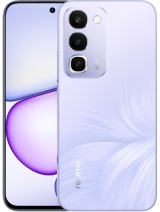
Realme C100 is a budget-tier durability specialist featuring an 8000 mAh Si/C battery for multi-day endurance and IP69K protection for extreme resilience, aimed at outdoor workers and high-usage commuters. Released in early 2026, it competes in a market where 5G is the standard, yet it relies on a cost-effective 4G infrastructure to keep its price point around 250 EUR. We must look closely at the trade-offs made to achieve such massive battery density and ruggedness, as the hardware choices indicate a specific focus on longevity over raw speed.
Carriers often present devices like the [Brand] Realme C100 as a "free" incentive when signing a two-year contract. From an economic standpoint, this is rarely a gift. The handset retails for approximately 250 EUR, but a 24-month contract at a premium rate often results in the consumer paying double that amount in hidden service costs. We noticed that because this is a 4G-only device in 2026, carriers are eager to move this inventory to clear space for 5G-SA (Standalone) compliant hardware. Users should calculate the total cost of ownership before committing to a plan that locks them into older network technology while 6G research is already making headlines.
Investing in this model unlocked allows for much more flexibility. By purchasing it outright, users can pair it with low-cost MVNO (Mobile Virtual Network Operator) plans that utilize existing 4G LTE towers without the overhead of 5G licensing fees. This approach makes sense for those who live in areas with spotty 5G coverage or for enterprises needing a fleet of durable devices that don't require high-speed data for simple reporting tasks. The economics of the "free" phone only work if you were already planning to use a high-tier unlimited plan; otherwise, you are essentially financing a budget phone at a high interest rate.
The build quality of this model represents its strongest selling point. It utilizes ArmorShell Glass, an impact-resistant material designed to withstand drops from up to 2 meters. This is a significant step up from standard chemically strengthened glass found in this price bracket. The plastic frame and back might seem less premium than metal or glass, but they serve a functional purpose: impact absorption. When a phone hits concrete, plastic flexes while glass shatters. We see this as a logical trade-off for a device marketed towards people working in construction, logistics, or outdoor recreation.
Furthermore, the IP69K rating is a rarity at this price. This certification means the device can handle high-pressure water jets and high-temperature steam cleaning. It is not just about dropping it in a puddle; it is about surviving industrial environments. Most consumer flagships stop at IP68, which only covers immersion. The addition of the IP69K standard suggests that the internal seals are significantly reinforced, likely using high-grade gaskets and adhesive barriers. For the average user, this means the phone will easily survive a heavy rainstorm or an accidental wash in the sink, but for the professional, it means a device that won't die on a dusty, wet job site.
Shipping with Android 16 and Realme UI 7.0, the software package is current for early 2026. However, software longevity is a major concern when dealing with budget silicon. While the OS introduces new privacy frameworks and better multitasking, the underlying Mediatek Helio G92 Max chipset will eventually struggle to keep up. Historical data suggests that budget devices receive fewer major OS updates compared to flagships. We expect perhaps two years of security patches, which is a consideration for those who plan to keep their phone for four or five years.
Realme UI 7.0 is heavily optimized for energy management, which pairs well with the massive battery. However, the software experience can feel cluttered. In our analysis of the interface, the animations are smooth enough for daily tasks, but as the system cache grows over time, the eMMC 5.1 storage will become a bottleneck. We often see budget phones slow down significantly after 18 months because the storage controller cannot handle the high IOPS (Input/Output Operations Per Second) required by modern, heavy apps. Buyers should expect a snappy experience initially, but understand that this isn't a long-term performance champion.
A common strategy for keeping the MSRP low on budget devices is the inclusion of pre-installed applications, often referred to as bloatware. This model is no exception. Upon first boot, users will likely find a dozen or more third-party games and utility apps. While most of these can be uninstalled or disabled, they take up initial space and can sometimes run background processes that drain the battery. We recommend a thorough clean-up immediately after setup to ensure the 8GB of RAM is dedicated to the apps you actually use.
Ads within the UI are another point of contention. Some regions may see "recommendations" in the app folder or the browser. This is the price you pay for a 250 EUR device with high-end durability specs. To the value hunter, this is a minor annoyance that can be mitigated by spending 20 minutes in the settings menu to toggle off ad IDs and personalized tracking. To the casual user, it can make the device feel less polished than a more expensive, "cleaner" alternative from the likes of Google or Apple.
The use of eMMC 5.1 instead of UFS 2.2 or 3.1 is a clear cost-cutting measure. In 2026, this storage standard feels dated. It means that downloading a large game or installing a system update will take significantly longer. While the 256GB capacity is generous, the transfer speeds are limited. Imagine trying to empty a swimming pool with a garden hose; that is eMMC 5.1 trying to move large data blocks. For social media and texting, you won't notice the difference. For power users, the delay in app launching will be palpable.
The microSDXC slot is a welcome inclusion, though it shares a slot with the second SIM card. This allows for massive storage expansion, which is ideal for those who record a lot of 1080p video or want to carry a large library of offline maps and Hi-Res audio files. Given the 24-bit/192kHz Hi-Res audio support, having 1TB of FLAC files on an SD card makes this a decent budget audiophile player, provided you use the built-in 3.5mm jack.
We must address the elephant in the room: this is a 4G handset in a 5G era. The Mediatek Helio G92 Max is a capable gaming-centric 4G chip, but it lacks the future-proofing of 5G. In metropolitan areas where 4G bands are being refarmed for 5G, signal quality might actually decrease over the next few years. However, in rural areas or developing markets, 4G remains the backbone of connectivity. The device supports a wide range of LTE bands (1, 3, 5, 7, 8, 20, 28, 38, 40, 41), ensuring it works on almost any carrier globally.
Wi-Fi 5 (802.11ac) and Bluetooth 5.3 are standard but solid. The inclusion of NFC is regional, so we advise buyers to check their specific market if they rely on contactless payments. The GPS/GALILEO/GLONASS support is robust, making this an excellent dedicated navigation tool for a vehicle or a bike, especially given the screen's 1200 nit peak brightness which ensures visibility under direct sunlight.
The 8000 mAh Si/C battery is the undisputed king of this spec sheet. Silicon-Carbon technology allows for much higher energy density than traditional Lithium-Ion, meaning Realme packed a massive capacity into a chassis that is only 8.6mm thick. In a real-world scenario, this phone can easily last three to four days of moderate use. For a delivery driver using GPS all day or a hiker out for a weekend, this is a literal lifesaver. You can forget your charger at home and not worry about it until Tuesday.
However, the 15W wired charging is a major drawback. Charging an 8000mAh cell at 15W is like filling an Olympic pool with a bucket. It takes hours. If you drain the battery completely, expect to leave it plugged in overnight for a full charge. This is where Bypass Charging becomes essential. When you are gaming or using the phone for heavy tasks while plugged in, the device draws power directly from the wall to the motherboard, bypassing the battery entirely. This prevents heat buildup, which is crucial for preserving the long-term health of that expensive Si/C cell. It’s a smart inclusion that acknowledges the slow charging reality.
A 6.8-inch IPS LCD at 720p resolution results in a pixel density of roughly 254 ppi. At this size, the screen is not sharp. Text will have slight fuzziness around the edges if you look closely. However, the panel does offer a 120Hz refresh rate, making the UI feel fluid and responsive. The decision to go with 720p was likely twofold: to reduce the load on the GPU and to maximize battery life. Pushing fewer pixels saves significant energy.
The 1200 nits (HBM) is the saving grace. Most budget LCDs struggle in the sun, but this one remains legible. If you are using this as a tool in the field, brightness matters more than pixel count. We also looked at the 19.5:9 ratio, which makes the phone tall and narrow, helping with one-handed grip, though the 219g weight reminds you that there is a massive battery inside.
In online enthusiast communities, the debate around this handset is polarized. One camp argues that a 720p screen and 4G-only connectivity are unacceptable in 2026, regardless of the price. They point to slightly more expensive mid-range phones that offer OLED and 5G. The other camp, consisting of pragmatists and outdoor enthusiasts, praises the device for its specialized focus. They argue that for 250 EUR, getting IP69K durability and an 8000mAh battery is an incredible value for a specific niche.
Many users on forums like Reddit are also discussing the Helio G92 Max. While marketed as a "gaming" chip, the community consensus is that it's best suited for casual titles. Trying to run heavy AAA mobile games from 2025 or 2026 will result in thermal throttling despite the Bypass Charging feature. The consensus is clear: this is a "Utility Phone," not a "Media Phone."
If you find the [Brand] Realme C100 for 250 EUR, it is a solid purchase for anyone who prioritizes battery and durability over everything else. If you are offered it for "free" on a contract, do the math. Unless the monthly service fee is incredibly low, you are better off buying it unlocked and choosing your own carrier. The lack of 5G means this phone has a shorter technical shelf life in urban areas, so don't overpay for it through a long-term commitment. In summary, the [Brand] Realme C100 is a niche workhorse that excels at staying alive in conditions that would kill most modern flagships.
The Free Phone Trap
Carriers often present devices like the [Brand] Realme C100 as a "free" incentive when signing a two-year contract. From an economic standpoint, this is rarely a gift. The handset retails for approximately 250 EUR, but a 24-month contract at a premium rate often results in the consumer paying double that amount in hidden service costs. We noticed that because this is a 4G-only device in 2026, carriers are eager to move this inventory to clear space for 5G-SA (Standalone) compliant hardware. Users should calculate the total cost of ownership before committing to a plan that locks them into older network technology while 6G research is already making headlines.
Investing in this model unlocked allows for much more flexibility. By purchasing it outright, users can pair it with low-cost MVNO (Mobile Virtual Network Operator) plans that utilize existing 4G LTE towers without the overhead of 5G licensing fees. This approach makes sense for those who live in areas with spotty 5G coverage or for enterprises needing a fleet of durable devices that don't require high-speed data for simple reporting tasks. The economics of the "free" phone only work if you were already planning to use a high-tier unlimited plan; otherwise, you are essentially financing a budget phone at a high interest rate.
Hardware Quality and Durability Standards
The build quality of this model represents its strongest selling point. It utilizes ArmorShell Glass, an impact-resistant material designed to withstand drops from up to 2 meters. This is a significant step up from standard chemically strengthened glass found in this price bracket. The plastic frame and back might seem less premium than metal or glass, but they serve a functional purpose: impact absorption. When a phone hits concrete, plastic flexes while glass shatters. We see this as a logical trade-off for a device marketed towards people working in construction, logistics, or outdoor recreation.
Furthermore, the IP69K rating is a rarity at this price. This certification means the device can handle high-pressure water jets and high-temperature steam cleaning. It is not just about dropping it in a puddle; it is about surviving industrial environments. Most consumer flagships stop at IP68, which only covers immersion. The addition of the IP69K standard suggests that the internal seals are significantly reinforced, likely using high-grade gaskets and adhesive barriers. For the average user, this means the phone will easily survive a heavy rainstorm or an accidental wash in the sink, but for the professional, it means a device that won't die on a dusty, wet job site.
Software Longevity and Update Realities
Shipping with Android 16 and Realme UI 7.0, the software package is current for early 2026. However, software longevity is a major concern when dealing with budget silicon. While the OS introduces new privacy frameworks and better multitasking, the underlying Mediatek Helio G92 Max chipset will eventually struggle to keep up. Historical data suggests that budget devices receive fewer major OS updates compared to flagships. We expect perhaps two years of security patches, which is a consideration for those who plan to keep their phone for four or five years.
Realme UI 7.0 is heavily optimized for energy management, which pairs well with the massive battery. However, the software experience can feel cluttered. In our analysis of the interface, the animations are smooth enough for daily tasks, but as the system cache grows over time, the eMMC 5.1 storage will become a bottleneck. We often see budget phones slow down significantly after 18 months because the storage controller cannot handle the high IOPS (Input/Output Operations Per Second) required by modern, heavy apps. Buyers should expect a snappy experience initially, but understand that this isn't a long-term performance champion.
Bloatware and Pre-installed Junk
A common strategy for keeping the MSRP low on budget devices is the inclusion of pre-installed applications, often referred to as bloatware. This model is no exception. Upon first boot, users will likely find a dozen or more third-party games and utility apps. While most of these can be uninstalled or disabled, they take up initial space and can sometimes run background processes that drain the battery. We recommend a thorough clean-up immediately after setup to ensure the 8GB of RAM is dedicated to the apps you actually use.
Ads within the UI are another point of contention. Some regions may see "recommendations" in the app folder or the browser. This is the price you pay for a 250 EUR device with high-end durability specs. To the value hunter, this is a minor annoyance that can be mitigated by spending 20 minutes in the settings menu to toggle off ad IDs and personalized tracking. To the casual user, it can make the device feel less polished than a more expensive, "cleaner" alternative from the likes of Google or Apple.
Storage Speed and Installation Bottlenecks
The use of eMMC 5.1 instead of UFS 2.2 or 3.1 is a clear cost-cutting measure. In 2026, this storage standard feels dated. It means that downloading a large game or installing a system update will take significantly longer. While the 256GB capacity is generous, the transfer speeds are limited. Imagine trying to empty a swimming pool with a garden hose; that is eMMC 5.1 trying to move large data blocks. For social media and texting, you won't notice the difference. For power users, the delay in app launching will be palpable.
The microSDXC slot is a welcome inclusion, though it shares a slot with the second SIM card. This allows for massive storage expansion, which is ideal for those who record a lot of 1080p video or want to carry a large library of offline maps and Hi-Res audio files. Given the 24-bit/192kHz Hi-Res audio support, having 1TB of FLAC files on an SD card makes this a decent budget audiophile player, provided you use the built-in 3.5mm jack.
The Connectivity and Network Gap
We must address the elephant in the room: this is a 4G handset in a 5G era. The Mediatek Helio G92 Max is a capable gaming-centric 4G chip, but it lacks the future-proofing of 5G. In metropolitan areas where 4G bands are being refarmed for 5G, signal quality might actually decrease over the next few years. However, in rural areas or developing markets, 4G remains the backbone of connectivity. The device supports a wide range of LTE bands (1, 3, 5, 7, 8, 20, 28, 38, 40, 41), ensuring it works on almost any carrier globally.
Wi-Fi 5 (802.11ac) and Bluetooth 5.3 are standard but solid. The inclusion of NFC is regional, so we advise buyers to check their specific market if they rely on contactless payments. The GPS/GALILEO/GLONASS support is robust, making this an excellent dedicated navigation tool for a vehicle or a bike, especially given the screen's 1200 nit peak brightness which ensures visibility under direct sunlight.
Battery Endurance and the 15W Problem
The 8000 mAh Si/C battery is the undisputed king of this spec sheet. Silicon-Carbon technology allows for much higher energy density than traditional Lithium-Ion, meaning Realme packed a massive capacity into a chassis that is only 8.6mm thick. In a real-world scenario, this phone can easily last three to four days of moderate use. For a delivery driver using GPS all day or a hiker out for a weekend, this is a literal lifesaver. You can forget your charger at home and not worry about it until Tuesday.
However, the 15W wired charging is a major drawback. Charging an 8000mAh cell at 15W is like filling an Olympic pool with a bucket. It takes hours. If you drain the battery completely, expect to leave it plugged in overnight for a full charge. This is where Bypass Charging becomes essential. When you are gaming or using the phone for heavy tasks while plugged in, the device draws power directly from the wall to the motherboard, bypassing the battery entirely. This prevents heat buildup, which is crucial for preserving the long-term health of that expensive Si/C cell. It’s a smart inclusion that acknowledges the slow charging reality.
Display: The Resolution Trade-off
A 6.8-inch IPS LCD at 720p resolution results in a pixel density of roughly 254 ppi. At this size, the screen is not sharp. Text will have slight fuzziness around the edges if you look closely. However, the panel does offer a 120Hz refresh rate, making the UI feel fluid and responsive. The decision to go with 720p was likely twofold: to reduce the load on the GPU and to maximize battery life. Pushing fewer pixels saves significant energy.
The 1200 nits (HBM) is the saving grace. Most budget LCDs struggle in the sun, but this one remains legible. If you are using this as a tool in the field, brightness matters more than pixel count. We also looked at the 19.5:9 ratio, which makes the phone tall and narrow, helping with one-handed grip, though the 219g weight reminds you that there is a massive battery inside.
Community Consensus and Forum Debates
In online enthusiast communities, the debate around this handset is polarized. One camp argues that a 720p screen and 4G-only connectivity are unacceptable in 2026, regardless of the price. They point to slightly more expensive mid-range phones that offer OLED and 5G. The other camp, consisting of pragmatists and outdoor enthusiasts, praises the device for its specialized focus. They argue that for 250 EUR, getting IP69K durability and an 8000mAh battery is an incredible value for a specific niche.
Many users on forums like Reddit are also discussing the Helio G92 Max. While marketed as a "gaming" chip, the community consensus is that it's best suited for casual titles. Trying to run heavy AAA mobile games from 2025 or 2026 will result in thermal throttling despite the Bypass Charging feature. The consensus is clear: this is a "Utility Phone," not a "Media Phone."
Buying Advice: Unlocked vs. Contract
If you find the [Brand] Realme C100 for 250 EUR, it is a solid purchase for anyone who prioritizes battery and durability over everything else. If you are offered it for "free" on a contract, do the math. Unless the monthly service fee is incredibly low, you are better off buying it unlocked and choosing your own carrier. The lack of 5G means this phone has a shorter technical shelf life in urban areas, so don't overpay for it through a long-term commitment. In summary, the [Brand] Realme C100 is a niche workhorse that excels at staying alive in conditions that would kill most modern flagships.
Technical Specifications
| LAUNCH | |
|---|---|
| Announced | 2026, April 07 |
| Status | Available. Released 2026, April 07 |
| PLATFORM | |
| OS | Android 16, Realme UI 7.0 |
| Chipset | Mediatek Helio G92 Max |
| CPU | Octa-core (2x2.4 GHz Cortex-A76 & 6x2.0 GHz Cortex-A55) |
| GPU | Mali-G52 MC2 |
| BODY | |
| Dimensions | 166.5 x 78.2 x 8.6 mm (6.56 x 3.08 x 0.34 in) |
| Weight | 219 g (7.72 oz) |
| Build | Glass front, plastic frame, plastic back |
| SIM | Nano-SIM + Nano-SIM |
| Info | IP66/IP68/IP69K dust tight and water resistant (high pressure water jets; immersible up to 6m for 30 min) Drop resistant up to 2m |
| DISPLAY | |
| Type | IPS LCD, 120Hz, 1200 nits (HBM) |
| Size | 6.8 inches, 113.0 cm2 (~86.8% screen-to-body ratio) |
| Resolution | 720 x 1570 pixels, 19.5:9 ratio (~254 ppi density) |
| Protection | ArmorShell Glass |
| MEMORY | |
| Card slot | microSDXC (uses shared SIM slot) |
| Internal | 256GB 8GB RAM |
| Info | eMMC 5.1 |
| MAIN CAMERA | |
| Single | 50 MP, f/1.8, (wide), PDAF |
| Features | LED flash, HDR, panorama |
| Video | 1080p@30fps |
| SELFIE CAMERA | |
| Single | 8 MP, f/2.0, (wide) |
| Video | 1080p@30fps |
| SOUND | |
| Loudspeaker | Yes, with stereo speakers |
| 3.5mm jack | Yes |
| Info | 24-bit/192kHz Hi-Res audio |
| COMMS | |
| WLAN | Wi-Fi 802.11 a/b/g/n/ac, dual-band |
| Bluetooth | 5.3, A2DP, LE |
| Positioning | GPS, GALILEO, GLONASS, QZSS, BDS |
| NFC | Yes (market/region dependent) |
| Radio | No |
| USB | USB Type-C 2.0, OTG |
| NETWORK | |
| Technology | GSM / HSPA / LTE |
| 2G bands | GSM 850 / 900 / 1800 / 1900 |
| 3G bands | HSDPA 850 / 900 / 2100 |
| 4G bands | 1, 3, 5, 7, 8, 20, 28, 38, 40, 41 |
| Speed | HSPA, LTE |
| FEATURES | |
| Sensors | Fingerprint (side-mounted), Proximity, Light, E-compass, Accelerometer |
| BATTERY | |
| Type | Si/C Li-Ion 8000 mAh |
| Charging | 15W wired Reverse wired Bypass charging |
| MISC | |
| Battery | 8000 mAh Si/C Li-Ion, 15W Charging |
| Durability | IP69K/IP68, 2m Drop Resistance |
| Display | 6.8" IPS LCD, 120Hz, 1200 nits |
| Chipset | Mediatek Helio G92 Max (12nm) |
| Storage | 256GB eMMC 5.1, 8GB RAM |
| Camera | 50 MP Main, 8 MP Selfie |
| OS | Android 16, Realme UI 7.0 |
| Audio | Stereo Speakers, 3.5mm Jack, Hi-Res 24-bit/192kHz |
| Colors | Glory White, Triumphant Purple, Eternal Brown |
| Price | About 250 EUR |