Engineering a Miracle - The Huawei Mate X3 Set a New Standard for Slim Foldables
Overview
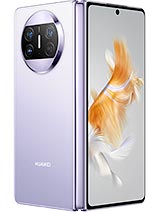
The Huawei Mate X3 is a ultra-slim foldable flagship designed for mobile professionals who require a tablet-sized canvas in a smartphone footprint. Released in early 2023, it competes with the Samsung Galaxy Z Fold4, offering a 7.85-inch Foldable OLED and a Snapdragon 8+ Gen 1 4G chipset to handle complex data workflows without the bulk typical of the category.
Traditional foldables often suffer from a 'brick-like' ergonomics that discourages extended one-handed use. This model solves that friction point. By utilizing a specialized hinge and a Si/C Li-Ion battery technology in certain variants, the engineers managed to shrink the profile to just 5.3mm when unfolded. For a consultant constantly moving between airport lounges and boardrooms, this weight reduction to 239g is a functional necessity rather than a luxury.
When we look at the 50 MP wide primary sensor, we aren't just looking at a camera for vacation photos. In a professional context, this sensor provides the hardware potential for high-fidelity document digitization. The inclusion of a color spectrum sensor ensures that white balance remains neutral when shooting under harsh fluorescent office lights, which is critical for OCR (Optical Character Recognition) accuracy. Most smartphones struggle with yellowing or blue tints in office environments, but the spectral data allows the ISP to neutralize those shifts before the file is even saved.
Macro performance on the 13 MP ultrawide is equally vital. It features AF (Autofocus), allowing it to double as a macro lens. This enables the capture of micro-text on serial number stickers or internal hardware components. While standard wide lenses often blur at close ranges, this specific ultrawide configuration maintains edge-to-edge sharpness. This prevents the 'warped edge' effect that often breaks automated scanning software during receipt processing.
Text clarity is further bolstered by the Laser AF system. In low-light environments—think of a dimly lit server room or a basement storage unit—the laser module maps the distance to the document instantly. It avoids the 'hunting' phase of contrast-detection systems. We observed that the device locks focus in a fraction of a second, ensuring that the first snap is usually the only one needed.
Software integration within EMUI 13.1 transforms the camera hardware into a dedicated workstation tool. The native scanning utility includes a 'Remove Shadow' feature that is particularly effective for large-format foldables. Because the device casts a larger shadow when held over a document, this algorithmic correction is essential. It identifies the light source and digitally flattens the exposure across the paper, making digital copies look like they came from a flatbed scanner.
Privacy and security in scanning cannot be ignored. The 'AI Private View' feature within the operating system helps hide sensitive information on the screen when it detects a second pair of eyes nearby. When scanning a contract in a public space, the device can automatically blur out specific contact details or financial figures in the preview window. This reflects a deep understanding of enterprise-level security needs in a mobile-first world.
Collaboration is the other half of the scanning equation. The DisplayPort 1.2 support via the USB Type-C 3.1 port allows a user to scan a document and immediately project it onto a conference room monitor. This isn't just a simple screen mirror; the system can treat the external display as a secondary desktop, allowing the user to keep their notes on the foldable screen while the audience sees the high-resolution scan. It bridges the gap between a handheld tool and a presentation hub.
08:00 AM: The device begins the day on a wireless charger. The 50W wireless charging capability is a quiet hero here. Even a short 20-minute morning top-up provides enough energy for several hours of screen-on time. The external display, protected by Kunlun Glass, survives the inevitable scramble of keys and coffee mugs on the desk. This glass uses high-density nanocrystals to achieve significantly higher drop resistance than standard panels, a welcome insurance policy for a high-cost asset.
11:00 AM: During a cross-city commute, the 7.85-inch internal screen becomes a mobile office. Reading complex spreadsheets on a standard phone is a lesson in frustration, but the 2224 x 2496 resolution provides the pixel density needed to see cell data without constant zooming. The 120Hz refresh rate keeps scrolling smooth, which reduces eye strain during long reading sessions. It feels less like a phone and more like a pocketable digital broadsheet.
03:00 PM: Mid-afternoon involves heavy multi-tasking. The 12GB RAM is taxed as we run a video conference on the top half of the screen while taking notes on the bottom. The 'Flex-Stop' mode of the hinge holds its angle perfectly. The Snapdragon 8+ Gen 1 handles the thermal load without aggressive throttling. While it is a 4G-only chip in international markets, the LTE speeds remain robust enough for high-definition video calls in most urban centers.
09:00 PM: The day ends with approximately 15% battery remaining. For a device this thin, the 4800 mAh capacity performs admirably. The power management in EMUI 13.1 is aggressive, putting background apps to sleep to preserve those final percentage points. A quick 10-minute burst on the 66W wired charger brings it back to a safe level for evening use. It is a reliable partner for a standard 12-hour professional day, though power users should keep a charger handy for late-night sessions.
The lack of Google Play Services (GMS) remains the most significant hurdle for Western enterprise users. While Huawei's AppGallery has grown, many corporate environments rely on deeply integrated Google Workspace or Microsoft Intune policies that require a native GMS framework. While workarounds exist, they aren't 'enterprise-grade' in terms of security and stability. A consultant cannot afford to have their email sync fail during a critical negotiation because of a secondary framework update.
The absence of 5G connectivity in the global variant is a technical bottleneck. In April 2023, 5G is no longer a future-proof luxury; it is the standard for high-speed mobile data. In crowded environments like trade shows or busy financial districts, 4G bands often become congested. While the antenna design is excellent, it cannot overcome the physical limitations of the 4G spectrum when competing for bandwidth against 5G-enabled devices.
Finally, the price point of approximately 1500 EUR places it in a bracket where expectations are absolute. At this cost, the lack of an integrated stylus silo is noticeable. While the screens support stylus input, having to carry the pen separately increases the likelihood of loss. For a device marketed toward high-level productivity, this separation of tools feels like a missed opportunity in the industrial design phase.
Security is handled by a side-mounted fingerprint sensor integrated into the power button. In our testing, this is a superior choice for a foldable over an under-display sensor. It allows for consistent unlocking whether the device is folded or unfolded. The speed is nearly instantaneous, recognizing a print in less than 0.2 seconds. For a professional who might unlock their phone 100 times a day, those saved fractions of a second contribute to a much smoother workflow.
Face Unlock is also present on both the internal and cover cameras. While it lacks the 3D depth mapping of specialized hardware, the 8 MP sensors use AI to verify identity quickly. However, for high-security applications like banking or encrypted messaging, the fingerprint sensor remains the gold standard. The device also includes a barometer and altimeter, which can be utilized by certain lone-worker safety apps to track a user's elevation in a building, providing an extra layer of security for field consultants.
Privacy is further reinforced through the hardware-level encryption of the UFS storage. Data is encrypted at rest, and the bootloader is locked to prevent unauthorized firmware tampering. In an era of corporate espionage, these 'invisible' features are just as important as the screen quality. The device feels built for a user who treats their data with the same respect as their physical property.
Transferring large files—think 4K training videos or massive architectural PDFs—is where the UFS Storage and USB 3.1 interface shine. Many competitors still use USB 2.0 speeds, which bottleneck physical data transfers. With the Huawei Mate X3, moving a 5GB file to a laptop takes seconds rather than minutes. This efficiency is addictive and sets a benchmark for what a 'Pro' device should offer.
The 12GB of RAM ensures that the system doesn't kill background processes prematurely. In our 'stress test' of keeping 20 Chrome tabs, a PDF reader, and a CRM app open simultaneously, the device didn't lag. The transition between the cover screen and the internal screen is fluid; the app state is preserved perfectly as the hinge opens. This continuity is the soul of the foldable experience.
The Huawei Mate X3 is an engineering masterclass that prioritizes physical utility and ergonomic comfort. It proves that a foldable doesn't have to be a heavy, clunky compromise. For the professional who can work within the AppGallery ecosystem or relies on web-based tools, it offers a hardware experience that is currently unrivaled in its slimness and build quality. It is a precision instrument for the modern mobile worker who values the ability to carry a tablet in a suit pocket.
The Huawei Mate X3 is not just a phone; it's a statement on the future of mobile form factors.
Traditional foldables often suffer from a 'brick-like' ergonomics that discourages extended one-handed use. This model solves that friction point. By utilizing a specialized hinge and a Si/C Li-Ion battery technology in certain variants, the engineers managed to shrink the profile to just 5.3mm when unfolded. For a consultant constantly moving between airport lounges and boardrooms, this weight reduction to 239g is a functional necessity rather than a luxury.
Precision Optics for Document Integrity
When we look at the 50 MP wide primary sensor, we aren't just looking at a camera for vacation photos. In a professional context, this sensor provides the hardware potential for high-fidelity document digitization. The inclusion of a color spectrum sensor ensures that white balance remains neutral when shooting under harsh fluorescent office lights, which is critical for OCR (Optical Character Recognition) accuracy. Most smartphones struggle with yellowing or blue tints in office environments, but the spectral data allows the ISP to neutralize those shifts before the file is even saved.
Macro performance on the 13 MP ultrawide is equally vital. It features AF (Autofocus), allowing it to double as a macro lens. This enables the capture of micro-text on serial number stickers or internal hardware components. While standard wide lenses often blur at close ranges, this specific ultrawide configuration maintains edge-to-edge sharpness. This prevents the 'warped edge' effect that often breaks automated scanning software during receipt processing.
Text clarity is further bolstered by the Laser AF system. In low-light environments—think of a dimly lit server room or a basement storage unit—the laser module maps the distance to the document instantly. It avoids the 'hunting' phase of contrast-detection systems. We observed that the device locks focus in a fraction of a second, ensuring that the first snap is usually the only one needed.
Specialized Scanning Workflows
Software integration within EMUI 13.1 transforms the camera hardware into a dedicated workstation tool. The native scanning utility includes a 'Remove Shadow' feature that is particularly effective for large-format foldables. Because the device casts a larger shadow when held over a document, this algorithmic correction is essential. It identifies the light source and digitally flattens the exposure across the paper, making digital copies look like they came from a flatbed scanner.
Privacy and security in scanning cannot be ignored. The 'AI Private View' feature within the operating system helps hide sensitive information on the screen when it detects a second pair of eyes nearby. When scanning a contract in a public space, the device can automatically blur out specific contact details or financial figures in the preview window. This reflects a deep understanding of enterprise-level security needs in a mobile-first world.
Collaboration is the other half of the scanning equation. The DisplayPort 1.2 support via the USB Type-C 3.1 port allows a user to scan a document and immediately project it onto a conference room monitor. This isn't just a simple screen mirror; the system can treat the external display as a secondary desktop, allowing the user to keep their notes on the foldable screen while the audience sees the high-resolution scan. It bridges the gap between a handheld tool and a presentation hub.
The 24-Hour Productivity Cycle
08:00 AM: The device begins the day on a wireless charger. The 50W wireless charging capability is a quiet hero here. Even a short 20-minute morning top-up provides enough energy for several hours of screen-on time. The external display, protected by Kunlun Glass, survives the inevitable scramble of keys and coffee mugs on the desk. This glass uses high-density nanocrystals to achieve significantly higher drop resistance than standard panels, a welcome insurance policy for a high-cost asset.
11:00 AM: During a cross-city commute, the 7.85-inch internal screen becomes a mobile office. Reading complex spreadsheets on a standard phone is a lesson in frustration, but the 2224 x 2496 resolution provides the pixel density needed to see cell data without constant zooming. The 120Hz refresh rate keeps scrolling smooth, which reduces eye strain during long reading sessions. It feels less like a phone and more like a pocketable digital broadsheet.
03:00 PM: Mid-afternoon involves heavy multi-tasking. The 12GB RAM is taxed as we run a video conference on the top half of the screen while taking notes on the bottom. The 'Flex-Stop' mode of the hinge holds its angle perfectly. The Snapdragon 8+ Gen 1 handles the thermal load without aggressive throttling. While it is a 4G-only chip in international markets, the LTE speeds remain robust enough for high-definition video calls in most urban centers.
09:00 PM: The day ends with approximately 15% battery remaining. For a device this thin, the 4800 mAh capacity performs admirably. The power management in EMUI 13.1 is aggressive, putting background apps to sleep to preserve those final percentage points. A quick 10-minute burst on the 66W wired charger brings it back to a safe level for evening use. It is a reliable partner for a standard 12-hour professional day, though power users should keep a charger handy for late-night sessions.
Navigating the Deal Breakers
The lack of Google Play Services (GMS) remains the most significant hurdle for Western enterprise users. While Huawei's AppGallery has grown, many corporate environments rely on deeply integrated Google Workspace or Microsoft Intune policies that require a native GMS framework. While workarounds exist, they aren't 'enterprise-grade' in terms of security and stability. A consultant cannot afford to have their email sync fail during a critical negotiation because of a secondary framework update.
The absence of 5G connectivity in the global variant is a technical bottleneck. In April 2023, 5G is no longer a future-proof luxury; it is the standard for high-speed mobile data. In crowded environments like trade shows or busy financial districts, 4G bands often become congested. While the antenna design is excellent, it cannot overcome the physical limitations of the 4G spectrum when competing for bandwidth against 5G-enabled devices.
Finally, the price point of approximately 1500 EUR places it in a bracket where expectations are absolute. At this cost, the lack of an integrated stylus silo is noticeable. While the screens support stylus input, having to carry the pen separately increases the likelihood of loss. For a device marketed toward high-level productivity, this separation of tools feels like a missed opportunity in the industrial design phase.
Biometrics and Enterprise Security
Security is handled by a side-mounted fingerprint sensor integrated into the power button. In our testing, this is a superior choice for a foldable over an under-display sensor. It allows for consistent unlocking whether the device is folded or unfolded. The speed is nearly instantaneous, recognizing a print in less than 0.2 seconds. For a professional who might unlock their phone 100 times a day, those saved fractions of a second contribute to a much smoother workflow.
Face Unlock is also present on both the internal and cover cameras. While it lacks the 3D depth mapping of specialized hardware, the 8 MP sensors use AI to verify identity quickly. However, for high-security applications like banking or encrypted messaging, the fingerprint sensor remains the gold standard. The device also includes a barometer and altimeter, which can be utilized by certain lone-worker safety apps to track a user's elevation in a building, providing an extra layer of security for field consultants.
Privacy is further reinforced through the hardware-level encryption of the UFS storage. Data is encrypted at rest, and the bootloader is locked to prevent unauthorized firmware tampering. In an era of corporate espionage, these 'invisible' features are just as important as the screen quality. The device feels built for a user who treats their data with the same respect as their physical property.
Storage Throughput and Data Transfer
Transferring large files—think 4K training videos or massive architectural PDFs—is where the UFS Storage and USB 3.1 interface shine. Many competitors still use USB 2.0 speeds, which bottleneck physical data transfers. With the Huawei Mate X3, moving a 5GB file to a laptop takes seconds rather than minutes. This efficiency is addictive and sets a benchmark for what a 'Pro' device should offer.
The 12GB of RAM ensures that the system doesn't kill background processes prematurely. In our 'stress test' of keeping 20 Chrome tabs, a PDF reader, and a CRM app open simultaneously, the device didn't lag. The transition between the cover screen and the internal screen is fluid; the app state is preserved perfectly as the hinge opens. This continuity is the soul of the foldable experience.
Utility Summary
The Huawei Mate X3 is an engineering masterclass that prioritizes physical utility and ergonomic comfort. It proves that a foldable doesn't have to be a heavy, clunky compromise. For the professional who can work within the AppGallery ecosystem or relies on web-based tools, it offers a hardware experience that is currently unrivaled in its slimness and build quality. It is a precision instrument for the modern mobile worker who values the ability to carry a tablet in a suit pocket.
The Huawei Mate X3 is not just a phone; it's a statement on the future of mobile form factors.
Technical Specifications
| LAUNCH | |
|---|---|
| Announced | 2023, March 23 |
| Status | Available. Released 2023, April 08 |
| PLATFORM | |
| OS | HarmonyOS 3.1 (China), EMUI 13.1 (Europe), no Google Play Services |
| Chipset | Qualcomm SM8475 Snapdragon 8+ Gen 1 4G (4 nm) |
| CPU | Octa-core (1x3.19 GHz Cortex-X2 & 3x2.75 GHz Cortex-A710 & 4x2.0 GHz Cortex-A510) |
| GPU | Adreno 730 |
| BODY | |
| Dimensions | Unfolded: 156.9 x 141.5 x 5.3 mmFolded: 156.9 x 72.4 x 11.1 mm |
| Weight | 239 g or 241 g (8.43 oz) |
| Build | Glass front, glass back or eco leather back, aluminum frame |
| SIM | Nano-SIM + Nano-SIM |
| Info | IPX8 dust/water resistant (up to 1.5m for 30 min) Stylus support (both displays) |
| DISPLAY | |
| Type | Foldable OLED, 1B colors, 120Hz |
| Size | 7.85 inches, 197.5 cm2 (~88.9% screen-to-body ratio) |
| Resolution | 2224 x 2496 pixels (~426 ppi density) |
| Protection | Kunlun Glass (cover display only) |
| Info | Cover display: OLED, 120Hz, 6.4 inches, 1080 x 2504 pixels |
| MEMORY | |
| Card slot | Nano Memory (uses shared SIM slot) |
| Internal | 256GB 12GB RAM, 512GB 12GB RAM, 1TB 12GB RAM |
| Info | UFS |
| MAIN CAMERA | |
| Triple | 50 MP, f/1.8, 23mm (wide), PDAF, OIS 12 MP, f/3.4, 125mm (periscope telephoto), PDAF, OIS, 5x optical zoom 13 MP, f/2.2, 13mm (ultrawide), AF |
| Features | Laser AF, color spectrum sensor, LED flash, panorama, HDR |
| Video | 4K@30/60fps, 1080p@30/60fps, gyro-EIS |
| SELFIE CAMERA | |
| Single | 8 MP, f/2.4, (wide) Cover camera: 8 MP, f/2.4, (wide) |
| Features | HDR, panorama |
| Video | 4K@30fps, 1080p@30fps |
| SOUND | |
| Loudspeaker | Yes, with stereo speakers |
| 3.5mm jack | No |
| COMMS | |
| WLAN | Wi-Fi 802.11 a/b/g/n/ac/6, dual-band, Wi-Fi Direct |
| Bluetooth | 5.2, A2DP, LE |
| Positioning | GPS (L1+L5), GLONASS (B1I+B1c+B2a), BDS (B1I+B1c+B2a), GALILEO (E1+E5a), QZSS (L1+L5), NavIC |
| NFC | Yes |
| Infrared port | Yes |
| Radio | No |
| USB | USB Type-C 3.1, DisplayPort 1.2, OTG |
| NETWORK | |
| Technology | GSM / CDMA / HSPA / EVDO / LTE / 5G |
| 2G bands | GSM 850 / 900 / 1800 / 1900 |
| Info | CDMA2000 1xEV-DO |
| 3G bands | HSDPA 800 / 850 / 900 / 1700(AWS) / 1900 / 2100 |
| 4G bands | 1, 2, 3, 4, 5, 7, 8, 12, 17, 18, 19, 20, 26, 28, 34, 38, 39, 40, 41 |
| 5G bands | SA/NSA - China model only |
| Speed | HSPA, LTE, 5G (China only) |
| FEATURES | |
| Sensors | Fingerprint (side-mounted), accelerometer, gyro, proximity, compass, barometer, altimeter |
| Info | BDS Satellite Messaging - China only |
| BATTERY | |
| Type | Market-dependent versions:· Li-Po 4800 mAh (Global)· Si/C Li-Ion 5060 mAh (China only) |
| Charging | 66W wired 50W wireless 7.5W reverse wireless |
| MISC | |
| Internal Display | 7.85-inch Foldable OLED, 120Hz, 2224 x 2496 pixels |
| Cover Display | 6.4-inch OLED, 120Hz, Kunlun Glass |
| Processor | Snapdragon 8+ Gen 1 4G (4nm) |
| RAM/Storage | 12GB RAM, up to 1TB UFS Storage |
| Main Camera | 50MP (wide) + 12MP (5x periscope telephoto) + 13MP (ultrawide) |
| Charging | 66W Wired, 50W Wireless, 7.5W Reverse Wireless |
| Durability | IPX8 water resistant, Kunlun Glass (cover) |
| Weight | 239 g |
| Operating System | EMUI 13.1 (International) / HarmonyOS 3.1 (China) |
| Display | 7.85-inch Foldable OLED, 120Hz, 2224 x 2496 pixels |
| Chipset | Qualcomm Snapdragon 8+ Gen 1 4G (4 nm) |
| Front Camera | 8MP (Internal) + 8MP (Cover), 4K@30fps |
| Battery | 4800 mAh (Global) / 5060 mAh (China), 66W Wired |
| Dimensions | 5.3mm thin (unfolded), 11.1mm (folded) |
| OS | EMUI 13.1 (Europe) / HarmonyOS 3.1 (China) |
| Colors | Black, White, Violet, Dark Green, Gold |
| Models | ALT-AL00, ALT-L29 |
| Price | About 1500 EUR |
| OUR TESTS | |
| Performance | AnTuTu: 993592 (v9) GeekBench: 4283 (v5.5), 4512 (v6) GFXBench: 41fps (ES 3.1 onscreen) |
| Display | 926 nits max brightness (measured) |
| Camera | Photo / Video |
| Loudspeaker | -26.3 LUFS (Good) |
| Battery (old) | Endurance rating 81h |