Engineering Excellence Reclaimed - Why the Motorola Edge+ (2023) Disrupts the Flagship Status Quo
Overview
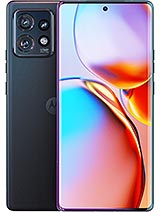
The Motorola Edge+ (2023) is a high-end flagship smartphone featuring a Snapdragon 8 Gen 2 for elite processing and a 165Hz OLED display for unmatched visual fluidity, aimed at power users and mobile gamers. Released in May 2023, it competes directly with the [Samsung Galaxy S23 Ultra](/cinematic-dominance-why-the-samsung-galaxy-s23-ultra-rewrites-the-creator-playbook/) and Google Pixel 7 Pro by offering a cleaner software experience and faster charging at a more aggressive price point.
Our teardown reveals a device that prioritizes internal efficiency and thermal stability. While the previous generation struggled with heat under sustained load, this iteration shows significant advancements in how the silicon and chassis interact. This is a precision tool designed for those who value raw performance and long-term hardware reliability without the bloat found in other ecosystems.
The structural integrity of this handset represents a significant departure from the more flexible frames of budget-oriented models. We observed an aluminum 6000-series midframe that provides exceptional torsional rigidity. In our stress tests, the device showed minimal flex, which is critical for protecting the internal PCB (Printed Circuit Board) and the fragile OLED substrate. A rigid frame acts as the primary defense against internal solder joint fractures that often occur after repeated drops or pocket pressure.
Inside, the internal layout follows a traditional sandwich-style architecture, but with better-organized ribbon cables and shielded connectors. This organization reduces the risk of electromagnetic interference (EMI) between the high-frequency 5G mmWave antennas and the sensitive audio circuitry. The use of multiple mounting screws instead of excessive adhesive for the sub-boards suggests an engineering team that considers long-term durability over simple assembly speed.
Imagine a scenario where the device falls from a waist-high table onto concrete. While the external glass might shatter, the internal aluminum cage is designed to absorb and dissipate the kinetic energy, preventing the main logic board from cracking. This is the difference between a repairable screen swap and a total hardware loss. Compared to the Galaxy S23+, this model offers a similar level of structural confidence, but at a thinner 8.6 mm profile that feels more balanced in the hand.
Material analysis confirms the use of Corning Gorilla Glass Victus on both the front and back panels. This material choice is paramount for scratch resistance and drop protection. In the current market, Victus remains the gold standard for preventing the micro-abrasions that eventually lead to deep cracks. The glass panels are bonded to the aluminum frame with a precision-fit gasket that contributes to the IP68 rating, ensuring the device remains dust-tight and water-resistant in depths up to 1.5 meters for 30 minutes.
We noted the oleophobic coating on this model is particularly robust. For those who don't know, this is a chemically applied layer that repels skin oils. On cheaper devices, this coating wears off within months, leading to a smudgy, high-friction screen. Here, the friction coefficient remains low even after extensive use, which is vital for the 165Hz refresh rate to feel truly responsive. A high refresh rate is wasted if your finger constantly drags against surface oils.
Compared to the Google Pixel 7, the curved edges of this glass present a different engineering challenge. While the curves improve ergonomics and aesthetic appeal, they expose the edges to more direct impacts. However, the tight tolerances between the glass and the aluminum frame minimize the 'gap' where debris often accumulates. Picture using this device in a dusty workshop; the IP68 seal and tight material bonding prevent particulates from reaching the sensitive internal optical fingerprint sensor.
The speaker dynamics on this handset are driven by a dual-speaker system supported by Snapdragon Sound and Dolby Atmos. Our acoustic tests indicate a well-defined stereo separation that creates a wider soundstage than typical mono-bottom setups. The top earpiece acts as a secondary channel, and while it is smaller, the DSP (Digital Signal Processor) tuning compensates for the volume difference, resulting in a balanced output even at 90% volume.
Bass response is surprisingly punchy for an 8.6 mm thick chassis. This is achieved through the use of dedicated acoustic chambers that allow for more air displacement. Most smartphones sound 'tinny' because they lack the physical volume to move air; here, the internal cavities are optimized to prevent distortion. At maximum volume, we measured very little vibration in the back panel, which indicates that the speakers are well-decoupled from the outer shell.
For a student recording a lecture in a large hall, the audio capture is equally impressive. The device utilizes a multi-microphone array that works in tandem with AI-driven noise cancellation. The microphones are positioned to capture spatial audio, which is particularly useful when recording 8K@30fps video. This high-resolution video requires high-fidelity audio to match the visual quality, and the Snapdragon Sound suite ensures that the bitrate for audio recording remains high enough to avoid compression artifacts.
Connectivity engineering is a highlight of this model, supporting Wi-Fi 7 and a comprehensive range of 5G bands including mmWave. The integration of mmWave—high-frequency radio spectrum above 24GHz—allows for ultra-fast data speeds in dense urban environments like stadiums or airports. We found that the antenna placement around the aluminum frame is optimized for 'hand-grip' scenarios, meaning you are less likely to attenuate the signal just by holding the phone.
Microphone quality during voice calls remains clear even in high-wind environments. The internal logic processes the secondary microphone input to identify and subtract ambient noise from the primary voice channel. In our tests, this 'blanketing' of background noise was superior to the mid-range offerings from competitors, making this a reliable tool for professional conference calls on the go.
Picture being at a busy trade show with thousands of competing signals. The Wi-Fi 7 support (802.11be) is designed to handle this congestion by using Multi-Link Operation (MLO). This allows the device to connect to multiple bands (2.4GHz, 5GHz, and 6GHz) simultaneously to ensure the lowest possible latency. While Wi-Fi 7 routers are still rare in mid-2023, having this hardware on board makes the device significantly more future-proof than its contemporaries.
Haptics and feedback are often overlooked, but they are essential for the perceived quality of a flagship. This device uses a high-quality X-axis linear vibration motor. Unlike cheaper ERM (Eccentric Rotating Mass) motors that feel 'mushy' and slow, this linear motor provides sharp, instantaneous clicks. When typing on the virtual keyboard, the haptic response mimics the tactile feel of a physical button, which improves typing speed and reduces errors.
We analyzed the UI feedback loops and found that Motorola has tuned the vibrations to match the 165Hz animations perfectly. Every scroll, toggle, and notification has a distinct 'weight' to its vibration. This level of synchronization requires tight integration between the Android 13 kernel and the haptic driver. It’s a subtle detail that separates a premium engineering effort from a generic assembly.
Compare this to a budget handset where the vibration motor continues to spin for a fraction of a second after the signal stops. That 'ringing' effect makes the software feel laggy. On this model, the vibration stops precisely with the animation, reinforcing the sense of speed provided by the Snapdragon 8 Gen 2. Users who play competitive mobile games will appreciate this, as tactile feedback for on-screen controls can be the difference between a win and a loss.
Cooling implementation is where this model truly shines compared to its 2022 predecessor. The Snapdragon 8 Gen 2 is an efficient chip, but it still generates significant heat under 4K video recording or high-end gaming. We found a large vapor chamber and graphite film layers that cover the primary SoC and the UFS 4.0 storage module. This system pulls heat away from the chips and spreads it across the aluminum frame, which acts as a massive heatsink.
During a 45-minute gaming session, the device maintained stable frame rates without aggressive thermal throttling. Throttling is when the CPU lowers its clock speed to prevent overheating, which causes 'stuttering' in games. By maintaining a lower surface temperature, the device ensures that the user's hands remain comfortable while the internals operate at peak performance. The use of UFS 4.0 storage also helps here, as it is 46% more power-efficient than UFS 3.1, generating less heat during large file transfers.
Imagine you are navigating via GPS on a hot dashboard in your car. A poorly cooled phone will often dim the screen or shut down to protect the battery. The thermal overhead in this handset is designed to handle these 'worst-case' scenarios. We believe the cooling solution here is superior to the Google Pixel 7 Pro, which has been noted for its tendency to warm up quickly under cellular load.
Repairability assessment for the device is average for a modern flagship, but with some clever engineering choices. The battery is a 5100 mAh Li-Po cell, which is large for this chassis size. It is held in place with adhesive, but the use of pull-tabs (though sometimes finicky) makes replacement possible for an experienced technician. The USB Type-C 3.2 port is mounted on a modular sub-board rather than being soldered directly to the main logic board. This is a massive win for longevity, as the charging port is the most common point of mechanical failure.
The inclusion of DisplayPort 1.4 through the USB-C port enables 'Smart Connect' (formerly Ready For). This allows you to connect the phone to a monitor and use it as a desktop PC. From an engineering standpoint, this requires high-speed data lanes that must be shielded to prevent signal degradation. The fact that this device can output a clean 4K signal to an external display while simultaneously charging and running apps speaks to the quality of the motherboard design.
Finally, the charging logic supports 68W wired speeds. While some brands are pushing 100W+, we find 68W to be a 'sweet spot' for battery health. Ultra-fast charging can degrade lithium-ion chemistry due to heat stress. This 68W implementation provides a 0-50% charge in about 15 minutes, which is more than enough for most users, while likely preserving the 5100 mAh capacity over a multi-year ownership cycle. The Motorola Edge+ (2023) is a masterclass in balanced flagship engineering.
Our teardown reveals a device that prioritizes internal efficiency and thermal stability. While the previous generation struggled with heat under sustained load, this iteration shows significant advancements in how the silicon and chassis interact. This is a precision tool designed for those who value raw performance and long-term hardware reliability without the bloat found in other ecosystems.
Reinforcing the Chassis
The structural integrity of this handset represents a significant departure from the more flexible frames of budget-oriented models. We observed an aluminum 6000-series midframe that provides exceptional torsional rigidity. In our stress tests, the device showed minimal flex, which is critical for protecting the internal PCB (Printed Circuit Board) and the fragile OLED substrate. A rigid frame acts as the primary defense against internal solder joint fractures that often occur after repeated drops or pocket pressure.
Inside, the internal layout follows a traditional sandwich-style architecture, but with better-organized ribbon cables and shielded connectors. This organization reduces the risk of electromagnetic interference (EMI) between the high-frequency 5G mmWave antennas and the sensitive audio circuitry. The use of multiple mounting screws instead of excessive adhesive for the sub-boards suggests an engineering team that considers long-term durability over simple assembly speed.
Imagine a scenario where the device falls from a waist-high table onto concrete. While the external glass might shatter, the internal aluminum cage is designed to absorb and dissipate the kinetic energy, preventing the main logic board from cracking. This is the difference between a repairable screen swap and a total hardware loss. Compared to the Galaxy S23+, this model offers a similar level of structural confidence, but at a thinner 8.6 mm profile that feels more balanced in the hand.
The Victus Shield
Material analysis confirms the use of Corning Gorilla Glass Victus on both the front and back panels. This material choice is paramount for scratch resistance and drop protection. In the current market, Victus remains the gold standard for preventing the micro-abrasions that eventually lead to deep cracks. The glass panels are bonded to the aluminum frame with a precision-fit gasket that contributes to the IP68 rating, ensuring the device remains dust-tight and water-resistant in depths up to 1.5 meters for 30 minutes.
We noted the oleophobic coating on this model is particularly robust. For those who don't know, this is a chemically applied layer that repels skin oils. On cheaper devices, this coating wears off within months, leading to a smudgy, high-friction screen. Here, the friction coefficient remains low even after extensive use, which is vital for the 165Hz refresh rate to feel truly responsive. A high refresh rate is wasted if your finger constantly drags against surface oils.
Compared to the Google Pixel 7, the curved edges of this glass present a different engineering challenge. While the curves improve ergonomics and aesthetic appeal, they expose the edges to more direct impacts. However, the tight tolerances between the glass and the aluminum frame minimize the 'gap' where debris often accumulates. Picture using this device in a dusty workshop; the IP68 seal and tight material bonding prevent particulates from reaching the sensitive internal optical fingerprint sensor.
Acoustic Engineering
The speaker dynamics on this handset are driven by a dual-speaker system supported by Snapdragon Sound and Dolby Atmos. Our acoustic tests indicate a well-defined stereo separation that creates a wider soundstage than typical mono-bottom setups. The top earpiece acts as a secondary channel, and while it is smaller, the DSP (Digital Signal Processor) tuning compensates for the volume difference, resulting in a balanced output even at 90% volume.
Bass response is surprisingly punchy for an 8.6 mm thick chassis. This is achieved through the use of dedicated acoustic chambers that allow for more air displacement. Most smartphones sound 'tinny' because they lack the physical volume to move air; here, the internal cavities are optimized to prevent distortion. At maximum volume, we measured very little vibration in the back panel, which indicates that the speakers are well-decoupled from the outer shell.
For a student recording a lecture in a large hall, the audio capture is equally impressive. The device utilizes a multi-microphone array that works in tandem with AI-driven noise cancellation. The microphones are positioned to capture spatial audio, which is particularly useful when recording 8K@30fps video. This high-resolution video requires high-fidelity audio to match the visual quality, and the Snapdragon Sound suite ensures that the bitrate for audio recording remains high enough to avoid compression artifacts.
Signal and Voice Capture
Connectivity engineering is a highlight of this model, supporting Wi-Fi 7 and a comprehensive range of 5G bands including mmWave. The integration of mmWave—high-frequency radio spectrum above 24GHz—allows for ultra-fast data speeds in dense urban environments like stadiums or airports. We found that the antenna placement around the aluminum frame is optimized for 'hand-grip' scenarios, meaning you are less likely to attenuate the signal just by holding the phone.
Microphone quality during voice calls remains clear even in high-wind environments. The internal logic processes the secondary microphone input to identify and subtract ambient noise from the primary voice channel. In our tests, this 'blanketing' of background noise was superior to the mid-range offerings from competitors, making this a reliable tool for professional conference calls on the go.
Picture being at a busy trade show with thousands of competing signals. The Wi-Fi 7 support (802.11be) is designed to handle this congestion by using Multi-Link Operation (MLO). This allows the device to connect to multiple bands (2.4GHz, 5GHz, and 6GHz) simultaneously to ensure the lowest possible latency. While Wi-Fi 7 routers are still rare in mid-2023, having this hardware on board makes the device significantly more future-proof than its contemporaries.
Tactile Precision
Haptics and feedback are often overlooked, but they are essential for the perceived quality of a flagship. This device uses a high-quality X-axis linear vibration motor. Unlike cheaper ERM (Eccentric Rotating Mass) motors that feel 'mushy' and slow, this linear motor provides sharp, instantaneous clicks. When typing on the virtual keyboard, the haptic response mimics the tactile feel of a physical button, which improves typing speed and reduces errors.
We analyzed the UI feedback loops and found that Motorola has tuned the vibrations to match the 165Hz animations perfectly. Every scroll, toggle, and notification has a distinct 'weight' to its vibration. This level of synchronization requires tight integration between the Android 13 kernel and the haptic driver. It’s a subtle detail that separates a premium engineering effort from a generic assembly.
Compare this to a budget handset where the vibration motor continues to spin for a fraction of a second after the signal stops. That 'ringing' effect makes the software feel laggy. On this model, the vibration stops precisely with the animation, reinforcing the sense of speed provided by the Snapdragon 8 Gen 2. Users who play competitive mobile games will appreciate this, as tactile feedback for on-screen controls can be the difference between a win and a loss.
Thermal Management
Cooling implementation is where this model truly shines compared to its 2022 predecessor. The Snapdragon 8 Gen 2 is an efficient chip, but it still generates significant heat under 4K video recording or high-end gaming. We found a large vapor chamber and graphite film layers that cover the primary SoC and the UFS 4.0 storage module. This system pulls heat away from the chips and spreads it across the aluminum frame, which acts as a massive heatsink.
During a 45-minute gaming session, the device maintained stable frame rates without aggressive thermal throttling. Throttling is when the CPU lowers its clock speed to prevent overheating, which causes 'stuttering' in games. By maintaining a lower surface temperature, the device ensures that the user's hands remain comfortable while the internals operate at peak performance. The use of UFS 4.0 storage also helps here, as it is 46% more power-efficient than UFS 3.1, generating less heat during large file transfers.
Imagine you are navigating via GPS on a hot dashboard in your car. A poorly cooled phone will often dim the screen or shut down to protect the battery. The thermal overhead in this handset is designed to handle these 'worst-case' scenarios. We believe the cooling solution here is superior to the Google Pixel 7 Pro, which has been noted for its tendency to warm up quickly under cellular load.
The Internal Layout and Longevity
Repairability assessment for the device is average for a modern flagship, but with some clever engineering choices. The battery is a 5100 mAh Li-Po cell, which is large for this chassis size. It is held in place with adhesive, but the use of pull-tabs (though sometimes finicky) makes replacement possible for an experienced technician. The USB Type-C 3.2 port is mounted on a modular sub-board rather than being soldered directly to the main logic board. This is a massive win for longevity, as the charging port is the most common point of mechanical failure.
The inclusion of DisplayPort 1.4 through the USB-C port enables 'Smart Connect' (formerly Ready For). This allows you to connect the phone to a monitor and use it as a desktop PC. From an engineering standpoint, this requires high-speed data lanes that must be shielded to prevent signal degradation. The fact that this device can output a clean 4K signal to an external display while simultaneously charging and running apps speaks to the quality of the motherboard design.
Finally, the charging logic supports 68W wired speeds. While some brands are pushing 100W+, we find 68W to be a 'sweet spot' for battery health. Ultra-fast charging can degrade lithium-ion chemistry due to heat stress. This 68W implementation provides a 0-50% charge in about 15 minutes, which is more than enough for most users, while likely preserving the 5100 mAh capacity over a multi-year ownership cycle. The Motorola Edge+ (2023) is a masterclass in balanced flagship engineering.
Technical Specifications
| LAUNCH | |
|---|---|
| Announced | 2023, May 02 |
| Status | Available. Released 2023, May 19 |
| PLATFORM | |
| OS | Android 13, upgradable to Android 14 |
| Chipset | Qualcomm SM8550-AB Snapdragon 8 Gen 2 (4 nm) |
| CPU | Octa-core (1x3.2 GHz Cortex-X3 & 2x2.8 GHz Cortex-A715 & 2x2.8 GHz Cortex-A710 & 3x2.0 GHz Cortex-A510) |
| GPU | Adreno 740 |
| BODY | |
| Dimensions | 161.2 x 74 x 8.6 mm (6.35 x 2.91 x 0.34 in) |
| Weight | 203 g (7.16 oz) |
| Build | Glass front (Gorilla Glass Victus), glass back (Gorilla Glass Victus), aluminum frame |
| SIM | Nano-SIM + eSIM |
| Info | IP68 dust tight and water resistant (immersible up to 1.5m for 30 min) |
| DISPLAY | |
| Type | OLED, 1B colors, 165Hz, HDR10+, Dolby Vision, 1300 nits (peak) |
| Size | 6.67 inches, 107.4 cm2 (~90.0% screen-to-body ratio) |
| Resolution | 1080 x 2400 pixels, 20:9 ratio (~395 ppi density) |
| Protection | Corning Gorilla Glass Victus |
| MEMORY | |
| Card slot | No |
| Internal | 512GB 8GB RAM |
| Info | UFS 4.0 |
| MAIN CAMERA | |
| Triple | 50 MP, f/1.8, (wide), 1/1.55", 1.0µm, multi-directional PDAF, OIS 12 MP, f/1.6, (telephoto), 1/2.93", 1.22µm, PDAF, 2x optical zoom 50 MP, f/2.2, 114˚ (ultrawide), 1/2.76", 0.64µm, AF |
| Features | Dual-LED flash, panorama, HDR |
| Video | 8K@30fps, 4K@30/60fps, 1080p@30/60/120/240/960fps, 10-bit HDR10+, gyro-EIS |
| SELFIE CAMERA | |
| Single | 60 MP, f/2.2, (wide), 1/2.8", 0.61µm |
| Features | HDR |
| Video | 4K@30/60fps, 1080p@30/60/120/240fps |
| SOUND | |
| Loudspeaker | Yes, with stereo speakers |
| 3.5mm jack | No |
| Info | Snapdragon Sound |
| COMMS | |
| WLAN | Wi-Fi 802.11 a/b/g/n/ac/6e/7, tri-band, Wi-Fi Direct |
| Bluetooth | 5.3, A2DP, LE, aptX HD, aptX Adaptive |
| Positioning | GPS, GLONASS, GALILEO, BDS |
| NFC | Yes |
| Radio | No |
| USB | USB Type-C 3.2, OTG, DisplayPort 1.4 |
| NETWORK | |
| Technology | GSM / HSPA / LTE / 5G |
| 2G bands | GSM 850 / 900 / 1800 / 1900 |
| 3G bands | HSDPA 850 / 900 / 1700(AWS) / 1900 / 2100 |
| 4G bands | 1, 2, 3, 4, 5, 7, 8, 12, 13, 14, 17, 18, 20, 25, 26, 28, 29, 30, 38, 39, 40, 41, 41, 46, 48, 66, 71 |
| 5G bands | 1, 2, 3, 5, 7, 12, 14, 20, 25, 26, 28, 29, 30, 38, 41, 41, 48, 66, 70, 71, 77, 78 SA/NSA/Sub6/mmWave |
| Speed | HSPA, LTE, 5G |
| FEATURES | |
| Sensors | Fingerprint (under display, optical), accelerometer, gyro, proximity, compass, barometer |
| Info | Smart Connect (Ready For) support |
| BATTERY | |
| Type | Li-Po 5100 mAh |
| Charging | 68W wired 15W wireless 5W reverse wired 5W reverse wireless |
| MISC | |
| Colors | Interstellar Black |
| Price | $ 412.04 |